

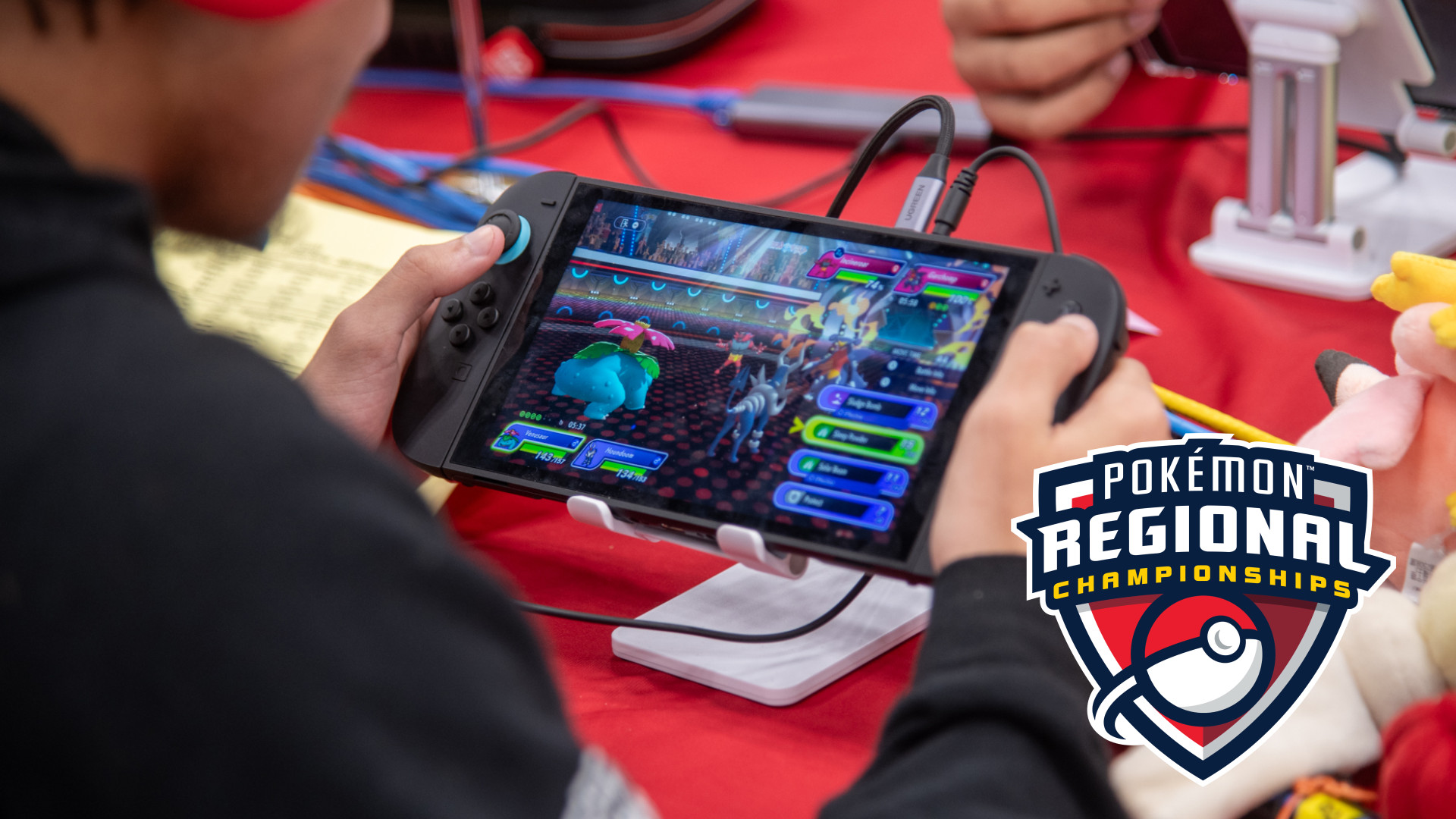
There’s no doubt competing in Regional Championship events is exciting. You get to meet new Trainers, challenge yourself against different strategies, and maybe make some new friends in the spirit of competition. How do you get started when you’re ready to make the plunge into your first large-scale event? Pokémon VGC expert and Regional Champion Christopher Han has the lowdown on how to prepare for Regional Championships.
I’ve been coaching Pokémon VGC for four years; in that time, I’ve helped Junior and Senior competitors prepare for tournaments to earn Regional, International, and World Champion titles. There are a lot of steps to prepare for a Regional, and it can be a daunting task at times. Let’s talk about how to practice, build teams, and more!
Forging Your Roster
The first step of tournament preparation is finding a team of six Pokémon. For Regulation M-C, a team’s core strategy revolves around Mega Evolution. With the ability to Mega Evolve only once per battle, it’s important that the other Pokémon on the team can counter the weaknesses of your Mega Evolutions and support their strengths.
Each Mega Evolution brings different strengths. For example, Mega Charizard Ycontrols the weather by setting harsh sunlight with its Drought Ability while Mega Gengar can trap opposing Pokémon on the field with its Shadow Tag Ability. The truth is there’s no correct Mega Evolution to use; it’s all about player preference. Consider the metagame when selecting which Pokémon you want to Mega Evolve. For instance, if Mega Charizard Y is a popular choice, Mega Tyranitar could be a smart pick.
Explore your favorite Mega Evolutions! A wide variety of them are strong when supported by the right partners. At the end of the day, it’s all about finding what niche your Mega Evolution fills. All of them have unique strengths. Mega Absol Z is one of the fastest Pokémon in Regulation M-C and has strong single-target attacks thanks to its Sharpness Ability. Mega Golisopod has high Defense and Special Defense stats and strong defensive typing that’s only weak to Fire types. Though Mega Camerupt is slow, it’s great in Trick Room and offers strong damage with Sheer Force–boosted attacks.
You might be wondering: How can I find some teams to use in Pokémon Champions and explore Regulation M-C? The official Pokémon website is a great resource to find recent tournament results, which highlights Pokémon teams from International Championships or World Championships that Trainers piloted to Top 8 or further. Many Trainers also share Replica Teams on social media platforms, like X, which is a great way to learn how to distribute stat points on popular Pokémon as well as common partners. By looking at the top teams of previous tournaments, you can try some out in your ranked battles—and even think about which teams to counter! The great thing about Pokémon VGC is that there’s no best team for each regulation. Oftentimes, a handful of teams will be dominant and common at Regionals, but this doesn’t mean that those teams will always win.
It can be difficult to follow the meta and what teams other players are using, but identifying recent trends is useful for team-building decisions such as which Pokémon, moves, Abilities, and items to use. By checking the Battle Data in Pokémon Champions, you can get an idea on how to train a Pokémon, too.
Understanding a VGC regulation requires not only a deep understanding of a specific team but also a breadth of knowledge about the many variations out there. Look at many different archetypes and figure out which ones you like. Do you prefer to play a “balanced” long game with bulky Pokémon or a quick game with heavy offense? Is controlling weather and terrain important to your play style? Are setup moves such as Swords Dance and Calm Mind appealing to you? The answers vary from person to person and even from regulation to regulation.
Another aspect of selecting a team is speed control. For the 2026 VGC World Championships, finalist Hiroshi Onishi’s team used Whimsicott with the move Tailwind to double the Speed of its partner Pokémon, while players Cary D’Ortona and Stefano Greppi in top cut had Trick Room to reverse the speed order, allowing their slower Pokémon like Sylveon to move first.
Surprise Factor: Making the Unexpected Work
Making a meta call to counter certain teams (like changing a Pokémon, held item, or move) can make matches advantageous before the tournament even begins. At the latest Baltimore Regional, Champion Joseph Ugarte utilized unique moves on his Pokémon to counter meta threats to his team. In fact, by having Salamence learn Flamethrower, he was able to defeat Mega Golisopod in the finals.
Don’t be afraid to use less popular Pokémon as a meta call; new archetypes tend to be underexplored, especially at the beginning of a new regulation. Dorian Kang recently found success with an innovative team featuring Dragapult and Armarouge at the Baltimore Regional Championships. Though Dragapult had yet to find its place within the metagame, it fit into the niche perfectly for Kang’s team, threatening opposing Gholdengo and Mega Salamence—Pokémon that counter his Mega Staraptor. It’s possible that a Pokémon performs well on one team and not on others. Don’t be afraid to explore!
Practice Makes Perfect
Once you’ve found the team you want to bring to a Regional Championships, it’s time to get experience with it, but what does it look like to practice for a tournament?
Participating in Ranked Battles in Pokémon Champions is a great way to start. These battles help you learn specific information about your team, such as speed interactions, type matchups, and Pokémon synergies. Additionally, you get a general idea of what strategies you want to use during Regional matches: common leads, strong offensive pairings, and even how to counter opposing strategies.
Ranked Battles can also help inform potential team changes. You may encounter new “techs” or team-building choices that you want to adopt on your own team. Keep an eye out for what other Trainers are using on the ranked ladder because it might just be what you see at the Regional.
Another great form of preparation is matchup practice—participating in Private Battles against friends. Find some common teams on X or the official Pokémon website and take turns practicing against them with your Regional team. Looking at common matchups is important for gaining knowledge and experience about an opponent’s potential leads and game plans. Additionally, having in-depth knowledge about a matchup will help you choose moves. Instead of thinking in the moment at a tournament, a lot of the thought process has already been done, which is crucial in a time-sensitive environment.
Experiment with different game plans in matchup practice. Try some different combinations of four Pokémon and move selection. Additionally, play against multiple game plans from the opposing team. You’ll learn the ins and outs of how to play against a team and be prepared for the many strategies that opponents can throw at you.
Wins, and especially losses, are informative during practice; they call attention to important Pokémon interactions. For example, if you find that it’s important for a Pokémon to survive an attack, redistributing stat points can be useful. Most importantly, keep an eye out for how you can make different strategic choices in battle as it will help with both team building and planning. It can even help to play a tricky matchup from the other side with your opponent’s team to better understand the opposing point of view.
Level Up Your Game
If you’re looking to take it to the next level, whether that be reaching Day 2, top cut, or Finals, watching past tournament broadcasts is useful. Particularly, if a player is using the same team as you, you can learn how they approach certain matchups and common game plans. Avoid passively watching a set, but rather, sit in each player’s shoes and try to understand or even predict what they will do. Consider the board state and the mind games that go into it. I personally think it makes watching sets even more entertaining!
Regional Weekend
My number one tip for a Regional weekend is to not just focus on winning but to also have fun. It sounds counterintuitive, but I encourage my students to take it easy on Friday and not to cram too much practice the night before Day 1 of a Regional. While VGC requires a lot of strategy, matches demand reads, or predictions, on your opponent. Take time to get into the right headspace for risk taking.
Competing at a Regional Championships can be daunting, but enjoy the moment! Most importantly, play to winby taking greater risks rather than not to loseby making more passive plays.Have confidence in yourself to make the plays you need. Embrace each win and loss, the good and the bad luck, and give it your all! Who knows? After all, you could be the next Regional Champion.
Stay up to date with the latest Championship event news on the official Championships website, and don’t forget to follow @PlayPokemon on social media and YouTube!
Release Date
April 8, 2026
Genre
Battle
Platform
Nintendo Switch, iOS, and Android
Learn more

1 Comment
Pingback: Tate McRae Has Mastered the Pop Spectacle. Now Comes the Hard Part. - Comic Vibe