

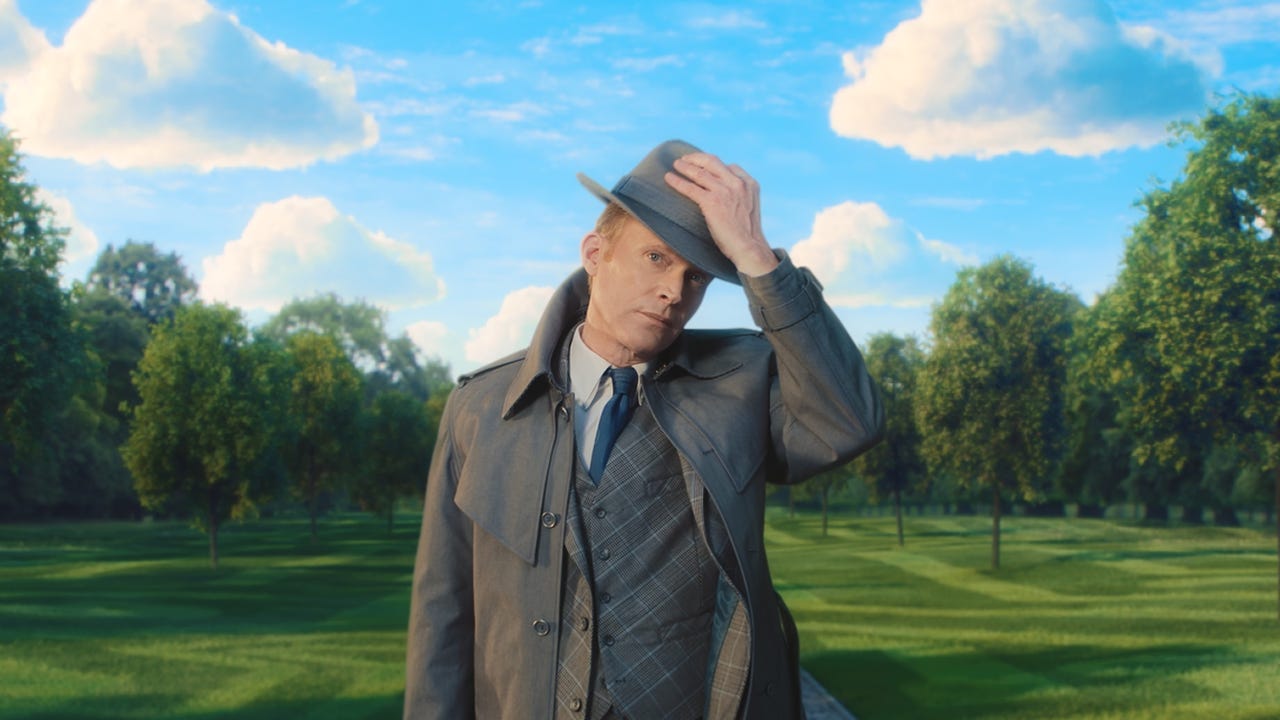
The first two episodes of Marvel’sVisionQuestdebut on Disney+ on Wednesday, October 14.
One of the most frustrating things about the post-Endgame MCU is how long it takes Marvel to circle back around and follow up on loose ends. Heck, they waited five years between <a href="https://comicvibe.com/lego-batman-midnight-spider/” title=”LEGO Batman & Midnight Spider”>Spider-Man sequels. And that’s to say nothing of the numerous post-credits scenes that still remain unresolved. VisionQuest is yet one more example of Marvel taking its sweet time to address a character who’s been trapped in storytelling limbo. Five years after WandaVision wrapped, we finally have a series dealing with the fate of Paul Bettany’s White Vision. But it’s not necessarily Vision himself who emerges as the beating heart of the series.
WandaVision is essentially the final leg of the trilogy begun by WandaVision in 2021 and continued by Agatha All Along in 2024. When last we saw Bettany’s characters in the WandaVision finale, the regular Vision returned to blissful oblivion, while his emotionless clone fled Westview to ponder his own existence. Half a decade later, he’s still very much in the pondering phase. By day, works in a bar and struggles to master the nuances of human interaction. By night, he literally lives inside his own head in a fanciful construct populated by the various other Tony Stark-designed AI units. He’s a being who barely exists in the physical world any longer, until circumstances arise that force him back into action.
To be frank, as much as Bettany’s Vision is one of the best and most nuanced MCU characters, the series is a bit of a tough sell out of the gate. For one thing, the idyllic mansion construct feels like a rote, poor man’s recreation of what WandaVision was doing all those years ago, only without the TV sitcom conceit. It also feels like an attempted nod towards Tom King and Gabriel Hernandez Walta’s incredible 2015 Vision comic, though only in the most superficial sense. The production design in these scenes can’t really be faulted, but there’s nothing that WandaVision or Loki didn’t do better in that regard.
On a deeper level, Vision is not at all the same character we’ve known and loved for the past 11 years. The old Vision, despite being a synthetic lifeform, was by far the most human and compassionate of the Avengers. He was responsible for some of the most poignant lines in the MCU. This new Vision utterly lacks that charm. He’s cold and distant. He doesn’t understand humans, much less feel any appreciation for their struggles and foibles. That’s the entire point of the series – the question of whether this carbon copy can gain the insight and emotional maturity that his predecessor possessed.
Now it’s Ultron who has something to teach Vision about the plight and beauty of mankind.“
Regardless, this newer, less compassionate Vision is a harder character to connect with. Bettany certainly draws a firm distinction between the roles in his performance, but there’s just something a little off-putting about a Vision who shows such contempt for his fellow man and kills with abandon. By the end of Episode 2, that problem begins to recede somewhat, but there’s definitely a major adjustment period fans of the character will have to endure.
Luckily, if the series struggles to make its central protagonist fully resonate with viewers, it has a solid supporting cast to fall back upon. It’s a lot of fun seeing the various AI entities given “human” form inside Vision’s mind. That includes F.R.I.D.A.Y. (Orla Brady), E.D.I.T.H. (Emily Hampshire), and, best of all, the return of Agent Carter’s James D’Arcy to the J.A.R.V.I.S. role. Each character has been tasked with helping Vision understand humanity in one way or another, and all serve as entertaining foils to our dour hero.
Marvel Cinematic Universe: Every Upcoming Movie and TV Show
Then there’s the real highlight of the series in Episodes 1 and 2, James Spader’s Ultron. Say what you will about 2015’s Avengers: Age of Ultron, but Spader was an inspired casting choice, and this series promises to finally realize the lingering, untapped potential of that character in the MCU. Ultron is neither entirely friend nor foe to Vision, but more a cranky, supremely bored prisoner left over from a bygone era. Spader plays the role with gusto, bringing even more gravelly, affected charm to an AI who believes himself to be the smartest guy in every room. These episodes make the most of the role reversal, as now it’s Ultron who has something to teach Vision about the plight and beauty of mankind. If it’s tough to fully connect with Vision out of the gate, Ultron alone makes the series worth watching.
That’s not to say the series is devoid of any compelling human characters. Much as Agatha All Along marked the debut of the reincarnated Billy Maximoff (Joe Locke), VisionQuest focuses a great deal of attention on his brother Tommy (Ruaridh Mollica) and his own struggle to understand his existence and reconcile two very different sets of memories. Tommy makes for a compelling secondary protagonist in Episode 2, and its his presence that finally forces Vision to start coming out of his vibranium shell a bit.
On the villain front, these two episodes introduce us to Paladin (Todd Stashwick) and his handler (Diane Morgan). These two make for a fun pair, despite the fact that all of their interaction happens over the phone. In general, Stashwick brings plenty of campy energy to the screen, while at the same time molding his character into someone who feels like a legitimate threat to Vision despite the latter’s vastly superior powerset and refusal to engage in mind games.
Verdict
VisionQuest is a show that should probably have arrived a lot sooner than it did, but at least Marvel has finally opted to pick up one of the biggest loose threads from WandaVision. The series definitely faces an uphill battle in getting fans to connect with this rebooted, compassion-free version of the character. Luckily, it makes some tangible progress by the end of Episode 2. It also has a strong supporting cast to fall back upon when the main protagonist falters, the standout of which is easily James Spader’s Ultron. If not a flawless start for the series, these first two episodes serve as a solid blueprint for Vision’s journey to come.
