

VisionQuest: James Spader on how Marvel TV show explores modern-day questions of AI
One of the more thematically and philosophically ambitious shows from Marvel Studios, VisionQuest wonders if AI and humanity can mix. The Nightly talks to actor James Spader.
The Marvel Cinematic Universe has been active for almost two decades, and over that time, it’s roped in a lot of stars, so many, in fact, it’s easy to forget some of them were a part of it.
Remember Glenn Close in Guardians of the Galaxy? Or Rachel McAdams in Doctor Strange? How about Stanley Tucci in Captain America? And Chris O’Dowd, Angelina Jolie, Tommy Lee Jones, Carrie Coon, Rebecca Hall and Guy Pearce. So many more names.
Among them is James Spader, who provided the voice for the genocidal AI program Ultron in the second Avengers movie, released in 2014. So, you didn’t even get to see his face, but Marvel fans will generally remember his sing-song line reading of “I had strings, but now I’m free, there are no strings on me”.
Get the first look at the digital newspaper, curated daily stories and breaking headlines delivered to your inbox.
The contrast between Spader’s menacing, mellifluous voice coming out of a monster steel robot, and the memory of the joyful innocence of Pinocchio only adds to how terrifying the world-destroying Ultron was.
Marvel’s new streaming series is called VisionQuest, named after the titular character played by Paul Bettany, a more altruistic AI being that was imbued with a “mind” from conception, and is capable of real love and humanity.
Although, through the plot shenanigans of the MCU, this version of Vision is not exactly that same one, which is what leads the character to try and understand himself and his relationship to his memories.
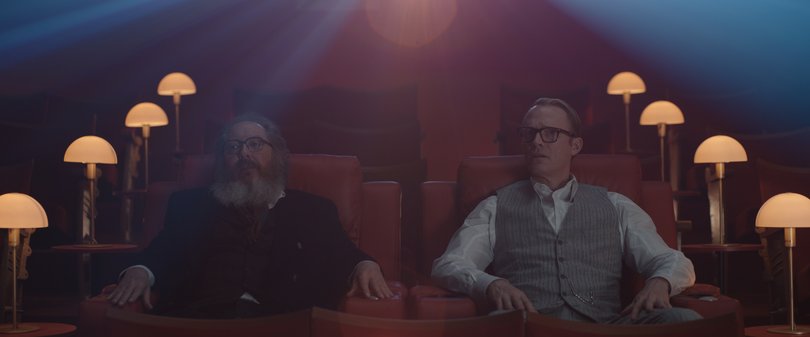
But it’s Spader’s Ultron that really drives the story engine of the eight-episode series. It’s something showrunner Terry Matalas knew too. It had been a decade since Spader’s involvement in the MCU, so when the writer took the actor out to lunch in New York City to convince him to return, everything was riding on it.
“It was a high pressure meeting because if James didn’t agree, I didn’t have another idea,” Matalas told The Nightly.
He needn’t have worried, Spader was so engrossed by Matalas’ pitch, neither men even noticed the stunning view of Central Park before them.
“He told me his idea for the show, from beginning to end in broad strokes, and it didn’t waver from that a tremendous amount,” Spader recalled. “The outline of the show he talked about was what the show ended up turning into.
“The most curious and eccentric execution of an idea in every way.”
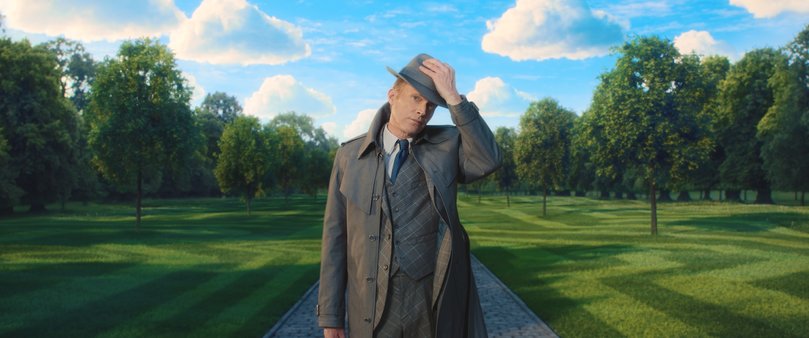
Curious and eccentric is exactly that. VisionQuest is brimming with ideas presented in a stylised way.
The series is the third instalment of a streaming trilogy which began with WandaVision and then through Agatha All Along. We find Vision, a resurrected AI being who has the memories of but not the experience of an earlier iteration, some years after WandaVision.
He’s hiding out in a pub in Edinburgh, playing at being human but too scared to form any real meaningful connections. In the evening, he treats into his mind palace, an artificial digital construct of a house that looks like a cross between The Sims and a Rene Magritte painting.
The fakery is the point, as if it’s a self-imposed cage for Vision, who doesn’t feel as if he’s earnt a spot among humans.
There, he lives with the AI programs we’ve met across the MCU, including JARVIS (James D’Arcy, reprising a role he played in human form from Agent Carter and Avengers: Endgame) FRIDAY (Orla Brady), EDITH (Emily Hampshire) and two service AIs.
And, of course, Ultron, the Big Bad from Avengers: Age of Ultron who tried to destroy the world because he logicked that humanity was the greatest threat to Earth.
Now, Ultron appears in his human avatar aka Spader, and is an antagonistic mentor to Vision. Perhaps not the best choice for a guide, but Ultron has also evolved over the decade-plus he’s been confined to within Vision’s mind/mainframe.
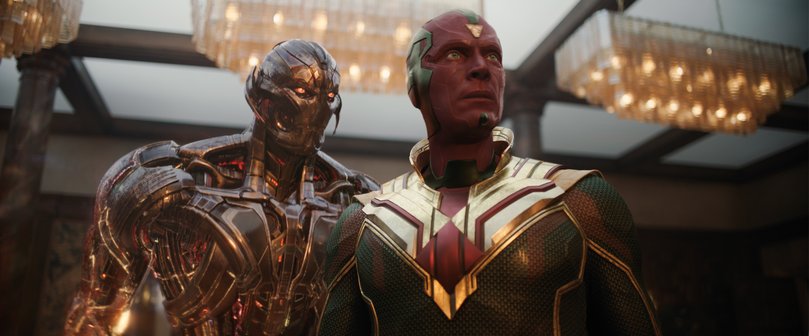
We find him maybe not changed but evolved. He loves art, which he has come to see as a true expression of humanity. He also no longer wants to end it all.
“Ultron in VisionQuest has a true appreciation for the human aspect of life on Earth,” Spader explained, “Is it infuriating? Yes. Is it confounding? Yes. Is he conflicted about it? Yes. But has a real appreciation for it.
“He realises that the bests way that AI can glimpse humanity is to have a true understanding of humanity and for humanity to have a true understanding of AI.”
Ultron advocates for Vision to experience life to understand life.
“It can’t just be consumption or knowledge,” Spader added. “It has to be life experience. It’s one of the things that is a real struggle with AI right is that it feels lifeless and inauthentic.
“You can put grammar together but it also has to reflect thought and I think that’s how (Ultron) has spent the past 12 or 13 years or however long it has been.
“That’s what he’s trying to impart to Vision, that you must live it, you can’t just process it, you can’t just digest it and then spit it back out.”
Matalas, Spader and the VisionQuest team started filming the series 18 months ago, and the discourse around AI in the real world has shifted in that time.
So, the series is coming out at a moment when fears about AI have accelerated. Audiences turning into VisionQuest will inevitably map out their own feelings about it on top of the story of the show.
But, as Matalas pointed out, “the singularity”, meaning the moment AI gained consciousness, has already happened in the Marvel Cinematic Universe.
Questions around whether we should be anthropomorphising AI, or identifying the potential threat, has already been settled within the wider fictional narrative.
Matalas wanted to add a different dimension to the conversation.
“The message, and we touch upon this in the fourth episode, is this is all about parents and children, and we are, for better or worse, the parents of AI,” he said. “It is up to us to shepherd them in this world, whether that’s guardrails or making sure they understand us.
“That always stays true no matter what happens with AI.”
Can AI truly understand humanity in the way that Vision, Ultron and Marvel’s AI programs try to and, seemingly, achieves? The concepts of love and loss are threaded through VisionQuest, and it’s the AI characters’ relationship to those very human emotions the series is most eager to explore.
Spader wasn’t convinced that real-world Ais are there yet.
“Falling love is something so obscure and abstract, there’s reason why it’s called ‘falling’ because you are falling, you have no control over it, you lose a certain rationality,” he said.
“It’s impossible, today, in our real lives, for AI to really understand the notions of love and loss.”
VisionQuest is streaming on Disney+ from October 14

4 Comments
Pingback: XBOX Testing a New 'Streak' System for Dashboard - Comic Vibe
Pingback: #ColoursOfNavaratri: Day 3 - Comic Vibe
Pingback: 'Star Wars' comics bridging 'Ahsoka' seasons 1 & 2 with Ezra's 'Escape From Thrawn' - Comic Vibe
Pingback: Hawai‘i energy forum launches online series on solar farming, disaster resilience and LNG - Comic Vibe