

Marvel may rule over cinemas, but when it comes to the small screen, many projects have failed to set the world on fire. And tragically for comic book fans, numerous Marvel cartoons were canceled well before they ever had a shot to show audiences what they were capable of.
Countless folks suddenly became fans of comic book movies with the rise of the Marvel Cinematic Universe. But hardcore fans know that there have been many stellar animated Marvel shows over the years, some of which precede the MCU significantly. Sometimes, the small screen can be an even better avenue for exploring these characters as we get to spend years understanding their psyches rather than just two hours here and there.
Some animated shows have thrived, but others were sadly canceled well before their times. Decades later, we’re still left wondering what kind of stories could’ve unfolded if these Marvel shows really had a chance to get going. But whether it’s due to corporate mergers or lack of viewership, these shows got the ax. In some cases, they’re still some of the best Marvel cartoons ever, meaning it’s even more tragic they got discarded so soon.
The Spectacular Spider-Man
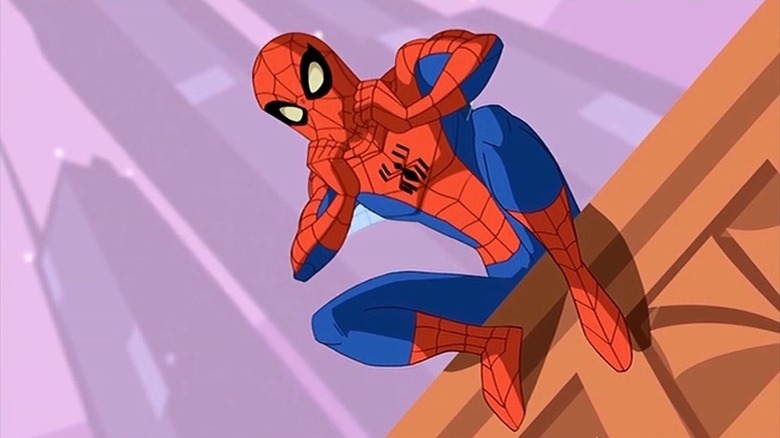
“The Spectacular Spider-Man” isn’t just a great show. It’s easily the best Spider-Man show of all time. It perfectly captures elements from numerous iterations of the web-slinger from the comics, ensuring there’s ample humor and pathos to make this the definitive small-screen Peter Parker (Josh Keaton). The show even does justice by many of Spidey’s most famous villains, giving characters like Venom (Benjamin Diskin) and Tombstone (Kevin Michael Richardson) multi-episode arcs.
There were big plans for “The Spectacular Spider-Man,” which began in 2008. Co-developer Greg Weisman wanted the show to run for 65 episodes, up until Peter graduates from high school. From there, more adventures could be explored with supplementary DVDs taking Peter through his college years, but the show got nowhere close to that lofty goal.
Instead, “The Spectacular Spider-Man” was canceled in 2009 after 26 episodes due to Disney’s acquisition of Marvel. By extension, Sony lost the television rights to Spider-Man while holding onto the film rights. It was an untimely end to such a great show with a lot of potential. Season 2 ends with the supposed death of Norman Osborn, aka Green Goblin (Alan Rachins), with Harry (James Arnold Taylor) blaming Spider-Man for his father’s demise. It’s ground covered in the Sam Raimi “Spider-Man” films, but the story could have gone in some fascinating directions on a cartoon show. Sadly, “The Spectacular Spider-Man” came to a spectacularly unsatisfying conclusion.
The Avengers: Earth’s Mightiest Heroes
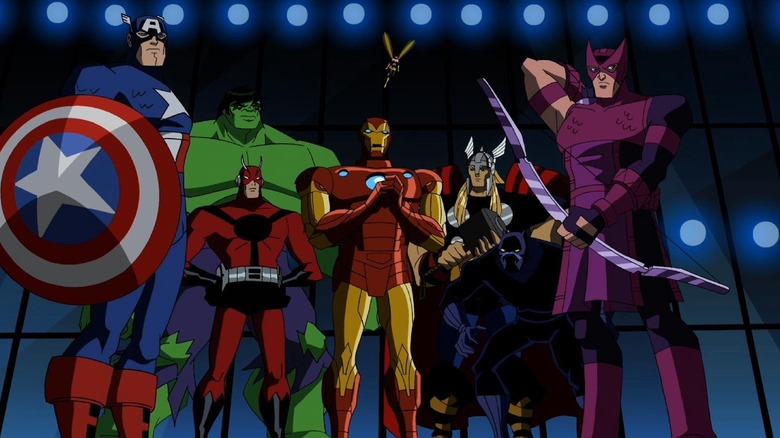
Before the Avengers assembled for the first time on the big screen, they starred in a stellar cartoon titled “The Avengers: Earth’s Mightiest Heroes,” which premiered on Disney XD in 2010. The show brings together many heroes who would soon be further explored in the films, but it has a chance to explore more storylines with serialized 26-episode seasons.
While kids are the main target audience, adults can also enjoy the mature storytelling. The show brings in formidable threats like Kang the Conqueror (Jonathan Adams), Doctor Doom (Lex Lang), and the Skrulls (which infiltrate the Avengers by having one of their own shape-shift into Captain America). Honestly, “Earth’s Mightiest Heroes” does the “Secret Invasion” storyline from the comics far better than the MCU did with its widely panned Disney+ show.
This was a show building out a deep world that could’ve gone on for a while, but it was canceled after two seasons. A year after its cancelation, Disney XD debuted “Avengers Assemble,” an inferior show with more simplistic storytelling. “Earth’s Mightiest Heroes” respects its audience’s intelligence to follow this deep well of lore and characters, but “Avengers Assemble” brings things back to basics, including following a lineup largely similar to the films. It was a trade-off for something unique with something safe, and we’ll always be sad we never saw how “Earth’s Mightiest Heroes” could’ve developed.
Silver Surfer
Silver Surfer may not inherently lend himself to a cartoon series in the same way as Spider-Man or Iron Man, but “Silver Surfer” remains a thrilling example of what’s possible with the character. There’s a lot of existential angst with Silver Surfer in the comics, as he’s the servant of Galactus, finding worlds suitable for his consumption. And the show, even though it was designed for kids, doesn’t hold back on the psychological dread of Surfer (Paul Essiembre) living with the knowledge that he doomed countless worlds.
But the storytelling isn’t the only thing to appreciate. The show boldly utilizes both 2D and early 3D animation to develop a unique look. There are some outstandingly beautiful shots of the Surfer against the effervescent cosmos, adding to how our place in the universe can feel insignificant and important all at once.
And “Silver Surfer” is yet another show canceled on a massive cliffhanger. Thanos (Gary Krawford) finds a way to reverse time and make the universe contract on itself. It even looks as though Surfer himself has died, and then … that’s it. The show ended after just 13 episodes due to legal disputes between Marvel and Saban Entertainment. It also didn’t help that around this time, Marvel Comics was facing severe financial difficulties. Eight Season 2 episodes were already written by the time “Silver Surfer” was canceled, and maybe in another universe, “Silver Surfer” would’ve continued and got an even bigger budget to provide even greater animation.
Wolverine and the X-Men
“X-Men: The Animated Series” and “X-Men ’97” garnered attention with heart and plenty of surprises, but fans shouldn’t have slept on “Wolverine and the X-Men.” It’s a surprisingly deep show that isn’t afraid to get dark despite originally airing on Nicktoons. It drops viewers right in the middle of the action with an explosion seemingly killing Professor X (Jim Ward), but he survives and can communicate with a future version of the team to help stop a horrific dystopia from taking shape. Under the guidance of Wolverine (Steve Blum), the X-Men must get back together to protect mutants in both the present and future.
The show only ran for 26 episodes, but there were big plans for the future. After all, Season 1 concludes with the X-Men successfully stopping the horrible future, but another, more terrible one has taken its place with Apocalypse ruling over all. Season 2 would’ve taken a lot from the “Age of Apocalypse” storyline from the comics and would’ve introduced Deadpool to the mix.
The demise of “Wolverine and the X-Men” ultimately boiled down to a disagreement over money. Marvel and the animation studio couldn’t agree on who would pay how much and who would own the larger percentage, so the series just died. It wasn’t Sentinels or Mister Sinister who wiped out the X-Men, but contract disputes.
Spider-Man: Unlimited
“Spider-Man: Unlimited” is an incredibly bizarre show. It’s unlike any other “Spider-Man” series because here we have Peter Parker (Rino Romano) wind up on another planet, Counter-Earth. There, the High Evolutionary (Richard Newman) rules over all with his human-animal hybrids, and Spider-Man teams up with a rebellion faction to restore order and peace. It may not come as a surprise to hear that the premise didn’t sound enticing to kids in the ’90s, resulting in the show’s cancellation after one season.
However, the behind-the-scenes drama associated with “Unlimited” is almost as fascinating as the show itself. The series only existed so that Fox Kids could continue airing “Spider-Man: The Animated Series” reruns. According to a contract, they needed at least one season of a new “Spider-Man” show to retain the rights, so one season was all they set out for. Saban Entertainment was tasked with making the show, but they had an extremely limited amount of source material to work with because the live-action “Spider-Man” film was in development. That even extended to Spidey’s traditional costume, which is why his outfit is drastically different in the cartoon (complete with a web cape).
It may have been weird, but also incredibly ambitious, with a cliffhanger positioning Venom, Carnage, and symbiotes to play a larger role in Season 2. But “Spider-Man: Unlimited” was doomed from the start since it played in the same time slot as a little show called “Pokémon.” Maybe with more time, “Unlimited” could’ve grown on viewers.
Fantastic Four: World’s Greatest Heroes
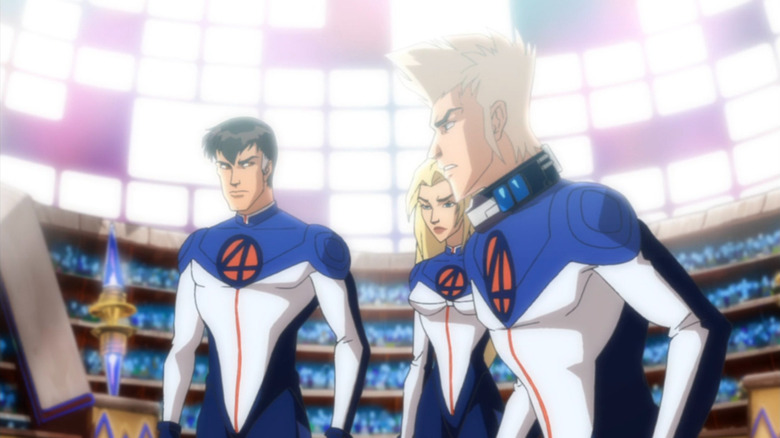
If this is the first time you’re hearing about a “Fantastic Four” series airing during the 2000s, you’re not alone. The series pretty much skated right into obscurity from the beginning, and it’s a real shame. As far as a “Fantastic Four” show is concerned, it’s pretty solid. And it’s light-years better than the “Fantastic Four” film duology we got around the same time period.
The show has plenty of cosmic adventures, but its real shining light is the emphasis on making the Fantastic Four feel like a family. They’re not just a crime-fighting unit, which is what the ’90s “Fantastic Four” often felt like. They bicker and get on each other’s nerves. Plus, Sue Storm (Lara Gilchrist) gets far more agency in this show compared to the older series.
The show’s early demise seems to come down to shifting priorities with Marvel around the time it released in 2006. That was just a couple years before Marvel Studios launched “Iron Man,” so a cartoon probably wasn’t deemed pertinent. As such, the series was dumped on Cartoon Network, where episodes aired at random times and out of order. Even if you wanted to watch it, you had no idea when something new would drop. Fortunately, all episodes are now available on Disney+ for easy access.
X-Men: Evolution
There are plenty of great “X-Men” shows, but “X-Men: Evolution” remains an underrated gem every Marvel fan needs to watch. Unlike the previous “X-Men: The Animated Series,” “Evolution” takes a more grounded approach to the characters. They actually attend a normal high school, giving the whole show more of a “Buffy the Vampire Slayer” vibe where they deal with normal teenager things and then fight crime in their spare time.
At first glance, you might not even think “X-Men: Evolution” was canceled. After all, it ran for a respectable four seasons, consisting of 52 episodes. That’s more than enough time to tell a comprehensive story, but audiences got short-changed a fifth season, which would’ve adapted the “Dark Phoenix” saga from the comics.
The common belief, and the one shared by co-creator Robert N. Skir, is that Kids’ WB programming was changing by the time “X-Men: Evolution” got the can in 2003. Nickelodeon was taking up a sizable chunk of younger audiences, and it’s believed Kids’ WB was chasing wider trends. Considering how the “Dark Phoenix” storyline has been done dirty twice now in the films, it’s too bad we missed out on what could’ve been an awesome adaptation with “X-Men: Evolution.”
MODOK
Most Marvel cartoons lean into the comics’ fantastical nature, so it was refreshing to see 2021’s “MODOK” borrow more from sitcom influences. It’s still very much a Marvel show, as the series centers on the supervillain MODOK (Patton Oswalt) with aspirations to take over the world. But he has bigger problems at the moment, as he loses control of AIM and tries to be a good father.
It’s a weird show worthy of such a weird, off-putting villain. The use of stop-motion makes it visually-striking, and while it isn’t focused so much on overarching plot threads, Season 2 easily could’ve developed these characters further, depicting even more absurd scenarios.
Corporate restructuring is to blame for “MODOK” ending before its time. Honestly, it’s kind of a miracle Season 1 aired, as Marvel Television initially announced four animated shows to go into development — “MODOK,” “Hit-Monkey,” “Tigra and Dazzler,” and “Howard the Duck.” All four would eventually crossover into an event known as “The Offenders,” but Marvel put the kibosh on that before it could even get off the ground.
Marvel Television was folded into the wider Marvel Studios so that they could proceed with programming more connected to the film side of things, like “WandaVision” and “Loki.” It feels like “MODOK” didn’t fit into the vision Marvel had for its TV shows and was dropped without much fanfare, even though it had an all-star comedic cast.
Moon Girl and Devil Dinosaur
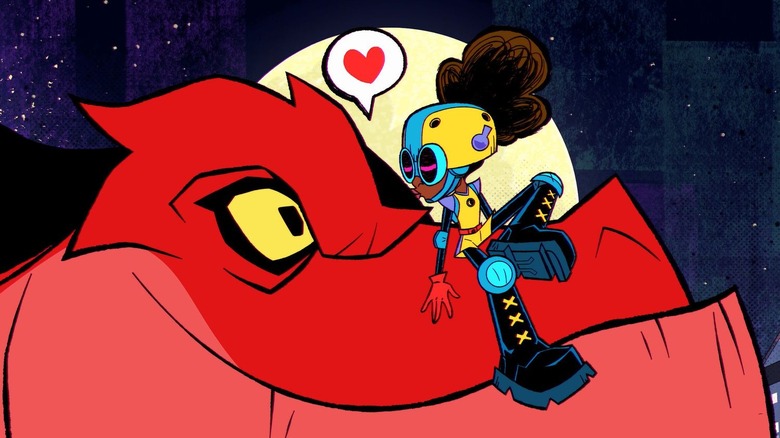
“Moon Girl and Devil Dinosaur” was exactly the kind of animated series Marvel should’ve been making in the 2020s. It was aimed squarely at children, but didn’t talk down to them. It boasted a diverse cast and storylines of Lunella, aka Moon Girl (Diamond White), finding her identity not just as a superhero but as a young Black girl.
The animation is stunning with several inventive sequences sporting a comic book-esque aesthetic. And many episodes feature a final fight choreographed to songs for an added punch. “Moon Girl and Devil Dinosaur” wasn’t just a fun show, it explored material often ignored in mainstream animated series. Sadly, it ended after just two seasons.
No public reason was given for the cancelation, but low viewership was likely to blame. Executive producer Steve Loter took to X to confirm what would be needed for “Moon Girl and Devil Dinosaur” Season 3 to get off the ground: “The reality of the situation is this. We already know what to do for a 3rd season of [‘Moon Girl and Devil Dinosaur’] and it’s really, really great. We NEED more viewers to watch the premiere of MG Season Two on Feb 2nd on Disney Channel and Feb 3rd on Disney Plus to make this happen.”
It’s a shame it ended so soon, but now, you can binge all of “Moon Girl and Devil Dinosaur” right on Disney+.
Iron Man: Armored Adventures
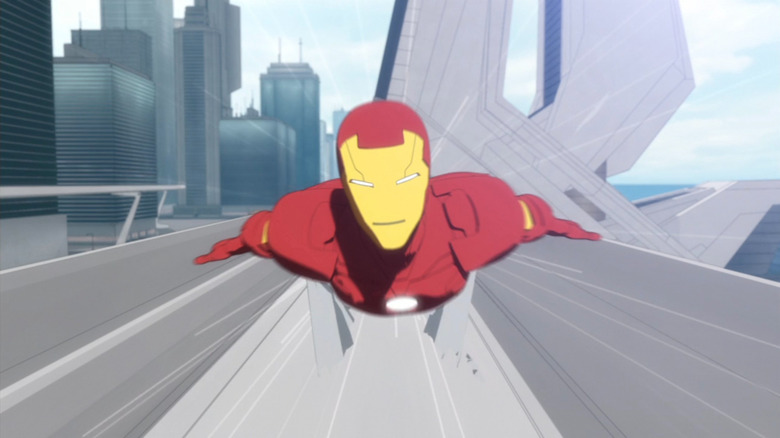
Iron Man took over the world in 2008 with his blockbuster movie. Shortly thereafter, Nicktoons released “Iron Man: Armored Adventures.” Intentionally or not, it was a great bit of corporate synergy, as it got a whole new generation of comic book fans invested in the character. Changes were made to Tony Stark (Adrian Petriw), like turning him from an adult to a teenager becoming a superhero thanks to some exceptionally advanced technology, but overall, it was a great way to make the character more relatable to younger kids.
Easily, the best thing about the series is the tension between Tony and Gene Khan (Vincent Tong), who becomes this show’s version of the Mandarin. Gene wants Tony to acquire the Makluan rings for him, but neither is aware of the other’s secret identities. It offers some superb dramatic irony and a very satisfying moment when everything comes to light.
But even with Iron Man ascending the A-list, “Iron Man: Armored Adventures” was cut short after two seasons. It quietly went off into that good night without much fanfare, but considering the final episodes aired in 2012, it was also likely a victim of Disney’s acquisition of Marvel, and Marvel Studios wanting more of its own original shows to promote its properties. Marvel’s had a lot of shake-ups over the years, and many great cartoons have fallen victim to such restructuring. Hopefully, in the future, some stability ensures we enjoy beloved shows for much longer.

1 Comment
Pingback: NYCC '26: WotC drops new DARKHOLD DESTINY cards, announces tie - Comic Vibe