For decades, toy aisles have been dominated by Marvel and DC‘s stables of super-heroes and villains. That kind of marketplace dominance comes with a major boon to fans of these comic book universes: although the likes of Kenner, Hasbro, and Mattel have certainly tried, a toyline can’t exist entirely on Spider-Man and Batman. Long-lived lines like Marvel Legends or DC Multiverse come with universe-spanning character selection, giving fans the chance to own a plastic representation of virtually any major character they can think of. This wasn’t always the case: in the early years of action figures, license-holders like Mego were hesitant to dig too deep into the worlds of Marvel or DC. Kenner’s Super Powersline was celebrated as the first time fans saw action figures of A-list heroes like Green Lantern and the Flash. For other characters, their first ever figural merchandise came from a surprising source: “rack toys.”
Videos by ComicBook.com
“Rack toys” is a term popularized by toy collector Brian Heiler (who literally wrote the book on the subject), and describes the kind of low-cost, impulse toys you might see hanging on the racks at a grocery or drug store. They were cheap, they were gaudy, they usually only lasted a kid for an afternoon — but that low cost came with a surprising benefit: manufacturers could afford to task risks on second and third-string properties and characters. In some cases, that meant rack toy tie-ins for short-lived television series, or cinematic box office duds. For comic book fans, it meant items like Fleetwood Toys’ awesome 1976 Ghost Rider figure, the first-ever plastic representation of the cult-favorite Marvel hero. It’s the platonic ideal of a rack toy, with a gorgeous, colorful cardback featuring art ripped straight from the comics, plus paint and a sculpt that get worse the longer you look at them. Mint-on-card, it makes an incredibly striking display piece, coveted by Marvel Comics collectors. And those collectors will pay, evidenced by the $5k listing price for this carded sample on eBay now.
Why Fleetwood’s Ghost Riders Toys Are Still a Fan-Favorite
Image Courtesy of Marvel Comics
Like many licensed rack toys, the Fleetwood Ghost Rider is a clever retool of a common, unlicensed toy. It takes a classic “figure with motorcycle” and swaps out the rider for a sculpted figurine of Ghost Rider. Straightforward enough. But the toy goes above and beyond: it includes a swappable, alternate Johnny Blaze headsculpt, enabling kids to play with the figure as Ghost Rider’s secret identity. Interestingly, this makes Fleetwood a surprise innovator: while commonplace today, swappable heads were virtually unheard of in the seventies. This figure is one of the first instances of the mechanic being used for an action figure, preceding its widespread adoption by any of the larger (and better-heeled) toy manufacturers by a factor of literal decades. The head-swapping feature also makes this Ghost Rider incredibly difficult to locate loose and complete on the secondary market.
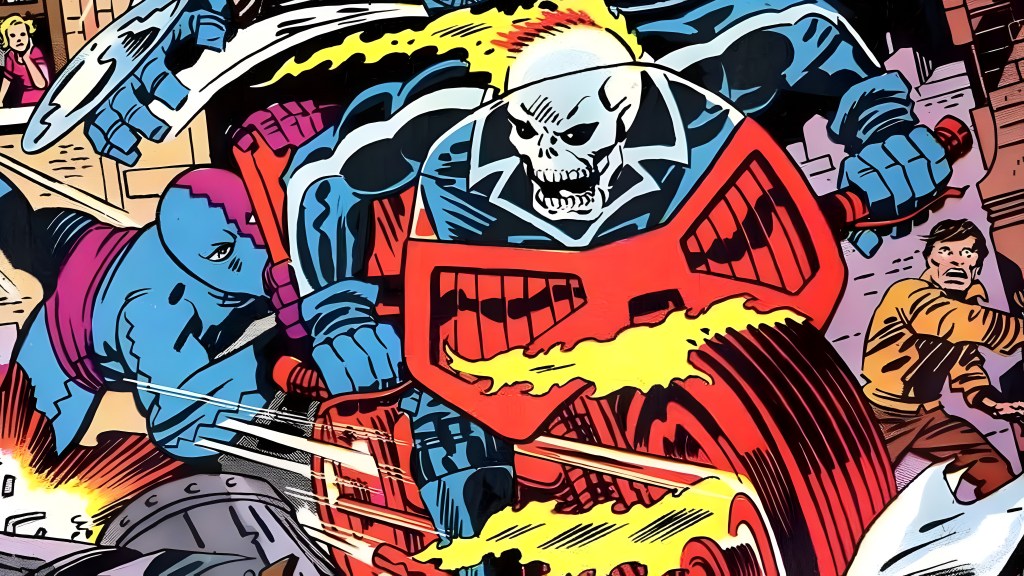
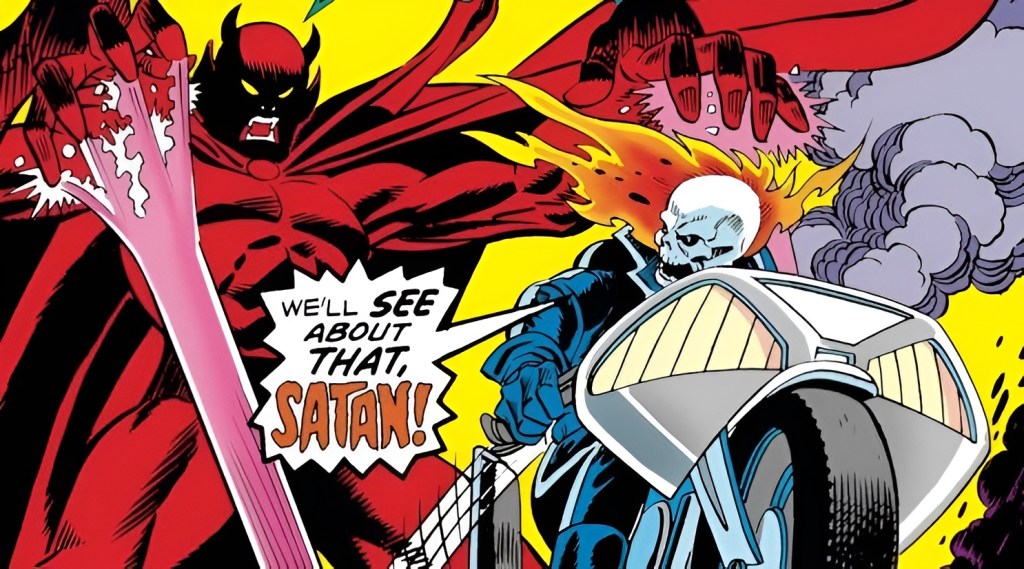
Fleetwood gives their Ghost Rider a garish, bright-red motorcycle, which at a glance would appear to be a cost-saving measure. But the bike looks exactlylike it would if you picked up the latest Ghost Rider off the spinner rack in 1976 — right down to the skull emblems on the side. After his earthly motorcycle is destroyed in a battle with the Enforcer in Ghost Rider #24, Ghost Rider conjures a “mystic flame cycle” glowing with red hellfire. Hasbro would later give fans an updated version of this same Hell-Cycle in both its faux-retro 3.75″ and 6″ Marvel Legends lines. Fleetwood’s 1976 catalog advertises a friction-powered, chromed version of Ghost Rider and his Hell-Cycle, though it’s unclear whether this ever saw production. By their nature, rack toys come with less certainty around what items were produced, when they were produced, and how they were distributed. At the time, neither the manufacturer nor the customer thought much of posterity. These were disposable, fly-by-night products, and a dedicated collector market for them seemed unlikely.
Fleetwood produced various other Marvel items throughout the decade. The most elaborate of these were painted reissues of Louis Marx’s 6″ scale unarticulated Marvel action figures, first made available in the sixties. Most of their other offerings were less elaborate, fitting the aforementioned mold of “pre-existing product with a Marvel character slapped onto it.” Ghost Rider happened to be well-suited to this format, as one of the staples of rack toys was putting license-specific plastic figurines onto generic vehicles. This is exemplified by the line of “Fantastic Four Supercars,” featuring each of the four members of Marvel’s first family driving an identical (though cast in a different color) cheap plastic car. Other offerings included a Marvel rubber stamp set, Marvel flashlights, and the foam “Fly Avengers Fly” gliders. Notably, the flashlight set includes Silver Surfer, and the glider set Vision. Neither character saw much merchandise in this era, otherwise appearing in Amsco’s cardboard “Marvel World Adventure Set” and on 7-11’s tie-in Marvel Slurpee cups.
Image Courtesy of Marvel Comics
For the most part, rack toys are something of a “cult favorite” in the collecting world. The majority of collectors either don’t know about them, or the lack the space to dedicate to them. The exception is when a rack toy is some of (or the only) merchandise a character or property got in the vintage era, suddenly making it an attractive piece of that character or property’s history. This what happened with the Fleetwood Ghost Rider: once fans at large were made aware of the item, it became highly-sought after as not only the first Ghost Rider action figure, but a pretty cool toy taken on its own merits. It’s certainly more elaborate than many other offerings from companies like Fleetwood, and hews much closer to the source material (unless Mister Fantastic drove a hot yellow muscle car in an issue of Fantastic FourI missed). Couple this with the toy’s built-in, aforementioned scarcity, and it’s no surprise that this rack toy has become one of the most collectible Marvel toys of its era.
There are only three samples of the toy on eBay now, one featuring a manufacturing-error cardback (in another testament to the production quality of the toy). Each is listed at a four-figure price. Any of Fleetwood’s other Marvel offerings can be found readily, and are listed at prices between thirty and one hundred and fifty, even for a mint-on-card sample. If one looks at sold listings, only one Fleetwood Ghost Rider has been sold in the past several months, for the bargain price of two hundred and fifty dollars. That vast price range reminds us just how unusual of a case the Fleetwood Ghost Rider is. It’s one of the few rack toys to cross the threshold into mainstream collectibility, leaving several dedicated fanbases to complete for the small supply of them that were ever produced. With every year, there are fewer and fewer of the figure for this (arguably growing, thanks to Ghost Rider’s renewed mainstream appeal) group of collectors to compete for. It therefore becomes a seller’s market, and a collector has to ask themselves if the chance to own such a rare item is worth potentially overpaying — after all, they don’t know when (or even if) they’ll come across one again.
Long Before Disney Parks Merchandise Became A Collecting Obsession, There Were These Model Kits
More Collectibles
Courtesy of Nintendo
Collectibles
2 days ago
The Zelda Game That Predates the NES is Soaring to a Legendary Price at Auction
3 Years After His DCEU Disaster, The Flash Disappoints Again (In a Whole New Way)
Collectibles
3 days ago
This Lot Of Vintage Batman Action Figures Features Some Big Names And The Penguin’s Cutest Henchmen
Collectibles
3 days ago
This G.I. Joe Helicopter Gave Us Our First Hint Of The Iconic Defiant Space Shuttle
Courtesy of 20th Century Studios
Collectibles
4 days ago
This Huge Set of 1990s Kenner Aliens Action Figures Sold for a Scarily Low Price
Courtesy of Universal Pictures
Movies
4 days ago
A Forgotten Flash Gordon Action Figure Is Worth 3 Masters of the Universe Grails (Including He-Man)
<img src="https://comicbook.com/wp-content/uploads/sites/4/2026/09/Screenshot-2026-09-23-105835.jpg?w=300" alt="Kenner Tried And Failed To Push Indiana Jones Toys After Star Wars, But They’re Collectors Items Now”>
Collectibles
4 days ago
Kenner Tried And Failed To Push Indiana Jones Toys After Star Wars, But They’re Collectors Items Now
Courtesy of Sony Pictures
Collectibles
5 days ago
Two Versions of the Same Spider-Man Comic Sold for Wildly Different Prices (& the Reason Might Surprise You)