

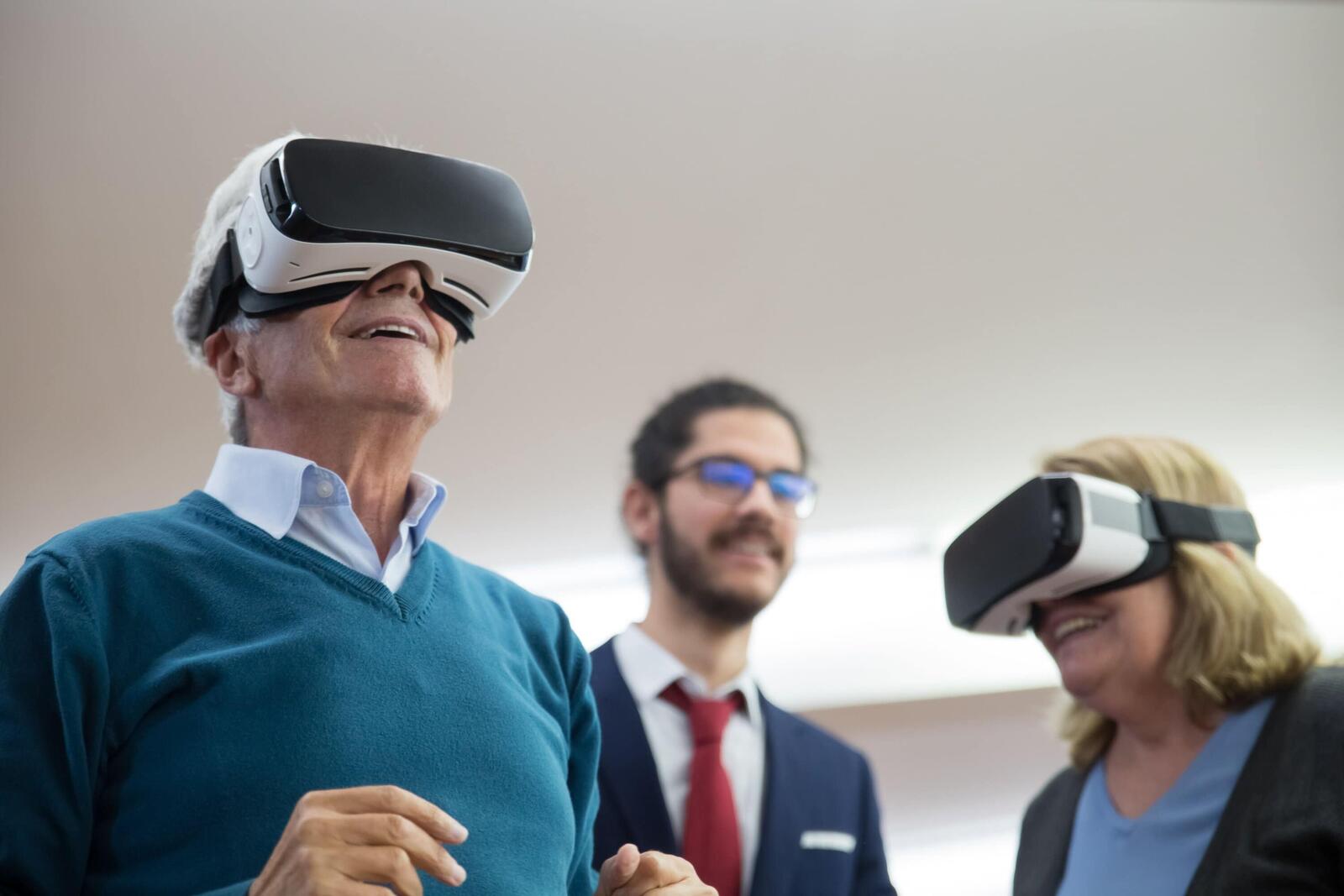
Anyone who has tried a VR headset will know that moment when you reach out to pick something up and grab a handful of nothing, and the whole illusion falls apart. The technology has come a long way since the blurry, slightly nauseating early days though, and researchers are now working on the details that separate a realistic virtual world from a believable one.
With that in mind, how close are we to VR that genuinely feels real, and could it ever become something we use to work, socialise and experience places rather than just something we put on for gaming?
Making Virtual Worlds Look More Real
Meta’s research gives an idea of where this is going; its Tiramisu prototype reaches 90 pixels per degree, a major increase in visual detail compared with current consumer headsets. The prototype also uses high brightness and contrast to make images appear more realistic, although it comes with some downsides which include a smaller field of view and a bulkier design.
Eye tracking can also make better visuals possible without rendering everything at the highest level of detail. A headset can identify where someone is looking and concentrate more processing power there, while areas outside their direct focus can be rendered with less detail.
That’s already being built into modern VR hardware, but sharper screens alone can’t make a virtual environment feel completely real. If the image looks realistic but the sound doesn’t match what is happening around you, the illusion can disappear just as quickly.
More from Tech
- How Technology Has Transformed F1 Cars Through The Decades
- Laifen Cuts Prices Of Swift Special And Neo Hair Dryers For This Shopping Season
- Antivirus vs The Smart Home: Can It Protect IoT Devices?
- Building It Twice: How Digital Twins Are Changing Construction And Management
- What Role Does Tech Play In Solving Criminal Investigations?
- How Does The FIA Police Race Technology To Keep F1 Competition Fair?
- Technology Is Making Counterfeit Products Both Easier To Make And Easier To Detect
- How Tech Shaped The Design of Mclaren’s F1 Technology Centre
VR Has To Feel Real Too
Touch is another part of the experience that researchers are working to recreate. Research found on PubMed looked at 105 studies involving multisensory VR and found that 84.8% reported a positive impact from adding sensory cues. Haptic feedback was the most commonly used additional sense in the research.
Touch is way harder to recreate than sight or sound. For example, when you pick up a real mug, you can feel its weight, shape, surface and temperature while your hand responds to how much force is needed to hold it. Haptic technology can provide some of that feedback through vibration, pressure and resistance, but it still can’t recreate that full experience yet.
A 2024 review looked at different haptic sensing and feedback technologies for VR and identified issues including accuracy, durability, technical conflicts and limitations in the types of feedback devices can provide.
A virtual object can therefore still look convincing on screen while still feeling very different from the real thing when you reach out to touch it.
Your Body Still Knows You’re In The Real World
A headset can track where you move your head and hands and translate those movements into the virtual environment, but your physical surroundings are still there. You might see yourself walking through a huge virtual room while actually standing in your bedroom.
This creates agap between VR and reality because the virtual world can behave as though it has no physical limits, while the person wearing the headset still has to deal with walls, furniture and the space around them.
Your eyes might tell you that a table is sitting in front of you, but unless the technology can provide convincing physical feedback, your hand will just move through it.
Researchers are therefore looking at ways to combine visual tracking, hand movements and haptic feedback so that virtual objects respond more like physical ones. The aim is to make the different senses agree with each other.
Could We Actually Use VR Outside Gaming?
Virtual reality is already being explored for training, healthcare and education, allowing people to practise or experience situations without being physically there. Haptic VR research also covers applications such as medical rehabilitation and training.
The technology could also make virtual meetings, museums, concerts and other experiences more immersive, which gives people ways to experience places or events without to actually be physically present.
Meta’s latest hardware shows how companies are moving beyond the traditional bulky headset. Announced in September 2026, Meta VR Glasses weigh about 100 grams and use a 5K micro-OLED display, spatial audio and eye and hand controls.
How Close Are We To VR That Feels Real?
VR is already pretty good at convincing some of our senses, but reality is really difficult to reproduce because we experience it through all of them at once.
Better displays can make virtual environments way more realistic, while eye and motion tracking allow them to respond to what we are doing. Spatial audio can make sounds feel as though they exist around us, and haptic technology is gradually giving our hands something to respond to.
Getting all of those things to work together while keeping the hardware comfortable enough to wear remains animportant part of developing VR.
We’re not really close the point where you could pick up a virtual mug and feel exactly what it would be like in your hand, but each improvement definitely brings VR a little closer to making the virtual world feel like somewhere you could actually be.
