

Єлизавета Баздирєва25
September
2026
12:32
September 25, 2026, marks Comics Day—a special day for everyone who loves stories told through pictures.It is not an official national or international holiday, but on this day, comic book fans read their favorite issues, discover new characters, and reflect on how illustrated stories have become such a huge part of modern culture.
Comic Book Day is celebrated on September 25. In 2026, this date falls on a Friday. The holiday is most often called National Comic Book Day. It has American origins and is specifically tied to comic book culture, which flourished particularly strongly in the United States during the 20th century. However, Comic Book Day should not be confused with Free Comic Book Day—that is a separate event held on the first Saturday in May. During Free Comic Book Day, comic book stores and publishers in various countries may distribute special issues for free.

The exact origin of September 25 as Comics Day has not been definitively established. There is no universally accepted information about a specific person or organization that first established this date. The National Day Calendar also notes that the source of the holiday’s origin remains unknown. At the same time, the date has taken root among comic book fans and has gradually become an occasion to discuss the genre, its history, and its influence on culture. Therefore, it is more accurate to view Comics Day as a themed celebration for fans of illustrated stories rather than as an official calendar day.
How Comics Actually Began
The history of comics is much older than Superman, Batman, or Spider-Man. People were telling stories through sequences of drawings long before the advent of modern comics. The work of Swiss artist and writer Rodolphe Tepper is considered one of the important precursors to the modern comic. His story, *The Adventures of Obadiah Oldback*, was created as early as the 1830s, and an English edition was later published in the United States in 1842. It is this work that is often cited as one of the earliest prototypes of the modern comic book.
Even in these early stories, a sequence of illustrations and text was used so that readers could follow the development of the plot. This was important because each individual illustration became part of a larger story. Gradually, illustrated stories began to appear in newspapers. Newspaper comic strips became popular, and readers got used to following the same characters from issue to issue. It was these newspaper comics that later laid the groundwork for the emergence of standalone comic books. This is how the format we now associate with the word “comic” took shape: pages divided into individual panels, characters’ dialogue, short scenes, and a continuing storyline.
What Was the First Modern Comic?
One of the key dates in the history of comics was 1933. That was when the publication *Famous Funnies: A Carnival of Comics* appeared in the U.S., which historians often refer to as the first true American comic in the modern sense. It consisted mainly of reprints of popular newspaper comic strips. Before this, there had already been publications that resembled comics. For example, in 1933, “Funnies on Parade” appeared—a color publication featuring newspaper comic strips. It was distributed as promotional material rather than as a regular magazine sold at newsstands. “Famous Funnies” took things a step further. Its format showed publishers that readers were willing to buy individual booklets containing illustrated stories.
In 1934, a full-fledged commercial issue of “Famous Funnies” was released. It sold for 10 cents and had 68 pages. The publication marked an important milestone in the development of the American comic book market. In other words, modern comic books didn’t emerge all at once. It was a gradual process: first, individual comic stories; then newspaper strips; next, collections; and only after that—the independent comic book industry.
Superman Changed Everything
While *Famous Funnies* helped shape the comic book format, Superman turned comics into a mass cultural phenomenon. In June 1938, the first issue of *Action Comics* was published, featuring Superman’s debut. The hero was created by writer Jerry Siegel and artist Joe Shuster. His appearance became one of the defining moments in the history of comics and gave impetus to the development of the superhero genre. Superman differed from many previous heroes. He had extraordinary abilities, a costume, his own backstory, and a clear image as a hero who fights evil.
The character’s success quickly showed publishers that superheroes could become a major genre in their own right. After that, dozens of new characters began to appear. As early as 1939, readers were introduced to Batman. He made his debut in *Detective Comics* No. 27. That same year, the first issue of *Marvel Comics* was published, introducing, among others, the Human Torch and Namor. Thus began the era that would later be called the Golden Age of Comics.
Why Comics Became So Popular
The success of comics isn’t due solely to superheroes. One of the genre’s main secrets is its simple way of telling complex stories. The reader simultaneously sees the hero, the setting, the hero’s actions, and the dialogue. There’s no need to spend a long time describing a character’s appearance or explaining exactly what’s happening. A single panel can convey what would take several paragraphs in a traditional novel. Comics also allow for the blending of very different genres. These can include humorous stories, mysteries, fantasy, horror, romance, adventure, science fiction, or serious social issues.

Therefore, the term “comic” has long since ceased to imply that a story must be funny. The genre itself has become so broad that you can find virtually any topic within it. Over time, comics have come to be read by more than just children. More complex plots, political and social themes, psychological stories, and author-created graphic novels emerged for adult audiences. That is why comics today are viewed not merely as entertainment, but as a distinct art form and a means of storytelling.
The Golden, Silver, and Other Ages of Comics
The history of American comics is often divided into several periods.
-
The Golden Age began in the 1930s. It was then that Superman, Batman, and many other heroes emerged, shaping the classic image of the superhero.
-
Then came the Silver Age, which is usually associated with the mid-1950s through the early 1970s. During this period, the superhero genre experienced a new boom. It was then that Marvel and its characters flourished particularly strongly.
-
This was followed by what is known as the Bronze Age. Comics began to tackle more serious themes, and creators started addressing social issues—such as racism, drugs, inequality, and other topics of concern to society—more frequently.
-
The mid-1980s marked the beginning of a period known as the Modern Age of Comics. During this time, there was a rise in independent publishers, original stories, and complex plots.
-
Some researchers also use the term “Dark Age” to describe part of this period. This is due to the popularity of more serious and darker works, such as *The Dark Knight Returns* and *Watchmen*.
Comics Are More Than Just Superheroes
When people talk about comics, many immediately think of Superman, Batman, Spider-Man, or the Avengers. But superhero stories are just one part of the vast world of comics. There are comics about everyday family life, humor, travel, history, science fiction, mysteries, and romantic relationships. There are also horror comics, biographical stories, and documentary graphic novels.
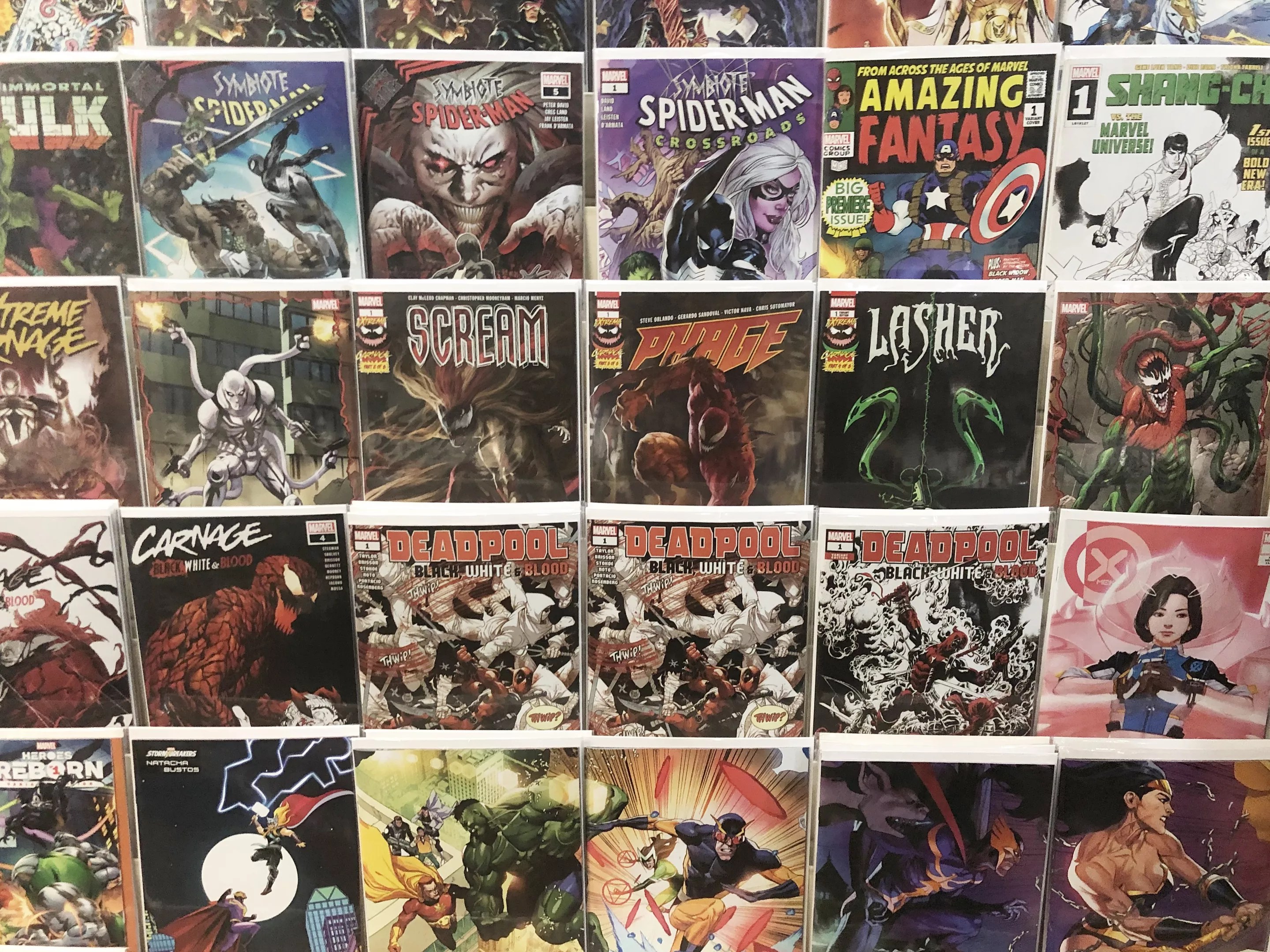
There are even comics that recount real historical events. Through their illustrations, authors can depict wars, the lives of famous people, social changes, or their own experiences. Graphic novels hold a special place. They usually have a longer and more complex plot and can be structured like a complete book. That’s why comics have long since moved beyond being just children’s entertainment. Today, they represent a major cultural movement involving writers, artists, screenwriters, colorists, editors, and designers.
Interesting Facts About Comics
-
One of the most interesting facts is that the word “comic” does not necessarily mean a funny story. The name is linked to the genre’s history and its connection to humorous newspaper strips. Over time, comics began to tell stories in virtually any genre.
-
Another interesting fact is that comic book collectors are called pannapictagraphists. The English word “pannapictagraphist” is used to refer to people who collect comics. Of course, in everyday speech, people much more often simply say “comic book collector.”
-
Comics have also become an important part of cinema. Many popular movies and TV series are based on comics or feature their characters. The Marvel and DC superhero franchises have transformed heroes from the pages of comics into global cultural icons.
-
Another important point is that comics can outlive their creators by far. Some characters have existed for decades, changing their appearance, gaining new storylines, and passing from one generation of readers to the next.
-
And some older issues are now very expensive. Rare comics—especially well-preserved first issues of famous series—can become collector’s items and sell for significant sums.
How Comic Book Day Is Celebrated
Since this isn’t an official holiday with a set of rules, there are no universal guidelines for celebrating. Everyone can celebrate it however they like. The simplest option is to pick up a comic book and finally read it. It could be an old favorite issue, a new series, or a graphic novel you’ve been meaning to read for a long time. Another option is to watch a movie or TV series based on your favorite comic. Afterward, you can compare the adaptation to the original story and see exactly what the screenwriters changed.
Fans can organize a themed get-together with friends. For example, they can discuss their favorite characters, swap comics, or go to a specialty store together. Costume events are also a popular option. Fans can dress up as their favorite characters, take photos, and participate in themed festivals and cosplay events. And for those who enjoy drawing themselves, Comics Day can be a great excuse to create their own short story. Even just a few panels featuring a character, some dialogue, and a simple plot can already make for a small original comic.
How to Celebrate Comics Day in 2026
You don’t need any elaborate plans for September 25. Just pick a comic you’ve been meaning to read for a while and set aside at least a few dozen minutes for it. You can also give a comic as a gift to a friend who’s into the genre. If you’re not sure what to choose, a good option is to ask about their favorite character or author. Another idea is to visit a bookstore or comic book shop and pick out something completely new. It doesn’t have to be a superhero story—it could be a graphic novel, manga, mystery, or biographical comic.
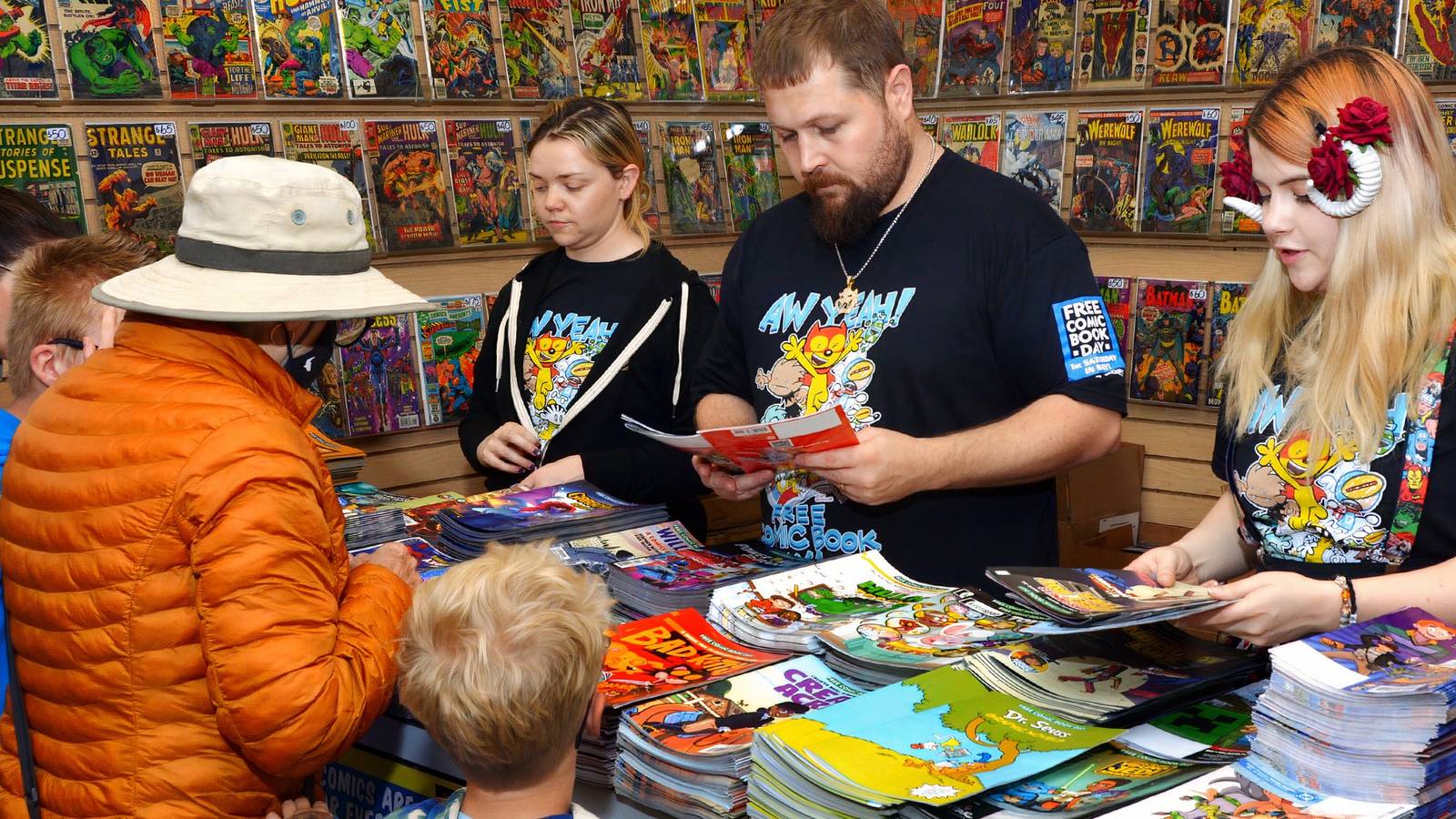
On social media that day, you can share a photo of your favorite issue, talk about a character you like, or recommend an interesting series to others. For artists, it’s also a great opportunity to showcase their own drawings or try their hand at illustrating a short story. And if you’ve never read comics before, September 25 is the perfect time to give the genre a try. You don’t have to dive right into a multi-volume series—you can start with a single short story and see if you like this way of telling stories.
The main idea behind this day is simple: comics can be funny, serious, scary, romantic, or even documentary-style. But in every case, they combine text and images so that the reader can literally “see” the story on the page.

