

Len Brown, a long-time executive at Topps Chewing Gum Inc. who, among many other things, created the Mars Attacks trading card series, died on August 11th, 2026. He was 84 and had been in failing health for several years. The cause of death was arteriosclerosis, according to his wife, Abby Demel Brown.
During his four decades at Topps, Brown worked with scores of comic artists, including Wallace Wood, Basil Wolverton, Jack Davis, Jay Lynch, Art Spiegelman and many others to create bubble gum cards and stickers that delighted children and sometimes horrified their parents and teachers.
“Len was really good at having an 12-year-old’s brain,” said Spiegelman, who worked with Brown at Topps for many years and on many projects, including Wacky Packages, Garbage Pail Kids and numerous others. “A large chunk of his brain was still exactly 12-years-old, so he knew exactly when he liked and what other kids would like.”
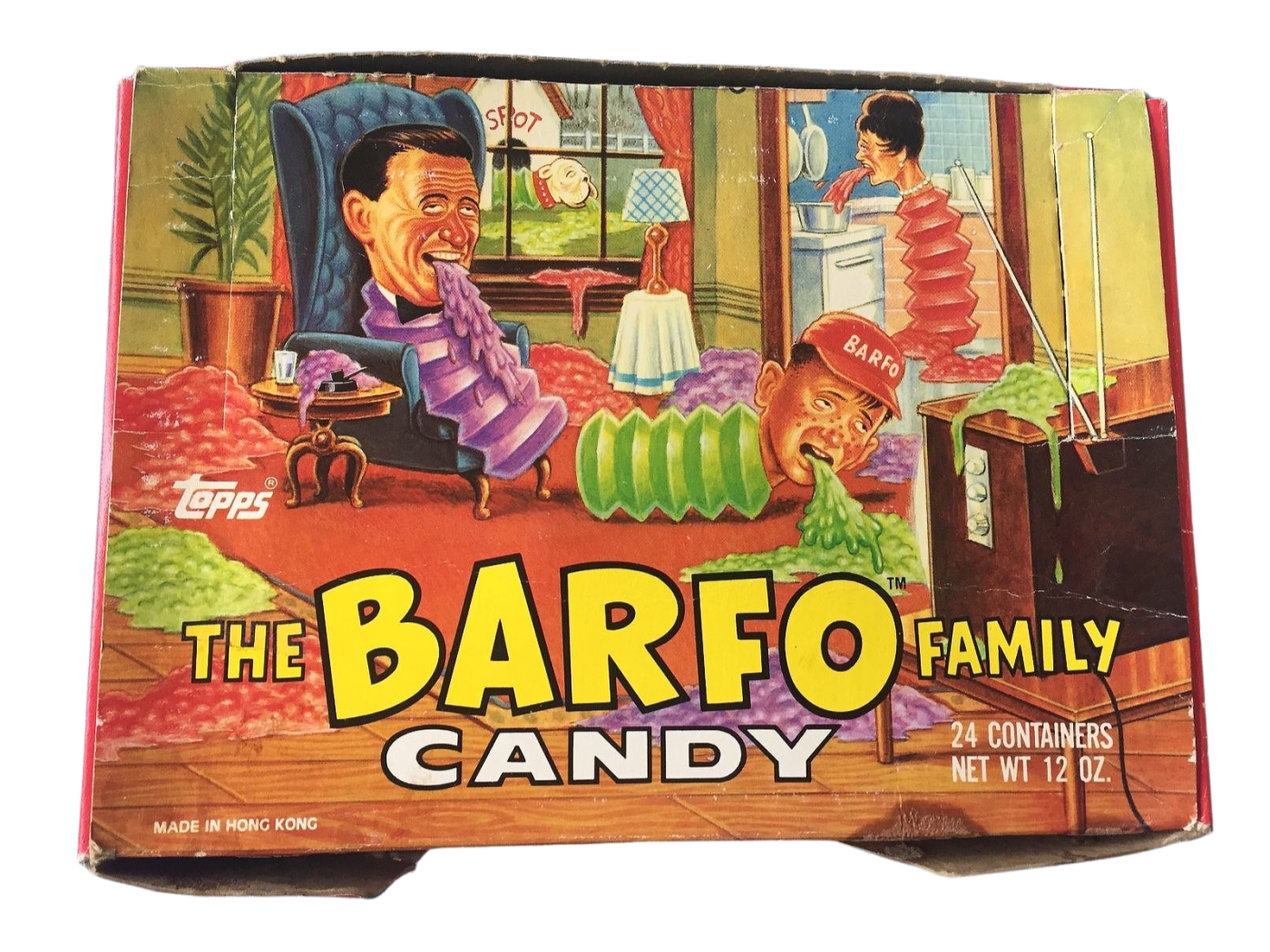
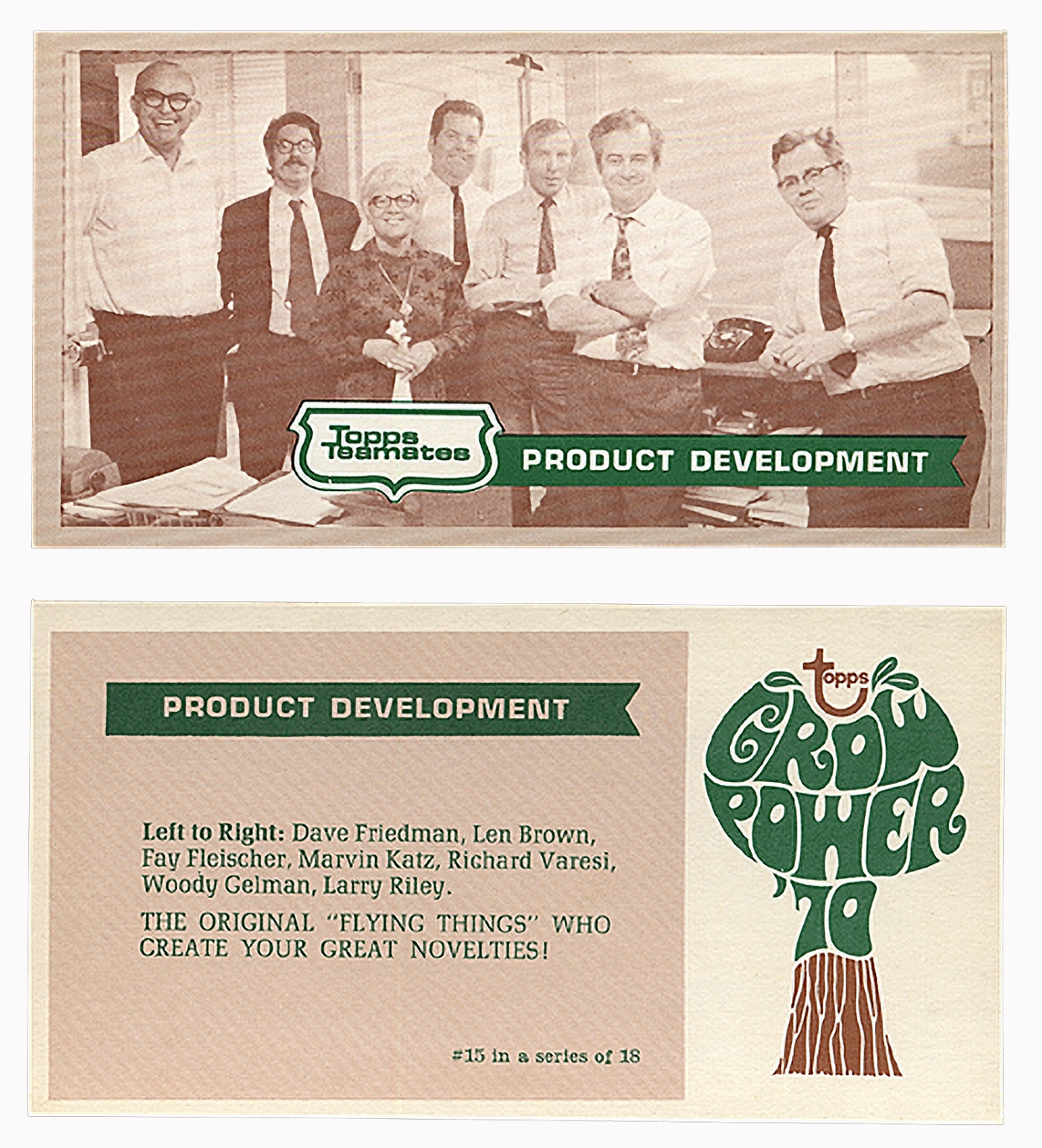
Brown, whose own father died when he was a young boy, joined Topps at the age of 18 in 1959 as a part-time helper for the company’s legendary head of New Product Development, Woody Gelman. He would later call Gelman a father figure. During his more than 40 years at Topps, Brown had a hand in virtually everything the company produced, from baseball cards to the Barfo Family, a 1990 novelty product that dispensed a liquid candy that simulated vomit through the mouth of a plastic cartoon head when its container was squeezed. In the early 1970s, Brown succeeded Gelman as Director of New Product Development, the division at Topps that oversaw its non-sports line of merchandise. By the time Brown left the company in 2000, Topps had grown from a mid-sized confectionery/chewing gum company into a diversified collectibles powerhouse with a 25-fold increase in annual revenues.
“The suits at Topps paid a lot of attention to whatever Len said,” said Mark Newgarden, another Topps employee who worked closely with Brown during the 1980s and ’90s.
Leonard Albert Brown was born on Oct. 7, 1941, in Brooklyn, NY to Sarah (Goldsmith) and Jacob Brown. His father died when Brown was 6. He grew up an avid comics fan, loving Superman, Captain Marvel, Wonder Woman, and rock and roll. When he was 15, he purchased a copy of The Adventures ofDavy Crockettthat was published by Gelman and his partner Ben Solomon under the imprint of Triple Nickel Books. The book contained a note from Gelman asking readers to send in story ideas. As a result, Brown wrote a letter to Gelman that he later said ended up “changing his life.” Gelman responded to the letter and soon invited Brown to visit Topps’ Bush Terminal offices. The two kept in touch.
“I wrote [Gelman] a couple of letters,” Brown told J.K. King in a 1986 interview that ran in BLAB! #2. “He was impressed with my letter writing so he called me…and invited me over to Topps just to see the place and talk about what other books I’d like to see. I was 15 then and just kept up a phone friendship with him for about three years.”
When Brown turned 18, he received a call from Gelman “out of the clear blue…he said, ‘Look, I could use an assistant to help me around here. Someone to make scrapbooks out of cards, answer mail, stuff like that. Would you be interested in a part-time job?'”
Brown jumped at the opportunity.
“[Gelman] asked if I’d like to come in for 12 hours a week and sort of help as an assistant.” Brown told Jon B. Cooke in a 2001 interview for Comic Book Artist #14. “Little by little, I got involved in Topps projects and was working there five days a week in about a year.”
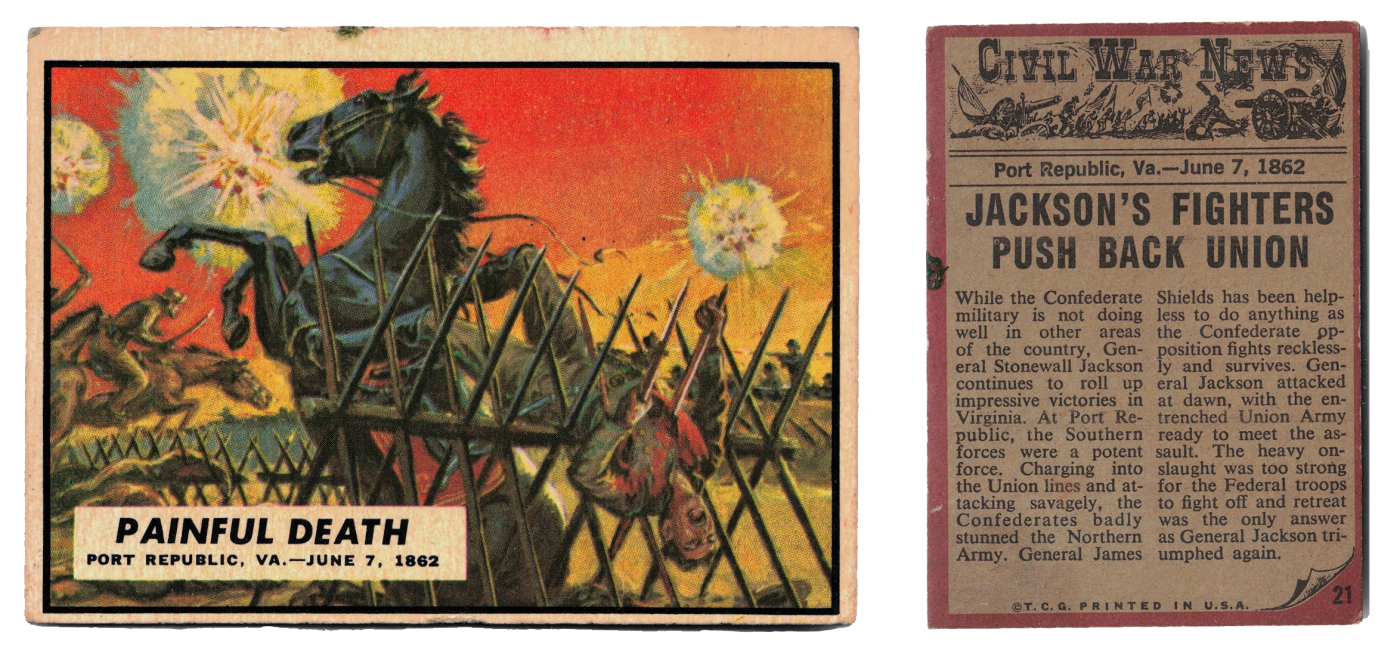
“We planned the pictures…composed the scenes out of our imaginations…after the paintings were done, I wrote a little story about the front of the cards–then I would look up a town or date that seemed appropriate and would try to publish a newspaper back as if it were a real event,” Brown said in a 1988 interview. “I remember getting a letter from a school teacher years ago, thanking us for helping the children in her class to learn about the Civil War. Yet, sad to say, facts never got in the way of telling an interesting story.”
The success of the Civil War cards led to the creation of Mars Attacks, a series that has attained legendary cult status thanks, in part, to the 1996 movie adaptation directed by Tim Burton. The original series, issued in 1962, featured 55 different cards, each one playing out often violent and horrific events that unfold when a group of rogue Martians invade Earth. Featuring vivid images mostly painted by Norman Saunders, the aliens were depicted as big headed monsters in a design contributed by Wallace Wood.
The cards, which were never distributed nationally and discontinued due to complaints from outraged parents, are highly prized on the collectors’ market, sometimes selling for thousands of dollars for a single card.
“It was not a success at the time–we got lots of bad press and complaints and we did not issue the series in many parts of the country because of that,” Brown said in a 1988 interview. “Those who saw it, never forgot it.”
Mars Attacks was very much a team effort between Brown and Gelman.
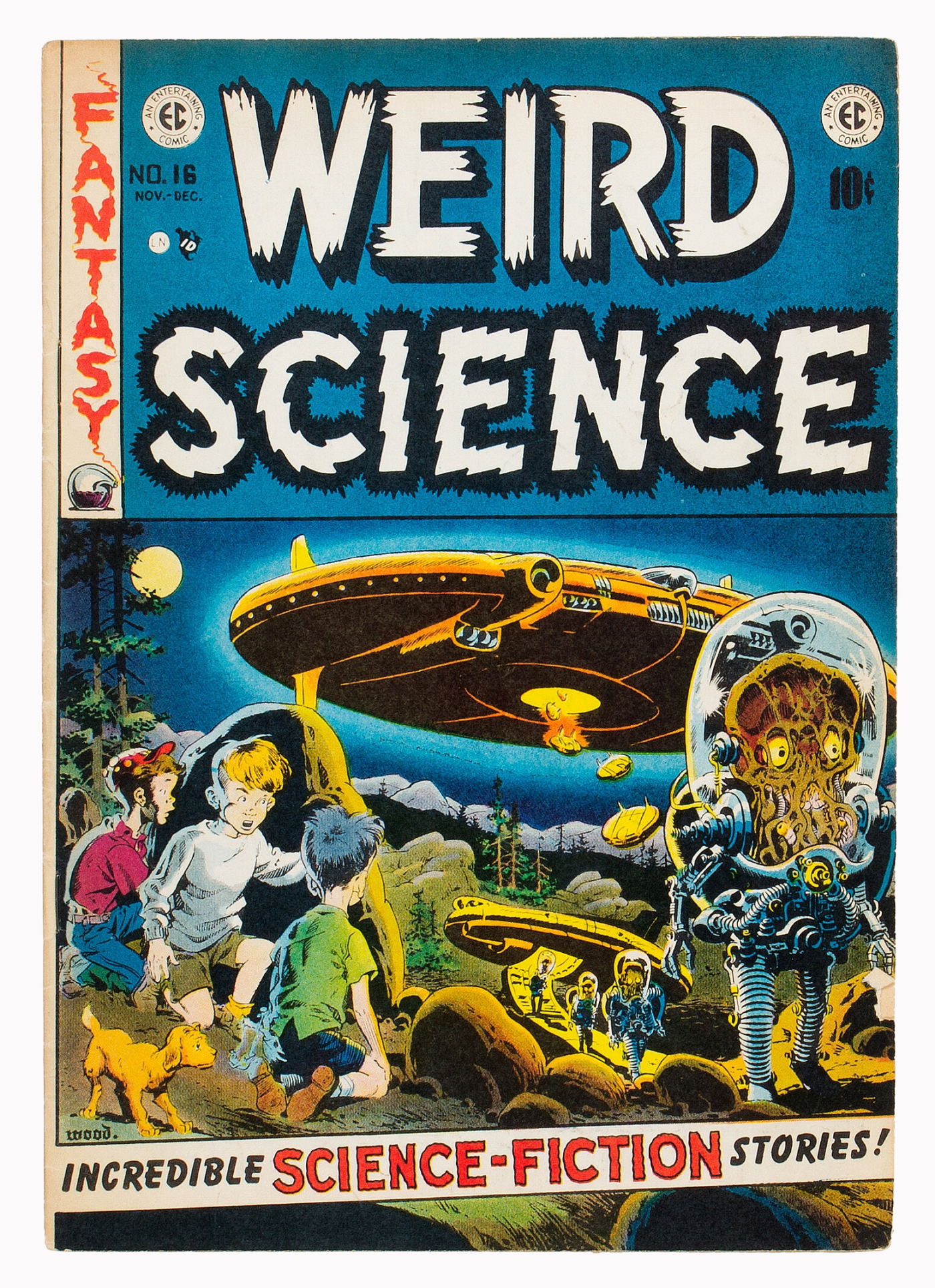
“I remember cutting out–I can’t believe I actually did this–a Wally Wood Weird Science cover where these three boys were hiding behind a rock watching flying saucers land with aliens coming out of them,” Brown told BLAB! in 1986. “I cropped this cover to bubble gum card size and showed it to Woody Gelman, who ran the department. I said, ‘Wouldn’t stuff like this sell on cards?’ He thought that I was on to something, that kids would like well-drawn science fiction bubble gum cards. [Gelman] was every bit as instrumental in Mars Attacks as I was. We’d sit and talk about each scene.”
When Art Spiegelman joined the Topps team in the mid-1960s, he arrivedstudent when he wrote Gelman a letter requesting some samples of work by the artist Jack Davis, who had been among the artists the company used for its cards and stickers. When he turned 18, Gelman reached out to him, just as he had with Brown a few years earlier
“I basically followed in Len’s footsteps [in the way I started working at Topps],” Spiegelman said. “Len was such a nice man and so easy to get along with.”
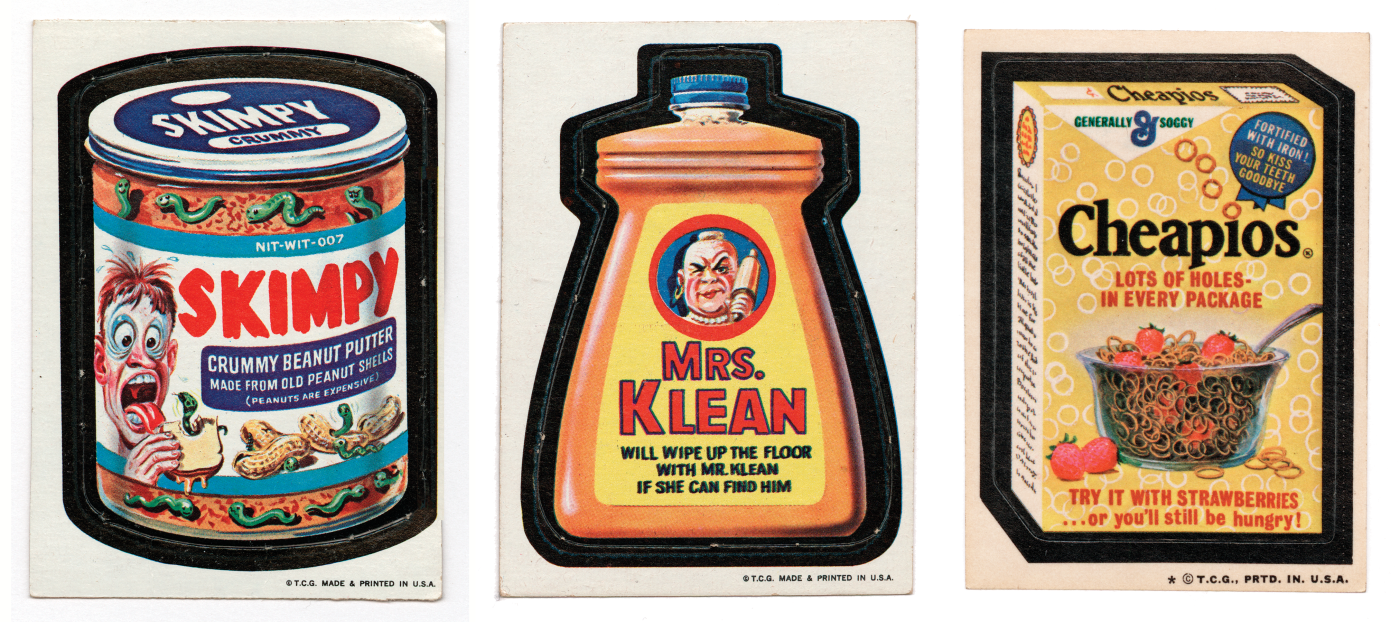
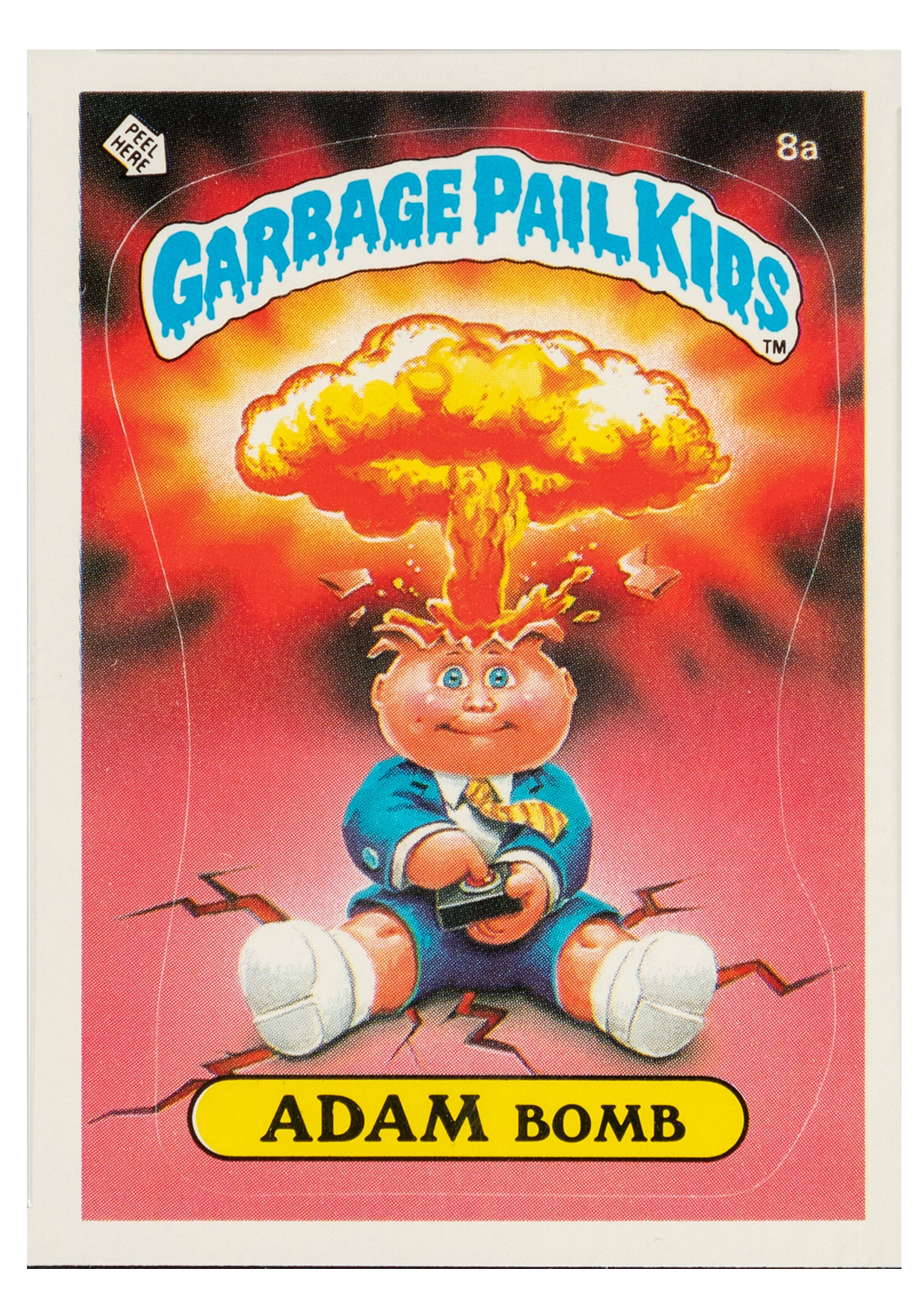
Together, Brown and Spiegelman worked on several of Topps’ most successful, and notorious, non-sports projects. In 1967, the company launched the first series of Wacky Packages. an extremely popular line of consumer product parody cards that at the height even outsold the company’s baseball cards. The first series featured paintings by Saunders that spoofed well-known supermarket goods and other items. In 1985, the company released Garbage Pail Kids, an immensely successful sticker series that parodied the then-popular Cabbage Patch Kids dolls. Conceived by Spiegelman and Mark Newgarden, with art by John Pound, Tomas Bunk and others, it’s estimated that Topps sold hundreds of millions of the stickers in their first year alone.
Brown seemed to have an uncanny knack for guessing exactly what kind of things the Topps consumer base of kids would find most desirable.
“Len was like, ‘well my 12-year-old self, which probably takes up like two-thirds of my brain, knows that this is great’…and then he’d pursue that,” Spiegelman said. “And he really had a good nose for those things. He loved them directly, as opposed to abstractly. It was just a tingle that set him off. It was a remarkable skill and it served Topps really well.”
Recognizing Brown’s keen ability to predict success, Topps sent him on market research expeditions to casually survey the audience.
“I would visit a lot of stores and try and get a feeling for what kids were interested in by talking to kids in candy stores,” he told the website Garbage Pail Kids World in 2016. “[I’d] get a feeling for what they might be interested in, what TV shows and, down the line, eventually movies. Didn’t start out that we were doing a lot of movies, but then of course Star Wars came along and blew all the sales away.”
Brown’s gut instincts led to Topps landing a lucrative deal licensing Star Wars trading cards.
“One of the amazing things that Len did was that he went to some kind of preview of Star Wars, way before it came out in the theaters and before it had any kind of following, and he came back so excited about it,” Spiegelman said. “At the time, Star Wars was not a known entity at all and Len insisted, and he got his way, that Topps buy up the rights to do the bubblegum cards for it. And [the Topps executives] were going, ‘alright Len, what is this movie? Nobody knows anything about it…’ And Len insisted and the result was that before anyone else did any licensing for Star Wars, he had signed the rights to do the Star Wars cards series that were an enormous success and went on for many seasons and were a gold mine for Topps.”
It was just one of the very many high profile examples of how in tune Brown’s radar was.
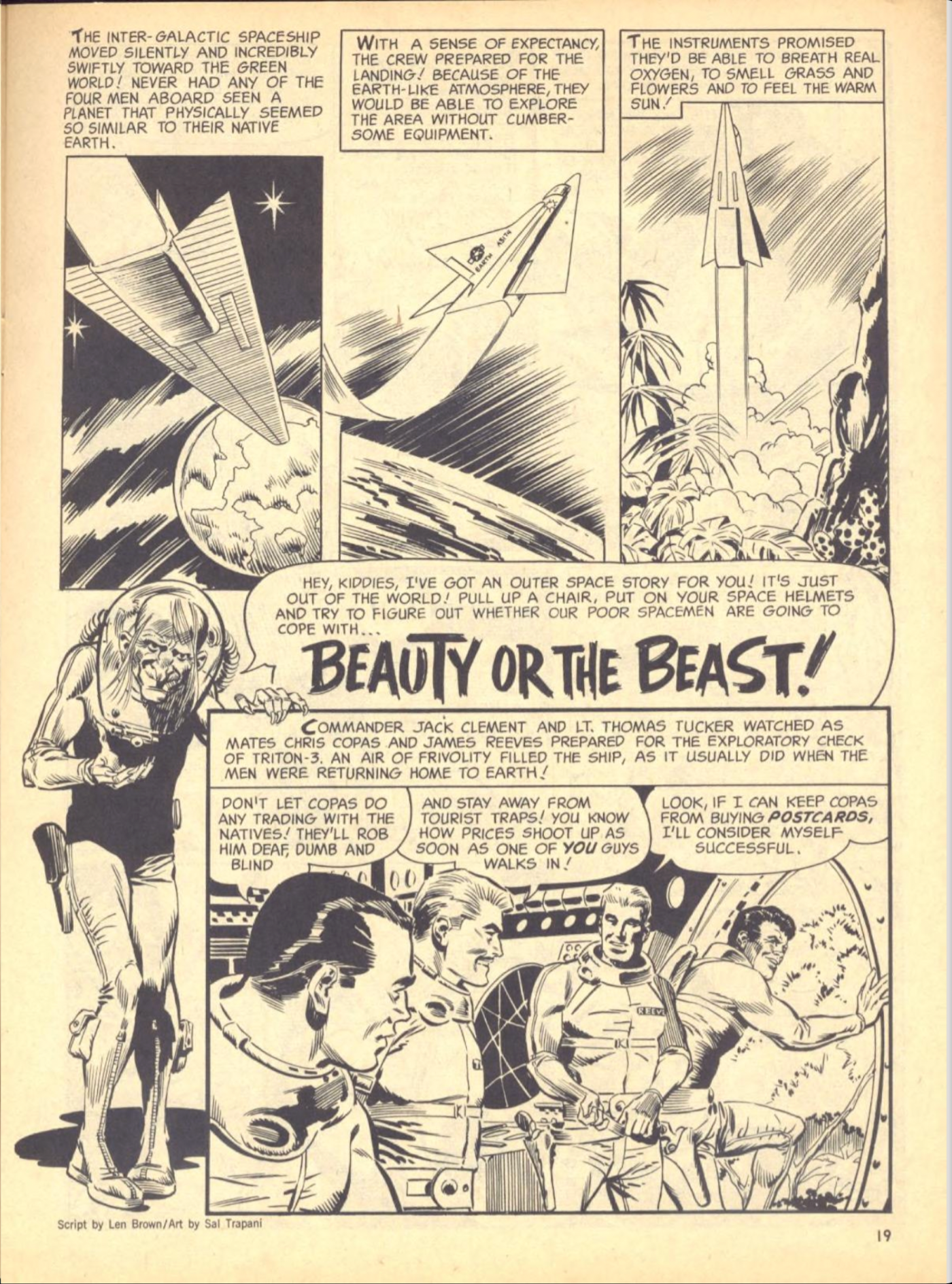
Beyond his work at Topps, Brown also co-created and wrote scripts for Wallace Wood’s mid-1960s series T.H.U.N.D.E.R. Agents(Tower Comics), contributed some stories to Warren’s CREEPY magazine, and wrote several books about the trading card industry and country music. In addition to comics, horror and sci fi, he had a lifelong love of music, particularly Doo-Wop, rockabilly and country. This passion led to a second career as a disc jockey at several New Jersey and Texas radio stations following his retirement from Topps.
In addition to his wife, Abby, he is survived by his daughter, Valarie Brown, son, Jonathan (both from his marriage to his first wife Dianne Denenberg), his stepsons, Todd, Eric and Harris Demel, and two step-grandsons.
Many thanks to Topps historians David Hornish and Mark Newgarden for all their help with this memorial. In the space below, some who knew and worked with Brown share their thoughts about him.
Mark Newgarden
cartoonist/Topps co-worker
As the director of NPD (New Product Development) Len Brown was my boss at Topps Chewing Gum Inc. for about a decade, from the early 1980s to the early 1990s. To give that some context “new products” at Topps were originally just that, one-shot self-created novelties designed to fly into candy stores, grab a kid’s allowance money before they even knew what hit them, and fly out again. These included trading cards, stickers, various candy items and other gimmicks; basically anything that wasn’t baseball cards. It was a crazy job in a crazy place and Len was born for it. He was plucked out of high school as a pop-culture savant back in the ’50s and basically grew up at Topps. (That is, if you want to count Len as an official grown up because he really did retain that stereotypical – but in this case accurate – “big-kid” quality.) He was enthusiastic and thoughtful and one of the most inherently likable people I’ve ever worked with.
Len was a company man at Topps, but he was no suit. He knew how to speak to and work with the various species of creative types that filtered through Bush Terminal, as well as with the Topps suits themselves who regarded him as something of an oracle. His oft-quoted endorsement “Aw, the kids will love it!” was a conversation-stopper and accepted as gospel by those hard-nosed Brooklyn businessmen. I personally witnessed how “the kids” rescued many a questionable new idea, image or product from the chopping block.
There was unquestionably a “family” vibe at Topps (dysfunctional to be sure) and Len’s role in the Topps family was that of a middle child, serving as a buffer, go-between and peacemaker between the more volatile siblings. There could be an awful lot of drama in a given day’s work there, but Len took it all in zen-like stride as part of the job. I really don’t think I ever saw him flustered. His mind was simply auto-dialed elsewhere: the country music charts in Billboard, Howard Stern’s latest outrage or just horsing around on the other side of the building with guys from the art department. Len had been at Topps forever, seen it all and then some, and had his priorities straight.
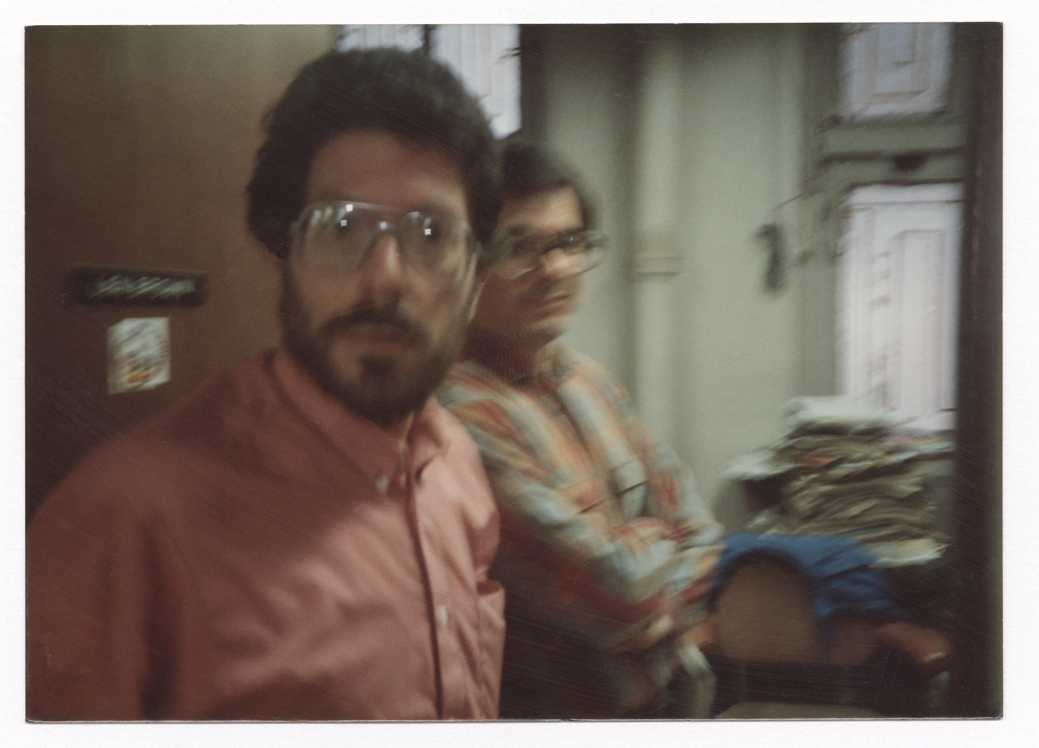
For the uninitiated, walking into Topps was like walking into another century (“Dickensian” is a term that’s frequently invoked). Located at 254 36th street Brooklyn in an Industry City waterfront warehouse that had originally been constructed to house World War I munitions, Topps was situated in an extremely dodgy part of Brooklyn: adjacent to dive bars, strip clubs, and other questionable urban attractions. The interior was split into two halves, an “executive suite” on one side for the suits (shag carpets and other rapidly-aging 1970s furnishings) while us mere mortals toiled away in a ramshackle labyrinth of leaking, boxlike cubicles that had not seen sunlight (or a vacuum cleaner) in decades. Of all these messy little offices Len’s was the absolute messiest, piled halfway to the ceiling with several lifetimes of paperwork and bubblegum cards and paperwork aboutbubble gum cards and god knows what else. (I used to have dreams about what ancient treasure lay hidden beneath Len’s leaning towers of crap.)
As the director of NPD (New Product Development) Len Brown was my boss at Topps Chewing Gum Inc. for about a decade, from the early 1980s to the early 1990s. To give that some context “new products” at Topps were originally just that, one-shot self-created novelties designed to fly into candy stores, grab a kid’s allowance money before they even knew what hit them, and fly out again. These included trading cards, stickers, various candy items and other gimmicks; basically anything that wasn’t baseball cards. It was a crazy job in a crazy place and Len was born for it. He was plucked out of high school as a pop-culture savant back in the 50’s and basically grew up at Topps. (That is, if you want to count Len as an official grown up because he really did retain that stereotypical – but in this case accurate – “big-kid” quality.) He was enthusiastic and thoughtful and one of the most inherently likeable people I’ve ever worked with.
Len was a company man at Topps, but he was no suit. He knew how to speak to and work with the various species of creative types that filtered through Bush Terminal, as well as with the Topps suits themselves who regarded him as something of an oracle. His oft-quoted endorsement “Aw, the kids will love it!” was a conversation-stopper and accepted as gospel by those hard-nosed Brooklyn businessmen. I personally witnessed how “the kids” rescued many a questionable new idea, image or product from the chopping block.
There was unquestionably a “family” vibe at Topps (dysfunctional to be sure) and Len’s role in the Topps family was that of a middle child, serving as a buffer, go-between and peacemaker between the more volatile siblings. There could be an awful lot of drama in a given day’s work there, but Len took it all in zen-like stride as part of the job. I really don’t think I ever saw him flustered. His mind was simply auto-dialed elsewhere: the country music charts in Billboard, Howard Stern’s latest outrage or just horsing around on the other side of the building with guys from the art department. Len had been at Topps forever, seen it all and then some, and had his priorities straight.
For the uninitiated, walking into Topps was like walking into another century (“Dickensian” is a term that’s frequently invoked). Located at 254 36th street Brooklyn in an Industry City waterfront warehouse that had originally been constructed to house World War I munitions, Topps was situated in an extremely dodgy part of Brooklyn: adjacent to dive bars, strip clubs, and other questionable urban attractions. The interior was split into 2 halves, an “executive suite” on one side for the suits (shag carpets and other rapidly-aging 1970s furnishings) while us mere mortals toiled away in a ramshackle labyrinth of leaking, boxlike cubicles that had not seen sunlight (or a vacuum cleaner) in decades. Of all these messy little offices Len’s was the absolute messiest, piled halfway to the ceiling with several lifetimes of paperwork and bubblegum cards and paperwork aboutbubble gum cards and god knows what else. (I used to have dreams about what ancient treasure lay hidden beneath Len’s leaning towers of crap.)
In my day, Topps NPD comprised an enclave of four or five cubicle offices, plus a slightly bigger “meeting room” (where I sat) and an open area with filing cabinets and a secretarial desk. Cast members included Gary Gerani (full-time specialist in licensed movie & TV products), Brad Kahlhamer (full-time graphic designer) and Abe Morgenstern (full-time adult in the room). Art Spiegelman (my entrée into this world) checked in one day a week to shake things up and Stan Hart arrived intermittently, like a monsoon. Later faces there included Ira Friedman (to “oversee” and create a publishing line), Susan Brady (“girl” products), Don Zak (“Design Deputy”) plus Sean Taggart and Ingar Westburg (similarly deputized). NPD secretaries included Sandy and Claudia whose full names are currently lost to history. Working at Topps was like walking into a sitcom or a soap opera or a disaster movie and you really never knew which one you’d get on a given day. (But yes, it was always entertaining.)
I picked his brain incessantly about exactly who did exactly what on favorite products from my own childhood, and thus earned my graduate’s degree in Topps NPD trivia. (Wesley Morse was “mousey,” Norm Saunders was “unbelievably fast,” Soupy Sales was an “unbelievable egomaniac,” “The guy who painted this series was murdered by his brother,” Woody Gelman was like a father: “You would have loved him, Mark.”) Do you know who drew the Topps Astroboy tattoos back in 1964? Well Len did, so that’s why I do and now you do too (It was Vince Fago. Of course. And he was mousey too.)
Naturally I also got the unvarnished inside scoop on some of Len’s personal contributions to our cultural heritage including the varying roles he played in concocting Mars Attacks, Wacky Packages and a thousand and one other cheap novelties. Not to mention his adventures in the comic book trade, dashing off superhero concepts for Wally Wood and even trying his hand at EC-inspired horror (he was astonished that I actually knew hissoleCreepy story, seared into my brain at the exact right age.) Len didn’t blow his own horn too often (or too well) and his modest claims invariably rang true.
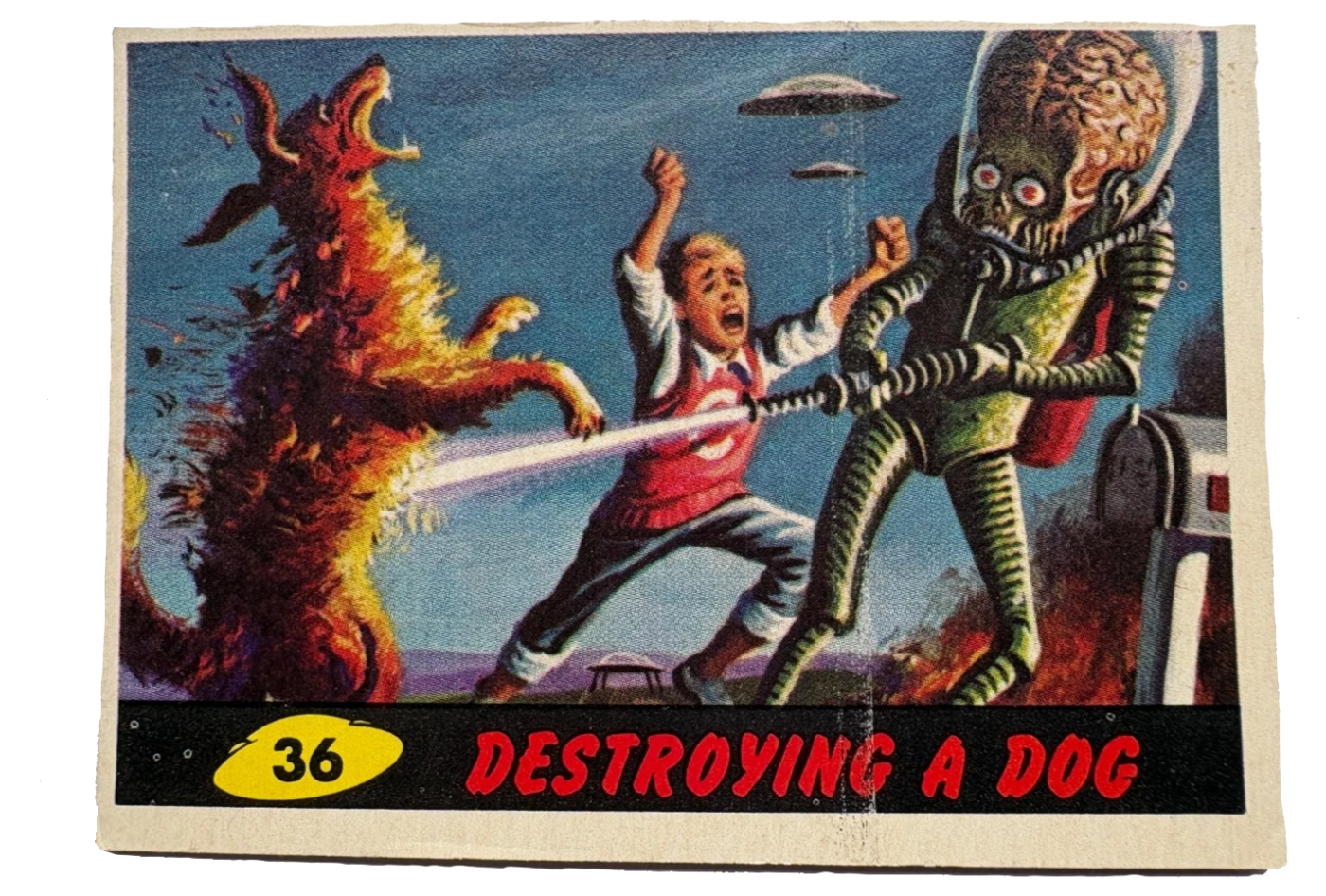
The voice of Len Brown the writer was pure Brooklyn street kid playing cub reporter and perfectly attuned to a 10 year-old bubble gum chewer’s sensibilities. The opening sentence from 1962’s Mars Attacks is deathless: “The Martian leaders voted and decided that Mars would have to attack the earth.” (Topps Martians may indiscriminately burn flesh and destroy dogs but they uphold democratic values and observe Martian cocktail hour in elegant repose as the capital rotunda crumbles.) However my favorite piece of Len Brown copy might be his text for card #20 (“Crushed to Death”) which I still read aloud in my word & picture classes, dissecting the series as an example of “climactic anti-narrative”: “The terror caused by the flying saucers was endless. It seemed as if the Martians always had a new form of horror to inflict on the people of earth. Often the invaders would clear the streets of wreckages by ejecting a giant shovel from their spaceships. The giant shovels would sweep the streets clear by depositing the unwanted material in the river or a vacant lot. Once the Martians amused themselves by trapping a number of men and women in the powerful steel shovels. The people were pushed through the city streets, receiving bruises and gashes despite their cries of pain. The unfortunates were finally crushed against the walls of brick buildings.”
Beyond such apocalyptic climaxes, Len was a good storyteller and his stories were typically self-deprecating. His repertoire included the one about getting caught by Boy’s Life for stealing jokes from their back pages to feed to Bazooka Joe and his Gang, showing up for a 1960s Central Park “Be-in” in a suit and tie (albeit a psychedelic number which he sometimes still wore to meetings), enduring the “longest-running divorce case in NJ history” and a 1970s foray into publishing in which he inadvertently released The Elvis Presley Poster Book on the eve of The King’s demise, thus poised to reap the inevitable windfall: “I swear my wife and I sat down and had a serious conversation about buying the NY Yankees.” (Needless to say, the Yankees were tagged safe.)
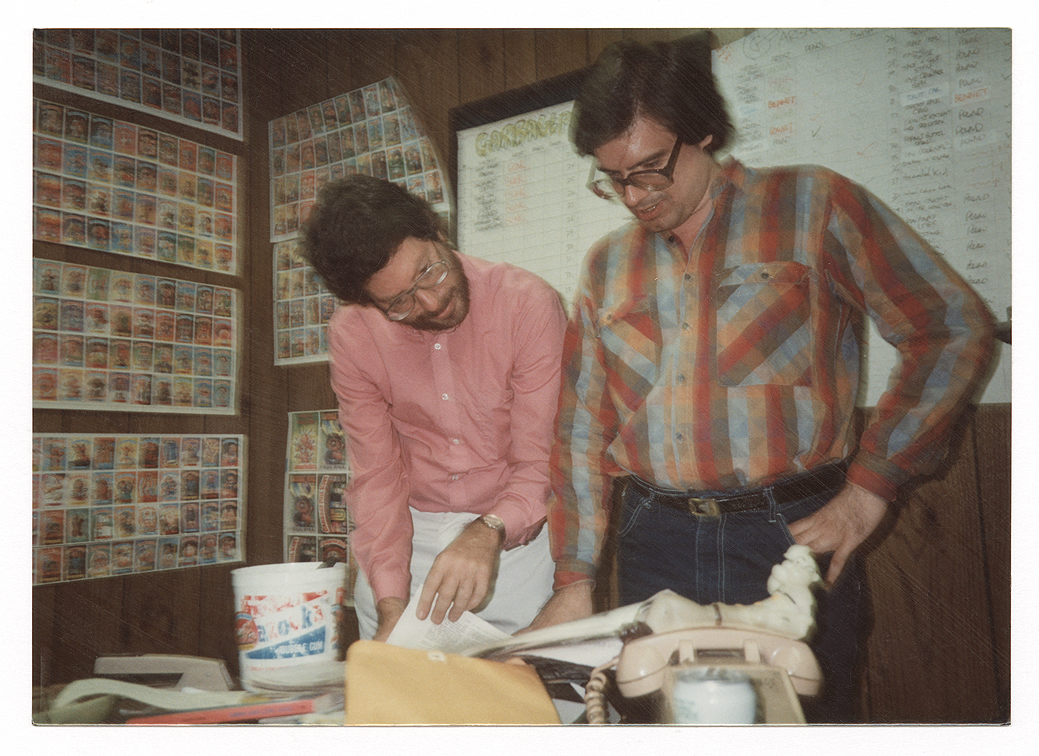
As NPD director, Len was perpetually in the mix on everything we did in that strange little universe and he made it a point to sit in on every Garbage Pail Kids naming session (the last phase in that product’s NPD pipeline) always making sure his two kids and their friend’s names were well-represented. Sometimes he would bring them to the office for a “take your kid to work day” and we would pick the brains of those tough-minded mini-Browns for new product ideas. And occasionally we got even got out of the office. I remember once riding with Len in his new car way, way out to Sheepshead Bay to scout Wacky Package targets at Toys-R-Us for a 1980s revival and getting his life story en route. There were also the rare NPD lunch trip to Nathans at Coney Island, and after-school pilgrimages to the old Koch comic book warehouse in the Brooklyn Navy Yard. This kid loved it all.
I did a pretty long stretch at Topps, but for a host of reasons eventually moved along to “greener” pastures, and an offer I couldn’t refuse. I don’t think Len was too happy about that, and on my last day there he did not stop in to offer his goodbyes. (Neither of us did awkward well.) We drifted after that, but I stayed aware of his various Topps Comics projects, eventual escape to Texas and second career in radio (he was already known as “the Rockabilly Rebel” on a local Jersey station back in our Brooklyn days.) Len Brown was a good guy and a good boss and I guess he lived a pretty good life – and that’s about as good as it gets.
So long Len, catch you later, in that big Topps cafeteria line in the sky.
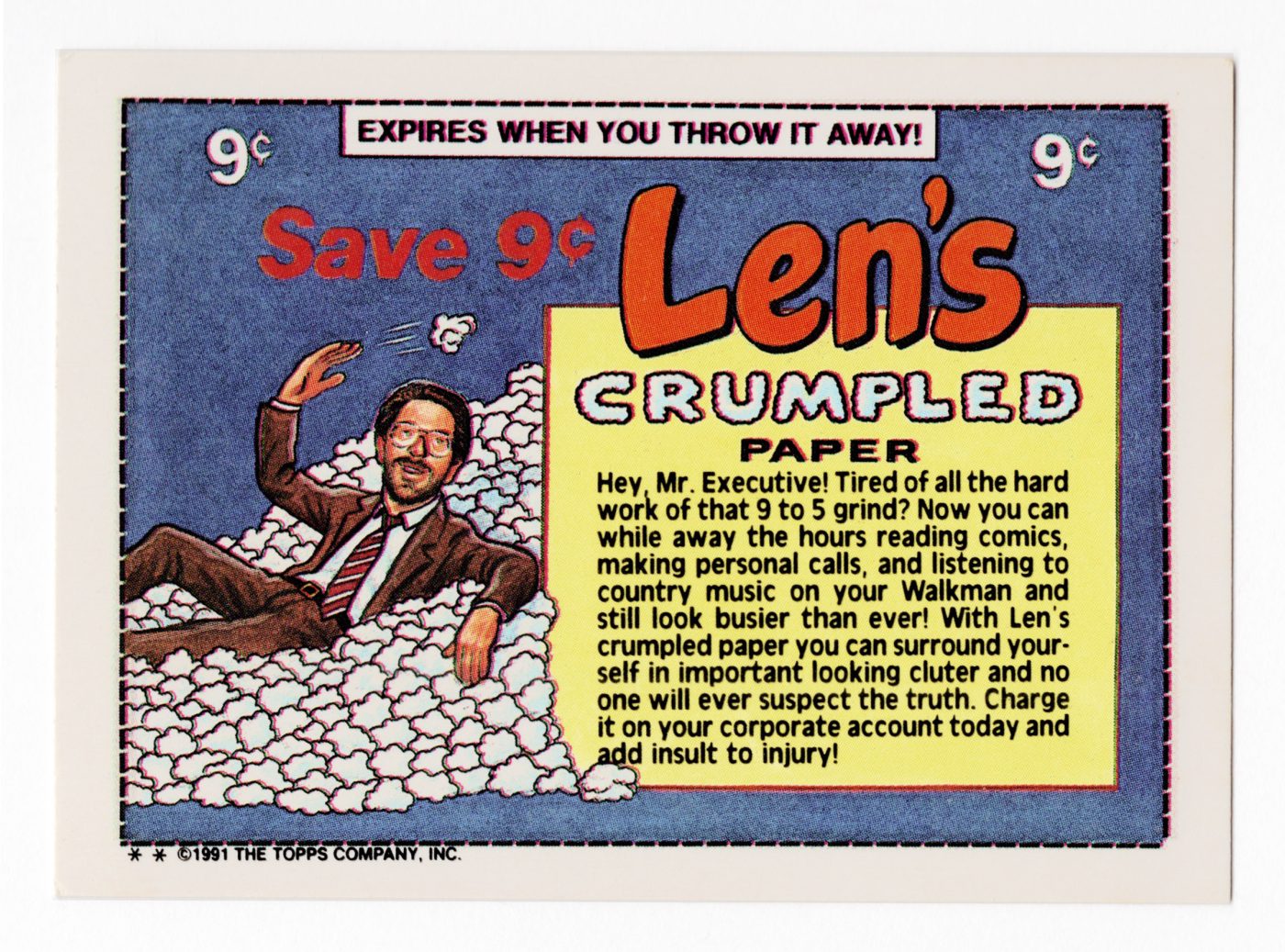
Roy Thomas
comics professional/former roommate
Far as I recall, Len Brown and I exchanged a letter or two back in 1963-64, before I moved to NYC. He had tried to order some of the comics I was selling (through my mother) to finance my month-long drive through Mexico, but Howard Rogofsky beat him to them all. I commiserated with him, and we stayed in touch.
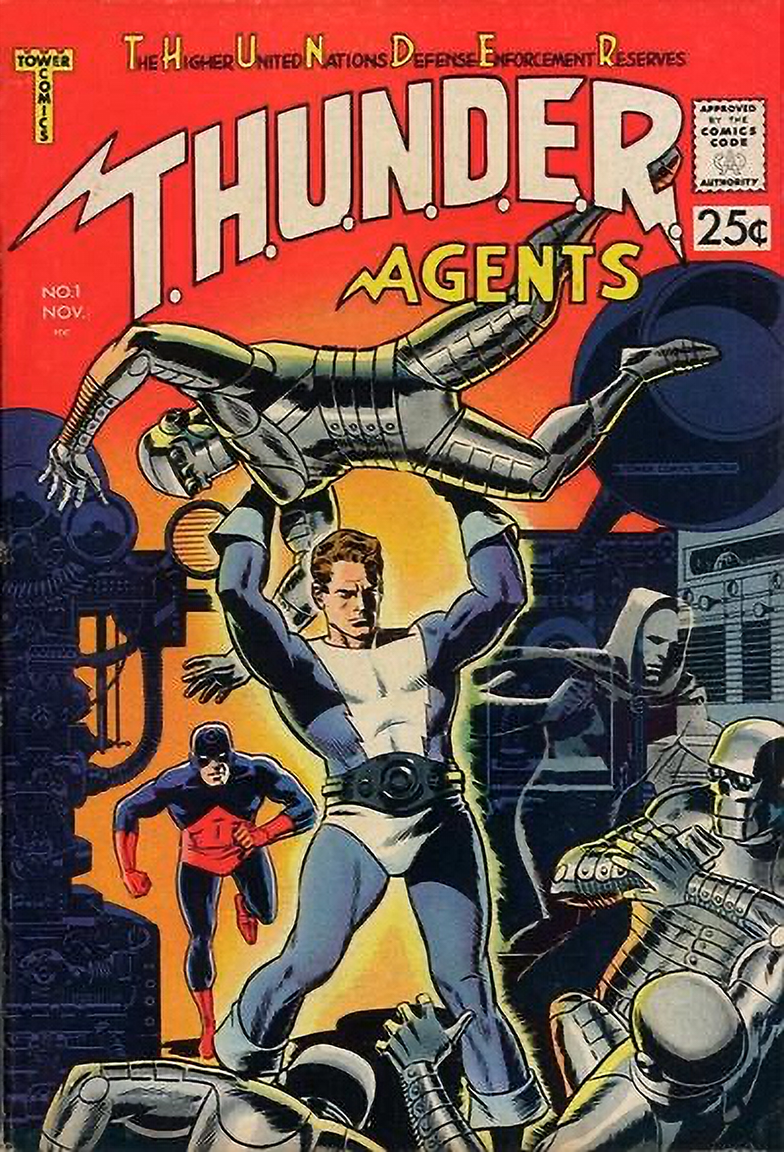
As soon as I moved to NYC in late June of 1965, I got in touch with him and, one night my first week there, he drove into the city from Brooklyn, picked me up, and took me to the studio of Wally Wood. He had written a couple of stories for the first two issues of T.H.U.N.D.E.R. Agents, none of which were out yet, but it was nice to meet an industry giant like Wood… as well as Dan Adkins and one or two others. I was most impressed, however, by the fact that Len double-parked on a side street but escaped without a ticket or getting towed away. He did that later when he visited Gary Friedrich and me in Greenwich Village, too. I remember that, sometime around 1967, he was listed in some newspaper listing as a “scofflaw” for ignoring a zillion parking tickets. I guess he eventually settled them, probably for pennies on the dollar. I suspect by then he was already driving Mustangs; in that era he tended to trade in for a new one every couple of years. And of course one day early on he showed me around Topps out in Brooklyn. I soon wound up writing some of the “Crazy Little Comics” parodies for him and them, maybe one or two other things.
I remember I was impressed by his basically complete EC collection – and he was impressed with my remembering stories from more than a decade before, considering I had bought virtually no “New Trend” ECs, unless you count MAD and PANIC. He had a semi-complete collection of Playboy, too… all but #1, which he said he planned to buy “when the price came down.” It never did, of course. Years later, his first wife Diane took off with his EC collection when they separated, and that was the end of that. I’ve no idea if she absconded with the Playboys, as well. So he never got that first issue.
In 1967 we decided to get an apartment together…but it had to be in Brooklyn, where he worked, so we got a place on Prospect Parkway. We had several parties there, to which various Marvel and other comics people came. I recall Larry Lieber nearly falling off of our 4th-story deck. Maybe that was our New Year’s Eve party at the end of 1967. We had a lot of fun during that ’67-68 years, with Len – who was a big country music fan (which I was not) and a rockabilly fan (which I definitely was – we were both big Elvis and Jerry Lee Lewis fans). Len was in the process of accumulating what had to be one of the largest rockabilly collections in the world, out of which he would later make an ongoing radio show…though I take it that his later radio shows in Texas were mostly straight country. He dragged me to various shows that I ended up loving – like new Grammy winner Glenn Campbell at a venue called the Memphis Room…and another great evening with Willie Nelson, Waylon Jennings, and that bunch. Also memorable was Artie Spiegelman, an artist freelancing for Topps who had become a good friend of Len’s and spent a fair amount of time at our place. But I think it was Len’s brother, rather than Artie, who was there the Saturday morning that my short-term “pet” ocelot escaped from my room, terrorized his collie Laddie, leaped up on the kitchen table to snatch some KFC chicken legs out of the guys’ hands and retreat beneath a sofa, where it sat alternately crunching chicken bones and growling at anyone who approached it. Len had to be the one, shortly thereafter, to handle the sale of that cat to a hippie couple from Westchester Country that answered my newspaper ad, since I had to be out that night. I told him to take their check; fortunately, it was good.
After I eloped with first wife Jeanie in July of 1968, she and I soon moved out to E. 86th in Manhattan. I think he and Diane, whom he met at a dance event, were married shortly thereafter. We socialized a bit, and after they moved down to New Jersey we would occasionally visit them…once with the four of us driving down from NJ to Philly to see Elvis.
Still, we saw rather less of each other after our marriages, and his and Diane’s move to Jersey…though we always stayed in touch, even after I loved to Los Angels in ’76. I wasn’t that surprised when he and his second wife Abby (whom I didn’t know as well, but who seemed very nice) moved to Austin after retirement, given his love for country music and Austin’s pre-eminence in that scene. Except for the very occasional phone call, however, we were pretty much out of touch after that. I did bug him for years for an interview for Alter Ego, and he finally relented a very few years ago – I think because he realized he was beginning to forget things and he wanted to be interviewed before it was too late. Alas, I haven’t yet printed that interview. I was about to schedule it when I learned he had gone into hospital over his severe memory loss…but now I’ll have to get to it soon.
I should stress that, from the day I met him, Len was always pushing Topps (at first through his boss Woody Gelman) to get into publishing actual comic books, since they were doing so many comics-related things anyway. He was a bit frustrated when, in 1991, Topps was finally ready to take the plunge…but he was far too busy with executive duties to become its day-to-day editor. He phoned me out in LA to ask me to interview for the job, but I was about to move to South Carolina and had no intention of moving back to NYC. But I recommended he talk with editor Jim Salicrup at Marvel…he did…Jim got the job, and even before Jim came aboard Len had seen to it that I was scripting their first series, an adaptation of the upcoming Francis Ford Coppola film, Bram Stoker’s Dracula. He wanted to give me a leg up on assignments for Topps, with the result that I did quite a bit of work for that company over the next few years. He was that kind of friend…just as, from time to time, I offered him work on Marvel’s black-&-white horror titles, although (again) he was already too busy at Topps. The handful of early stories of T.H.U.N.D.E.R. Agents –some of the Crazy Little Comics parodies (and ALL of the cover copy) – and a story or two for Jim Warren’s CREEPY and the like in the latter ’60s when their price was a straight $25 a story, no matter the length…just to keep his hand in.
Between the comics work he did…and even more so all the great Topps stuff, especially Mars Attacks and Wacky Packages…should secure him a legacy many another could envy.
Me, I just wish he would still be on the other end of that phone in Austin.
Art Spiegelman
cartoonist/Topps co-worker
Len was my first fan. At some point when I was just beginning to work on Maus, I had some rough sketches and and Len saw them and said, “Oh, Art, this is going to be big.” And I thought just the opposite…how the hell was I ever going to get this thing out in any form whatsoever? But Len would be eager to see any new pages that I did and it was at a time that nobody, including me, thought that Maus had any commercial possibilities. I needed to do it and at that time I guess I thought that it could be published as a RAW book or whatever, but Len was genuinely enthusiastic and kept asking me, “Do you have any new pages? I’d like to see what you’ve done with this.”
Gary Gerani
co-worker at Topps
He was my big brother, my super-close friend, my roommate for six months, and the guy who hired me at Topps after reading my goofy stories for The Monster Times back in 1972. We were kindred spirits in so many ways, collecting 16mm movies long before the age of home video, pulling in out-of-town TV stations with our parabolic antennas. Beyond the fun of the Topps creations, we also worked on numerous outside projects together, as I happily edited his licensed post card books based on Star Trek, Close Encounters, John Travolta, and finally an Elvis Presley poster portfolio of sorts. We even attempted a magazine called Fumetti, a wild, unprecedented combination of photo-comics and movie related material. Len and I were fanboys way before the term was invented.
Of course, Mr. B had his own illustrious history in the world of comic books, and he knew just about everybody. A protege of the legendary Woody (Nostalgia Press) Gelman, he was great pals with Al Williamson (another 16mm collector), Gene Colan, Roy Thomas (an earlier roommate of Len’s), and so many other notable people. He famously worked with Wally Wood writing the T.H.U.N.D.E.R AGENTS comics, and the hero’s name in that comic was actually Len Brown…Wally’s idea, which always embarrassed LB. For me, of course, Len’s greatest claim to fame was writing the original Mars Attacks cards in 1962. Hired as a writer and gag man, I actually used the same typewriter Len used when he penned Mars Attacks, and felt more than honored.
Lennie pops up in my Card King Chronicles books a gazillion times…how could he not? Once “Topps As We Knew It” broke apart and everyone went their separate ways, Len and his wife Abby moved to Austin, which meant that I didn’t see them all that often. But Mr. B and I always remained in touch, talking about everything from new movies to what was happening on the political scene. What we enjoyed chatting about most, not surprisingly, were the “good old days,” those decades we spent at Topps in Brooklyn. It was like an extended version of high school memories, with great personalities everywhere you turned. At meetings in the Art Department, for example, head honcho Ben Solomon would frequently sketch Popeye drawings in the corner of memos as we discussed a current project. He and Woody Gelman had been creatives at the Fleischer Studios during the 1940s, and even worked on those brilliant Superman cartoons. Across the hall at a drawing table sat Norm Saunders, who had rendered some of Topps’ greatest painted series, Batman and Mars Attacks! among them. It was wonderful, and I agree with Len when he said that his years there were among the happiest in his life. That’s certainly the way I felt.
A few days ago, Larry Brill, creator/editor of The Monster Times and the first person to hire me professionally as a writer, passed away. Now the legendary Len Brown, who read TMT and as a result was the second person to hire me, has also left us. It feels so weird to have these aspects of my life slip away into memory. I’m turning 73 this October 5…Len’s birthday was October 7, 1941…and I find myself spending a good deal of the time thinking back, trying to make sense of it all. I’m really not sure what my life has amounted to, if it’s amounted to anything. But I know this…the people I connected with in a major personal way made it colorful, warm, and utterly fantastic. Len Brown’s near the very top of that list. Hope the comic racks in the great beyond are filled with fabulous first issues, brother, all in mint condition. Catch you down the line…
Susan Konig
co-worker at Topps
When I was hired by Topps, the ever-present Len Brown offered generous encouragement to anyone who helped make new products a reality. My job was to develop what were considered, in 1989, “girl” products—basically any non-sports cards that weren’t gross. Mark Newgarden, Drew Friedman, Frank Santopadre and the Poster Boys already had that that stuff covered.
Len was a down-to-earth creative director and enthusiastic about all cards and novelties, even New Kids on the Block, Russ Trolls, Sonic the Hedgehog and Babysitters Club. He was truly Mr. Topps.
Monte Beauchamp
editor, BLAB!
Len Brown. What can I say? He was a God amongst Gods in the universe of non-sports bubble gum card collecting.
In 1962, hisMars Attacksseries landed in the five-and-dime stores of Moline, Illinois, the midwestern river town where I grew up. Peeling open the wrapper to that first five-card pack, my nine-year-old self was blown away. I’d abscond with my parents’ loose change whenever I could to buy pack after pack until completing the series.
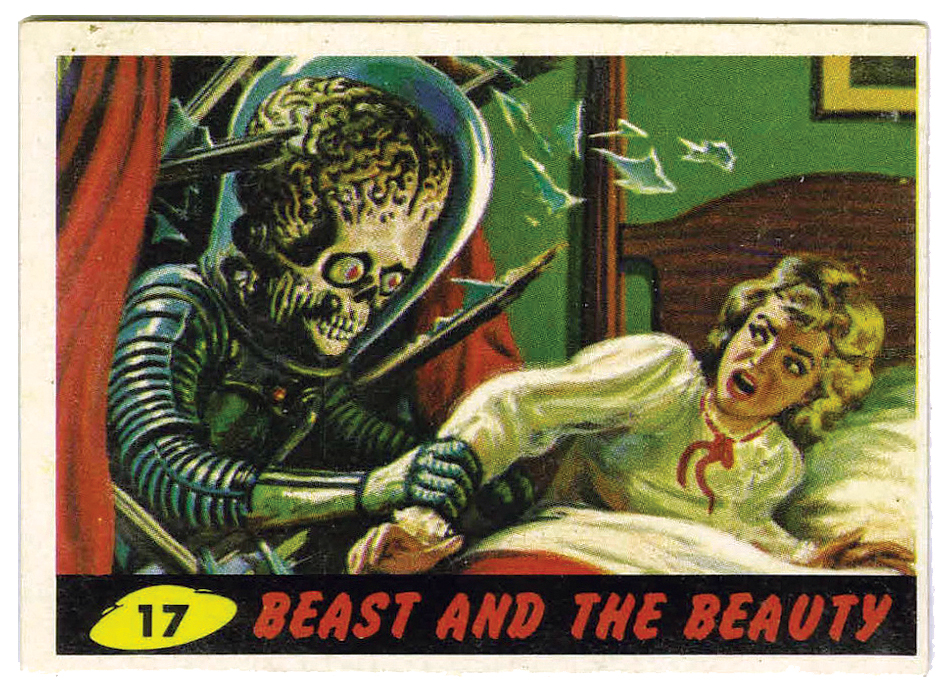
A prized favorite was card #13, “Watching from Mars,” which showed three of the aliens imbibing in cocktails while watching the destruction of the earth through a huge view screen from the comfort of their planet. Other top-notch favs included card #17 “Beauty and the Beast” and #21 “Prize Captive.” Just like myself, the Martians had a penchant for blonde beauties.
About a year later, my cherished set disappeared. As with my Jack Davis You’ll Die Laughing series (1959), Mr. Foney’s Funnies (1960), and many of the comics from that period, they met their fate in my father’s incinerator.
It would be another twenty-five years until Mars Attacks came into my orbit again.
In late 1986/early-’87, BLAB! contributor J.D. King proposed that he interview Len Brown for issue #2. I couldn’t believe BLAB!’s good fortune. I was totally game.
J.D.’s interview was everything this fledgling editor of a self-published comics zine could hope for. It was chock full of page-turning tri
-Originally dubbed Attack from Space, the name was changed to Mars Attacks. It was deemed that a two-word title would have more impact.
-How did the series get started??? Len came up with the idea to create an E.C. science fiction-type story for a bubble gum card set. He cropped the image from Wally Wood’s classic cover for Weird Science #16 in the proportion of an actual card and presented it to department head Woody Gelman, who dug the concept.
-Wally Wood himself did the first round of roughs and, as unbelievable as it may sound, they were rejected. His layouts were lacking in what Topps called “peak drama.” They did, however, run with Wood’s enthralling character design of the Martians.
-Though Len was a bigger fan of Wally’s than he was of Bob Powell’s (who drew dozens of classic “Sheena the Jungle Queen” stories during the Golden Age of Comics), Bob was able to pencil layouts in the dramatic fashion that Topps was looking for.
-Prolific pulp magazine cover artist Norm Saunders was assigned to handle the finished artwork. Due to deadline concerns, several anonymous illustrators were brought in to assist him on ten-to-twenty percent of the painted images.
These were but a few of the unknown tidbits of triagerie of commanding visuals (concept roughs, pencil layouts, character studies, and finished examples)
Looking back on it all, it was a privilegeand gas to edit, lay out, and design The Mars Attacks Interview for BLAB!#2.
Sean Taggart
cartoonist/Topps co-worker
Len looked like a Brooklyn Jewish, Disco, Wolfman Jack. Full beard, a gold chain, permanent pressed slacks, and cowboy boots? Yep, cowboy boots. Turns out the brains behind Mars Attacks was also a huge country music/rockabilly fan who had his own weekend radio show
Len loved what he loved and was full throttle about it. One minute he’s regaling you with stories of Wally Wood and the next, tales of Charley Feathers and George “no show” Jones. He was an unassuming, but restless guy who didn’t like getting cornered. “I think I hear Arthur.” Conversation over. Arthur, being Arthur Shoren, the owner of Topps. Another refrain of his “Aw, for the kids.” That was it, his total M.O. He knew what kids liked, and he was gonna give it to them whether their parents liked it or not. They hated it.
Flying under the radar, guys like Len and companies like Topps, can actually create something good and lasting. A thing that kids can buy on their own, without supervision, as an autonomous human being. Mainstream children’s media is the opposite, create things parents love and kids will just consume, no agency. Meeting guys like Len, the unsung, anonymous heroes who shaped our fragile minds and helped set us down this path of kids pop-culture is a great thing. Especially if they aren’t bitter old drunks.
So thank you Len for your service, and putting up with yet another young, testosterone-driven cartoonist clawing his way to the bottom.
“Aw, you gotta”!
Jonathan Bayliss
editor and publisher, So Buttons, co-worker at Topps
While I had interned at Marvel and Valiant Comics before I joined Topps, it was Len Brown who gave me my first and only staff job in comics. Len was a teenager in an adult body and I loved him immediately. He became another father figure in my life, and coincidentally, he and my dad were the same age and from Brooklyn. Lenny told me that his boss Woody Gelman was the nicest he ever had, and Lenny was MY nicest. While I was a 20-year old hothead, Lenny was a sweet diplomat and everyone loved him, and I tried to learn from that.
His enthusiasm for all things comics and trading cards was infectious. Much like our trading cards, the comics line was also mostly a licensed-property jam. I was his Associate Editor on a comic based on a futuristic space marine show on Fox called Space: Above and Beyond, written by his old roommate Roy Thomas. For the art, Lenny discovered a Canadian artist named Yannick Paquette who went on to become a fan-favorite for Marvel and DC Comics. He loved original art and was generous in showing off original pieces by greats like Mark Schultz and Al Williamson. He LOVED EC Comics. On that note, using some of that fun EC sci-fi inspiration, Lenny’s best known for co-creating the popular non-sport trading card series, Mars Attacks, with his boss Woody Gelman and Wally Wood, another one of his favorite EC artists.
I got my first in-person tastes of the Underground through Lenny when former Topps staffer “Artie” Spiegelman would show up to the offices as well as Jay Lynch, who I befriended and later drew the cover to So Buttons #6.
As he was a Brooklyn guy, I was always a little perplexed why Lenny loved country music, but love it he did and he hosted a radio show on the side during his working years AND in his retirement when he moved down South.
But a couple of years before that move, I got to sit with him and other Topps staffers at a special film screening of an adaptation of his Mars Attacks cards by Tim Burton. I think he felt honored that the work was adapted, but didn’t love the film. Tim did not give Lenny a cameo in the film and I think that was a big mistake, because he was a real character, and I’ll miss him. Love to his Abby and family.
Mydad,LenBrown,wasoneof a kind.Sincehelosthis own dadatsuch a youngage,hehadfewmemoriestoshare, whichwere,unsurprisingly,ofreadingtheSundaycomicsorgoingto a matinee.Thesememorieslater shapedwhohebecame.Itmakessense thatsomeofmy earliest memoriesareofweekendvisitsstartingwithcomicbookshoppingatfleamarkets, happymealsand thenheadingto themovieswhile country musicplayedinthecar.Tripsto thesupermarket oftendraggedashe’dholdupitemsandaskthingslike: “Isthisfunny? Stella Doradoorknobs?”
His mindwasconstantlythinking abouthowtomakesomethingfunnyorfunforkids. He’dreadclassiccomicswithmelike Archie andVeronicaandLittleLulu and theneventuallymoreage-appropriatecomicslike Tales fromthe Crypt. Movie postershungonourwalls andwewould have tough decisionsasmybrotherandI would negotiatewho gotSupermanorRaidersoftheLostArc.I rememberhimbeingasexcitedasI waswhenhe’dhandmea boxofthelatest tradingcards.
I’ddisappearinmy roomunwrapping packsof Garbage Pail Kidsorbaseballcards. Thiswas just my typicalweekend.
Anytime company brought kids over, or we’dmeet neighbors’ kids, he would alwayssend them home with comics, books, or some unique toyyou probably couldn’t even find in the store. He’dsend me to school with packs of trading cards or Bazooka gum to share with myentire class. He’d ask if weliked to read the fortunes he put at the bottom of the comic wrappers. A favorite of his was “Help, I’m stuck in a bubble gum factory.”He never got tired of laughing every time I’dsay, “Daddy you’re so corny.”He was alwaysso passionate about sharing his loveof these things with anyoneinterested.
As a little kid, I remember he would bring me to Topps. He’d start with going for his morning coffee–which would entail a tour of the building where we wouldn’t make it back to his office before he stopped to say hi to everyone from Arthur Shorin (“the boss”), to Butch White in the sports department, all the way to Philly and Carlos in the mail room. He’d finally make it back to his office and sit down with a sigh, as if he was tired before he even started working. We would share a laugh about it. Then Gary Gerani or other friends would pop in. Frequently, I’d suddenly be watching grown men break out laughing uncontrollably, gasping for air while wiping tears from under their glasses. Often there would be conference rooms with huge post it charts lining the walls with pairs of Garbage Pail Kids names. He’dencourage me to brainstorm myown lists and alwaysloved to hear mine and any other kids’ ideas. He loved his Topps family and even after he moved to Texasto retire, surrounded byhis other passion, country music, he would stay connected to so many of his “work” friends.
His had such strong lifelong friendships. He would beam every time he’d tell the story of when he was a kid, maybe 10 years old, and a man named Woody Gelman showed up at his door step in NY. The visit was in response to a letter dad sent about a comic he’d read. I think it was published by Woody’s company and he took my dad to lunch upon receiving the letter, to hear more of my dad’s ideas. He’d share how Woody stayed in touch, poached him from my dad’s record store job, and eventually became like a father to him. Who knew sending a letter to a comic book company would change the trajectory of his life. I was always thankful for this man I’d never met, who seemed like the hero in my dad’s story. I have to hope to they are together now.
For someone who grew up without a father he still knew how to be the best dad. He would introduce us to the best Italian ices, take me to myfirst concert, Johnny Cash, (I got to see so many of the country greats with him.) He’d teach me how to play baseball, buy me any book I wanted, give me quarters to play Pac Man and Donkey Kong–which later led to scratch off game cards, because anything fun seemed like an opportunity to create something fun from it.
He would take me to see a Broadway play each year for my birthday.He’dbring me to Yankeesgames. I remember we’ddo crosswordpuzzles or play dots to keep me entertained between innings. He could never get through telling me the Mickey Mantle story without getting choked up. Eventually in the ’90s, which we’dfondly call “the Jeter days,” he’dcharge me with the decision to choose between game 6 or game 7 of the WorldSeries. His birthday is in October and I’dalwayswrap up a bag of peanuts and a box of Cracker Jacks and be allowed to carry in mybackpack to Yankeestadium. I’dpresent his gift, and in classic dad, he would accept the gift bysaying, “Oh,thank you! Youshould have!” And we’d laugh as if he’dnever said that one before .
He was the person I’d call when I got accepted to college, got a job, had a break up. One summer I worked for a birthday party company where I drove around New Jersey all weekend with character costume heads, a magic trick bunny and balloon animals in my leaky $500 car. I thought he’d call every Sunday to be sure I was home safely, but he also wanted to hear the stories of me broken down on the side of the road in a clown costume, making balloon animals for the cop who rescued me, putting air in my tire in a Little Mermaid costume with the fin in a puddle, or being Barney waving on the side of the road at a car dealership getting the middle finger! He helped me find the humor in all the craziest of situations.
I learned more of his earlier creations when Tim Burton decided to make a B-movie of his old Mars Attacks card series. Supposedly he wanted to do one of an old dinosaur series, but Jurassic Park was being filmed and he didn’t want it to be rushed or seem like a copy, so he pivoted to Mars Attacks. I think this was an anecdote I heard from Art Spiegelman–so that’sthe only wayto confirm. Regardless, I was in awethat a creative genius weadmired had admired things mydad wrote. My dad was so humble and flattered. Originally he was not thrilled with the comedic take on what he intended to be more a horror and terrorizing story. He likened it to if they made a comedy about Les Miserables (at the time myfavorite musical.) But dad, I told him, that is French for “the miserables”–pretty much everyone dies! “Exactly!” he said and wecracked up! Cut to a year or so later, when his office was lined with Mars Attackstoysnext to his Aliens model, and myfriend’s kid is running after us in mydad’sMartian mask.
Later in 2000, my dad moved to Austin. He seemed to feel guilty to leave Topps and he may have told them it was to be closer to his daughter, who had moved there two years earlier. However, it was also to be surrounded by another passion of his–country music. He’d come for a SXSW festival in the ’90s and fell in love with the city. My timid, introvert father came back as I’d never seen him. Sharing stories of all the music in the streets and local musicians who befriended him and spent hours talking about music with him. Once his best friend and wife, Abby, retired, he knew it was time to start a new chapter .
The only regret was leaving his weekend radio shows where he played his favorite rockabilly or country music on the weekends. He “knew there was no waythey’d want to have someone with a Brooklyn accent playing country music in Texas,” but for such a wise man, he couldn’t have been more wrong. He eventually became a beloved DJ on Austin’s public radio station, KOOP, with his show, “Country Roots.” He continued to make more friends as he’d share his love and knowledge of all his favorite musicians. He started a station trend where he’d play songs with a common theme, and then the top 10 of a given year on that date. Occasionally, a waiter would recognize his voice from the radio and he’dbe so humbled and happy.
My dad was a great collector. His office, that later became mychildhood bedroom, was floor-to-ceiling built-in bookshelves filled with books. There weremovie reels and Playboys in the basement, his next townhome had piles of comics, Cash Box and Billboard magazines, every linen closet was for his movie collections – first VHS , then laser, then DVDs.The garage had boxeswhich weresomehow organized thanks to the skills of my stepmom Abby. His last office had a wall of floor-to-ceiling CDs of his favorite music.
Although he’dcollected for as long as I can remember he never had it in him to sell off his treasures to a highest bidder. He’deven feel bad taking money for autographs a few times at comic book days. So eventually,after several movedand downsizing, he hired a friend to help sell his incredible collections and basically split any sales. He was glad to know someone else was enjoying it now.
He loved to invite people over for dinner and a film in his movie room. He loved to have the latest on DVD to surprise a guest with. When I was a resident assistant in college and planning our October social, he mailed me a box containing of the best horror movies for our all night horror fest!
Anyone who mentioned a song they loved from his radio show might receive the entire CD in the mail.
It was heartbreaking to watch mycreative silly happy dad slowly succumb to vascular dementia. He had such a great sense of humor and would alwaysbe laughing about something. So when he started to lose the TV remote in the freezer, or stash Paydaybars in various shelves of his desk, wecould laugh at the absurdity – until it wasn’t funny.
After a final dream trip his wife, Abby, took him on in summer of 2024, he caught Covid. Sadly that really exacerbated his dementia and he didn’t come back the same. The doctor didn’t give him more than a year. That was the last year he stayed at home. He would spend the last 18 months in memory care where family would visit almost daily. When I would visit, he wouldn’t respond in any way that made sense. But I’d sit with my arm around him or he’d rest his head on mine. I would try to play DJ for him, and at first he could name a singer or song title. He would always bop his shoulders or tap his foot. Until his last weeks he would kiss our hand or reply with “I love you too” when we said we loved him.
Dementia started to erase our memory of who my dad was, but it could not erase his love of music and family.
Thankfully, so many of his friends have been sharing the memories of his creativity, silliness and passions.
