

More than 130 years after Andrew and Abby Borden were found brutally murdered in their Massachusetts home, nobody knows for certain who killed them.
Their daughter Lizzie Borden was charged with both murders and put on trial in a case that became a US national sensation. She was acquitted in 1893, but suspicion followed her for the rest of her life – and well beyond it.
Now her story is being revisited in Monster: The Lizzie Borden Story, the fourth instalment of Ryan Murphy and Ian Brennan’s Netflix anthology series.
Starring Ella Beatty as Lizzie, the eight-part drama has quickly become a global hit. It debuted at No 1 on Netflix’s global chart for English-language television shows, recording 12.1 million views in its first four days.
The series depicts Lizzie as responsible for the killings and fills in many of the gaps in the historical record with fictional relationships, motives and events.
Who was Lizzie Borden?
Lizzie Andrew Borden was born in 1860 in Fall River, Massachusetts, the younger of Andrew and Sarah Borden’s two daughters.
Her mother died when Lizzie was a child and Andrew later married Abby Durfee Gray, who became stepmother to Lizzie and her older sister Emma.
Andrew was a successful businessman and property owner who had accumulated considerable wealth, but was known for living relatively frugally. Despite the family’s money, they lived in a comparatively modest house rather than among Fall River’s wealthier residents in the more fashionable part of town.
Then, on the morning of August 4, the Borden household became the scene of one of America’s most infamous crimes.
What happened to Andrew and Abby Borden?
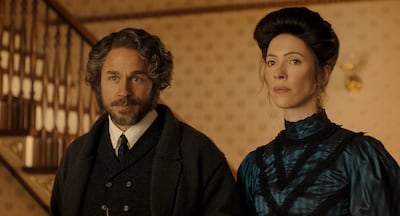
On the morning of August 4, 1892, Andrew and Abby Borden were killed in their home, in what became one of the most notorious unsolved murder cases in American history.
Lizzie’s stepmother was killed first. She was cleaning a second-floor guest room when she was attacked with a hatchet, suffering 19 blows. Her body remained undiscovered in the room while other members of the household went about their morning.
Andrew had left the house earlier that morning to conduct business in town. When he returned, he settled on a sofa in the downstairs sitting room. About an hour and a half after Abby was killed, he too was attacked, sustaining 10 or 11 blows to the head and face.
Lizzie said she had been in the barn and discovered her father’s body after returning to the house. She called for the family’s live-in maid, Bridget Sullivan, telling her that somebody had killed him.
The focus then turned to Abby. Lizzie initially said her stepmother had gone out to visit someone who was ill, but later suggested she might have heard her return. The maid and a neighbour went upstairs to look for her and discovered her body in the guest room.
Lizzie’s sister Emma was away at the time and their uncle, John Morse, who was staying with them, had left the house for the day in the morning. That left Lizzie and Sullivan as the two other members of the household known to have been at the property during the period in which the killings took place. Sullivan said she had been outside washing windows when Abby was killed and was resting in her room when Andrew was attacked.
Why did police suspect Lizzie Borden?
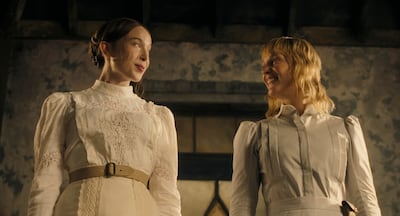
Lizzie was not immediately treated as the prime suspect. Andrew was a wealthy businessman, and investigators initially considered whether an outsider could have entered the house and killed the couple.
But suspicion increasingly shifted towards his daughter as investigators struggled to reconcile her accounts of where she had been and what she had been doing.
Her answers during questioning changed. Investigators were also interested in a claim that she had attempted to buy prussic acid, a highly poisonous substance, from a local pharmacy the day before the murders.
Another potentially damaging episode came several days after the killings. Lizzie’s friend Alice Russell later testified that she saw her burning a dress in the kitchen stove. Lizzie said the dress had been stained with paint. Russell’s testimony was eventually heard by the grand jury, which indicted Lizzie the following day.
There were also tensions within the Borden household, between the daughters and their stepmother. The sisters stood to inherit from their frugal but wealthy father’s estate after Andrew and Abby’s deaths.
But investigators lacked the physical evidence that might have decisively linked Lizzie to the killings. No blood-covered clothing belonging to her was found, and prosecutors could not produce a murder weapon that they could definitively prove she had used.
Lizzie was arrested on August 11, a week after the murders, and charged with killing her father and stepmother. She would spend the following months in jail awaiting a trial that became a national sensation.
Was Lizzie Borden found guilty?
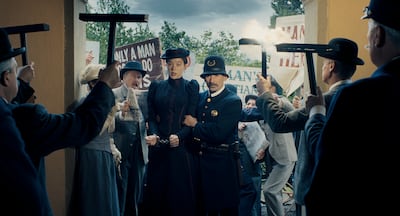
Lizzie’s trial began in June 1893 and lasted about two weeks.
The prosecution’s case was largely circumstantial, and some evidence that might have damaged her defence never reached the jury. The judges excluded testimony about her alleged attempt to buy prussic acid, while prosecutors were unable to present either a conclusively identified murder weapon or bloody clothes belonging to Lizzie.
Her social standing and gender also shaped contemporary perceptions of the case. Lizzie was a wealthy, churchgoing woman from a prominent family at a time when many found the idea of a woman of her background committing such a brutal crime difficult to accept. The all-male jury deliberated for about 90 minutes before finding her not guilty.
No one else was ever charged with killing Andrew and Abby Borden and their murders remain officially unsolved.
Who else is in the cast of Monster: The Lizzie Borden Story?
Beatty leads the series as Lizzie Borden, but she is joined by a sizeable cast of familiar faces.
Charlie Hunnam plays Lizzie’s father, Andrew, while Rebecca Hall portrays her stepmother Abby and Billie Lourd plays her older sister, Emma. Vicky Krieps stars as the maid Bridget “Maggie” Sullivan, whom the series reimagines as Lizzie’s lover and accomplice, and Joey Pollari plays the sisters’ uncle, John Morse.
Where does Aileen Wuornos come into the story?
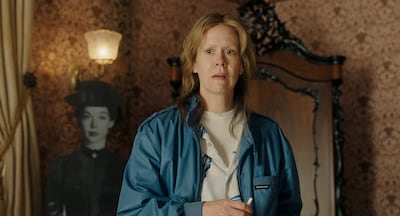
Two other women associated with notorious killings, from very different periods in history, also feature in the show.
Early in the series, Krieps’s Bridget Sullivan is shown reading Lizzie bedtime stories about Elizabeth Bathory, a 16th-century Hungarian countess accused of torturing and murdering young women. Krieps also plays Bathory in these sequences, creating a visual link between Sullivan’s stories and Lizzie.
Later, Sarah Paulson appears as Aileen Wuornos, the US serial killer who murdered seven men in Florida between 1989 and 1990 and was executed in 2002. She is portrayed as being deeply inspired by Lizzie’s story.
