

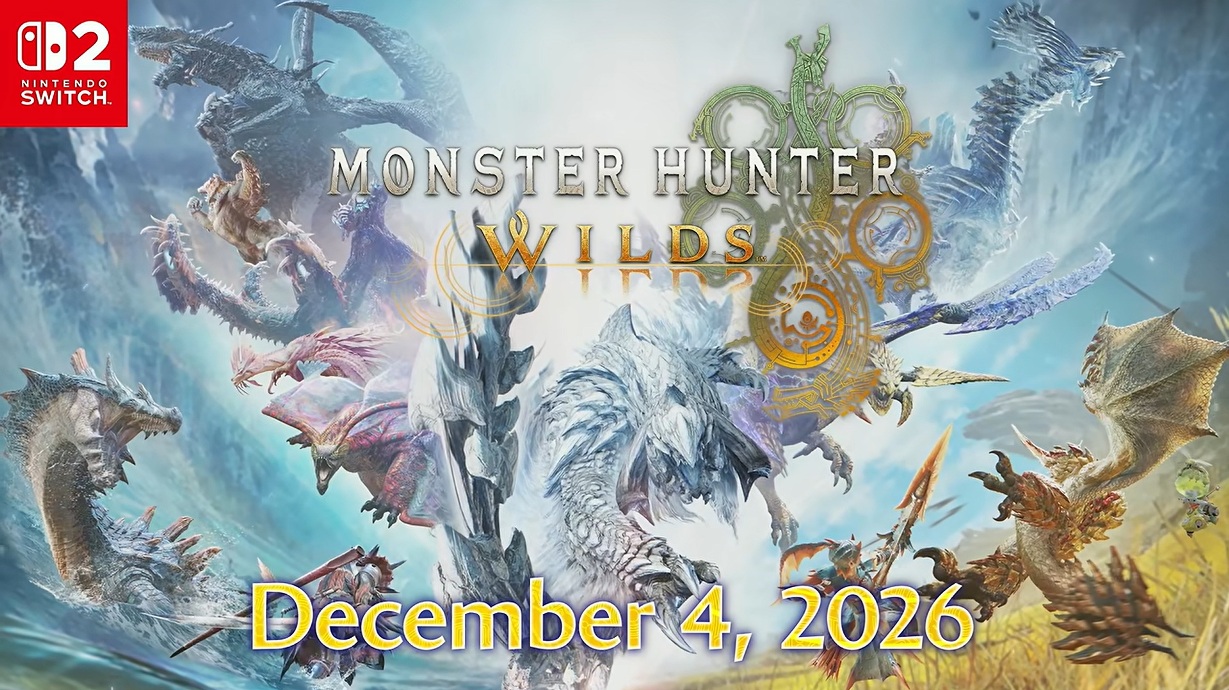
Monster Hunter Wilds devs on bringing the game to Nintendo Switch 2, didn’t want to offer an inferior version
Posted on September 19, 2026 by Brian(@NE_Brian)
in News, Switch 2
The team behind Monster Hunter Wilds has spoken about the work that went into the new Nintendo Switch 2 version.
Everything here comes from a new interview with Famitsu. Series producer Ryozo Tsujimoto, producer Genki Sunano, and executive director Kaname Fujioka participated in the discussion.
According to Sunano, development on Nintendo Switch 2 kicked off in June 2025. However, things didn’t really get started until a few months later. After development of Wilds was settling down, Capcom got a dedicated team together to port the game over.
Fujioka mentioned later in the interview that Capcom was “determined not to let it be dismissed as merely an inferior version of Wilds.” Sunano added that “the final product delivers an experience where the core Wilds hunting gameplay remains largely the same and just as enjoyable.”
Below is the full interview excerpt:
There were signs hinting at a potential Switch 2 port of Wilds even before the game was officially announced. When exactly did you decide to develop the Switch 2 version?
Tsujimoto: We started moving on it quite a while ago. It wasn’t a case where a single fix would solve everything; it was a process of optimizing every single element for the Switch 2. The development period took over a year.
Sunano: We actually began development around June 2025.
Fujioka: There were a few times when we thought we might be able to start, but we faced the issue of not having enough manpower to spare… It wasn’t as simple as just porting data from other platforms to the Switch 2, so there was a long period where we couldn’t really get started. However, once development on Wilds settled down a bit and some team members became available, we gathered the key staff, decided to commit seriously to the Switch 2 version, and kicked off development.
Tsujimoto: Full-scale development began around the end of last year.
Sunano: That’s when we really put our backs into it, and the pace was quite rapid.
What kind of process did you follow for the technical verification?
Sunano: It started with simply trying to get it running on the Switch 2; initially, the situation was, “It’s not running at all.” We gathered information on potential methods and ran repeated tests. Throughout that process, the verification work – figuring out how to boost performance or what could be trimmed – provided us with valuable insights. We proceeded with the development believing that this knowledge would also be useful for further improvements on the existing platforms later on.
Tsujimoto: We tried things specific to the Switch 2, so not everything is directly applicable elsewhere, but the experience itself will certainly be useful. I believe the Switch 2 version we have now is the result of our staff’s steady, persistent effort.
So, it wasn’t just a matter of focusing on one specific area; rather, you optimized various aspects of the game.
Fujioka: We couldn’t release it without first confirming that it actually ran, so we initially focused on getting it into a playable state without worrying too much about final product quality. Of course, it didn’t meet our quality standards at that stage, but once we had it running – even at a bare minimum – we entered a phase where we could figure out how to bring the quality back up. That was the moment we started to see a path forward and felt, “This might actually work.”
Sunano: As a team, we felt, “We can pull this off.” After confirming this with Tsujimoto, we decided to push ourselves a little further and continued development.
Fujioka: We were determined not to let it be dismissed as merely an inferior version of Wilds. From there, it was a process of meticulous, detailed work – optimizing the game by verifying elements one by one, almost like solving a puzzle, to restore the quality to its current state. I believe this is the result of our staff’s steady, persistent effort.
After playing the demo, I noticed a difference in frame rate, but otherwise, I didn’t feel there was a major gap.
Sunano: Our concept was to create something that allows players to naturally enjoy Wilds on the Switch 2, rather than offering a “downgraded” version. While there are visual differences compared to the PS5 Pro version, I believe the final product delivers an experience where the core Wilds hunting gameplay remains largely the same and just as enjoyable.
In other news, Capcom recently weighed in on the possibility of porting Monster Hunter World, but has seemingly ruled that out for now. Read Tsujimoto’s comments about that here.
More: Capcom, interview, Monster Hunter Wilds
