

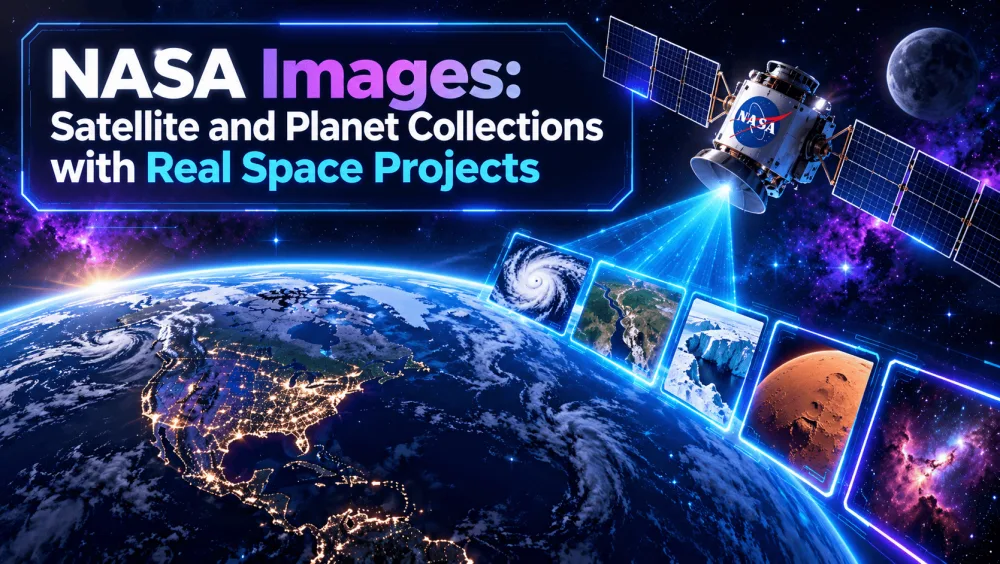
What if NASA released verified digital editions of planets, missions, and telescope discoveries? A NASA Images NFT program could connect each picture to Blockchain records without restricting public access. Collectors could support education or research, while every token preserved the
This scenario is hypothetical. NASA currently states that it does not want its materials used for NFTs and does not approve NFT merchandising. The policy appears in the agency’s brand guidance. Any real program would therefore require a new NASA decision, legal review, and clear public terms.
The useful question is not whether a token can make a public image scarce. It cannot. The better question asks what a verifiable digital record could add to science communication, archives, education, and mission funding.
- Provenance could connect a visual to its mission, instrument, caption, and processing history.
- Smart contracts could automate access passes, donations, or classroom rewards.
- Public records could show corrections without deleting earlier metadata.
- Collectors could fund defined programs without receiving ownership of public science.
That distinction controls the entire model. A token can identify a digital edition and its activity. It cannot transfer copyright, create scientific truth, or turn an agency archive into private property.
NASA Images could gain a second life as records that invite continued study. A student might follow one Mars observation from capture through processing and publication. A museum could connect the same record to a workshop and public archive. NASA Images would remain the shared
- NASA Blockchain NFT: Three Provenance Technologies for Space Collections
- NASA Images NFT Collection: How a Digital Collection Works
- NASA Images and NASA Space Images: Where to Find Originals for an NFT Concept
- Satellite, Planet, and Mission NFTs: Collection Table Based on NASA Images
- Real Space NFTs: Inspiration4, Refik Anadol, and Awkward Astronauts
- FAQ
- Conclusion: how to connect nasa images, nfts, and blockchain in a strong article
- About the author and editorial review
- Sources and verification date
NASA Blockchain NFT: Three Provenance Technologies for Space Collections
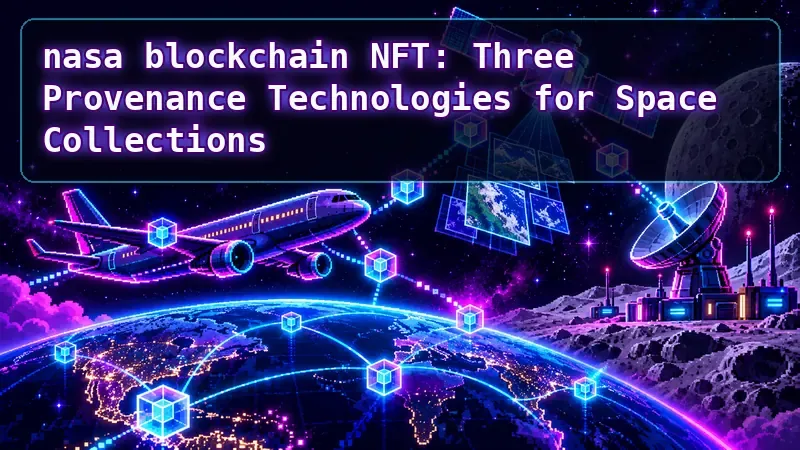
A credible nasa blockchain NFT model would begin with provenance, not a marketplace. The image file would stay in an official repository. A content hash would identify its exact bytes. A metadata record would describe the mission, instrument, date, credit, processing, and rights status.
The blockchain would store a compact proof, usually the hash, record version, timestamp, and contract event. Larger files and detailed metadata would remain off chain. This split matters because public chains are costly and poor image archives.
Three technologies would perform separate jobs within this system.
- A cryptographic hash would detect any change to the referenced file.
- Content addressed storage could retrieve metadata through an identifier derived from its content.
- A smart contract could track editions, transfers, permissions, donations, and later updates.
These tools verify consistency, not accuracy. A false caption can still receive a valid hash. Human review must confirm that the record matches the official
NASA research offers useful parallels. The agency’s RNCP technical record studies distributed decisions and resilient networking. Its purpose is not NFT sales, yet its treatment of shared state helps explain why versioned records matter.
NASA Images need a record that survives marketplace redesigns and company closures. The contract should therefore avoid dependence on one commercial interface. Open schemas and exportable metadata would make later migration possible. NASA Images could then remain auditable even when the original sales platform disappears.
NASA Satellite Images NFT: Scrambl and Image Provenance
Satellite imagery follows a longer path than many readers expect. A spacecraft captures data, ground systems receive it, processors create products, and editors publish selected visuals. Each stage can alter the file, format, resolution, color, or descriptive context.
The SCRAMBL project record describes research around shared satellite status, planning, and data routing. It does not describe NFTs. However, the same chain of custody can inspire a NASA Images record from observation through release.
A satellite token card could preserve the following checkpoints.
- Observation time, spacecraft, instrument, target, and operating mode.
- Ground receipt, product level, processing software, and version.
- Published asset identifier, caption, credit, and source address.
- Token identifier, metadata hash, update policy, and edition terms.
This record would help readers distinguish raw measurements from a finished visual. For example, radar data may require processing before a human can interpret its patterns. A token should never label that output as an ordinary photograph.
If an editor later corrects a date, the original record should remain visible. The next version would link to the correction and explain its cause. That approach protects scientific context without pretending that metadata never changes.
NASA Images from satellites may pass through several technical teams before public release. Each handoff can add useful information or introduce an error. Named review roles would show who approved each stage and when. NASA Images would gain stronger provenance without placing operational data on a public chain.
NASA Images NFT Collection: How a Digital Collection Works
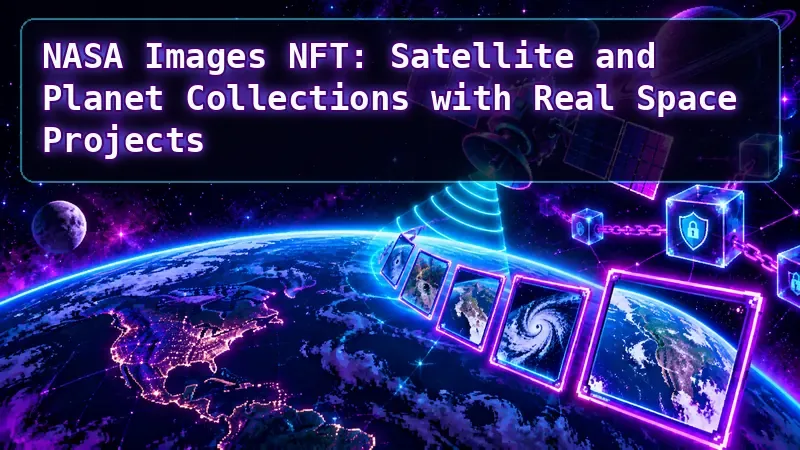
Imagine an official release called Mission Windows. The first season contains twelve records from Earth, Mars, Artemis, and Webb. Visitors can view everyts a stated education fund
Each NASA Images NFT card would show the visual,sh, edition size, and funding purpose. The token would identify the edition record. It would not claim exclusive control over the underlying picture
The user journey could follow six clear steps.
- NASA selects an asset with complete records and confirms every contributor.
- A curator prepares a metadata card and calculates the source file hash.
- A reviewer approves the scientific description and rights status.
- The contract creates a token identifier and points to the approved metadata.
- A buyer receives the token, membership benefits, and a funding receipt.
- Future corrections create linked versions instead of silent replacements.
The ERC 721 standard can track distinct tokens and optional metadata links. A lesser known detail is that its metadata extension is optional. Therefore, a token may exist even when its descriptive record is weak or unavailable.
A responsible collection would treat metadata as part of the product, not decoration. It would also publish contract ownership, upgrade powers, treasury rules, fees, and shutdown procedures before accepting money.
NASA Images should also carry a visible status such as active, corrected, archived, or withdrawn. That field would help interfaces handle later discoveries without erasing history. Collectors would see whether their edition still points to the current scientific description. NASA Images would remain understandable across both old and new versions.
NASA Images for NFT Concepts:
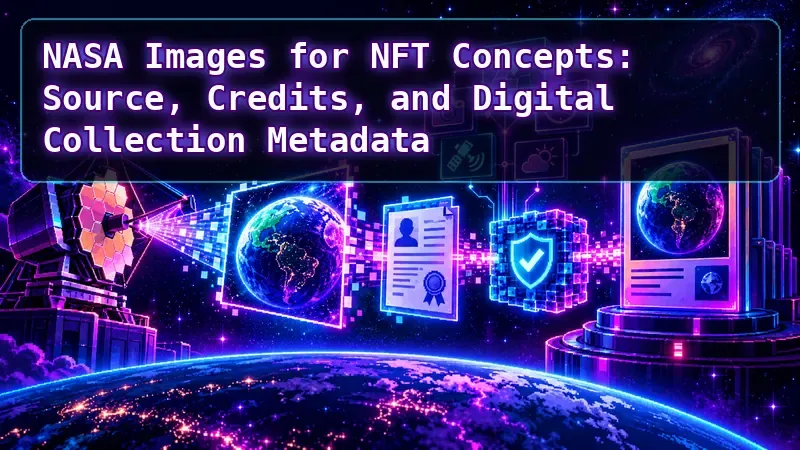
The NASA Images portal is a discovery page, while the Image and Video Library exposes searchable asset records. A collection team should open the individual record rather than copying a repost from social media.
An official page may identify a NASA center, photographer, partner agency, or scientific team. Credits sometimes include nonfederal contributors. Those details matter because open access does not erase third party rights or publicity interests.
| Layer | Core Fields | Purpose |
|---|---|---|
| Source | Asset ID, URL, caption, credit | Connect the edition to the official record |
| Science | Mission, instrument, date, processing | Explain what the visual represents |
| Proof | File hash, metadata hash, version | Detect changes and preserve history |
| Token | Contract, token ID, edition, utility | Define the digital record and its use |
| Rights | Owner, restrictions, review date | Prevent unsupported commercial claims |
Under 17 U.S.C. Section 105, copyright protection does not cover works of the United States government. That rule has limits. It does not automatically clear partner material, music, trademarks, personal likenesses, or work created outside federal duties.
For that reason, NASA Images should carry the full credit line and a dated rights review. The metadata should also state that token ownership does not create copyright, endorsement, or control over public access.
NASA Images can include agency work, partner contributions, and identifiable people within one frame. A single public domain label would hide those separate interests. The rights card should identify every known contributor and unresolved question. NASA Images would then enter review with evidence instead of broad assumptions.
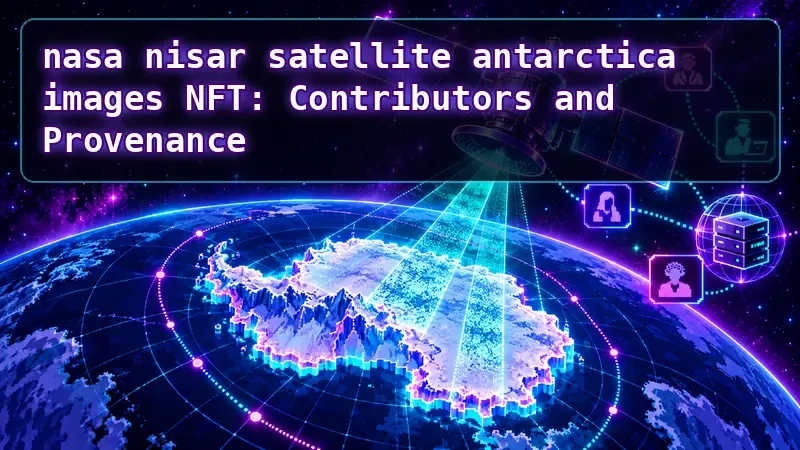
NASA Nisar Satellite Antarctica Images NFT: Contributors and Provenance
A NISAR Antarctica series would show how provenance can support Earth science. Instead of selling a single dramatic picture, the collection could connect observations from several dates and explain what changed between them.
The record would name the spacecraft, radar instrument, acquisition time, geographic footprint, processing level, resolution, and contributing organizations. It would also separate data creators from designers who prepared the public visual.
Contributor roles should remain explicit throughout the collection.
- Mission teams operate instruments and produce scientific records.
- Processing teams convert measurements into usable data products.
- Editors select captions, crops, and supporting explanations.
- Designers may create layouts without changing the scientific source.
- Education partners can build lessons without becoming image owners.
NASA Images could then support a time based classroom activity. Students would compare therpretation. The token would act as a signed course artifact, not proof of a scientific conclusion
A hash would reveal whether the referenced file changed. It would not explain why ice patterns changed or whether an interpretation was correct. That work still belongs to researchers, documented methods, and peer review.
NASA Images from polar missions could support lessons that compare evidence across seasons. Teachers would need plain explanations of scale, color, radar, and uncertainty. Students could record observations without treating every visible difference as environmental change. NASA Images would provide the starting evidence, while the lesson supplied interpretation rules.
NASA James Webb Images NFT: Token Uniqueness and Metadata
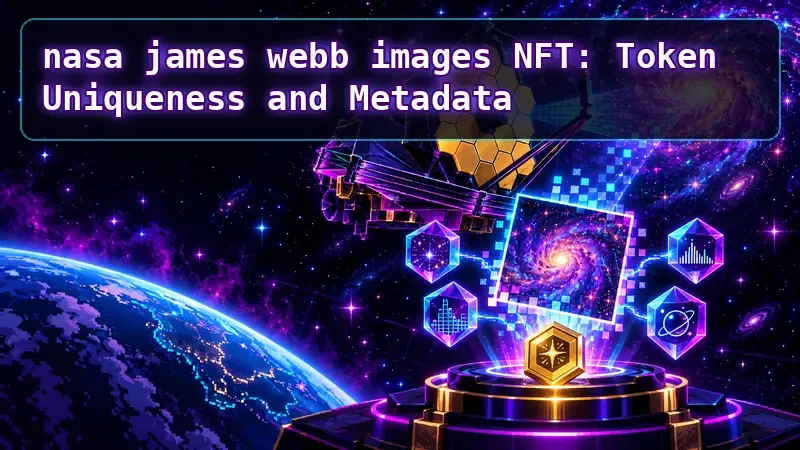
Webb imagery exposes a common misunderstanding about scarcity. The public can download the same visual while one token remains distinct. Its uniqueness comes from the contract address and token identifier, not from limiting access to the image.
A NASA Images edition could become distinct through its mission record, issue date, educational module, curator note, and benefit history. Those features are more defensible than claiming that a widely available file has become rare.
Webb visuals also reveal wavelengths that human eyes cannot directly see. Teams map selected infrared measurements into visible colors. The result can be scientifically grounded and visually processed at the same time. Metadata should preserve both facts.
A complete Webb card would answer five questions.
- Which target, instrument, filters, and observation program produced the data?
- Which team processed the data and prepared the public release?
- Which file version does the token reference?
- What educational or membership function does the edition provide?
- How will later caption or processing corrections appear?
The collection should store the image outside the contract and anchor its integrity with a hash. Using content addressing can make altered metadata receive a different identifier. Availability still requires active storage and backups.
NASA Images from Webb can attract buyers through beauty, yet the scientific record must remain central. A design layer may crop or animate thetive separately and identify its creator. NASA Images would stay linked to original releases rather than being replaced by promotional edits
NASA Images and NASA Space Images: Where to Find Originals for an NFT Concept
The quality of an NFT record depends on the quality of itsge provides the caption, credit, identifier, date, and available files
Mission galleries add context that a general archive may not show. The Artemis II mission page can explain events and crew activity, while the asset library preserves individual media records.
A repeatable verification process reduces mistakes.
- Search by mission, object, instrument, or date.
- Open the individual asset record on an official domain.
- Compare its caption with the relevant mission or science page.
- Save the asset ID, source address, credit line, and access date.
- Download the offered source file without replacing it with an enlarged copy.
- Calculate a hash and preserve the original beside any edited version.
NASA Images often travel through news sites, social platforms, and presentation tools. Those copies may lose metadata or use different compression. The visual can look identical while its file hash changes completely.
The collection record should therefore link to the official asset page, not only a storage gateway. If a platform disappears, the asset identifier and mission context can still guide a later audit.
NASA Images may appear in several resolutions and file formats on official pages. A curator should identify exactly which version produced the stored hash. Any crop, color adjustment, or conversion needs its own derivative record. NASA Images would otherwise look verified while the token referenced an undocumented edit.
NASA Space Images NFT by Theme: Earth, Artemis II, Mars, Webb, and 3i/atlas
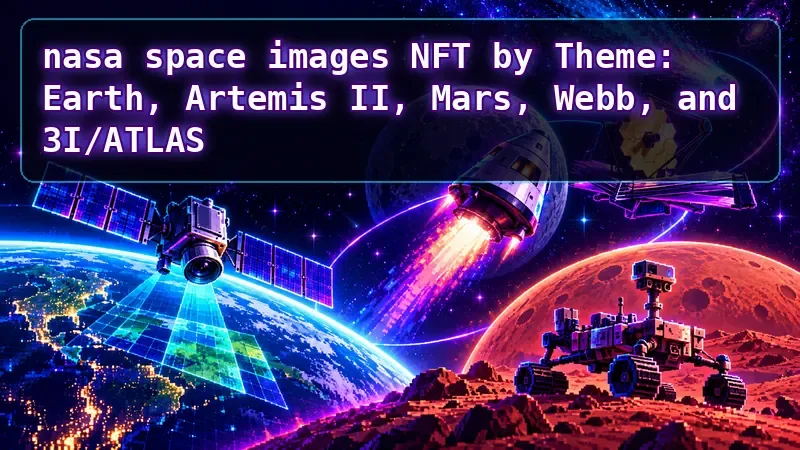
Themes should follow a scientific question or mission story. A random gallery produces visual variety but weak learning value. A structured series can connect each edition to a shared method and comparable fields.
Earth records can show change across time. Artemis records can follow preparation, flight, and return. Mars records can compare rover cameras or surface targets. Webb records can explain wavelengths and processing.
The 3I ATLAS science page illustrates another option. A moving object can be documented through observations from several instruments and dates. The collection would become an evidence timeline rather than a set of decorative cards.
| Theme | Record Unit | Learning Value | Required Distinction |
|---|---|---|---|
| Earth | One location at one time | Environmental change | Measurement versus composite |
| Artemis II | One mission event | Flight sequence | Photo versus simulation |
| Mars | One observation | Surface science | Raw versus processed image |
| Webb | One release | Wavelength and filters | Data versus visible color mapping |
| 3I ATLAS | One dated observation | Evidence across instruments | Observation versus interpretation |
NASA Images would use one controlled naming system across themes. That system should separate collection, series, item, and edition. Consistent labels make later searches, lessons, and corrections easier.
Local context also matters. Earth editions could connect observations to regional schools, museums, or citizen science groups. A global archive becomes more useful when local participants can explain why a place or event matters to them.
NASA Images can connect one theme across different scales, from a local coastline to a distant comet. Shared fields would help readers compare very different missions without confusing their methods. Curators could add regional notes while preserving the agency caption unchanged. NASA Images would support storytelling without losing the boundaries of the
Satellite, Planet, and Mission NFTs: Collection Table Based on NASA Images
A launch should start with a small pilot rather than thousands of tokens. Five series could test different records, audiences, and benefits. Every series would use the same provenance fields and public reporting rules.
| Series | Edition Basis | Useful Function | Main Risk |
|---|---|---|---|
| Earth Change | Dated satellite product | Local lesson and data comparison | Oversimplified interpretation |
| Mars Field Notes | Rover observation | Instrument and geology module | Missing processing context |
| Artemis Timeline | Mission milestone | Interactive event map | Implied endorsement or exclusivity |
| Webb Light Lab | Telescope release | Filter and wavelength lesson | Confusing color with direct vision |
| Visitor From Beyond | 3I ATLAS observation | Multi instrument timeline | Treating updates as contradictions |
Each edition could unlock a seminar, annotated dataset, curator session, or classroom challenge. The useful benefit should relate to the
A public dashboard would report the collection in practical terms.
- Number of tokens issued, held, transferred, and retired.
- Gross receipts, fees, refunds, and funds delivered to each beneficiary.
- Storage status, broken links, metadata changes, and contract updates.
- Lessons published, classrooms served, and public events completed.
NASA Images would remain available outside the token system. This condition prevents payment from becoming a gate around public science. It also makes the collection’s value depend on service, provenance, and participation.
NASA Images should enter a pilot only when curators can maintain them for several years. Short campaigns often ignore broken links, wallet support, and metadata hosting after launch. A maintenance budget would cover reviews, storage, accessibility, and contract monitoring. NASA Images would then retain useful records after public attention moves elsewhere.
NASA Earth Images NFT and NASA Satellite Images NFT: Earth, Nisar, and Antarctica
Earth observation offers the clearest public benefit. A series can connect global measurements with floods, fires, agriculture, ice, or coastal change. However, a striking image must not replace the underlying data or method.
A nasa earth images NFT record could pair one visual with a map, short lesson, downloadable metadata, and local discussion. The token would mark participation in that lesson. It would not certify the participant as a researcher.
For Antarctica, the edition could compare several radar acquisitions. Radar can observe through cloud cover and darkness, which makes it useful in polar regions. Processing choices still shape the final public image.
A regional education partner could add context through a defined workflow.
- NASA supplies the verified source record and scientific description.
- The partner writes local questions and identifies affected communities.
- Teachers test the lesson before release.
- The contract routes stated funds to the named program.
- A public report records delivery, costs, and measurable participation.
This model gives blockchain a narrow role. It records commitments and transactions that several parties may need to check. The science remains in NASA repositories, mission documentation, and reviewed data products.
NASA Images can therefore support local storytelling without losing global context. The strongest edition would show where the data came from, how it was processed, and what the local partner added.
NASA Images could also document how communities use Earth observations after release. A school might map shoreline change, while a museum explains radar measurements. Those activities should appear as linked outcomes rather than additions to the scientific caption. NASA Images would anchor the project while local records documented public use.
Real Space NFTs: Inspiration4, Refik Anadol, and Awkward Astronauts
Existing space NFT projects show several models, including mission auctions, data based art, and character communities. They do not authorize the commercial use of NASA Images. Their value here lies in the structures they tested.
Mission auctions connect editions to dated events and named beneficiaries. Refik Anadol’s An Important Memory for Humanity transformed Inspiration4 mission data into art. Awkward Astronauts uses visual traits and community activity rather than scientific provenance.
| Model | What Creates Value | Useful Lesson | Necessary Disclosure |
|---|---|---|---|
| Mission auction | Event and creator | Connect each lot to a real milestone | Author, date, beneficiary, result |
| Data art | Method and transformation | Explain inputs and creative process | Dataset, software, editions, rights |
| Character collection | Traits and community | Use traits for navigation | Theme is not scientific origin |
A NASA program would need stricter records because the agency carries public obligations. Every buyer should know what portion supports a program, which costs are deducted, who controls the contract, and what happens after closure.
The collection should avoid price promises and artificial urgency. Its purpose would be participation and verifiable support. Resale could remain possible, but speculation should not define the educational product.
NASA Images would also need separation from logos and agency identifiers. The agency’s media usage guidance explains why imagery, branding, endorsements, and third party rights require separate checks.
NASA Images should never appear beside language that implies guaranteed value or agency backing. Clear labels would distinguish the claims should match the contract and published program terms. NASA Images would then support the story without serving as a shortcut to trust
Inspiration4 in 2021: nft auction for st. jude and art by sian proctor
Inspiration4 linked digital works to a private orbital mission and fundraising for St. Jude. That combination created a clear story: a dated event, named creators, limited digital lots, and a public beneficiary.
The transferable lesson concerns accountability. A NASA Images program could connect each edition to a mission milestone and a defined education goal. It should then report what the sale funded after the campaign ends.
A mission linked edition should publish these facts before minting.
- The source asset and full credit line.
- The creator of any added design or interpretation.
- The edition count, issue schedule, and contract address.
- The beneficiary, distribution formula, fees, and payment timing.
- The utility period and responsibilities after the mission.
A token can make the funding trail easier to inspect when transfers occur on chain. It cannot prove that off chain spending reached its intended outcome. Reports, receipts, audits, and beneficiary confirmation remain necessary.
NASA Images could add lasting educational value through post mission updates. A collector might receive a revised timeline, a researcher discussion, or a classroom package. These benefits would extend the record beyond the sale date.
The model works only if public access survives. People who never buy a token should still reach the
NASA Images could make mission fundraising more tangible when every edition names its intended outcome. Buyers should see the target, payment schedule, and final distribution report. Any unmet target would require an explained refund or revised plan. NASA Images would attract attention, while transparent reporting would justify continued support.
Does NASA currently sell official image nfts?
No. NASA’s published guidance says the agency does not want its materials used for NFTs and does not approve NFT merchandising. This article examines a future policy scenario, not an existing product or partnership.
Would an nft make a nasa image private?
No. The one edition record, account, or benefit package. Ownership of that token would not remove public access to NASA Images
What would blockchain add to an image archive?
It could timestamp hashes, record token events, document approvals, and preserve links between metadata versions. A conventional database may still handle most content more efficiently.
Can a blockchain prove that a caption is correct?
No. It can prove that a specific record existed and later changed. Scientists, archivists, and editors must verify whether the record accurately describes the image.
Where would the picture and metadata live?
The large image would remain in an official repository. Detailed metadata could use agency storage and content addressed backups. The blockchain would store compact identifiers, hashes, and events.
Would buying a token transfer copyright?
Not unless separate terms clearly transfer rights that a seller can legally grant. A token transfer alone does not assign copyright, create endorsement, or clear third party material.
How could the project support education?
Benefits could include lessons, curator sessions, annotated datasets, local museum programs, or classroom challenges. Public reporting should connect token revenue to completed activities and measured participation.
Has NASA used blockchain outside nfts?
Yes. NASA described a 2026 aapproved participants. The official report concerns flight plans, telemetry, registration, and identity, not image collectibles
The practical conclusion remains consistent across all eight questions. NASA Images would need clearols, and a policy change before any official release
NASA Images raise questions that technology alone cannot answer. Policy determines whether a release may proceed, while rights review defines allowed uses. Scientific review protects meaning, and technical controls preserve the approved record. NASA Images would require all four functions to work together before any token reached the public.
Conclusion: how to connect nasa images, nfts, and blockchain in a strong article
The strongest version of this idea does not sell space pictures as artificial scarcity. It creates a verifiable participation layer around public science. The image remains accessible, while the token records an edition, activity, or funding relationship.
A workable pilot would begin with several NASA Images that have complete credits and mission records. Each item would receive aefit, and correction process
Five safeguards would decide whether the model deserves public trust.
- NASA must change or specifically define its current NFT policy before launch.
- Public access to source imagery and mission facts must remain independent of token ownership.
- Every record must separate scientific evidence, image processing, creative design, and market terms.
- Contracts, treasuries, fees, upgrade rights, storage, and shutdown plans must be public.
- Funding claims must end with reports that show delivery, costs, and outcomes.
Blockchain would serve as one recordkeeping component rather than the center of the science. Its best functions involve timestamps, shared approvals, version links, transaction records, and transparent distribution rules.
The final opportunity is cultural. NASA Images already connect remote missions with daily life on Earth. A carefully designed NFT layer could turn that attention into learning, participation, and measurable support without claiming ownership of discovery.
For now, the concept should remain a research model. It becomes realistic only when agency policy, rights review, technical design, public access, and reporting all support the same purpose.
NASA Images could make blockchain useful by giving it a limited and testable job. The ledger would record provenance, approvals, editions, and funding events. Repositories and experts would continue to hold the files, context, and scientific authority. NASA Images would stay public, while the token layer showed how people supported and studied them.
One practical test would compare a public blockchain pilot with a conventional signed database. Both systems would record the sameewers could then measure cost, reliability, accessibility, governance, and recovery. Blockchain should remain only if it solves a shared trust problem better within budgets
A second test would follow one edition for a full year. The team would audit links, storage, wallet support, contract permissions, educational delivery, and beneficiary payments. Results should be published even when engagement falls below expectations. Evidence from that review would guide any expansion across additional missions or partner institutions.
About the author and editorial review
- NASA Images, accessed September 18, 2026.
- NASA Image and Video Library, accessed September 18, 2026.
- NASA Brand Center, accessed September 18, 2026.
- NASA Images and Media Usage Guidelines, accessed September 18, 2026.
- Artemis II Mission, accessed September 18, 2026.
- Comet 3I ATLAS, accessed September 18, 2026.
- Resilient Networking and Computing Paradigm, accessed September 18, 2026.
- SCRAMBL Project 103039, accessed September 18, 2026.
- NASA Aviation Blockchain Demonstration, accessed September 18, 2026.
- ERC 721 Non Fungible Token Standard, accessed September 18, 2026.
- IPFS Content Addressing, accessed September 18, 2026.
- 17 U.S.C. Section 105, accessed September 18, 2026.
