

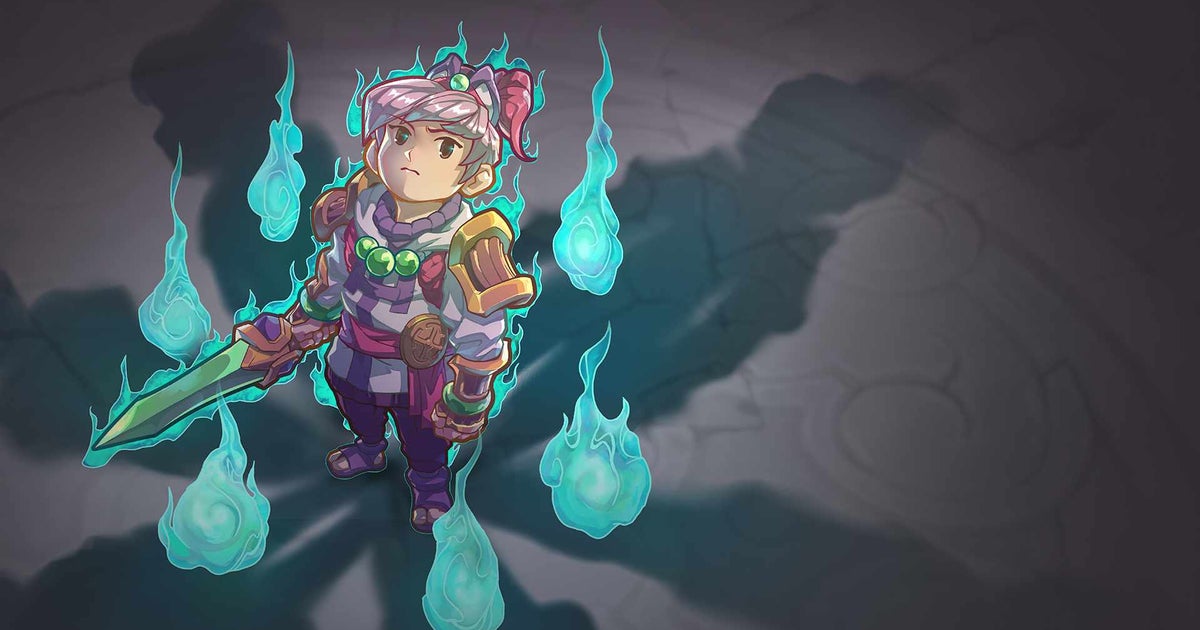
Dredge creator Black Salt Games has launched a new studio, Team Trifold, alongside a new white-label publisher called Saltworks Entertainment which will provide services to both studios along with fellow New Zealand indie Disc 2 Games.
The firm described Saltworks as bringing together “shared expertise across production, marketing, QA, localisation, audio, business operations and publishing” for the benefit of all three studios, which are based in the same building in the city of Christchurch. Each studio will remain creatively independent.
Black Salt Games is funding the development and publishing of Team Trifold’s debut game Nothing Lost, “off the back of the success of Dredge,” the developer‘s executive producer Nadia Thorne tells GamesIndustry.biz.
“We also benefit from New Zealand’s Game Development Sector Rebate, which gives Team Trifold the stability to focus on making Nothing Lost as strong as it can be.” As reported over the summer, studios supported by the rebate saw combined revenue grow 17% to $829 million.
Thorne states that sustainability is central to Saltworks Entertainment and its “multi-studio strategy [it’s] building.”
“We believe small teams making ambitious indie games that don’t require the latest and greatest hardware can be a really resilient model for whatever the next five years brings. By connecting these studios, we can share experience, infrastructure and support across teams without any one studio growing beyond what it actually needs.”
Team Trifold is composed of three members: Jed Uy (artist and writer), Wilson Teo (production and QA), and Carl Johnson (programmer).
“Each of us have long careers in the game industry (at all rungs of the ladder, working on original and work-for-hire alike),” says Uy, “but the enduring lesson that we all carry forward to this day is the importance of iteration and playtesting, as well as the value of being sensitive to the end-user’s needs.”
Uy says that it’s “absolutely necessary to establish firm design pillars, with which you challenge everycreative and technical decision. Individual details can and will change, frequently – but commitment to a vision is non-negotiable.”
Wilson Teo agrees, adding: “One of the biggest lessons that stood out the most for me is validating the core gameplay loop through rigorous playtesting feedback and internal discussions. Most importantly, to stay true to our design pillars.”
Inspired by the 2001 anime Shaman King, Team Trifold aims to “turn the roguelike loop on its head” by using death as a core progression mechanic.
“A multiplicative death-based crafting system that actually gives a reward for the most unpleasant part of the roguelike genre,” says Uy.
“The way [Shaman King] conveyed the idea of life after death – as well as the incredible supernatural powers that came along with that – always resonated with me. With this and many other inspirations (such as the varied cultural mythologies of our team members), we were able to arrive at a sensational and wholesome premise that we all are excited to develop.”
Teo emphasises that while the roguelike genre is a crowded market, “it really comes down to how we communicate and reinforce our design pillars and core game loop. Players resist losing, so we need to clearly explain our design intent that dying is part of the game.”
