

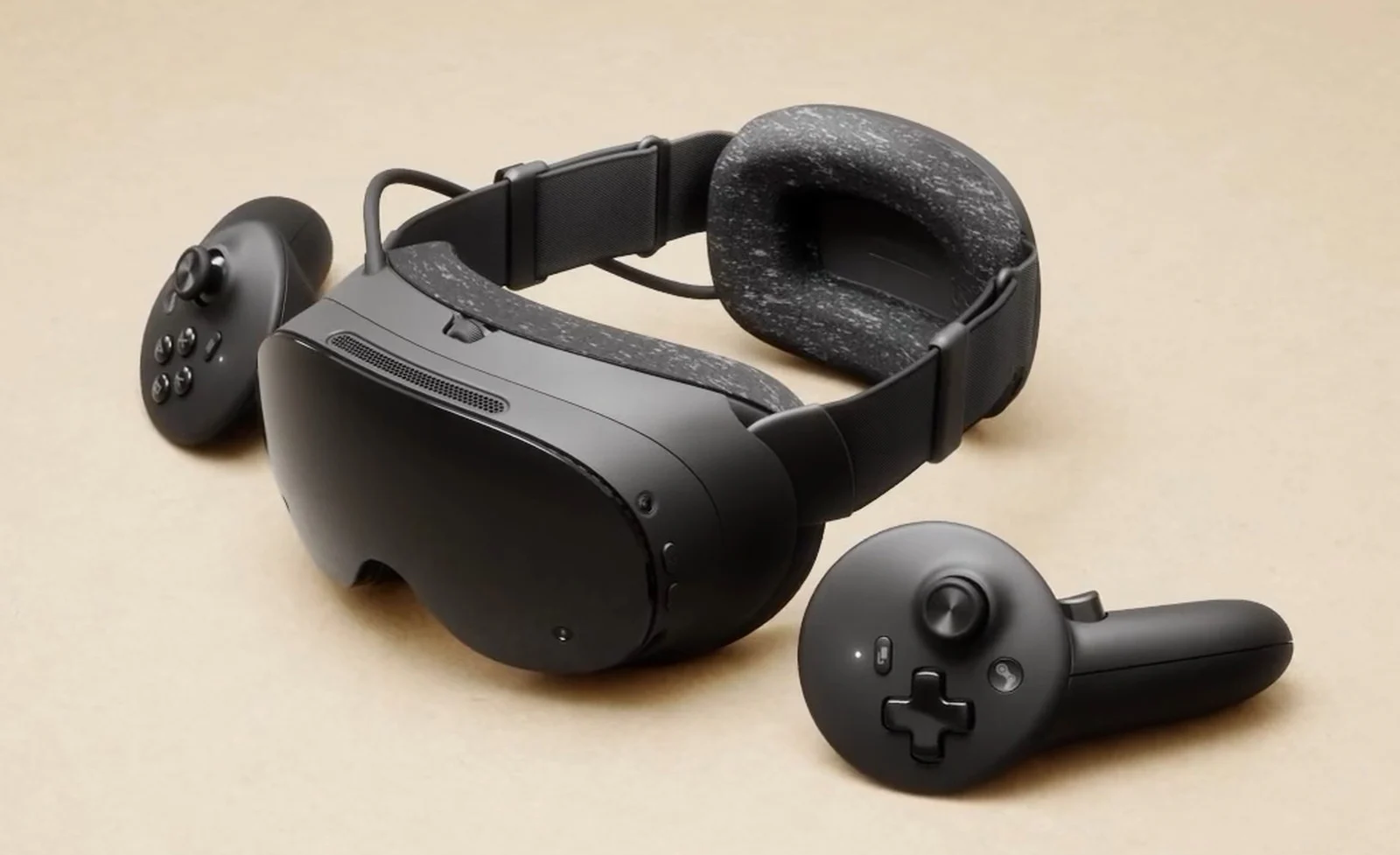
The Steam Frame – Valve’s brand-new VR headset – released on September 14, with preorders opening the same morning. This is Valve’s first official VR headset since the VALVE INDEX in 2019, and it comes with three standout features: wireless connectivity with PCs, the ability to run VR games directly on the headset, and support for non-VR games.
Ahead of launch, AUTOMATON conducted an email interview with the development team at Valve to discuss the evolution of VR and Steam over the six years since the VALVE INDEX, as well as their outlook for the future. We will provide additional information about Steam Frame and the topics discussed alongside each question.
—Various Steam devices were delayed due to the global memory price hike, but could you explain why the release of Steam Frame happened at this time?
The delay came from storage and memory availability. There were two challenges we had to solve prior to launch. First, we needed to make sure we had enough availability to launch the product. Second, we had to make certain that we had a path to continue production over the life of the product. Both took time to solve.
[1] Interviewer’s note: Since late 2025, AI companies have been purchasing memory and storage on a massive scale worldwide, making it difficult for companies outside the AI industry to procure memory and storage and causing devices to become more expensive or have their launches delayed. Some forecasts predict that the situation will be resolved by 2028, while others say it may not be resolved even by 2030, making things uncertain.
—Previous VR headsets that Valve has been involved with include the HTC VIVE in 2016 and the VALVE INDEX in 2019, but what was your goal with the Steam Frame? Are there any goals you have maintained or changed over the past seven years?
Our most important goal with Steam Frame was to make a comfortable, wireless PC VR headset. Steam Deck taught us a lot about the value of accessibility (portability, ease of use, and tight Steam integration), and we discovered over the course of development that these features were equally important to Steam Frame.
[2] Interviewer’s note: All of Valve’s previous official headsets, including the HTC VIVE and VALVE INDEX, required the headset to be connected to a PC with a cable and external sensors to be placed around the room in order to use them. Among VR headsets from other companies, the Meta Quest (formerly Oculus Quest) series has supported wireless connections to PCs since 2021. Steam Frame, meanwhile, does not require external sensors like those used by predecessors.
—Pushing the concept of “playing existing Steam games on a VR screen” is a very Valve-like move, but how much effort are you putting into this concept? Will the technology developed for this concept be utilized in future Valve products?
We find this experience compelling, and it informed both our software efforts (FEX, Proton) and core hardware decisions (for example, the controller inputs). We think it brings a new way to experience Steam, and are excited to continue this work.
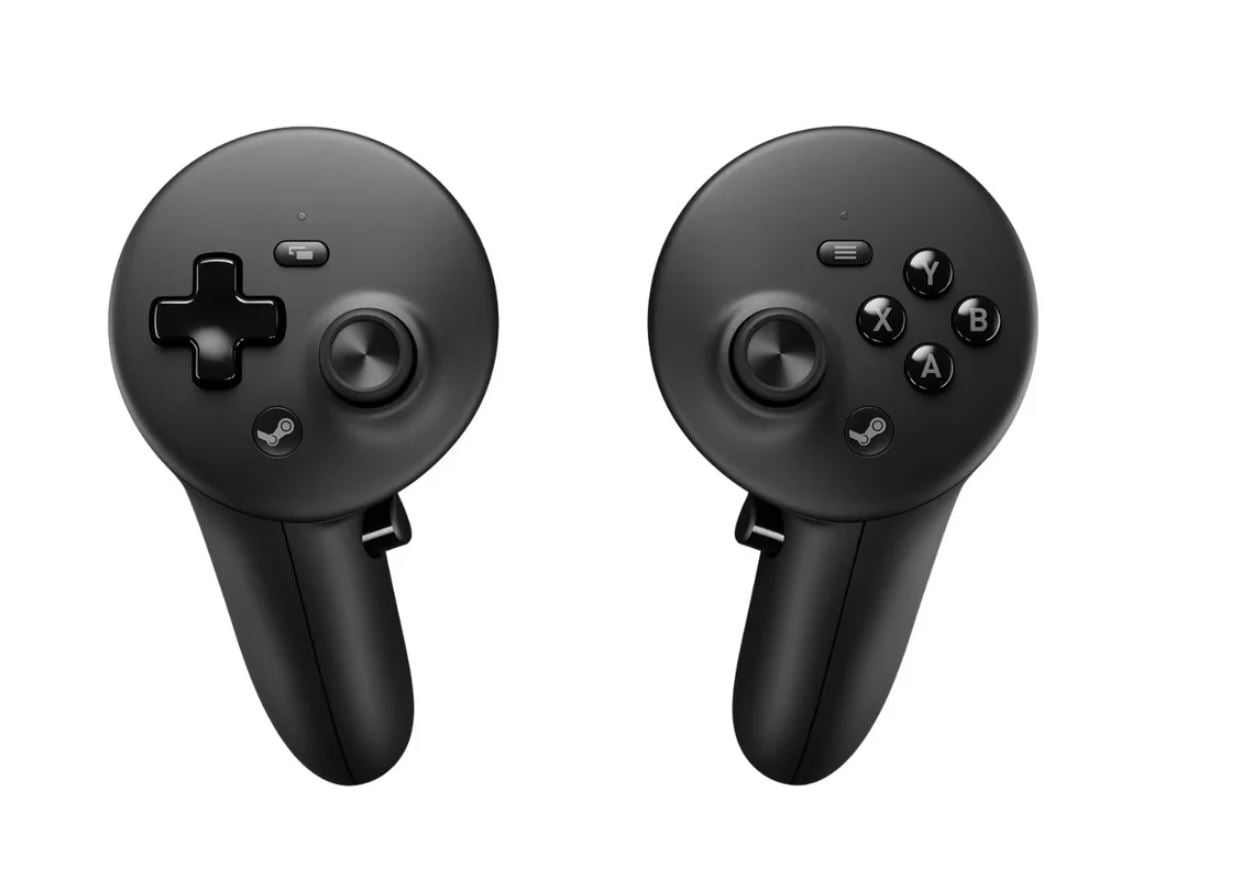
[3] Interviewer’s note: Steam Frame can also run regular non-VR games, allowing users to play them on a virtual screen in VR in place of a monitor. To support this feature, the Steam Frame’s controllers have the same buttons as a standard gamepad split between the left and right sides, similar to the Nintendo Switch’s Joy-Con. Games can be run directly on Steam Frame, or video from a game running on a PC can be displayed on the Steam Frame. The button layout is also compatible with existing VR controllers, so this does not interfere with playing VR games.
[4] Interviewer’s note: Valve developed and adopted the Linux-based SteamOS for its gaming devices, and created Proton, a compatibility layer that automatically allows games made for Windows to run on SteamOS/LinuxOS without requiring developers to make their own adaptations. However, while the Steam Deck uses an x86 CPU architecture, the same architecture commonly used by PCs, Steam Frame uses the Arm architecture found in smartphones. As a result, Valve newly developed “FEX” for Steam Frame as a compatibility layer that allows games made for PCs to run on smartphone-class hardware.
—The most surprising thing this time was that a new build of Half-Life: Alyx was created for the Steam Frame. I imagine there were major modifications to the in-game assets and theout those updates. Also, will those updates be reflected for users and the MOD community?
Surprisingly, the in-game assets are unchanged.
The team didn’t originally think bringing Alyx to a standalone system would be possible, but early foveated rendering and eye tracking experiments (along with 16 GB of RAM) gave us an indication that it could work.
One additional reason we wanted to do this work (whether Alyx would run or not), is that it became clear this same work would benefit much of the VR catalog. Our development work on Alyx led to numerous improvements in our graphics drivers, new features to Vulkan, and new options for depth reprojection.
When Alyx started to look like it was going to work, it was clear that we didn’t want to make modifications to the game assets. No content changes allows all the workshop content to just work. It also allows for the same kind of experience that was originally launched on PC. We believe this is the best version of Alyx we’ve shipped yet. We wanted to push people’s expectations for what stand-alone content can look like.
[5] Interviewer’s note: Depth reprojection is a technology that doubles the frame rate in VR. Using information about the direction the player wearing the headset is looking, along with the depth and motion vectors of each pixel in the game image, it can generate artificial frames that were not actually rendered, making the frame rate feel as though it has doubled. However, it is not a universal solution, and careless use can cause the image to break down. Meta Quest has a similar technology called Application Spacewarp.
—Looking at VR games as a whole, not just on Steam, we are in a situation where the number of “VR games not released on PC” can no longer be ignored. Will Steam Frame accept VR games that are released only as an APK (work only standalone on Steam Frame, not on PC)? Or is a PC release mandatory and the APK just provided as an option?
Partners who ship on Steam have the freedom to target any platforms they think make sense for their game and audience. There is no requirement that a game must have a PC target.
[6] Interviewer’s note: Looking specifically at VR games, there are quite a few titles that skipped a Steam release and remained exclusive to Meta Quest, or that only added support for PSVR2 or PICO. This is because Steam users make up a minority of the VR gaming audience. In fact, more than 90% of the copies sold of VR games the author of this article has been involved in developing came from Meta Quest, while Steam accounted for less than 10%.
[7] Interviewer’s note: APK stands for Android Application Package. Most VR headsets that are not PCs, including Meta Quest, run on Android OS, and VR software for these devices is created and distributed in the Android-specific format APK. Steam Frame is also capable of running VR games in APK format.
—Given that they run as either a Windows executable or an Android APK, is there any merit to building for Linux Arm64?
We would recommend that each game team select a target that makes sense for their project. Our goal in supporting all these options is to require the least amount of effort to bring content to this device. In the case of Half-Life Alyx, our development team had great familiarity with the Linux OS and ARM devices, so this decision made sense for us. But it may not make sense for other teams. And the performance differences between these alternatives will be minimal in many cases.
[8] Interviewer’s note: I tried as many of the VR games supported by Steam Frame as possible, but the only VR game I found actually running natively on Steam Frame was Valve’s own Half-Life: Alyx. Among the other VR games supported by Steam Frame, those that ran comfortably were almost all APKs (ports from Meta Quest), while the PC versions that ran comfortably were limited to a very small number of titles with relatively simple visuals.
—The Steam Frame’s support for APKs and Lepton is remarkable, but will these features be fed back into other Valve devices in the future? Are you considering the distribution of Android builds on non-Valve Steam operating environments?
Our goal with Lepton (and FEX) is to continue our effort to make SteamOS support gaming, with the highest performance possible, on all types of hardware. At this time, we are focused on making that a great experience on Steam Frame.
[9] Interviewer’s note: Lepton is a system for running Android OS builds in the form of “APKs” on LinuxOS (SteamOS). Valve developed it for Steam Frame.
[10] Interviewer’s note: Valve has effectively created a way for PC games to run on smartphone-class hardware for Steam Frame, and there would naturally be value in using this technology on devices other than Steam Frame as well. Smartphone chips are generally more energy-efficient and compact than PC-oriented chips, so if PC games can be run on smartphone chips, it could potentially make portable gaming PCs smaller and thinner.
—I believe the Steam Frame opted for a monochrome passthrough camera based on cost and its VR focus, but could you tell us how it came to support color passthrough as a peripheral device?
The choice to use monochrome tracking cameras for passthrough was intentional and carefully considered. In the end, it made the most sense for us at a system level, helping us balance overall power usage, weight, and other factors.
We knew early on that some customers would prefer passthrough cameras optimized for different considerations, such as RGB. That led us down the path of enabling a connection for high-bandwidth, low-latency devices, and we’re excited to see the kinds of things people do with it.
[11] Interviewer’s note: VR headsets that operate without external sensors are equipped with cameras for passthrough, which allows users to see their surroundings while wearing the headset. These were originally used as sensors for VR devices to recognize their surroundings rather than as cameras for the user to see through, but the ability to see outside while wearing a headset eventually came to be seen as valuable in its own right. Meta began switching to full -color passthrough cameras with the Meta Quest Pro in 2022, and they have also come to be used for mixed reality (MR), in which CG is composited with the real-world environment. Even without using them for MR, simply being able to check your surroundings while wearing a headset is convenient.
That concludes our interview with the developers at Valve. I hope this offers some insight into Valve’s approach to VR through Steam Frame, as well as the future prospects visible through FEX and Lepton, which emerged as byproducts of the Steam Frame’s development.
