

<a href="https://comicvibe.com/overwatch-season-5-will-add-a-new-kind-of-support-try-to-solve-two-roster-headaches/” title=”Overwatch Season 5 Will Add a New Kind of Support, Try to Solve Two Roster Headaches”>Overwatch kicked off its 10th anniversary in February by announcing that it was adding 10 new heroes to the hero shooter this year, more than triple the average additions in previous years. But the roster shake-ups aren’t over. Announced at BlizzCon 2026, the ninth of those 10 heroes joins the roster next month, alongside two existing heroes whose gameplay kits have been significantly reconfigured.
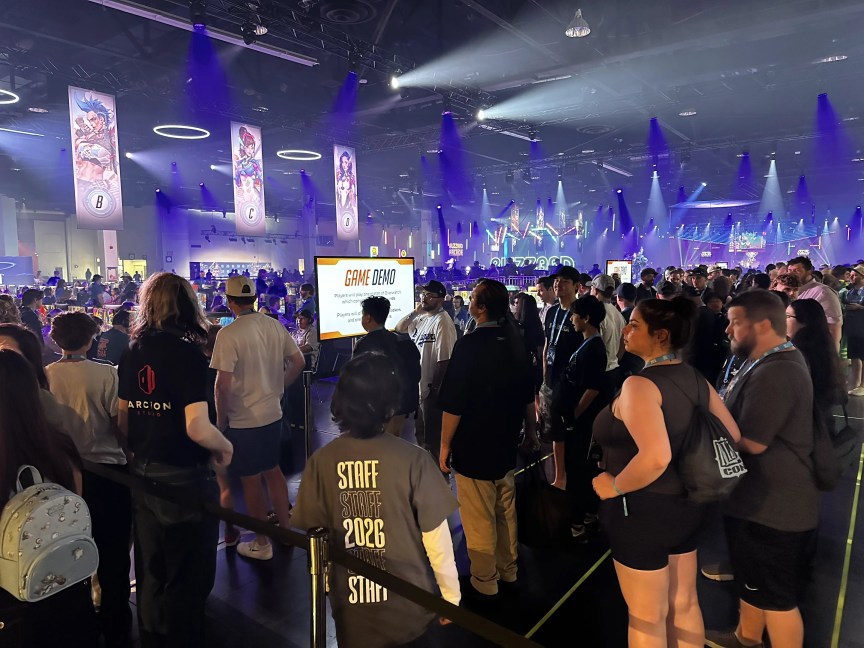
I tried the new hero at BlizzCon and spoke with some Overwatch developers about all three heroes being introduced or reintroduced next month.
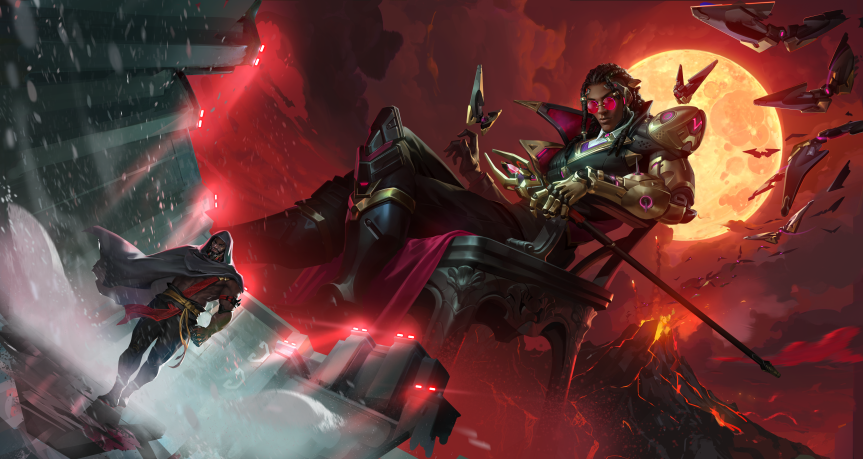
Season 5 introduces the new support character, Doctrine — a vampiric villain who empowers teammates and enfeebles opponents. His kit-defining ability is his alternate fire, which allows him to boost his other abilities. When paired with his Infuse ability, Doctrine’s primary fire becomes stronger and pierces enemies, his dash grants free flight and his ability to heal and provide allies a boost to attack speed is also applied to himself.
His ultimate ability, Deliverance, is perhaps the best embodiment of that vampiric fantasy: It sends out a swarm of bat-like drones that provide overhealth to allies while reducing opponents’ maximum life for several seconds.
“He seems pretty versatile, but I think there’s going to be a high skill ceiling for him as well, because it’s accuracy-based,” Kenny Hudson, lead hero producer on Overwatch, told me in an interview. He also speculated that Doctrine’s ultimate ability will be an important factor in players’ success, which is generally more true for support heroes than other roles.
Doctrine has a somewhat austere, too-important-for-you demeanor that fits the vampire fantasy while also distinguishing him from heroes in the damage role, Art Director Dion Rogers said. Rogers also noted the character’s posture and use of a staff, rather than a gun, as a weapon as a way to embody a dangerous support character without connoting a different role entirely.
I played a few games of Doctrine at BlizzCon — not enough to learn the ins and outs of the character, but enough to see how he functions in a few different situations. I liked the minigame of deciding which abilities to empower and when.
Playing against an enemy D.Va, I made sure to keep one charge in reserve for when she inevitably flew in my face, shooting rockets. I toyed with my opponent by luring her away from my team before spending an Infuse charge on my Shrouded Momentum ability to fly back up to high ground while she was still stranded elsewhere.
Sometimes it takes a while before the community figures out how to make new supports work, so I’m looking forward to seeing how Doctrine’s trial weekend goes and what players are able to unlock in these few days of experimentation.
After years of flirting with it, Sombra officially moves over to the support role
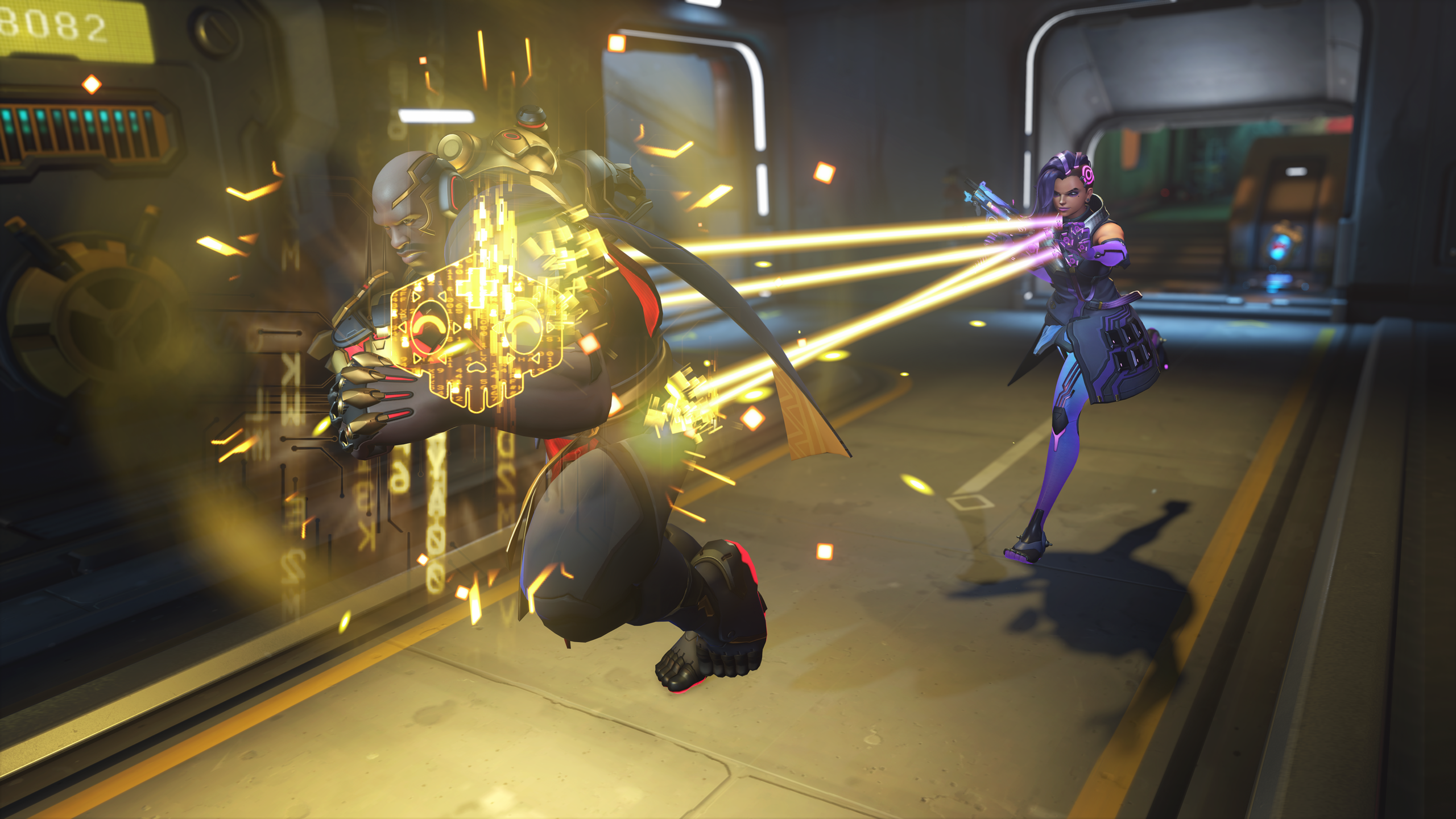
Doctrine isn’t the only new support hero in season 5. Longtime damage hero Sombra is sliding over into the support role, with multiple reworked abilities that allow her to heal her allies. She can now use abilities to heal allies and reduce enemies’ damage output, though she’s keeping her translocator ability and EMP ultimate.
Sombra has seen more reworks than any other Overwatch hero — five, by my relatively lenient count, before this one. The devs have tried repeatedly to find a way to offer players the gameplay fantasy of an invisible hacker while also trying to knock her off the list of most frustrating heroes to play against.
This time, they took a bigger swing at the changes, while targeting the usual frustrations.
“The idea was [to] take away the frustration of getting hacked and shot out of anywhere and the friction that comes from being unable to use your abilities,” Hudson said. The rework preserves the character’s stealthy hacker identity while reimagining her abilities in ways that more directly help her team. He and Rogers said the early internal playtests surprised people with how well the role swap seemed to click with the character.
Sombra has a long history of being on the edge of support, including being played by support players in the early days of the professional Overwatch League before the game implemented a role lock. More recently, the Mirrorwatch event, which flipped heroes and villains, gave us a vision of Sombra who could support allies by increasing their attack speed — hey, that sounds familiar — and providing them with overhealth.
She’s also one of my most-played damage heroes, trailing only Ashe in total damage playtime. I like being stealthy in video games, so I’ve enjoyed her sneak-around-and-teleport style of gameplay. But I’m historically more of a support player, which means this move is especially interesting to me. I’m very much in favor of the idea of the role swap, but I haven’t seen quite enough of her latest iteration to judge whether I think it’s an effective repositioning of Overwatch’s poster problem child.
In particular, I wonder whether she’ll have the healing throughput to function in a wide variety of compositions, or whether one player choosing Sombra will effectively require the other support player to choose a hero with more on-demand healing capabilities. One BlizzCon isn’t enough time to answer that, but I’m hopeful that the rework changes her into a functional support hero and not just someone stuck halfway between a maligned damage hero and useful support.
Roadhog loses his hook combo (mostly), gains a trash compactor
Joining Sombra on the rework front is Roadhog, who’s staying in the tank role, but with a new, allegedly more team-focused look. Changes to the pull distance of his chain hook and the mechanics of his gun will effectively remove his ability to instantly combo down most heroes, which Hudson said should be “a lot less frustrating” to play against.
He’s getting a new Trash Compactor ability that allows him to nullify incoming damage and convert it into a burst of damage. Scott Kennedy, a hero designer for Overwatch, said in a group interview that the ability was intended to give Roadhog a way of helping his team instead of being more of a lone wolf tank.
Removing the burst damage of the hook combo should do a lot to lessen the frustration of playing against a Roadhog, but I’m skeptical about how it affects the other side of the equation: playing with a Roadhog on your team. My worry is that he’ll remain a tank who mostly wants to roam around on his own and hook people from unexpected angles, making the rest of the team vulnerable to pushes from the enemy team if the Roadhog misses his skillshot and has to spend time fleeing prospective danger.
Then again, tanking in Overwatch’s 5v5 era has changed a lot, and most tanks benefit from playing different angles from their teams, maximizing the angles of incoming damage that enemy teams have to worry about. Even Reinhardt, Mr. Big Shield Man himself, can often get more value using that shield to protect himself on a threatening off-angle rather than trying to shield his entire team in a clump. So it’s possible that the rework will ultimately make Roadhog more consistent and less of a feast-or-famine hero, which would be a marked improvement.
We’ll find out when Doctrine and both reworks launch next month for the start of Season 5.
Editors’ note: Adam Benjamin’s travel costs for BlizzCon were covered by Blizzard Entertainment. The judgments and opinions of CNET are our own.
