

Spoiler Warning: Contains spoilersfor Train to the End of the World
Table of contents
When I first watched Neon Genesis Evangelion, I was struck by an uncanny sense that something about the show’s mid-apocalyptic setting was familiar. Specifically, the scenes at the high school: imagery of students leaning over their desks while heatwaves shimmer off the streets outside, and the unsettled energy permeating the group. At any time, alarms could start blaring and everyone might have to leap out of their chairs and evacuate, jostling through the sweltering heat to escape the impending threat (while Shinji and co. rush in the other direction to climb into their giant robots, of course). The world is under attack from alien beings and the city is falling apart, but listen, you still have to go to school. The concept sounds ridiculous, but it’s clear these kids are just used to it by now. They’ve grown up with it and that background thrum of doom has become their new normal. Evangelion captures this exhausted-yet-tense atmosphere so well, and I kept wondering why it made me feel weirdly… nostalgic.
I realised after a few episodes that, aliens and robots aside, it reminded me of being a kid during bushfire season in my Australian hometown. The oppressive heat, the looming danger, the way you have to keep one eye on the news (or, later, the emergency services apps). If the wind changes, you may have to flee, but while the air is still, life needs to go on “normally.” The sky turns a doomsday shade of orange, the fire danger signs dotted around the highways are pointed to “EXTREME” or “CATASTROPHIC,” and all the adults are busy hosing down the rooftops and putting your most important possessions in bags by the front door, just in case. Everyone’s waiting for something terrible to happen… or for the threat to pass. It might be fine. It might not.
In the meantime, you have to go to school.
Obviously, Evangelion is not about my childhood wildfire anxieties; its sense of stress and ennui stems from its own specific cultural context. But it’s cool how the series uses its speculative elements to create an uneasy atmosphere that resonates even outside of that. And by extension, it’s cool how fictional end-of-the-world scenarios allow us to embrace and unpack these kinds of fears in the abstract. It’s too early to know what the definitive piece of unsettling, atmospheric apocalyptic media will be for people who are teenagers right now… but I think it has to be something like 2024’s bizarre road trip series Train to the End of the World.
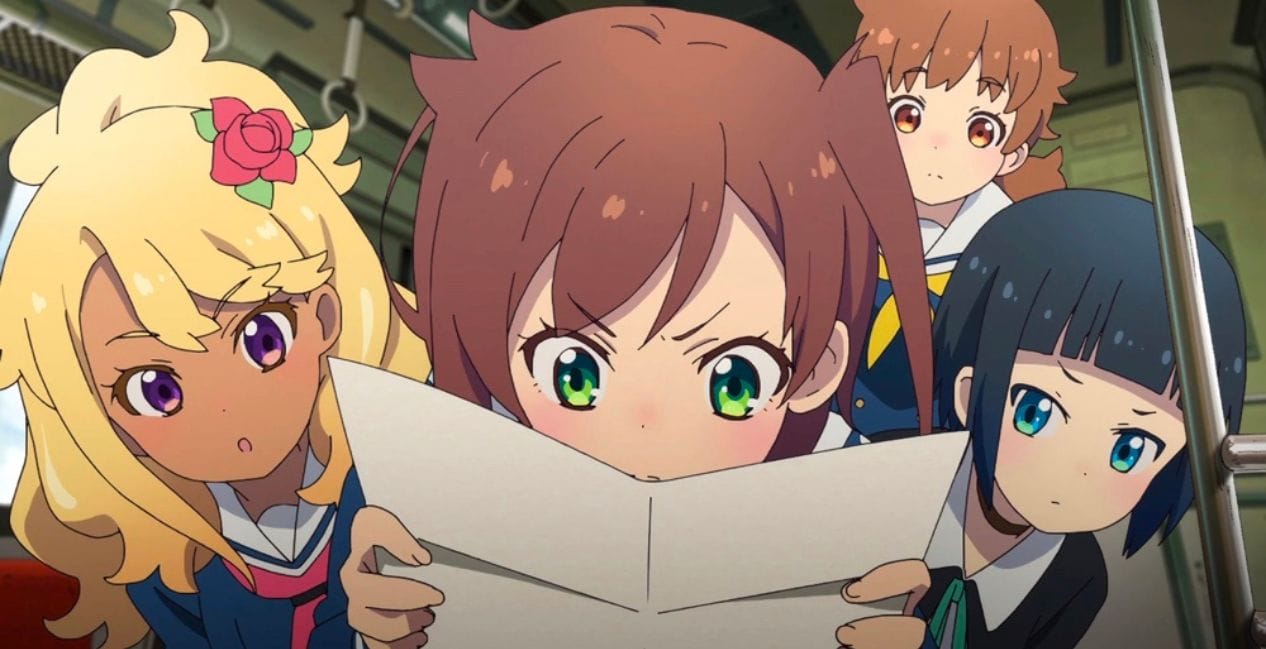
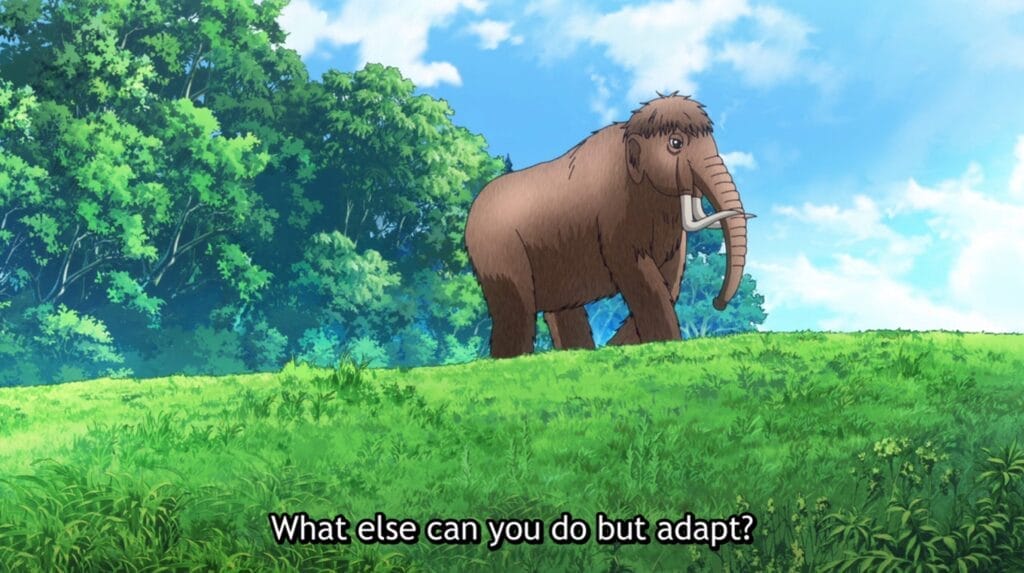
Train to the End of the World also establishes that, when the world is in chaos, you still gotta go to school. The first episode <a href="https://comicvibe.com/10-best-tv-shows-about-pirates-ranked/” title=”10 Best TV Shows About Pirates, Ranked”>shows protagonist Shizuka sitting in a near-empty classroom, getting scolded by her teacher for not taking her career planning paperwork seriously. The teacher is a lizard, by the way, because when reality got warped by the activation of the 7G network (more on that in a second), all the adults in Shizuka’s hometown were transformed into animals. When Shizuka turns twenty-one, and three months old, the same thing will happen to her. Discussion from various capybaras, bears, and birds makes it clear that no one dares venture outside the local region because the world beyond is so chaotic and dangerous. But listen, you still need to go to school, and you still need to fill in your form as if there are universities to attend and high-flying careers to prepare for, and you’ll still have your opposable thumbs and human mind by the time you’re thirty.
Not only is this scene important for establishing Shizuka’s motivation—instead of job prospects, she’s written about her plans to find her missing friend Yoka—but it so neatly sets up the absurdity of this world and the topsy-turvy “normal” that its residents are clinging to, and how that leaves its young people adrift.
“Everything feels insane and nothing feels real”
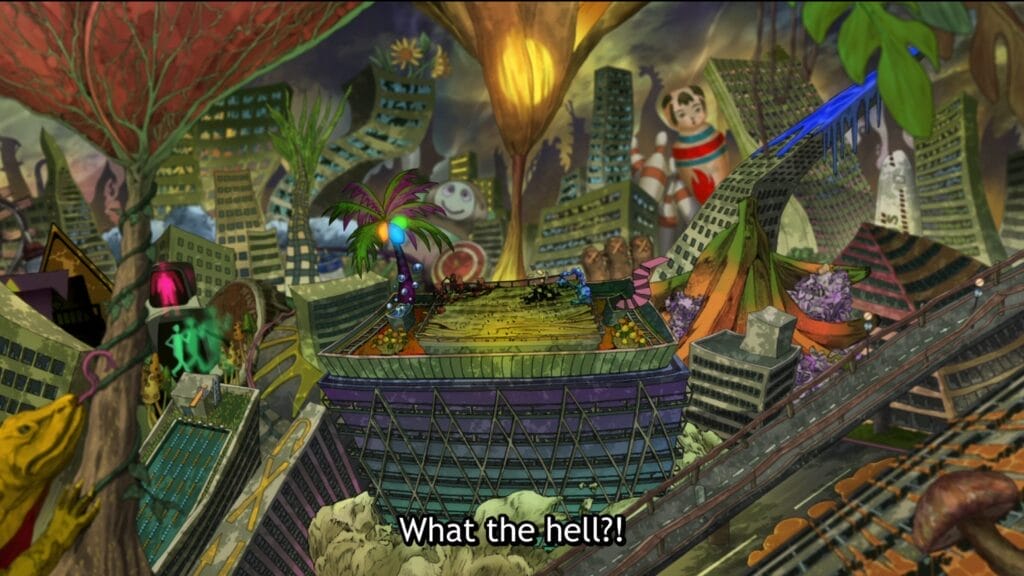
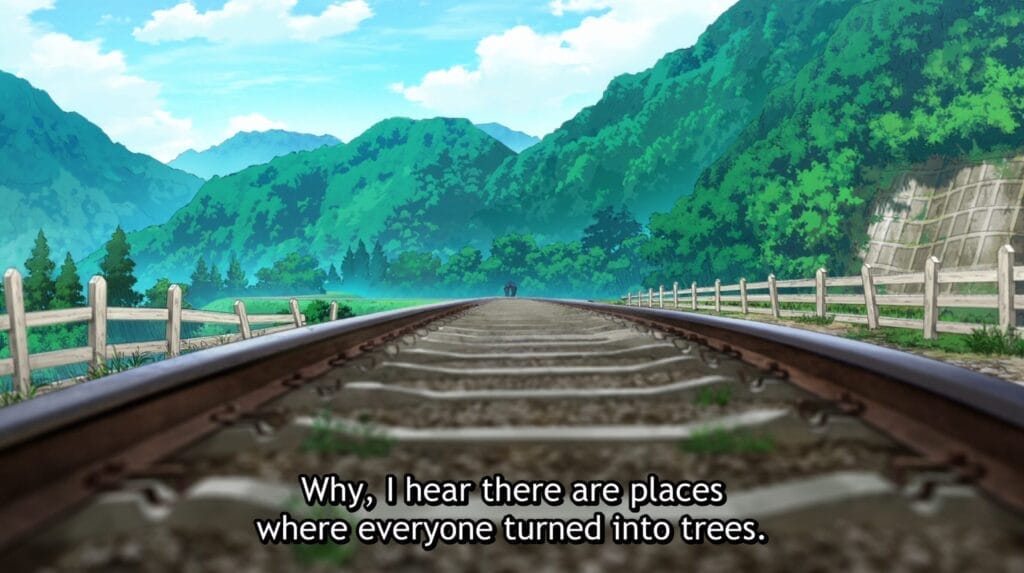
The setting of Train to the End of the World is a world gone mad: the laws of physics have stopped making sense, the distance between towns has expanded or contracted willy-nilly, and reality has distorted within each region in a different way. As Shizuka and her friends travel along the train line, trying to get to Ikebukuro to search for Yoka, they embark on a series of episodic adventures that pit them against everything from mind-controlling mushrooms, to teeny tiny soldiers, to exploding zombies. It’s a wild and fun viewing experience, as each piece of the oddball anthology lets the writers and animators play with different genres, art styles, and fantastical elements. Horror and comedy routinely smash into one another as our heroines venture down the tracks. And while each train station caper is different, the show somehow forms a cohesive whole. It’s consistent in its inconsistency, and it’s devoted to being as bizarre as possible. In that respect, maybe its warped world isn’t too far away from our real one.
It’s safe to say that we’re living in strange times. Frightening times, to be sure—I don’t want to downplay that—but the times are also strange, and frankly kind of stupid. At time of writing, the ever-present doomscroll of news about American politics is oscillating wildly between “the president wants to blow up an entire country” and “the president has hired a buddy of his to fill a large national monument with brightly-coloured toxic algae, and is blaming terrorists for their easily-avoidable plumbing mistake.” It feels like a satirical gag straight out of something like Fallout—a comparison that unfortunately brings imagery of an all-American apocalypse to mind. I want to remain hopeful that there are better days ahead; I think we have to, and have to fight for the future. But if this is the end of the world as we know it, it’s a profoundly silly way to go about it.
I don’t know about you, but it increasingly feels like there’s a smear on the glass through which I’m seeing everything, and I find myself increasingly reckoning with unreality and disbelief. Asking, “Did that thing really happen, or is this news source just working with an unchecked bias?” Or, “Is that an actual photo or AI slop?” (the influx of generative AI being one of the recent developments I’d class as particularly farcical and ridiculous). “Do these people really believe this conspiracy or those regressive ideas they seem to be spouting, or are they trolling… or maybe this is the punchline of a meme I’m out-of-the-loop on?” Or, perhaps worst of all, or at least the most exhausting: “That thing can’t really have happened, it’s too outlandish… oh! It really did? Okay!!”
As author Wen-Yi Lee puts it, “nothing feels real and everything feels insane”. But that means it’s a great time for fiction where reality is similarly wobbly. “We’ve moved into an era where the world feels so strange and distorted that realistic fiction no longer feels realistic,” Lee writes, “and where surreal storytelling is the sometimes only way to capture the real.”
Youthful disillusionment with a nonsense world
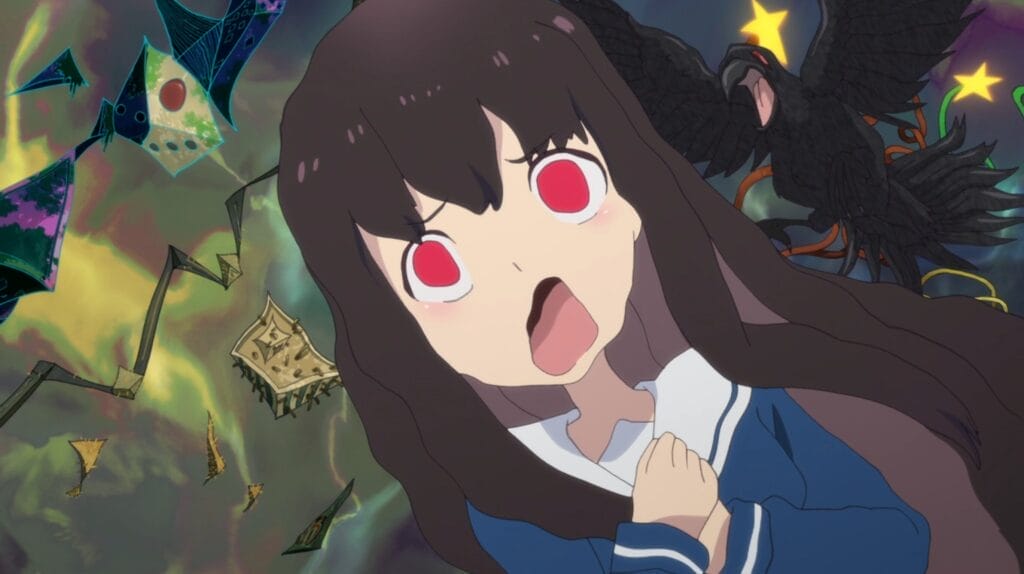
Train to the End of the World is a prime example of surreal storytelling capturing the real. The opening scenes in the main characters’ hometown do the necessary worldbuilding to establish the weird “normal” that everyone’s had to settle into, but they also establish the awful liminal state our teenage protagonists are stuck in. As far as the audience can see, they are the last humans in town, rendered alien to the adults they should be able to relate to and rely on. But clearly, the authority figures and protective structures have let them down.
Even when their neighbours aren’t trying to eat them (an objectively horrifying scene that the characters all roll their eyes at and treat as an everyday occurrence), they’re clearly stuck-in-their-ways in a way that offers no forward momentum. This is the future laid on a platter for Shizuka and the other young characters: the ridiculous paradox of knowing they’re doomed to an isolated life, losing their humanity out in the middle of nowhere, yet expected to go through the traditional rigmarole of career choices and university entrance exams. Yes, the world has ended, but you’ve got to go to school.
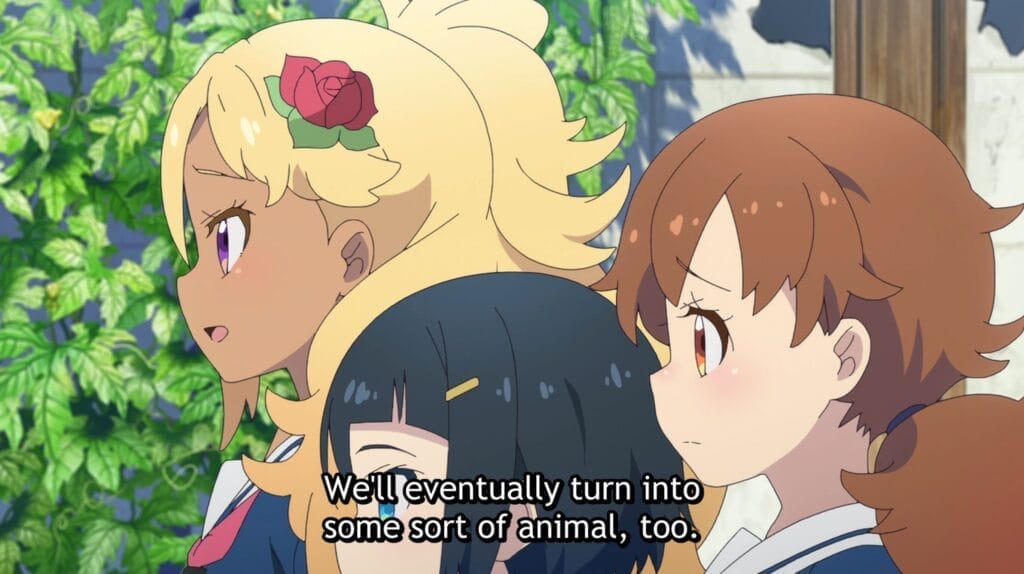
How can they be expected to plan for a future that no longer exists for them? It’s a heightened, absurd vision of reality for many young people, who are being told to plan their lives and aim for traditional milestones while they feel like the world is collapsing around them in, again, the stupidest way possible. These goals, which were concrete to previous generations, feel like little more than hazy mirages. Why save up for a mortgage if the economy is fundamentally changing shape and home-ownership is no longer the viable goal and symbol of maturity it once was anyway? Why fill in your career sheet when you know you’re going to turn into a mouse or something when you turn twenty-one?
The good news is that growing up like this means Shizuka and her friends are perhaps uniquely prepared for the nonsensical horrors they face on their train ride. Like many young heroes before them, they ultimately reject the stagnation of home and the traditional coming-of-age pattern laid out for them, and set off on their own adventure. It’s not always easy for these kids, but one of the funniest and most endearing aspects of the series is how they take things in stride.
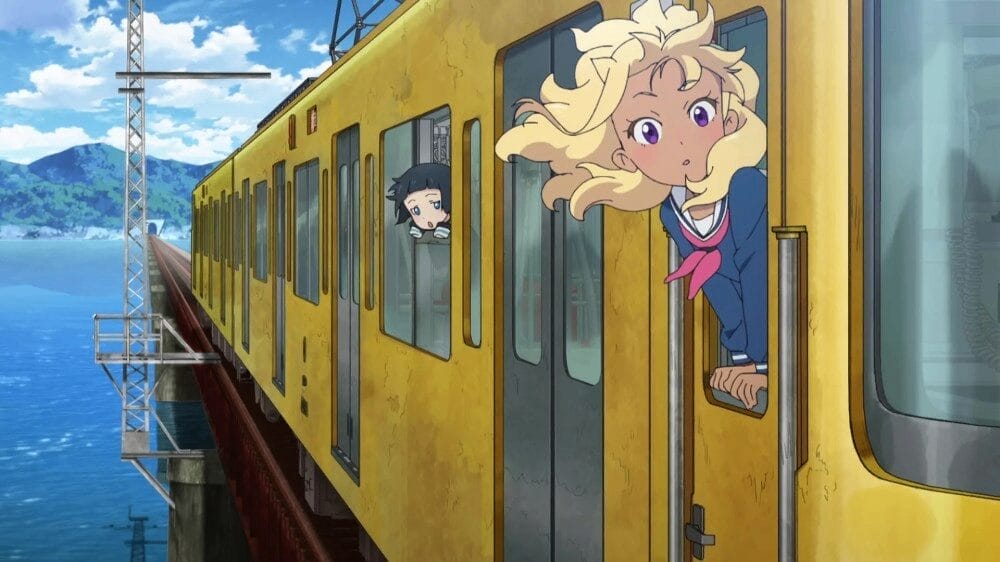
Shizuka and the girls have a powerful, no-nonsense attitude that allows them to plough through even the most insurmountable and silly of enemies. Oh, the zombies explode when they get flustered? What the hell, sure—sing a bawdy old song as we escape and make them so embarrassed they combust all around us. We’ve been captured by shrunken soldiers, still clinging to the power that supposedly comes from being in the military? How ridiculous—kick those little bootlickers and threaten to pee on them! Mushrooms have taken root in our brains and are trying to drag us down into defeated ennui? Not today, sucker—rip that thing outta your friend’s head and aggressively demand that we all strive for a better and more hopeful tomorrow!
It’s very entertaining, but also heartening to watch. Sheer determination, a crass sense of humour, and a low tolerance for the outside world’s surreal BS drives the group onwards. Not to mention the good old power of friendship: even if the group doesn’t always get along, they clearly have the sort of tight-knit dynamic that forms between disillusioned people grasping for support while stuck in the same bad situation. And they’ll need all the power of love they can muster when it comes to rescuing their missing member Yoka, who sits at the heart of the story’s weird worldbuilding.
A villain for our times
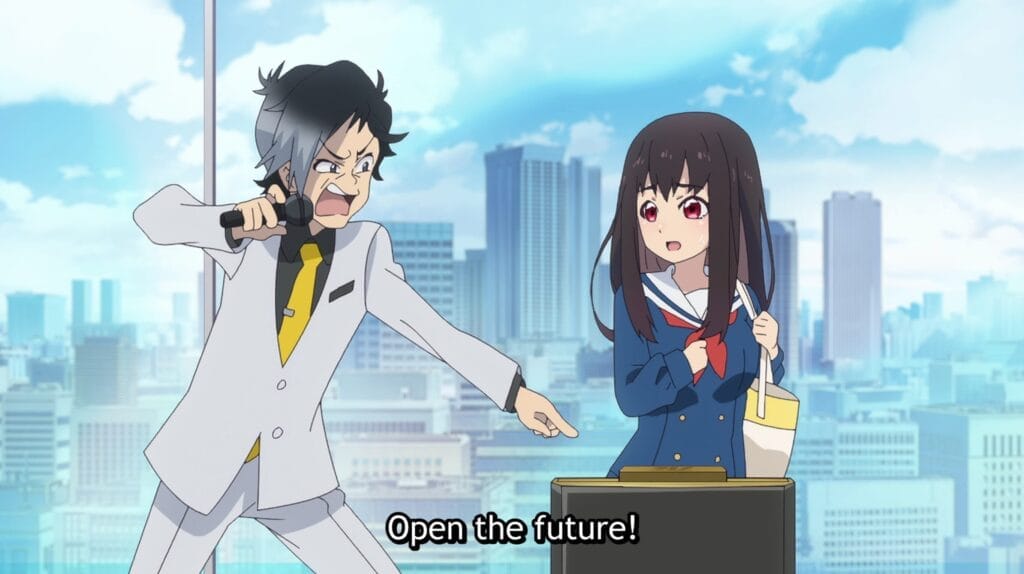
Well, perhaps that’s not quite fair. While it was Yoka who pressed the button and activated 7G, turning the world into the senseless mess it is currently, she was goaded into it by the technology’s creator and spokesperson, Poison Pontaro. In another deeply relatable move, Train to the End of the World features an obnoxious tech-bro as its main antagonist.
Pontaro is part of a grand tradition of slimy, corporate sci-fi villains, from the inhumane nastiness of the Alien movies to the more family-friendly hubris of The Mitchells vs. The Machines. There’s no grand twist or reveal of his folly; the show’s opening scene makes it clear what kind of person he is, inviting the audience to watch as he swings wildly from charismatic to cruel within a few seconds, all while advertising his glorious new tech that will revolutionise the world.
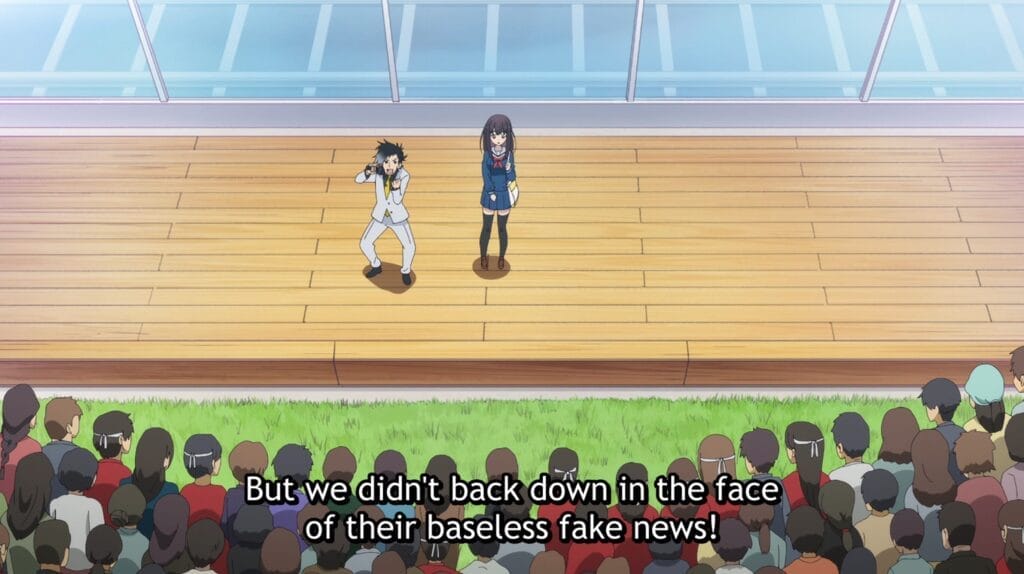
He knew the 7G technology was dangerous, but pushed for its development and release anyway. He brainwashes the experts and colleagues who tried to stop him, leaving them with permanent disabilities (the execution of this is somewhat goofy, but is definitely one of the show’s more haunting pieces of incidental horror). He keeps Yoka in a constant state of amnesia so she doesn’t realise, or tell people, that the end of the world is actually Pontaro’s fault. Let everyone blame the girl who pressed the button, let everyone pile their woes on the younger generation that will inherit this messed up world, rather than the big companies who wrecked it with their greed.
He’s loud-mouthed and shallow and egotistical; he has no humanising backstory or redeeming qualities. He wants money and power, and he wants people to like him, and he seeks these goals in the cruelest, most cringe-worthy way possible. He’s exactly the kind of ding-dong Rebecca Shaw wrote about in “I knew one day I’d have to watch powerful men burn the world down – I just didn’t expect them to be such losers”. Sometimes you want a nuanced, complex villain, but sometimes it suits your artistic statement better to have a guy who unambiguously just sucks.
Back to normal (???)
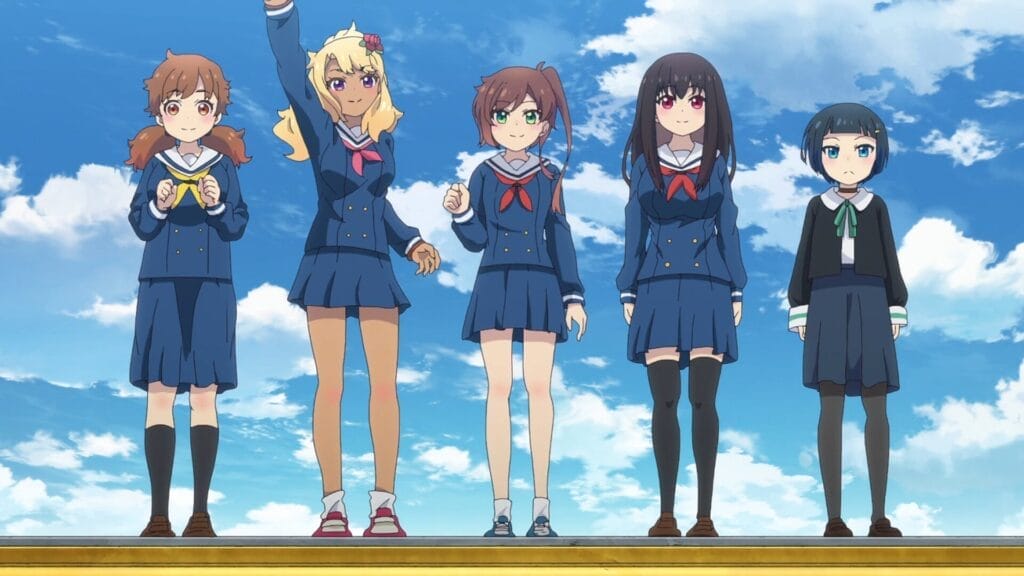
So, Shizuka and her friends have been let down by the previous generation, who impose ideals that simply don’t fit, andthey’ve been let down by the companies who were “supposed to” usher in a prosperous future for them to enjoy. Their frustration with the nonsense world they’ve inherited is palpable and deeply relatable, their warped and ridiculous version of Japan serving as an effective parable for the audience’s reality. But most importantly, Train to the End of the World gives its characters a productive rage with their situation, and ultimately gives them the means to improve it. The reality-warp can’t be entirely undone, but, joining forces with Yoka and fighting off Pontaro and his henchmen, the gang gets some of the way there.
Much like in the real world, there is no “back to normal” from here. Some events are truly too catastrophic, and, as I talked about above, scary and strange things get folded into “normal” as people find ways to cope and carry on. Train to the End of the World knows it’s not as simple as “fixing” anything, and instead offers its characters the catharsis and adventure of a world that’s weird in new, differentways. Will there be more nonsense? Certainly. But maybe, together, it’s nonsense they can manage.
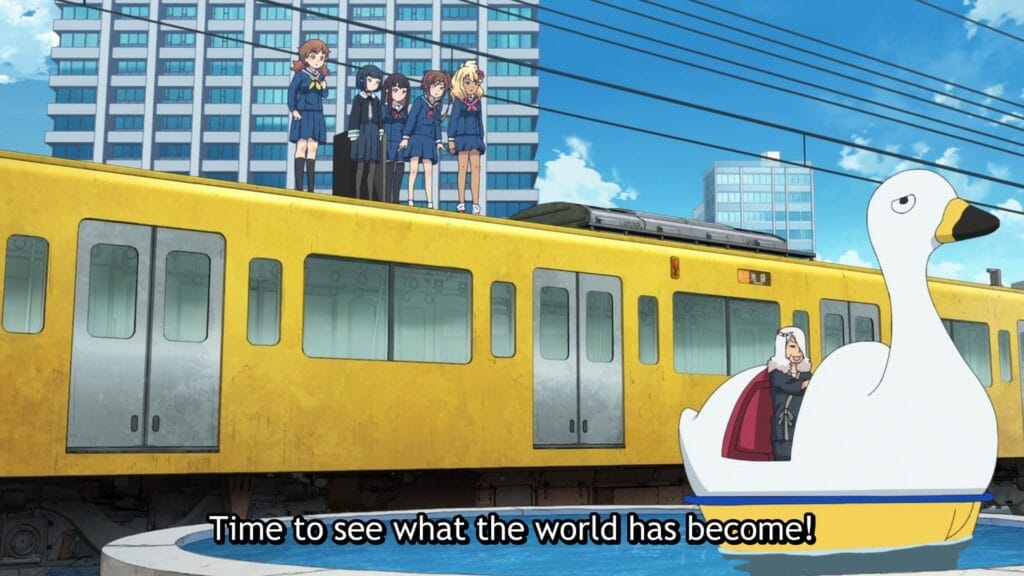
Most importantly, this odd yet hopeful ending comes with comeuppance for Pontaro, who is transformed into a pudding. It’s a fitting end: after so long dehumanising others, he’s now turned into something other than human himself, and into something as wobbly and weak as his own resolve. It’s also, of course, very silly. As it well should be.
Train to the End of the World is an odd show, and for that I hold it close to my heart. It’s delightful to see an experimental original anime like this get made, and to watch its female characters get to be so goofy, and crass, and kick-ass. But its strangeness also captures the current cultural moment in a way that’s unexpectedly accurate. In being so surreal, it touches on very real and relatable ideas, holding up a bendy carnival mirror to the audience’s own world. Maybe it will ultimately fly under the radar, but I can’t help but feel like its specific brand of bizarro social commentary and adolescent frustration will make it one of the defining speculative fiction series of the 2020s. Everything feels insane and nothing feels real, except for weird anime like this—which feels the most real of all.
