


Julia Hart’s striking 2018 drama “Fast Color” could easily serve as a soulful, more contemplative version of “X-Men: Origins — Storm.” “Fast Color” stars Gugu Mbatha-Raw as Ruth, a young woman who wanders the American Midwest in a dystopian future where it no longer rains. Ruth is wary of visiting anywhere, as she is susceptible to seizures, and when she seizes, for unknown reasons, it triggers a localized earthquake. There is also a mysterious scientist on Ruth’s tail, and he clearly aims to extract her blood and use it for some sinister study.
On paper, this is the beginning of an action-packed superhero thriller, but “Fast Color” has more on its mind than simple superhero mayhem. It’s a moody, downbeat film. Its pace is languid, and it spends more time with the characters who discuss their superpowers more than use them. Gugu Mbatha-Raw might be recognizable to Marvel fans as Judge Ravonna Lexus Renslayer from the TV series “Loki,” although she has had a long and prolific career in movies and on TV. She was most recently in the miniseries “Possession,” opposite Johnny Lee Miller, and others might know her from the romance “Belle,” the space opera “Jupiter Ascending,” or from her role as Tish on “Doctor Who.” She once talked about “Fast Color” at SXSW.
“Fast Color” follows three generations of American Black women who talk about their legacy of superpowers and how their powers also give them unusual visual flashes of bright colors. Ruth eventually goes home to see her mother, Bo (Lorraine Toussaint), who has been caring for Ruth’s daughter Lila (Saniyya Sidney). These three characters are more or less the only ones in the movie, the scientist (Christopher Denham) and a local sheriff (David Strathairn) notwithstanding.
Fast Color is a moody and attentive superhero movie
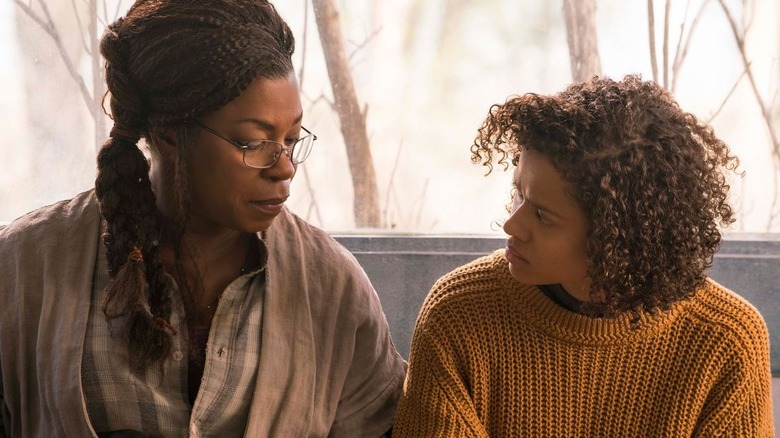
As it so happens, the local sheriff is Bo’s ex-boyfriend, so when the story inevitably goes sideways, Bo will have a leg up in warning Ruth that bad guys are coming. But, again, “Fast Color” is not a movie about mayhem. “Fast Color” is about mothers and daughters, and the legacy of Black women.
It’s revealed that both Bo and Lila have superpowers: they can concentrate on an object and make it disintegrate. They can also reintegrate things, and have spent their time practicing these powers while Ruth was away. Having wielded their powers in such a peaceful, remote place, they both encourage Ruth to start honing her abilities as well. Ruth’s powers are overwhelming to her, and she eventually remembers they are linked to a past trauma involving Lila. Earthquakes happen when Ruth seizes, but she also seems able to summon rain when experiencing emotional bliss.
“Fast Color” climaxes with a face-off, people disintegrating guns, and a weaponized storm, but the scenes you’ll remember are the conversations between Bo and Ruth, sitting in a quaint, peaceful, remote home, discussing their emotional health, and the potential of their repressed powers. Indeed, the movie is so focused on its emotional beats that the actual plot feels like an afterthought. There’s no sense of excitement at the story’s conclusion, and the movie ends with Ruth and Lila leaving the country to find other women with superpowers. “Fast Color” feels like issue #2 in a six-issue comic book miniseries, not bothering to conclude what is clearly a much larger supernatural story. As mentioned, it’s like the first act of a very good “Storm” movie from the “X-Men” series. And the movie ends before it can be ruined by a forced action climax.
What did critics think of Fast Color?
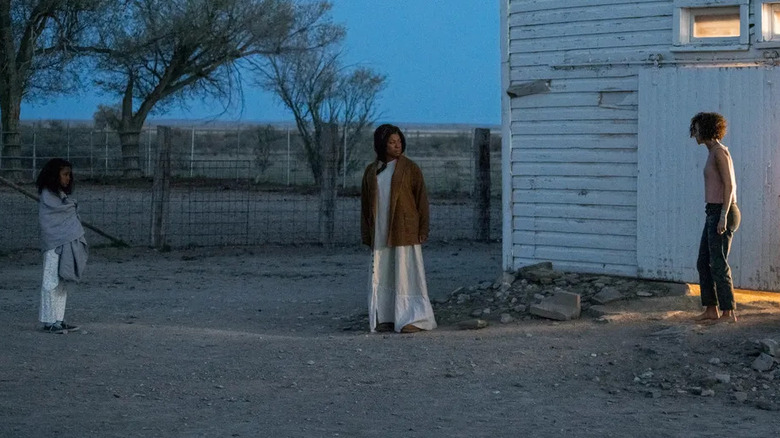
“Fast Color” was a little too moody and slow-moving for most audiences, and it slipped past the attention of a superhero-hungry public (the genre was still riding high back in 2018). Afrofuturist movies were definitely on the rise, as Ryan Coogler’s “Black Panther” had been released the previous February, and Boots Riley’s “Sorry to Bother You” came out later, in December. 2018 was also the year of Ava DuVernay’s adaptation of “A Wrinkle in Time,” which, incidentally, also starred Gugu Mbatha-Raw. “Fast Color” made less than $77,000 at the box office and was really only remarked upon by critics. It’s high time it was discovered.
Critics were generally quite positive on the movie, and it has an 83% approval rating on Rotten Tomatoes based on 88 reviews. Richard Brody, writing for the New Yorker, noted that “Fast Color” wasn’t devoted to spectacle, and honed in on the pleasures and beauties of everyday life, which were both breaths of fresh air from a genre that usually gets lost in VFX and violence. Valerie Complex, writing for The Mary Sue, was also positive on the film, writing:
“Hart excels at making this bleak, dry desert aesthetic appear beautiful, yet isolating. ‘Fast Color’ unintentionally deconstructs the superhero genre. This isn’t a traditional superhero film, as there’s no fancy CGI or an audacious final showdown with the big bad. In fact, the powers are secondary in this story. The focus is on this broken family trying to repair itself, bonding through the exploration of their family history, and using that history to become self-aware.”
And, Complex notes, it’s a rare movie about Black women with superpowers. There aren’t so many of those throughout the superhero genre, and there should be more.
