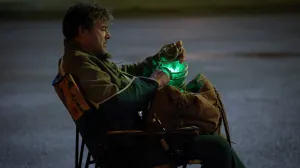
Back in 2013, the Marvel Cinematic Universe was much newer, starting then on Phase Two which marked its expansion into television with Marvel’s Agents of SHIELD.
Videos by ComicBook.com
While Marvel television today is characterized by short seasons as popularized by streaming with low expectations for renewal, Agents of SHIELDran for seven seasons. It kept a 22 episode format for seasons 1-5 and a 13 episode format for seasons 6-7. This allowed for creativity, in depth character development, and denied to contemporary Marvel projects.
Looking back at Agents of SHIELD,these are the five lessons the MCU needs to learn from the only Marvel TV show that not only got seven seasons but created a host of fan-favorite characters that still resonate with fans.
5. A Romance to Root For
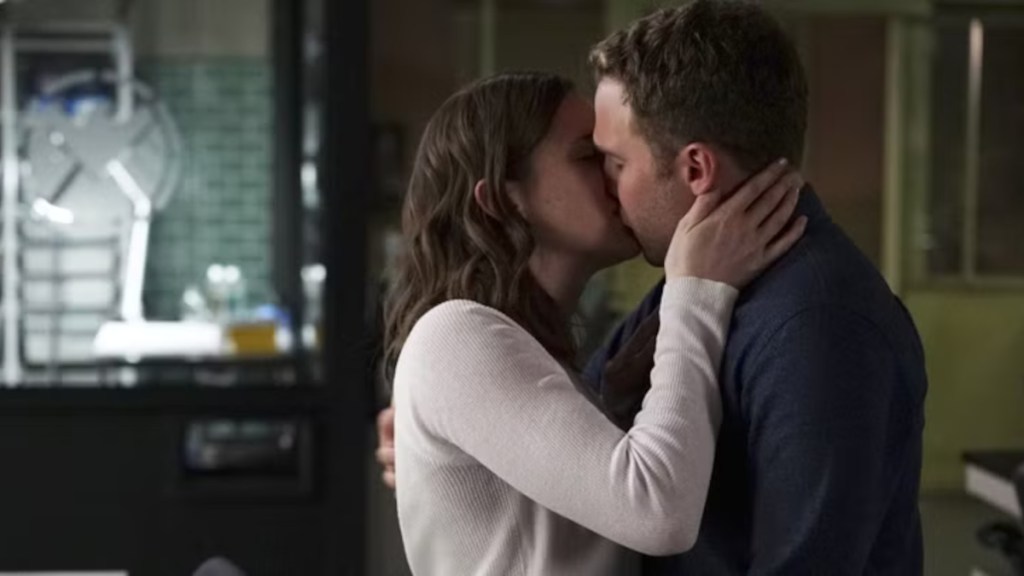
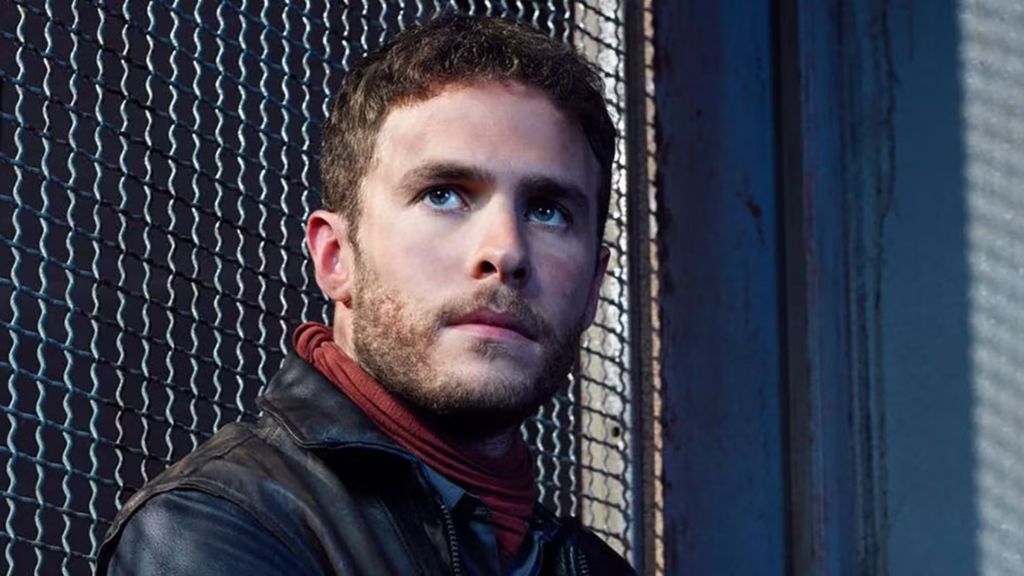
It’s rare that the MCU makes a watcher swoon, but I know for a fact that Fitz and Simmons had audiences invested.The show was able to devote time to the couple’s development in addition to time spent with both of the characters so as not to have one feel reduced to only a love interest for the other. Both were fully-fleshed out characters who had their own skills, quirks, and roles within the team – which both evolved over time and faced intense dramatic struggles (such as Jemma being stuck on the planet Maveth for six months, without any of her fellow agents, after being sucked into a Kree Monolith or Fitz being injected into a virtual matrix and unknowingly forced to become a villainous version of himself).
Throughout the show’s run, Fitz and Simmons’ relationship spans many stages. They go from best friends to lab partners to unrequited but actually secretly requited love to momentarily together before separated by circumstances over again — to where Fitz believes the universe has cursed them — and then ending up happily ever after together once the show was ending.
4. MCU Worldbuilding
As a show, Agents of SHIELDwas unafraid to play with the conventions of its genre both the spy / secret organization aspects and the superhero / supernatural ones. Taking place post Battle of New York, the show highlights human – such as hackers and thieves – and superhuman threats. Agents of SHIELD delights in splitting its world open over and over again, starting with the revelation of HYDRA secretly being inside of SHIELD – which, unlike a lot of MCU series, had massive implications on the movie-side MCU. The world is split open again with the introduction of Inhumans, aliens who undergo physical changes when exposed to terrigen mists.
Later seasons expand further, having the agents explore alien worlds, grapple with simulation technology, time travel, and memory wipes. The series initially includes stories like “The Well” with clear ties to MCU films like Thor: The Dark Worldbefore breaking away in favor of its own mythos and storytelling. The MCU can learn not only to enjoy worldbuilding but to be unafraid to let it stand on its own as opposed to obsessive tie-ing to other Marvel projects.
3. Mysteries with Payoff
Image courtesy of Marvel Television
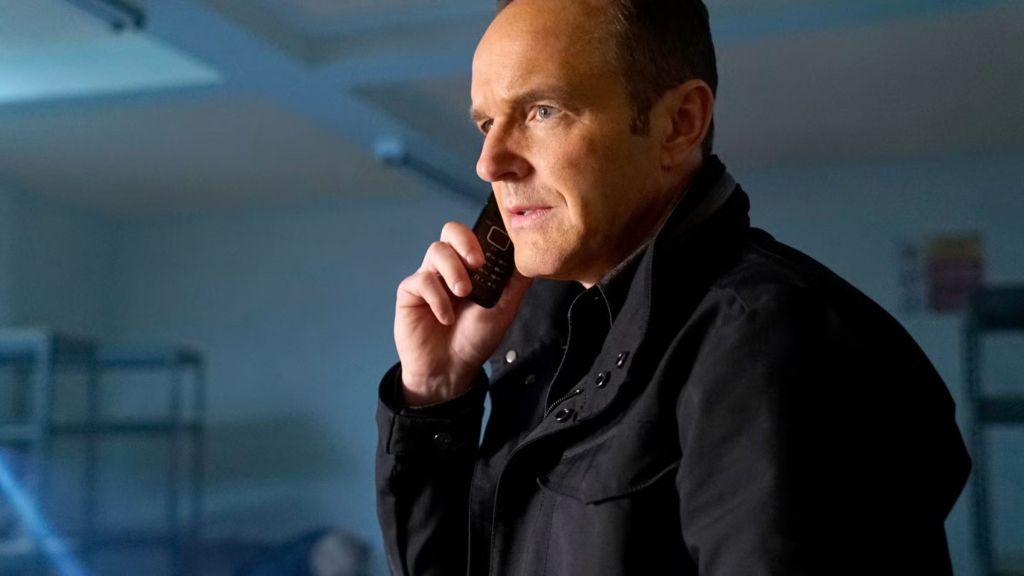
Have I said that Tahiti is a magical place? In addition to its world-building, Agents of SHIELDnot only sets up mysteries but follows through with satisfying payoff, such as the fate of Phil Coulson. Prior to the show, audiences watched Phil Coulson die in 2012’s The Avengers.Yet, in Agents of SHIELD,Phil Coulson is alive and doing his job day in and day out. When Coulson thinks about the events of The Avengers,he thinks he took a vacation in Tahiti afterwards. He only later finds out that it was an experimental alien procedure, bordering on torture for his mind, that gave him back his life.
Additional mysteries would propel the series throughout its run. Such questions included the identities of Skye’s parents, whether Fitz and Simmons would reunite (several times over), and if and how (not to mention if) SHIELD would be rebuilt.
2. Balanced Ensemble Cast
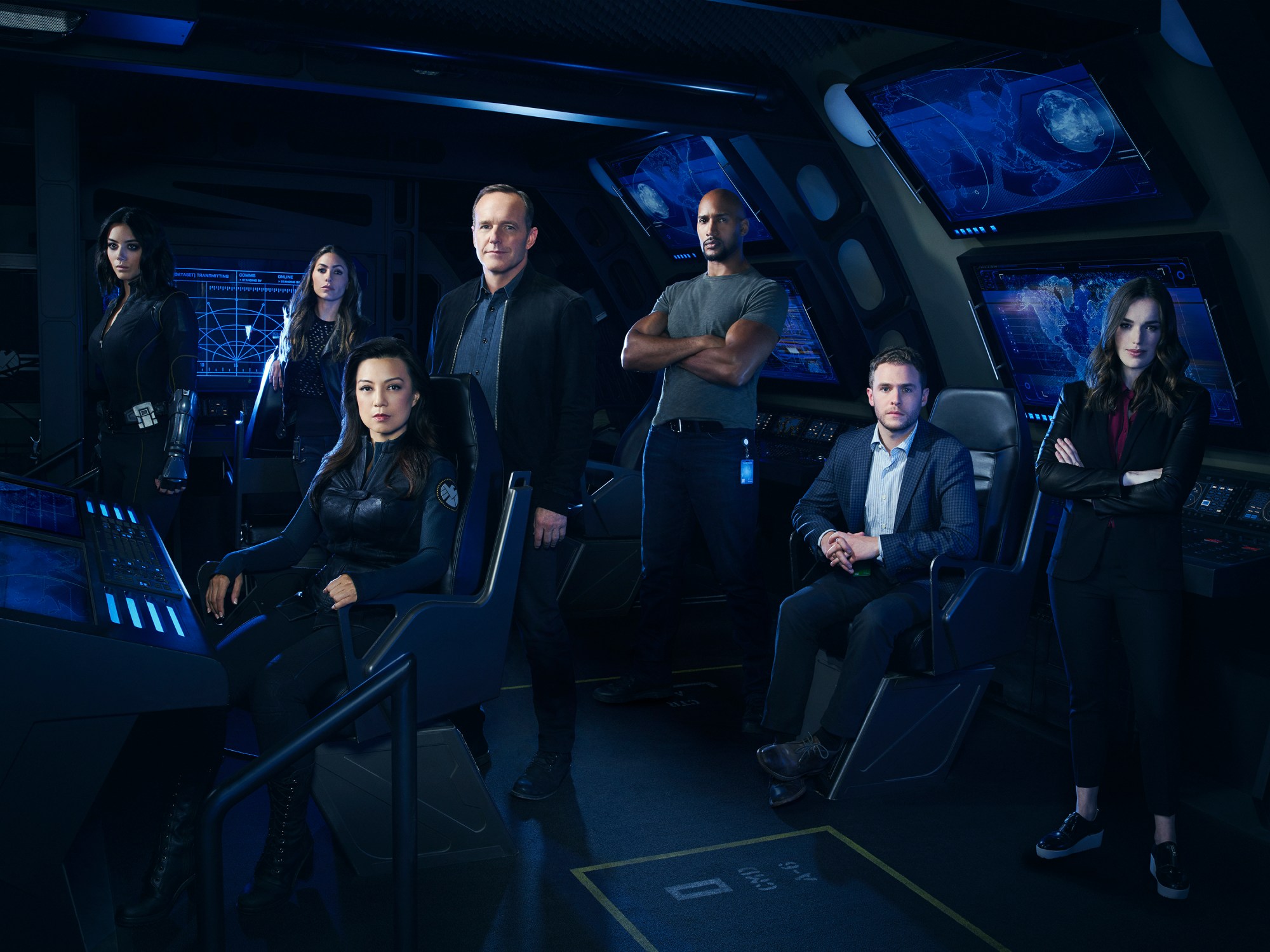
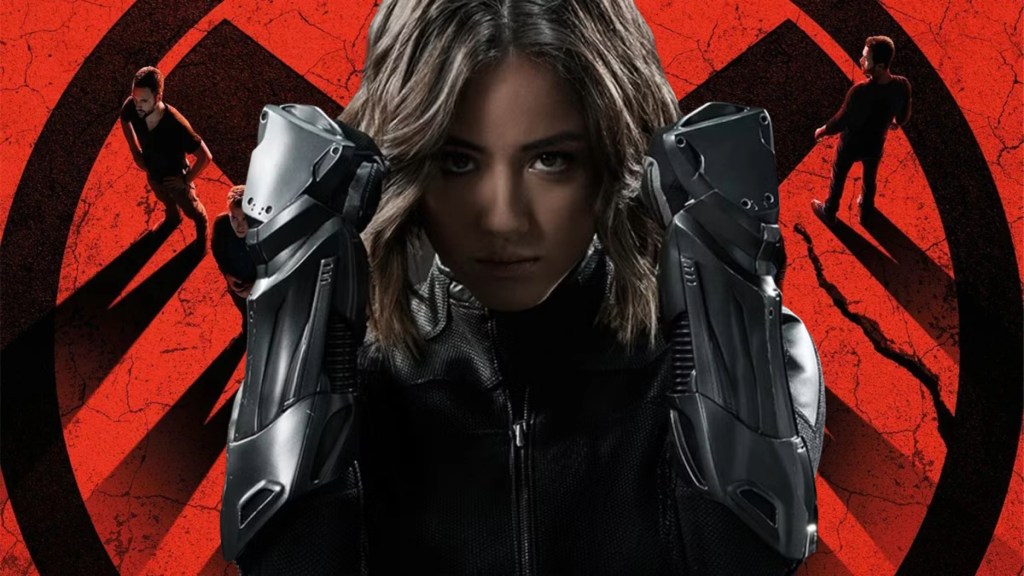
Arguably, this is a lesson already learned by the MCU, but its importance cannot be overstated. When thinking of successful Marvel Television projects, the first two that come to mind are Agatha All Alongand X-Men ‘97, both of which have stellar ensemble casts. Ensemble casts allow for more storytelling perspectives and angles whilst relieving the pressure of putting all the eggs in the basket of one main character, which audiences might not respond to. Agents of SHIELDstarts out with six main characters, five of which would stay consistent during its run. The characters are a mix of comic originating and series originals with lab scientists Fitz and Simmons created for the series and audience surrogate turned Inhuman Skye later turning out to be comics character Daisy Johnson.
The show is concerned with the backstories of each character – arcs throughout the series investigate Daisy Johnson’s parentage, the impact of Fitz’s abusive father, how May’s past has shaped her and earned the nickname “The Cavalry” – in addition to how they play off of each other. Daisy Johnson and Coulson develop a father-daughter dynamic in addition to a tight bond shared by the overall team. The shared closeness is not stated but also shown through recurring gags and scenes of the characters hanging out with each other and having fun. When Agent Ward is revealed as Hydra and sends Fitz and Simmons to the bottom of the ocean in a faulty escape pod, the betrayal hurts because we’ve seen Ward help Fitz out in the field and give him advice about Simmons.
1. Character Arcs!
Image courtesy of Marvel Television
The biggest takeaway for the MCU to learn is the art of a meaningful character arc. Unlike the MCU where different directors make use of mainline characters to suit the current story (are we getting depressed Thor, brash Thor, or sentimental Thor for this one), Agents of SHIELD committed to multi-season development of its heroes (and villains).
Take Fitz’s experiences as an example (and every person on the team has an arc): he has a psychotic break midway through the series, resulting from the trauma he’s experienced.Fitz starts out the series as a socially awkward genius experiencing fieldwork for the first time. His personality shifts following his brain damage but the main tenets of his character remain. He derives his self worth from his job, which he struggles to perform, and isolates himself from his friends given his new stutter. While he’s able to heal, he’s never quite the same even when he resumes his scientific work.
As mentioned, in the fourth season, Fitz develops a training simulation for agents known as the Framework. The simulation creates an alternate reality by taking away a person’s main regret. While Fitz goes into the project with the best of intentions, the removal of his own regret turns him into a cold, calculating genius who cruelly tortures Inhumans such as his friend Daisy. Fitz’s own deepest regret turned out to be his father’s rejection.
Yet, even when he’s rescued from the Framework, this personality doesn’t go away. Fitz hallucinates him and feels powerless to stop the other personality. He has to battle with who he is whilst other characters try arguing it wasn’t him. Fitz is insistent that it was, and that psychic split or not, he has to take accountability. Ultimately, he does – and his path to accepting himself, and his commitment to his friends, is what helps him move past his trauma.
It’s hard to think of a mainline character in Agents of SHIELD that doesn’t get a similar (albeit unique) arc that, by the end, brings each hero full circle.
What lessons do you think the MCU should take away from Agents of SHIELD? Comment down below.
6 Years Ago, The MCU’s Most-Underrated Show Released A Time-Bending Episode Better Than Doctor Who
More TV Shows
TV Shows
1 day ago
You Have Just Days Left to Stream One of TV’s Bloodiest Action Series Before It Leaves Netflix
TV Shows
1 day ago
Official Lanterns Hal Jordan Halloween Costume Has Fans Worried About The Show: “Is This a Spoiler?”
image courtesy of hbo max
TV Shows
1 day ago
Lanterns Reveals the Origin of Those Mysterious Black Portals, And It Makes A Lot of Sense
<img src="https://comicvibe.com/wp-content/uploads/2026/09/Mr-Freeze-in-Batman-The-Animated-Series-Heart-of-Ice-episode-1.jpg" alt="On TV 34 Years Ago, Batman Officially Changed Cartoons Forever (And the Opening Credits Still Haven’t Been Topped)”>Image courtesy of Warner Bros. Animation
TV Shows
2 days ago
On TV 34 Years Ago, Batman Officially Changed Cartoons Forever (And the Opening Credits Still Haven’t Been Topped)
IMAGE COURTESY OF HBO
TV Shows
2 days ago
Lanterns May Not Be in Space Much, But It’s Addressing a Major Criticism From the Ryan Reynolds Movie