

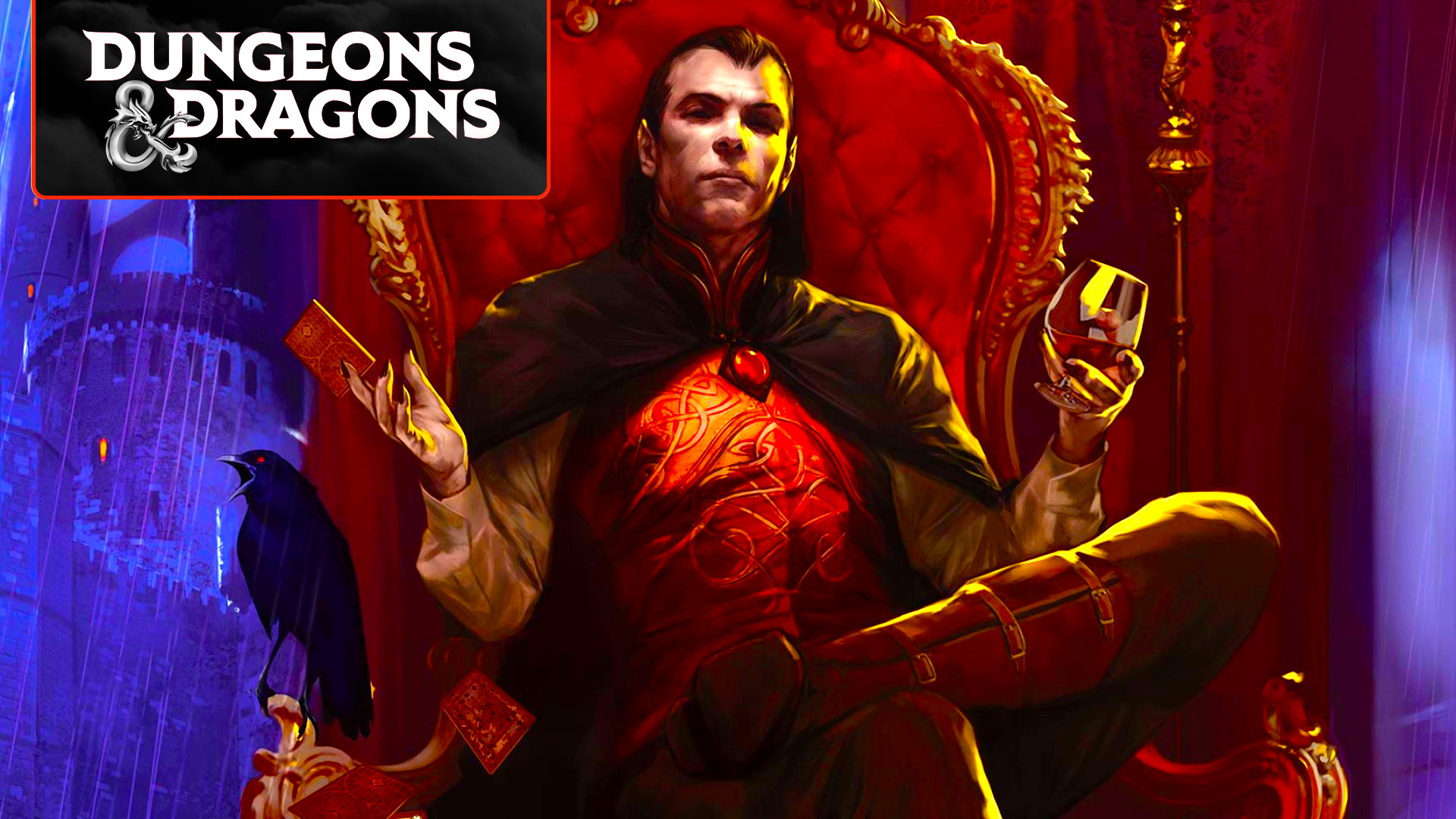
On September 3, Dungeons and Dragons announced a death and a resurrection. The Forgotten Realms Netflix show that entered development last year is dead, and from its ashes rises a new project. We’re officially getting a live-action Ravenloft Netflix series, starring D&D’s own Strahd von Zarovich.
I stand among the cries of ‘soulless cash grab!’, and I hold a mote of hope. Based on the sparse announcement from Deadline, I actually think this is a pitch with potential. John August is attached to write the thing, and he co-wrote many of Tim Burton’s better 2000s movies: Big Fish, Corpse Bride, Frankenweenie, and so on. He also wrote Charlie’s Angels, a well-liked movie that is marginally less relevant to gothic horror.
August is also executive producing, alongside Alfonso Cuarón, Gabriel Marano, Richard Schwartz, and Gaby Rodriguez. This list of names isn’t why I think the show has a shot at success, though. That’s all down to Strahd himself.
Ravenloft is remembered as one of D&D’s first villain-driven adventure modules. Strahd’s complex character and rich history is a lot of what makes Ravenloft so compelling. Dynamic dungeon and freeform sandbox aside, it’s the twists and turns of Strahd’s tragic backstory that captures hearts.
The producers at Netflix would do well to remember this, because there’s an easy pit trap they could fall into – inventing too many new characters.
It’s true that, in a Ravenloft campaign, the characters are the stars of the narrative. But roleplaying games and television are fundamentally different mediums. Screen audiences are passive voyeurs, observing the story from the outside. They don’t need a character to act as their agent, because they don’t decide the narrative outcomes.
D&D adaptations often insert a pseudo adventuring party to capture the feel of the original game. That works fine in something like Honor Among Thieves, where the star power of the original IP belongs to the setting. In a character-driven adaptation like Ravenloft, you risk overshadowing the characters people actually care about.
This was my biggest issue with the latest Ravenloft novel, Heir of Strahd. The brand-new protagonists were so much less interesting than Strahd himself that the whole thing felt a bit absurd.
I don’t want a series that lets them spectate somebody else’s campaign. I want to see the military career that led Strahd to neglect his personal life. I want to see him struggle with love and resentment for his brother, and they want to see how his relationship with the tragic Tatyana develops. The entire first season could easily be about his rise, fall, and re-rise as a vampire lord.
Series have a habit of extending past theStrahd lore to play with. Show us how he collects his coterie of brides! Give us side plots about Rahadin, his chamberlain! Introduce the vampire hunters, Van Richten and Eszmerelda, as antagonists, instead of a bunch of nobodies. Throw Lord Soth in there later on for a bit of spice!
A Ravenloft series can easily capitalize on the D&D module’s deep well of themes. It’s the chance to bring decades of excellent storytelling to a new audience, but Netflix needs to keep its eyes on the prize. We’re here for Strahd, not a boardroom’s idea of fantasy fanfiction.
Want to talk more about D&D? Tell us about your favorite D&D classes, or your best table stories, in the Wargamer Discord.
