

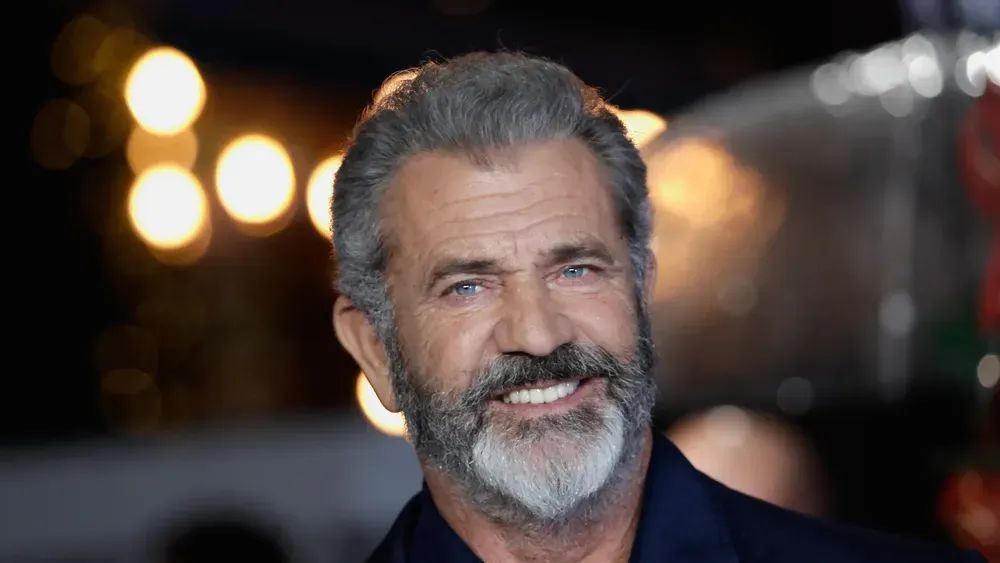
NOVEMBER 16: Actor Mel Gibson arrives at the UK Premiere of ‘Daddy’s Home 2’ at Vue West End on November 16, 2017 in London, England
Mel Gibson Apologizes After Backlash Over Sign-Language Gestures at Fan Expo Canada
Chris TremblayREAD TIME: 3 MIN.
Mel Gibson apologized on Monday, August 31, after video from Fan Expo Canada appeared to show him mimicking an American Sign Language interpreter during a public appearance in Toronto.
The incident occurred on Saturday, August 29, as Gibson was introduced for a question-and-answer session at the convention.
Footage circulated online shows the actor walking onto the stage behind an interpreter who was signing for members of the audience.
The video shows Gibson briefly turning toward the audience and making rapid hand movements of his own before approaching moderator Liam Crowley and taking his seat.
Several news organizations described the gestures as appearing to mock or imitate the interpreter, while noting that the short video does not establish what Gibson intended.
The clip reportedly lasts only a few seconds, making the sequence difficult to interpret independently of the surrounding context.
The event took place at Fan Expo Canada in Toronto, where Gibson participated in a career-focused retrospective discussion.
Gibson’s Apology
In a statement reported by multiple outlets, Gibson called the behavior “spontaneous thoughtless idiocy.”
“Sometimes when you get pushed out on a stage in a spotlight your mind is all over the place, and sometimes spontaneous thoughtless idiocy is displayed,” Gibson said.
“There was no intended maliciousness attached, and I certainly apologize to anyone who was upset by it,” he added.
The statement acknowledged the public reaction but did not identify the interpreter or describe any direct conversation with the interpreter after the appearance.
Gibson’s apology was reported after the footage drew criticism on social-media platforms and was republished by entertainment and news outlets.
The available reports do not indicate that Gibson used an audible slur or explicitly stated that he intended to ridicule the interpreter.
Accordingly, the confirmed facts are that Gibson <a href="https://comicvibe.com/kingdom-vol-80-leads-as-made-in-abyss-vol-15-debuts-at-no-2/” title=”Kingdom Vol. 80 Leads as Made in Abyss Vol. 15 Debuts at No. 2″>made the gestures, viewers interpreted them as mocking, the footage prompted criticism, and Gibson later apologized while denying malicious intent.
Why the Moment Drew Criticism
American Sign Language is a complete language with its own linguistic structure, rather than a set of improvised gestures or a word-for-word visual form of spoken English.
The National Association of the Deaf describes ASL as central to American Deaf culture and advocates for its recognition, use and preservation.
At public events, interpreters provide communication access for Deaf and hard-of-hearing attendees who use sign language.
The Canadian Association of the Deaf has said that communication access should be provided through qualified professional sign-language interpreters and intervenors.
The organization also identifies American Sign Language and Langue des signes québécoise as languages used by Deaf people in Canada.
That context made the footage especially sensitive to viewers who saw the gestures as reducing a recognized language and accessibility service to a joke.
The reports reviewed for this article do not document a public response from a national Deaf organization or from the interpreter involved.
The Broader Response
The episode generated criticism from social-media users who accused Gibson of making fun of the interpreter and showing disrespect toward Deaf people.
Some reports used the word “allegedly” or “seemingly” because the footage captures a brief gesture without an accompanying explanation of Gibson’s state of mind.
Other reports stated more directly that Gibson mocked the interpreter, reflecting the interpretation adopted by those outlets after reviewing the video.
No report reviewed for this article indicates that Fan Expo Canada canceled Gibson’s appearance, removed him from the event or announced disciplinary action.
No report reviewed for this article indicates that Gibson’s apology included a financial contribution, a formal meeting with Deaf advocates or a commitment to accessibility education.
The immediate public record therefore centers on the video, the criticism it prompted and Gibson’s explanation and apology.
The controversy also illustrates why descriptions of sign-language incidents require care: an observer can report visible movements and their public reception, but cannot establish private intent from a short clip alone.
As of September 1, Gibson had publicly apologized and said there was no malicious intent behind the conduct shown in the video.
The incident remains a matter of public criticism rather than a reported legal finding or official determination about the interpreter’s treatment.
Chris provides content for EDGE Media Network.
