

Of the plethora of companies that have delved into the video game industry, one company has endured longer than any other, and that’s Nintendo. There are others like Atari and Sega that are still around, but unlike Nintendo, they’re not releasing popular consoles and a ton of excellent games decades after joining in on the fun. Nintendo has staying power, and one of the things that’s kept the company at the forefront of the industry is its ability to innovate.
Nintendo has delivered plenty of duds over the years, as anyone who spent their hard-earned cash on the so-called “bad” Power Glove, the utter failure known as the Virtual Boy, or the poorly received Wii U can attest. Still, while it’s stumbled a few times, most of what Nintendo has delivered to the public has been fully embraced. The company strayed from the competition with the Wii, catering to players of all ages while bringing in people who’d never played a video game in their lives, and that’s hardly the company’s only innovative hardware.
Throughout its history, Nintendo has taken chances, offering up new ways to play that distinguish it from the competition. Some moves were made because of necessity, as technology advanced to a point where new tech had to be included. Others involved taking chances with new ideas that gamers embraced wholeheartedly. Some of Nintendo’s best inventions are those that many gamers don’t even attribute to the company, and these five were some of the most important in the history of gaming.
Platformers
There are tons of video game genres, and one of the oldest and longest-enduring is platformers. The first game that featured what is now common in a platformer, which includes jumping, climbing, and levels, is “Donkey Kong.” The game came about because Nintendo, which was close to bankruptcy, needed a new title to go into almost 2,000 unsold “Radar Scope” arcade cabinets. Shigeru Miyamoto was tasked with the game’s design, and he put together “Donkey Kong,” establishing the platformer genre.
Not only did “Donkey Kong” go on to become an amazing success, but it also saved Nintendo’s North American branch from financial ruin. Miyamoto was an artist and not a programmer, so he approached the game’s design from that perspective, focusing primarily on the game’s story over its mechanics. In fact, “Donkey Kong” isn’t merely credited as the first “true” platform game to break into the mainstream, as it’s also the first game with a complete story containing a beginning, middle, and an end. It also introduced story-driven cutscenes, and it’s one of the first games with named characters.
Of course, back then the hero wasn’t Mario; he was a carpenter named Jumpman who had to save Pauline from a rampaging, barrel-throwing gorilla who was initially Jumpman’s pet. The characters evolved, and “Donkey Kong” earned its place among the pantheon of vitally important games in the development of the video game industry, saving Nintendo in the process. Decades later, Miyamoto was recognized as the first video game developer to receive Japan’s Culture Award. He continues to oversee game development and is one of the most important people in the early establishment of the industry.
The D-pad
If you grab a bunch of modern gaming controllers, you’ll notice that they each feature many of the same buttons, similar button placements, and they all have a D-pad. This is true whether the controllers in question have thumbsticks or not, and the reason for their inclusion is their overt usefulness. They’re great for navigating menus, and plenty of games require them for all kinds of things, whether it’s a character’s movement or the selection of weapons or items.
Despite its modern ubiquity, the D-pad wasn’t always a thing in gaming, and it took a while before it appeared. The first game to feature a D-pad was none other than 1982’s handheld adaptation of Nintendo’s most important early arcade game, “Donkey Kong.” Specifically, it was included on the Nintendo Game & Watch “Donkey Kong” handheld system, which featured an LCD display and similar gameplay to the arcade game. Instead of a joystick, players input Mario’s direction via the new method, and it worked spectacularly well.
Not only was it one of the greatest handheld games from the early 1980s, but “Donkey Kong” demonstrated the usefulness of a small direction pad in early gaming. It took a while before Nintendo fully embraced the innovation, but by the time the Nintendo Entertainment System (NES) arrived in North America, it was a primary feature of the system’s controller. Other companies followed suit, and more than 40 years after its introduction, the D-pad remains one of the most fundamental elements of gaming.
Cartridge Battery Save Files
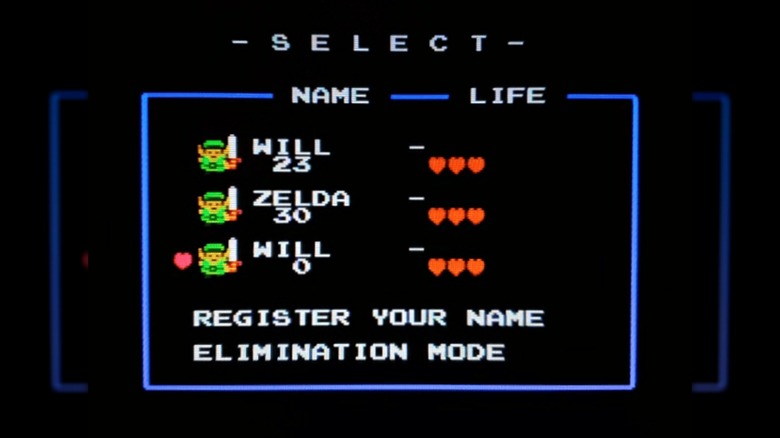
When video games arose in the 1970s, players didn’t have checkpoints or saves, and instead competed to see if they could get the high score. This remained one of the most common measures of a player’s skill for years, as the ability to save a game’s progress was limited. Eventually, complex codes could be inputted into NES titles and on other systems, returning gameplay to a specific level, but writing it all down and entering in the code was a frustrating process.
In 1987, that all changed when Nintendo released “The Legend of Zelda.” At the time, PC games had the ability to save, but consoles like the NES lacked that capability. To make it happen, Nintendo included a small watch battery inside the cartridge that provided the needed steady stream of power to save and recover files. This brilliant innovation brought saving as we know it today to consoles, changing the way games were played.
It opened the door for more robust role-playing and adventure games on the system, giving players more detailed titles they didn’t have to restart every time they fired up their NES. Soon, more games followed with similar saving features, establishing a norm that remains common today. Not only did the battery make saving the game possible, but decades after its release, players can open up their shiny, gold “Zelda” cartridge and replace the battery with a fresh one, making decades of gameplay possible long after the game first arrived on store shelves in the ’80s.
Shoulder Buttons
If you were to line up every home gaming console’s controller, beginning with the Magnavox Odyssey and finishing with the PlayStation 5, you’ll notice something interesting. Controllers evolved over time to include features that became common down the line, and it’s clear which elements were good enough to keep and which were best left in the past. Some poor innovations included adding number pads to controllers like the Atari Jaguar’s, which faded into obscurity, while the aforementioned D-pad and other elements remain.
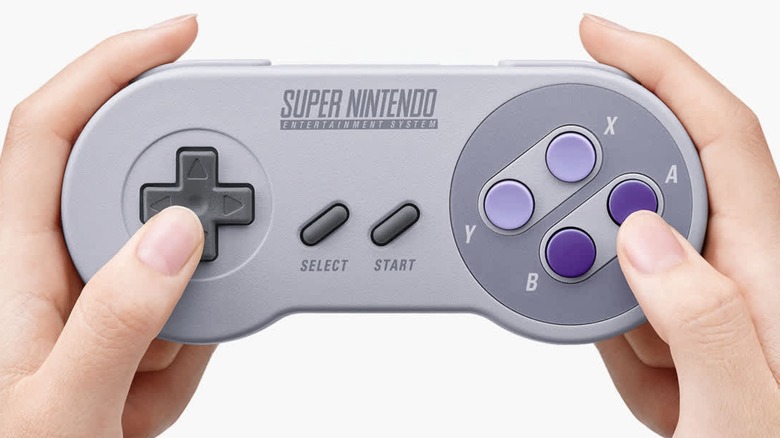
This is clear with button placement, and while many early consoles featured two, then three, and later, four buttons, many more arrived over time. Two of the most important new buttons came in the form of shoulder buttons on the Super Nintendo Entertainment System (SNES). Nintendo significantly improved its controller design by updating the form factor from a rectangle into one that’s more comfortable to hold in the hands for longer gaming sessions, taking inspiration from Sega’s Genesis controllers.
The company also added the X and Y face buttons, and two shoulder buttons on the top of the controller. Adding buttons increased the options for gameplay, and shoulder buttons quickly became standard in future consoles, whether they were made by Nintendo or another company. They took a process that used only a person’s thumbs for control and opened up the use of additional fingers. Nowadays, controllers have buttons all over the place, and elite controllers like the SteelSeries Aeon Pro feature tons of inputs, including shoulder buttons.
Hybrid Consoles
It used to be that if you wanted to game on the go, you needed a handheld console. There were tons of them throughout the 1980s and ’90s, but over time, they began to disappear. This was partly due to Nintendo’s domination of the market with various Game Boys, the 2DS and the 3DS, but also because other companies focused their attention on home consoles. Nintendo did the same, but the company had a goal that involved creating a console that was both made for the home and was also portable. Nintendo’s first solid attempt came via the Wii U, which ultimately failed.
The second attempt was far more successful, and when Nintendo released the Nintendo Switch in 2017, it changed the landscape of the entire video game industry. Not only was the Switch an excellent console for home gaming on a television, but it was equally exceptional for gaming anywhere you wanted to take it. You could fire up “The Legend of Zelda: Breath of the Wild” at home, and when you needed to leave, you simply removed the Switch from its dock and continued playing.
Nintendo wasn’t the first company to attempt something like this, as NEC’s TurboExpress could play the same games as the TurboGrafx-16. That and others weren’t truly hybrid, and unlike the Switch, players couldn’t simply pick up where they left off, and instead had to fire up a game as an entirely new instance. Nintendo showed the world how to do hybrid consoles properly, and while other companies tried to emulate that success, none have reached the level of market domination Nintendo enjoys.

1 Comment
Pingback: According to OpenAI CEO Sam Altman, 'It's Quite Terrible' for People to Have RAM in Their Own Computers - Comic Vibe