

For over 20 years now, the “Like a Dragon” series, primarily known in America as “Yakuza,” has entertained audiences with its breadth of gameplay and storytelling. Across any given title in the series, players can engage with an epic crime saga that would make “The Godfather” blush, take on enemies in bone-crunching melee combat, and explore the Tokyo nightlife in the fictional Kamurocho district. You can sing karaoke, play classic Sega arcade games, court hostesses at sexy nightclubs, or even go disco dancing. Simply put, the “Like a Dragon” games contain multitudes. You can get lost for dozens of hours and love every second of it.
There aren’t many games perfectly similar to “Like a Dragon,” but there are certain titles that capture the same feeling of exploring a small but dense open world filled with activities to do and an sprawling story to chew through. Here are some of our favorite “Yakuza”-likes that embody some of the same gameplay and storytelling philosophies — or just remind us of Kiryu’s Kamurocho adventures.
Shenmue
When talking about games like “Yakuza,” one has to tip their hat to “Shenmue.” Without Yu Suzuki’s 1999 masterpiece, there would be no “Like a Dragon.” In fact, “Yakuza” series creator Toshihiro Nagoshi spent many years working with Yu Suzuki, including on “Shenmue,” which is very much the spiritual predecessor to “Yakuza.”
“Shenmue” follows Ryo, a young man in the 1980s on a quest to avenge his father’s murder. While ostensibly a 3D brawler, it is also something of a life simulator, with a then-unprecedented level of immersion that’s still impressive to this day. NPCs follow a set routine, stores open and close at normal intervals, and the in-game clock is always ticking. You can go to the arcade and play classic Sega games (just like in “Yakuza”) and even get a job as a forklift operator. You can definitely see the roots of what would eventually become “Like a Dragon” within “Shenmue.”
“Shenmue” and “Yakuza” are definitely cut from the same cloth, though “Yakuza” is more immediately accessible. It might take you a few attempts to lock in with “Shenmue.” But once it does, you’ll have an experience unlike anything else in gaming. The game was followed by a 2001 sequel, but then it wasn’t until 2019 that “Shenmue III” hit stores. The story remained unfinished, so here’s hoping we’ll get a “Shenmue IV” within my lifetime.
Sleeping Dogs
The ultimate cult classic of the PS3 generation, “Sleeping Dogs” will forever be remembered as ‘that game that’s kinda like a bunch of different games.’ That’s not an inaccurate description, but it’s also terribly reductive. Sure, “Sleeping Dogs” is what you’d get if you put “Grand Theft Auto,” “Yakuza,” “Miami Vice,” and John Woo in a blender, but the concoction still has its own unique flavor.
Set in Hong Kong, “Sleeping Dogs” follows undercover cop Wei Shen as he sees how far he’s willing to go in order to find justice. Along the way, the main gameplay consists of driving, shooting, melee fighting, and the occasional parkour chase. The game is famous for its environmental takedown moves, wherein Wei can brutally kill (or at least badly injure) enemies by slamming doors on their face, impaling them on errant swordfish at the market, or throwing them into dumpsters, just to name a few examples.
There’s something for everyone in “Sleeping Dogs,” and it all comes together in a way that feels wholly its own. Sadly, Square Enix decided not to move forward with a sequel, and “Sleeping Dogs” was left a one-and-done adventure, a proof-of-concept that stands on its own, but also could have been the tip of the iceberg for something greater. In a better world, we’d have a new “Sleeping Dogs” game every couple of years, and we’d all be much happier because of it.
Final Fantasy VII Remake
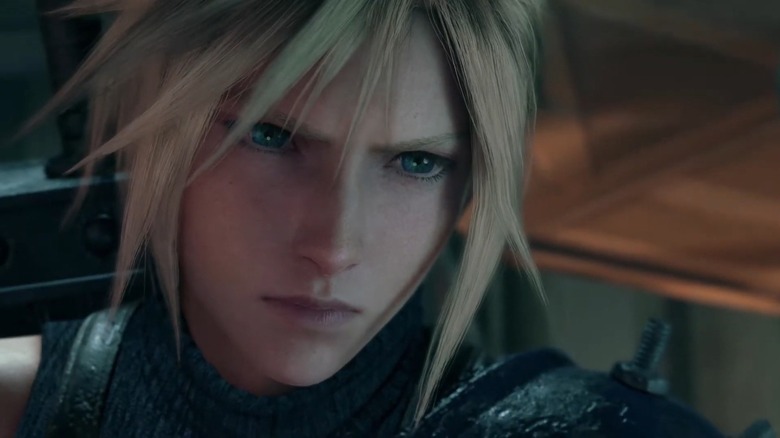
For decades, fans asked Square Enix for a modern remake of 1997’s “Final Fantasy VII,” one of the greatest “Final Fantasy” games ever made. In 2020, they got their wish. Kind of. “Final Fantasy VII Remake” was the first part of a trilogy dedicated to retelling, remixing, and expanding the story of the original game. The first part, “Remake,” was set entirely in the early Midgar portion of the game, expanding those first couple of hours into a full, 30-hour adventure.
“Final Fantasy VII Remake,” in contrast to the turn-based original, features real-time combat that incorporates some RPG elements. It’s more of a JRPG than the classic “Yakuza” games, but ironically less of a JRPG than some of the later titles, which themselves adopted a turn-based system based on “Dragon Quest.” Structurally, though, “Yakuza” fans will find a lot to like in “Remake,” thanks to its focus on a stellar supporting cast and deep characterization of its heroes. You really feel like you get to live with these people, and the world feels all the richer for it.
Part two of the trilogy, “Final Fantasy VII Rebirth,” released in 2024, though it had more of a grandiose, open-world feel than the more constrained “Remake,” and thus felt less like a “Yakuza” game. “Rebirth” is more like a modern interpretation of the old-school SNES/PS1 era of JRPGs, which gives it an entirely different, much larger, vibe than its predecessor. The third entry, “Final Fantasy VII Revelation,” is due out in April 2027.
Binary Domain
As a third-person, cover-based squad shooter set in a sci-fi cyberpunk world, “Binary Domain” might not seem “Yakuza”-adjacent. But it actually is, thanks to being developed by the very same team, RGG Studio. “Binary Domain” runs on the same game engine as the “Yakuza” games and has a similar penchant for long cutscenes.
Unlike “Yakuza,” though, the progression in “Binary Domain” is strictly linear, with the player constantly moving forward and blasting robots. The game has a unique system where enemy robots can be shot to pieces by gunfire. Knock out their legs, and they’ll still crawl towards you.
The “Yakuza” games usually only have one ending apiece, but “Binary Domain” has a unique system where trust can rise or fall between the player and their squad mates. If they don’t like you, they won’t follow orders and the story can even change in the endgame. If you can keep them loyal, though, the story will keep that in mind. Overall, “Binary Domain” is an ambitious and epic game that deserved so much more success than it ultimately received. These days, the game is forgotten by all but the most hardcore RGG Studio enthusiasts.
Mega Man Legends
Before “Yakuza,” there was “Shenmue.” Before “Shenmue,” there was “The Legend of Zelda: Ocarina of Time.” But before even all of that, there was 1997’s “Mega Man Legends,” which is arguably the greatest and most underrated game of all time. That sounds like a big boast, but if you’ve played it, then you’ll agree with me.
Ostensibly a spin-off of the side-scrolling “Mega Man” games, “Legends” is a singular and irrepressibly charming action RPG. Set in a world covered by endless water where humanity survives in scattered settlements across various islands (years before “Wind Waker” did the same thing), “Mega Man Legends” tells a completely unique story set countless generations after the more popular “Mega Man” games. The whole game is set on Kattelox Island, and by the end of it, you’ll have some degree of friendship with pretty much every NPC on the island.
When you’re not exploring vast underground dungeons looking for treasure, you’re up on the surface, helping people and following dozens of unmarked quests. Some are small, while others play out over the course of the entire game. If you want to blast through the main story, you can. But if you want to live in the world and explore every corner, you will always find something worthwhile, be it an upgrade, a unique character interaction, or some other form of environmental storytelling. A sequel followed in 2000, but “Mega Man Legends 3” for Nintendo 3DS was unceremoniously cancelled for no good reason and the series has been tragically dormant ever since. It’s a downright unacceptable ending to a saga that deserves proper closure.

1 Comment
Pingback: How to Watch Rays vs. Brewers: TV Channel, Live Stream, Time - Comic Vibe