

No other car manufacturer is as committed to road safety as Volvo.
Credit: Volvo Cars
No other car manufacturer is as committed to road safety as Volvo. Credit: Volvo Cars
structure
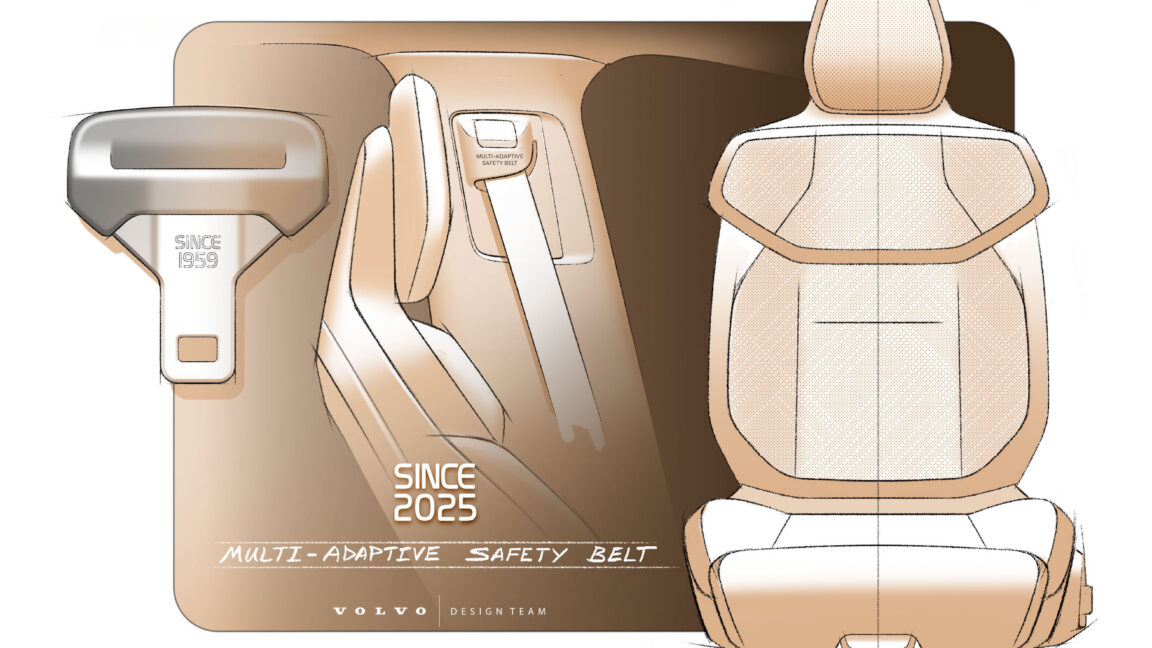
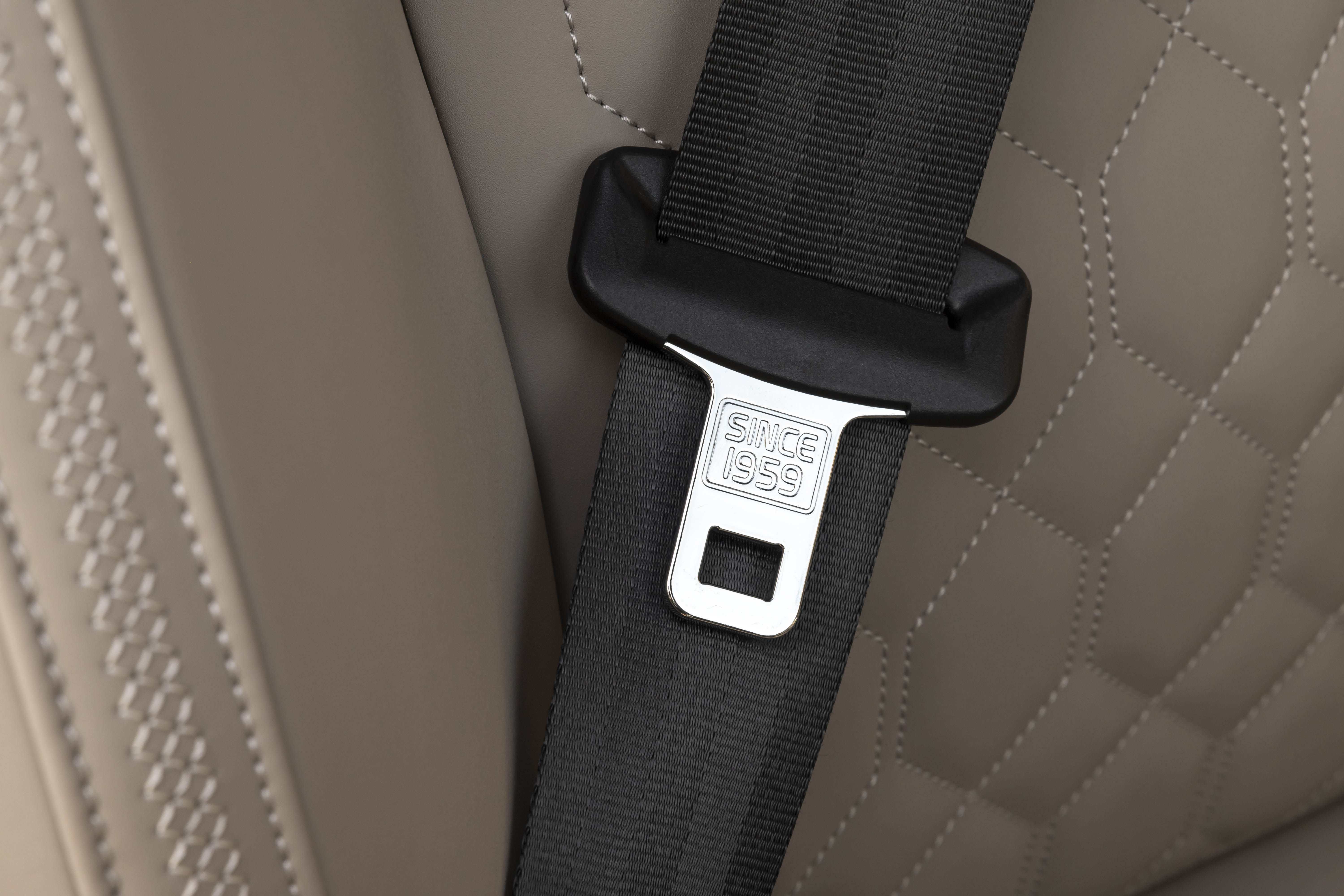
Seat belts basically consist of a retractor mechanism, buckle assembly, webbing material, and pretensioner device. The pretensioner is responsible for tightening the seatbelt webbing in the event of a collision. This reduces the forward movement of the occupant before the airbag deploys at speeds of up to 200 mph (321 km/h). All of these parts remain the same in Volvo’s latest seat belt version. What’s different is the tiny brain attached to the aggregate.
Volvo’s new central computing system, HuginCore (named after a bird from Norse mythology), runs the EX60 at more than 250 trillion operations per second. It was developed in-house in collaboration with partners Google, Nvidia, and Qualcomm.
“With the HuginCore system, we can collect a lot of data and make decisions instantly in the car, and combine that with the belt’s ability to select different load levels,” says Åsa Haglund, Director of the Volvo Cars Safety Center. “It opens up a box of possibilities, allowing us to detect the type of crash and who is in the vehicle, and select a more optimal belt force.”
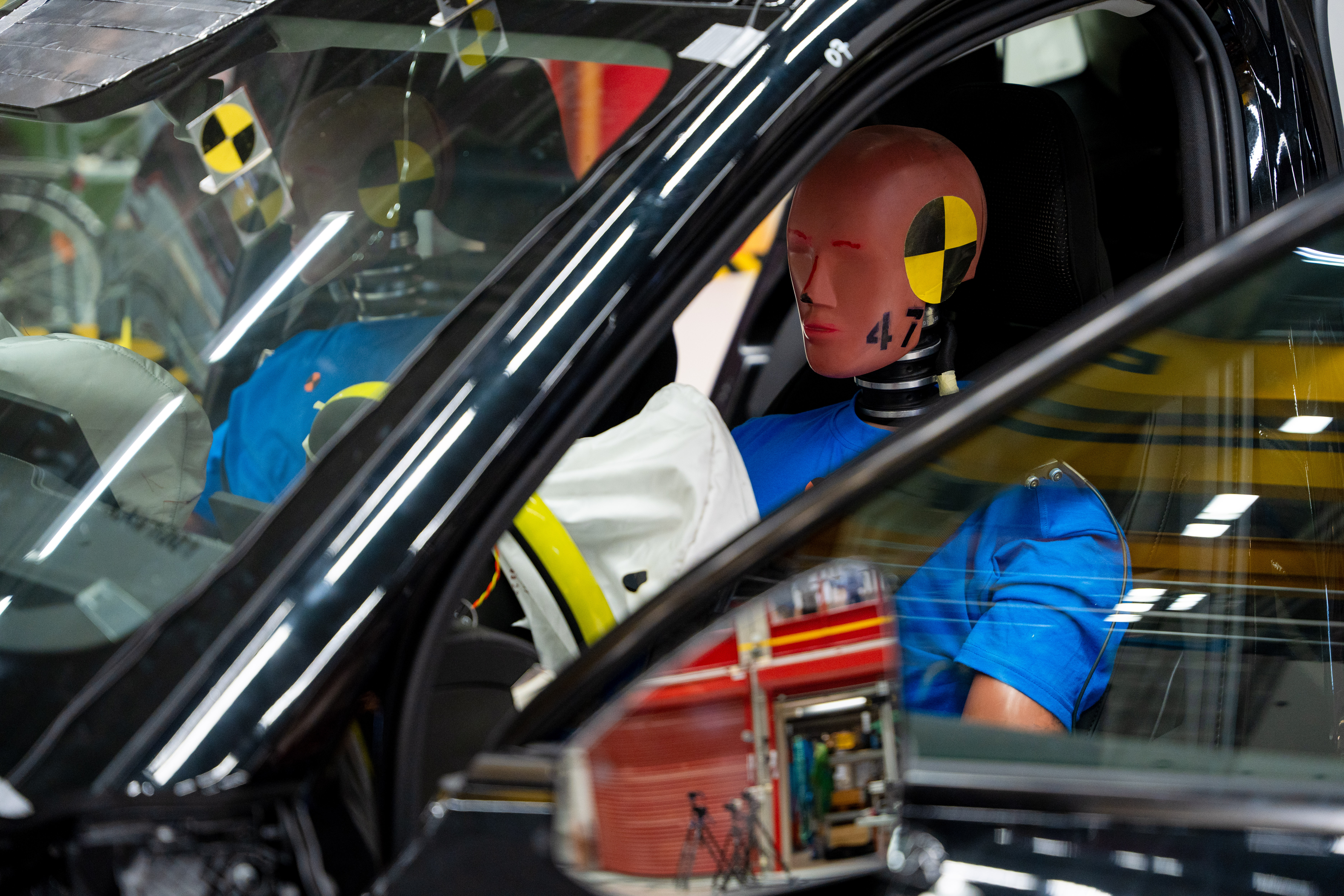
To improve the safety of Volvo, such dummy vehicles are crushed every day.
Credit: Volvo Cars
To improve the safety of Volvo, such dummy vehicles are crushed every day. Credit: Volvo Cars
Load limiters control the force that safety belts apply to the human body during a collision. Volvo’s new system increases the load limit profile from 3 to 11, significantly increasing adjustability. Ljung Oost thinks it’s like an audio system. A sound system that moves up the volume ladder by 10 steps will offer a variety of profiles along the way, while a sound system that only has one or two steps will accommodate fewer preference levels.
Ljung-Oost says the car uses data from exterior, interior and crash sensors to react to collisions in milliseconds, or less than the blink of an eye. In a collision, it’s important to push your hips into the car, but in a head-on collision, your upper body needs to fall forward smoothly so that it hits the airbag, he explains. Otherwise, the same force will be applied to the body of the car as it is slowing down.
