

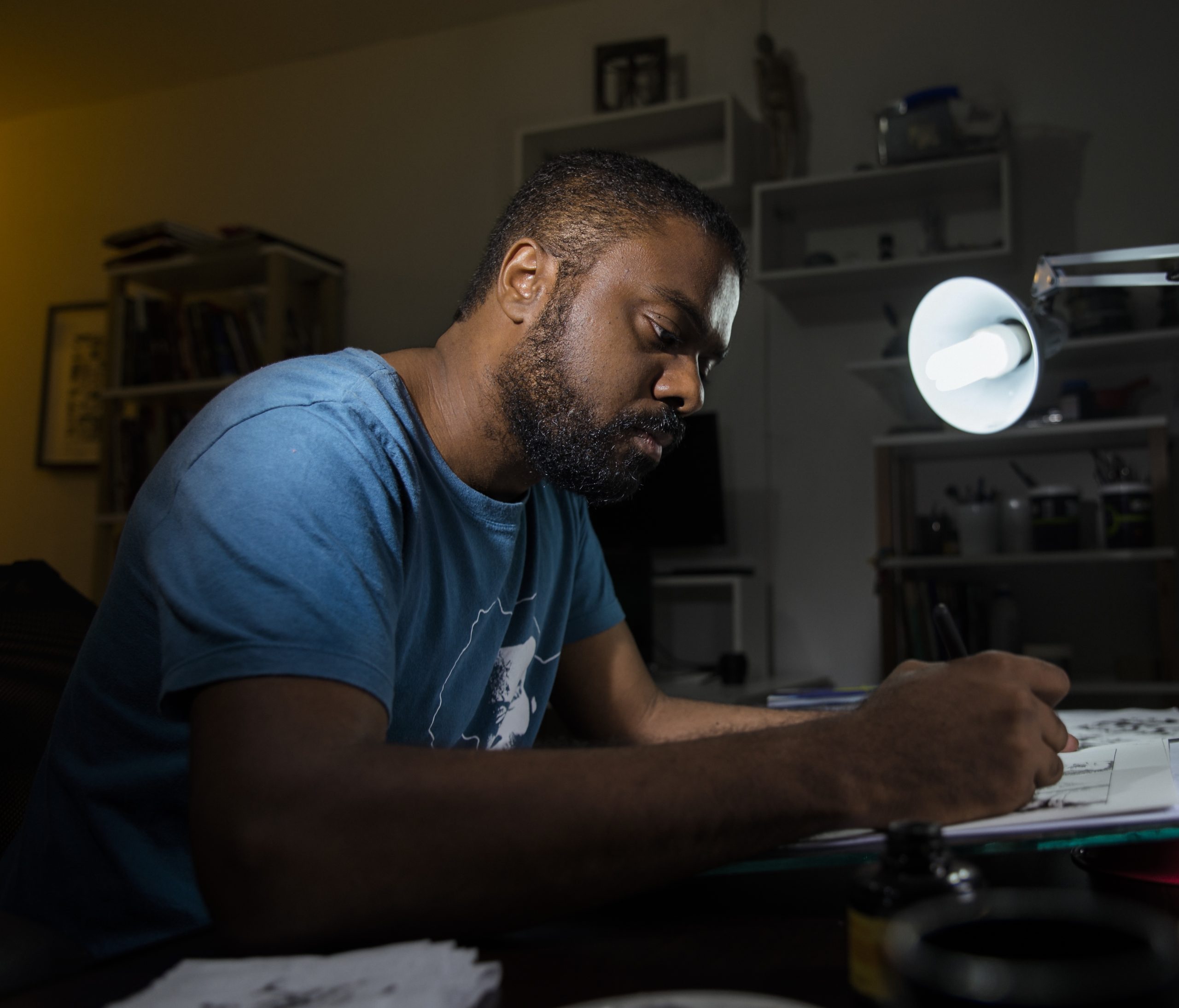
When Marcelo D’Salete began working onTiodora’s Letters: An Enslaved Woman’s Fight for Family and Freedom,he had a smaller project in mind. It was supposed to be between 40 and 60 pages, possibly a young adult work with very little text. These ideas differed from his two previous works, the award-winningsRun For It: Stories Of Slaves Who Fought For Their FreedomandAngola Janga: Kingdom of Runaway Slaves. The project grew, new characters emerged, and the themes it addressed required further research. The book ended up at 224 pages. It is a historical fiction about the real efforts of an enslaved woman seeking her freedom in 19th-century São Paulo.
Tiodora’s Letters was first published in Brazil in 2022. The following year, the book won the Jabuti Prize, the most prestigious award in the Brazilian literary market, in the Comics category. It deepens themes present in D’Salete’s earlier works, expands on the reflections they propose about contemporary Brazil, and feels like a new chapter of Brazilian history through the perspective and ink of its author.
D’Salete’s new graphic novel began to take shape when he readSonhos Africanos, Vivências Ladinas, a book by researcher and historian Maria Cristina Cortez Wissenbach. It focuses on the city of São Paulo in the 19th century and, especially, its Black population. One section of the work is devoted to the letters of Teodora Dias da Cunha, Tiodora, an enslaved woman originally from the lands of Angola. With the help of a literate enslaved man, she wrote seven letters to different recipients, including authorities and family members, in pursuit of her manumission.
“Reading Tiodora’s letters had a huge impact,” D’Salete told me about his first encounter with what would become the focus of his latest graphic novel. “I remember crying while reading them, because she is so forceful. She is very direct in expressing her emotions, as well as her determination to secure her freedom. And, of course, to reconnect with the people from whom she had been separated. This set of letters is certainly, as historian Cristina Wissenbach considers, something unique for understanding the city of São Paulo in that period.”
In the author’s view, the letters are also revealing about Tiodora’s life story and the country’s recent past: “Tiodora comes from the lands of Angola, arrived in Brazil, and was sold in the interior of [the state of] São Paulo. She later went to the city of São Paulo, living on Rua da Liberdade around 1860, while her husband and child remained in the countryside. It’s important to understand that both the interior of São Paulo and the city itself, both slaveholding, formed an extremely unequal and violent society. However, there were different forms of slavery. And the book tries to convey some of that.”
In 2018, Marcelo D’Salete experienced a year of unprecedented recognition for a Brazilian comics artist. ForAngola Janga,released in Brazil in 2017, he received the Jabuti Prize, four HQMix awards (Best Special Edition, Best National Artist, Best National Writer, and International Highlight), and the Grampo de Ouro Award. He also won the Eisner Award for Best U.S. Edition of International Material for the English-language version ofRun for It. All thre works have been published in the United States by Fantagraphics.
In bothRun for ItandAngola Janga, D’Salete created fictional narratives based on his research into slaveholding Brazil at the end of the 16th century. InTiodora’s Letters,he constructs a narrative around the journey of the message to its recipient.
“There are connections to history, to this attempt to imagine São Paulo in the 19th century, and especially to its Black population during that period,” he said. “It is a form of engagement, a poetic and fictional investigation of that moment, bringing in different characters to understand that context. I don’t consider it merely a historical record, but rather an attempt to imagine history by creating new ways to interpret those events through fiction.”
The blending of fiction and history and the presentation of a new narrative about resistance and defiance against the slaveholding power emphasize the dialogue betweenTiodora’s Letters, Run for It andAngola Janga.However, the temporal leap, from the 16th century in the previous two albums to the second half of the 19th century in this more recent work, reveals a different context of slavery in Brazil and another period of Black resistance against slaveholding power.
“I show other strategies used by the Black population in their attempts to gain freedom or better living conditions. This negotiation often involved escape, sometimes the formation of quilombos, but also tense negotiations with the ‘masters,’ using letters, as Tiodora did. So, writing, just like the action of Black brotherhoods, was another way to negotiate with this slaveholding power, seeking better living conditions and freedom,” he explains.
I spoke with D’Salete aboutTiodorain November 2022, when the book was published in Brazil. Its release came during the final months of the reactionary government of then-President Jair Bolsonaro, who held office from 2018 to 2022. Known for his racist remarks, among other controversial positions, Bolsonaro is now serving a 27-year and three-month prison sentence for leading an attempted coup to remain in power after his defeat to Luiz Inácio Lula da Silva in the 2022 presidential election.
In the interview below, originally published in Portuguese atVitralizado, D’Salete discusses his expectations for Lula’s administration beginning in 2023, reflects on the development of Mukanda Tiodora, outlines new directions in his drawing techniques, and shares his nostalgia for depicting modern urban centers.
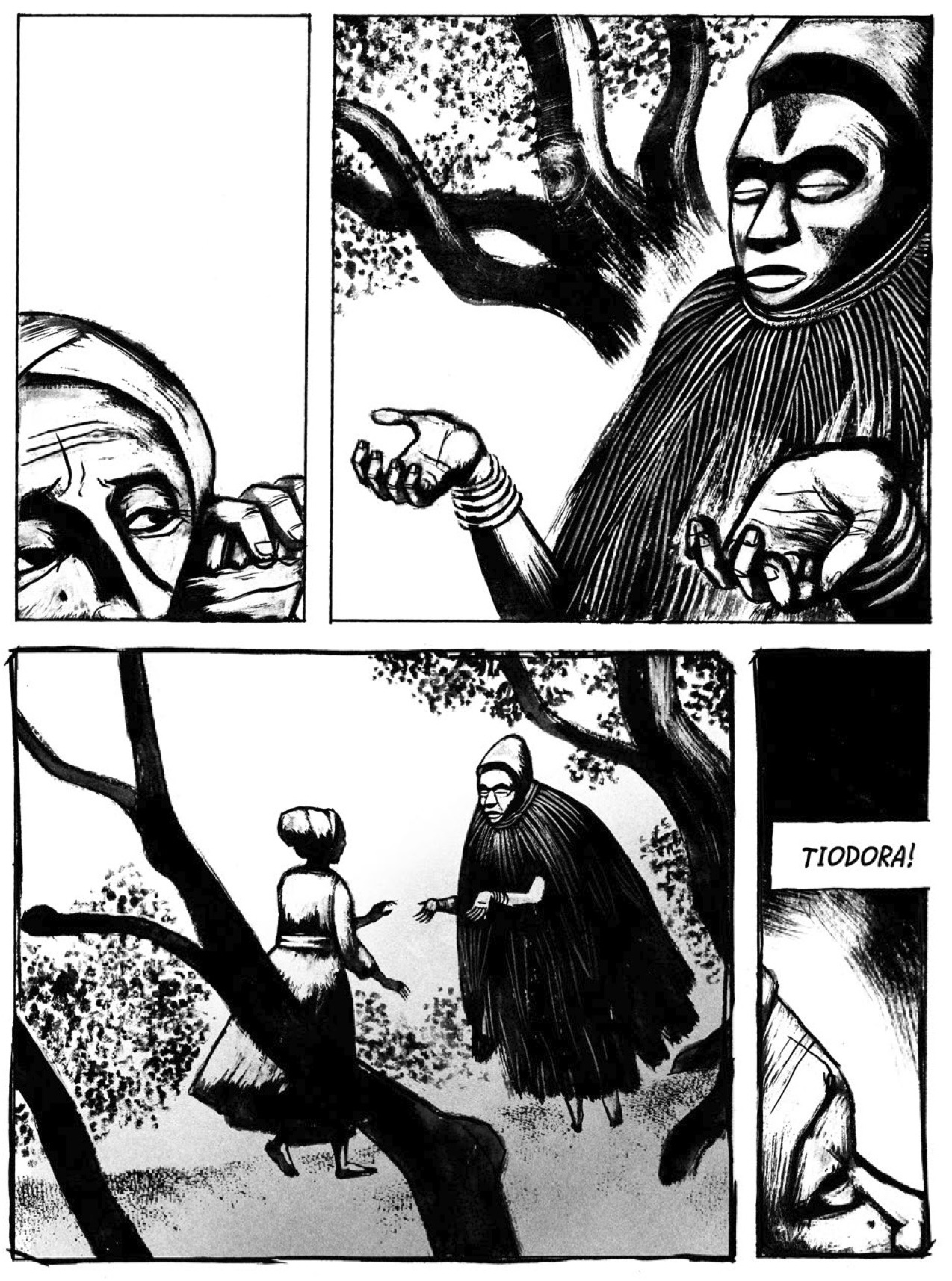
RAMON VITRA: Today is Nov. 4, 2022, five days after Lula’s victory in the presidential elections. I’d like to start by asking how you received this result. What are your expectations regarding this new government?
MARCELO D’SALETE: The news of the recent election on Sunday regarding the Presidency was received with great hope, relief, and joy. I imagine that breaking this destructive and extremely harmful cycle in Brazil’s politics, the Bolsonaro era, is something urgent and necessary. I believe that in the coming months and years, we will face the challenge of finding ways to fight the disinformation that has been spread in such a devastating way by Bolsonarism. We cannot imagine a government that is again against Black populations, Quilombola communities, Indigenous peoples, the poor, and women taking power in such a disastrous manner. We will face enormous challenges to ensure that this does not happen again, especially considering the number of votes they managed to secure in the last election.
On the other hand, it is still extraordinary to see that, despite so many companies spending huge amounts of money on the current president’s campaign and using public resources to do so, Lula has been elected president. This is a major popular victory against the interests of these wealthy oligarchies. I truly hope that we can move beyond the last four years, while also developing strategies to prevent this from happening again. This is possible through strong popular organization, with Black, Indigenous, women, LGBTI, and other groups making their voices heard. We need to engage in effective dialogues with these groups.
Amid the various setbacks of the Bolsonaro government, which ones do you think should be addressed with the most attention starting Jan. 1, 2023?
Well, the current government has caused many setbacks. You cannot think about the country’s future when there have been such drastic cuts in education, health, and culture. I believe that any vision of a possible country, with less inequality and, indeed, a different kind of society, necessarily depends on education, instruction, and better conditions for the population. I would say these are just a few of the issues that need to be addressed starting next year. But of course, it’s a very complex reality, with enormous problems that we will have to face. Absolutely. Especially when it comes to the denialist and extremely conservative discourse of the far right, which is very different from what it was 20 years ago.
Overcoming the politics of indifference and denialism is fundamental. We really need to put on the agenda, once again, a politics of solidarity and social change, which is urgent and necessary in Brazil.
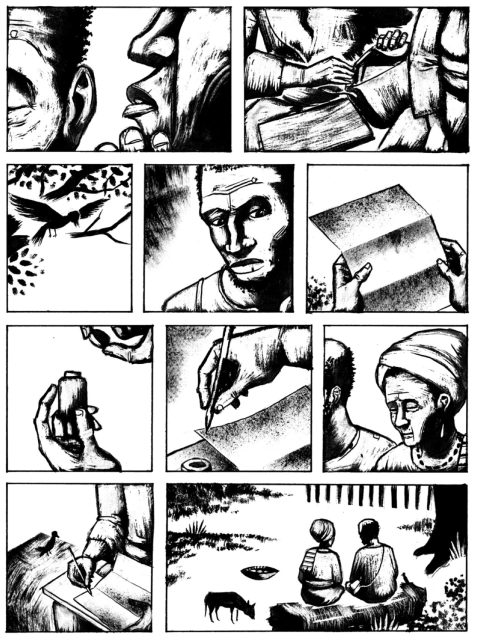 Can you tell me, please, about your first contact with Tiodora’s story? When did you first learn of her existence? What impacted you the most about her story?
She was a Black, enslaved woman who, in 1866, wrote some letters with the help of another enslaved person, Claro. I came across the records of these letters through the book Sonhos Africanos by Cristina Wissenbach. It focuses on São Paulo in the 19th century, particularly its Black population at that time. It’s an incredible book. It reveals São Paulo in the 19th century with a strong presence of Black people, both enslaved and free.
Tiodora’s letters were sent to various people. One was addressed to the “master;” another to a brother of the “master;” another to her husband, Luís, who was in the interior of São Paulo; and another to her son, Inocêncio. Tiodora wanted to contact her relatives and seek help in obtaining her manumission papers.
The letters also reveal a lot about Tiodora’s own life journey. She came from the lands of Angola, arrived in Brazil, and was sold in the interior of [the state of] São Paulo. Later she moved to the city of São Paulo, living on Rua da Liberdade around 1860, while her husband and son remained in the interior. It’s important to understand that both the interior of São Paulo and the city were slave-holding societies that were extremely unequal and violent. Yet there were different forms of slavery, and the book tries to explore some of that.
Reading Tiodora’s letters had an enormous impact. I remember crying as I read them because she is very powerful. She is very direct in expressing her emotions and her desire to gain her freedom. And, of course, to have contact with the people from whom she was separated. This collection of letters is, as historian Cristina Wissenbach notes, truly unique for thinking about the city of São Paulo in this period.
You describedAngola Janga to me as “a work of fiction that engages with historical facts.” Do you also see Tiodora’s Letters within this same “genre”?
I see Tiodora’s Letters, like my other books, as fiction. But there are connections to history, to the attempt to imagine São Paulo in the 19th century, and especially to its Black population during that period. It is a form of engagement, a kind of poetic and fictional investigation of that moment, bringing together different characters to understand the context. I don’t consider it purely a historical record, but rather an attempt to imagine history by creating new ways of interpreting those events through fiction.
You make use of several bibliographic references, but you built the comic book from Tiodora’s seven letters. They are short letters, yet full of information about her reality as well as her origins and personality. What was it like to create the storyline of this comic book using this material as a starting point?
Tiodora’s book went through several stages. It is currently a 224-page book. But at the beginning, when I started drafting the script, I thought it could even be a young adult book, focusing on the Black population, letters, writing, a book with almost no text. It would have been much shorter, about 40 to 60 pages. Gradually, this idea grew, increasingly, as often happens with my work. New characters and ideas started entering the story, which required me to deepen some research about the period.
Tiodora’s letters were a starting point, a potential document that served as a great generator of new images, new characters, and possible narratives. Little by little, I thought about Tiodora and how to bring all these characters into the narrative, all inspired by what was in her letters.
I also began trying to understand Brazil and São Paulo in 1866. At that time, we have the Paraguayan War; the Civil War in the United States had just ended. It was a moment when people, especially the poor and Black people, were being drafted and sent to die in war. That’s why it was very important to also dialogue with other historians and comic book artists, like André Toral, who gave me excellent advice for thinking about this context. The Paraguayan War is one of the topics André Toral discusses thoroughly in several of his books.
During this period, there was a convergence of intellectuals and artists working together to create some important newspapers in São Paulo. We have Luís Gama, a person from Salvador who was enslaved as a young man, spent time in the interior, and then settled in the city of São Paulo. He gained his freedom and became a writer. In addition, he became a lawyer, fighting in various causes and participating in the liberation of over 500 people. Luís Gama was aware of Tiodora’s case because her letters were seized by the police after Claro, the person who wrote the letters, was suspected of a crime. Luís Gama was one of the people who reported the entire Tiodora case, so he knew what was happening. Initially, he wasn’t going to be in the story, but later he became central.
This happened because of Luís Gama’s relationship with Ferreira Menezes, who was also a journalist and abolitionist writer. Their relationship began in São Paulo when Ferreira Menezes came to study at the Law School. He met Luís Gama, and they exchanged numerous letters throughout their lives, until 1880. So these two characters were included in the narrative.
During the 1860s, Ângelo Agostini was also in São Paulo. He published newspapers in São Paulo alongside Luís Gama, within the context of the abolitionist struggle and the fight for the Republic. There was this whole political context against the powerful. Luís Gama strongly criticized the power structures of the time, targeting wealthy landowners and the Church. On one hand, the landowners held the money and power to maintain this structure; on the other hand, the Church, unfortunately, provided moral support to the regime of slavery. Luís Gama never condoned these abuses or the “distortion,” so to speak, of the Church’s teachings regarding equality and justice.
What did these letters reveal to you most about 19th-century Brazil?
It’s very interesting to think that in the first decades of the 1800s, in the interior of São Paulo, as well as in Rio de Janeiro, there was a huge population of African enslaved people. In some places, they made up as much as 50% of the population; for some decades, they outnumbered the free population. This drew the attention of many travelers who came to Brazil as well.
There was enormous coffee production in the interior of Rio, which later extended to the interior of São Paulo, in the Campinas and Limeira regions. There was a massive flow of enslaved people from Africa, mainly from Angola, coming to Rio de Janeiro and then going directly to the interior of São Paulo. [The city of] Campinas and its surrounding area were among the most brutal centers of slavery during this period.
In the early 1800s, many countries were abolishing the Atlantic slave trade. England, France, the United States, and several other countries in Latin America, upon gaining independence, ended slavery. This did not happen in Brazil. Brazil became independent and reinforced the cruel institution of slavery. There was a real pact among the elites to secure independence while maintaining and even expanding slavery, bringing even more people here.
The first law abolishing the Atlantic slave trade was enacted in 1831. But the law quickly became a dead letter. Initially, there was some enforcement and interruption of the trade in African enslaved people across the Atlantic. But soon after, the powerful landowners and supporters of slavery ensured that the law was ignored and the trade continued illegally.
It’s very important to understand this period, and Luís Gama was one of the people most aware of it and who fought against it. He knew that anyone arriving in Brazil after 1831 came via illegal trafficking. These people should not have been enslaved. Luís Gama was probably one of the first people to use the term at that time: “freed enslaved people.” He understood that, by law, these people should have been considered free upon arrival. Yet, due to the collusion between the powerful landowners and the police of the time, the entire legal and criminal apparatus of the period did not consider this a heinous crime.
And do you see a dialogue between Tiodora’s reality and contemporary Brazil?
I think Tiodora helps us understand a crucial moment in Brazil’s history. She also allows us to relate her story to other marginalized figures in Brazilian society across different periods. I always think of Tiodora’s story and, 100 years later, the story of [the writer] Carolina Maria de Jesus, for example. And we could also consider the stories of many other women who used writing as a strategy for resistance and survival.
Your earlier books, set in more contemporary contexts, strongly reflect the urban reality of São Paulo. In Run for It and Angola Janga, you moved away from these settings, both geographically and temporally. In 2017, when Angola Janga was published, you mentioned how difficult that transition was. In Tiodora’s Letters, you return to São Paulo, but in the 19th century. How do you see 19th-century slaveholding São Paulo influencing the development of the city that exists today?
I imagine that Tiodora’s letters are important for showing São Paulo during that period. They are unique records for understanding certain Black spaces in the city before the large waves of immigration. For example, the Liberdade neighborhood, where Tiodora lived and where the gallows once stood. The Church of the Rosário dos Homens Pretos, which was originally located at Praça Antônio Prado, where the São Paulo Stock Exchange stands today. It is very emblematic that a church with a strong Black and Afro-Brazilian presence in the 19th century was destroyed, and on its site the city’s main buildings of the period were constructed, including the stock exchange. That ground was a place of great Black, Afro-Brazilian, and African significance in 19th-century São Paulo.
And out of curiosity: do you miss drawing buildings, graffiti, and more contemporary settings?
(Laughs) Yes, sometimes I do. I have some projects focused on more contemporary Brazil. But these other, more historical projects ended up having a very strong influence on my relationship with comics. They were stories I saw and thought, “It’s important that this be told somehow.” But I still hope to return, yes, to more contemporary stories, like I did with Encruzilhada and Noite Luz.
Even though Run for It was published before Angola Janga, you’ve already told me that you see Run for It as an extension of Angola Janga, since one arose from the research of the other. Is Tiodora’s Letters also an outcome of that research?
Well, Tiodora’s Letters, in a way, is a continuation, but it’s very different in terms of thinking about Brazil’s history. In Tiodora’s Letters, I address another moment and context of slavery. I show other strategies used by the Black population in their attempts to gain freedom or better living conditions. These negotiations involved escape, sometimes the formation of quilombos, but also tense negotiations with the “masters,” using letters, as happened with Tiodora and also with Esperança Garcia. So writing, along with the actions of Black brotherhoods, was another way of negotiating with the slaveholding power, striving for better living conditions and, ultimately, freedom.
It is very important to understand that there were different forms of resistance and negotiation with slaveholding power. All of these strategies are relevant for understanding that these people sought better lives, sometimes successfully gaining their freedom, but sometimes securing more time for their work, more time to sell their goods, to save money to buy their manumission papers, and to enjoy their festive moments as well. All of this is part of these forms of negotiation and is central to this Black history of resistance and struggle against slaveholding power.
I also wanted to ask a bit more about your techniques in this new book. In Angola Janga, you used India ink and brush with ink, avoiding acrylic paint, which had been a constant in your previous works. And now? What materials did you use?
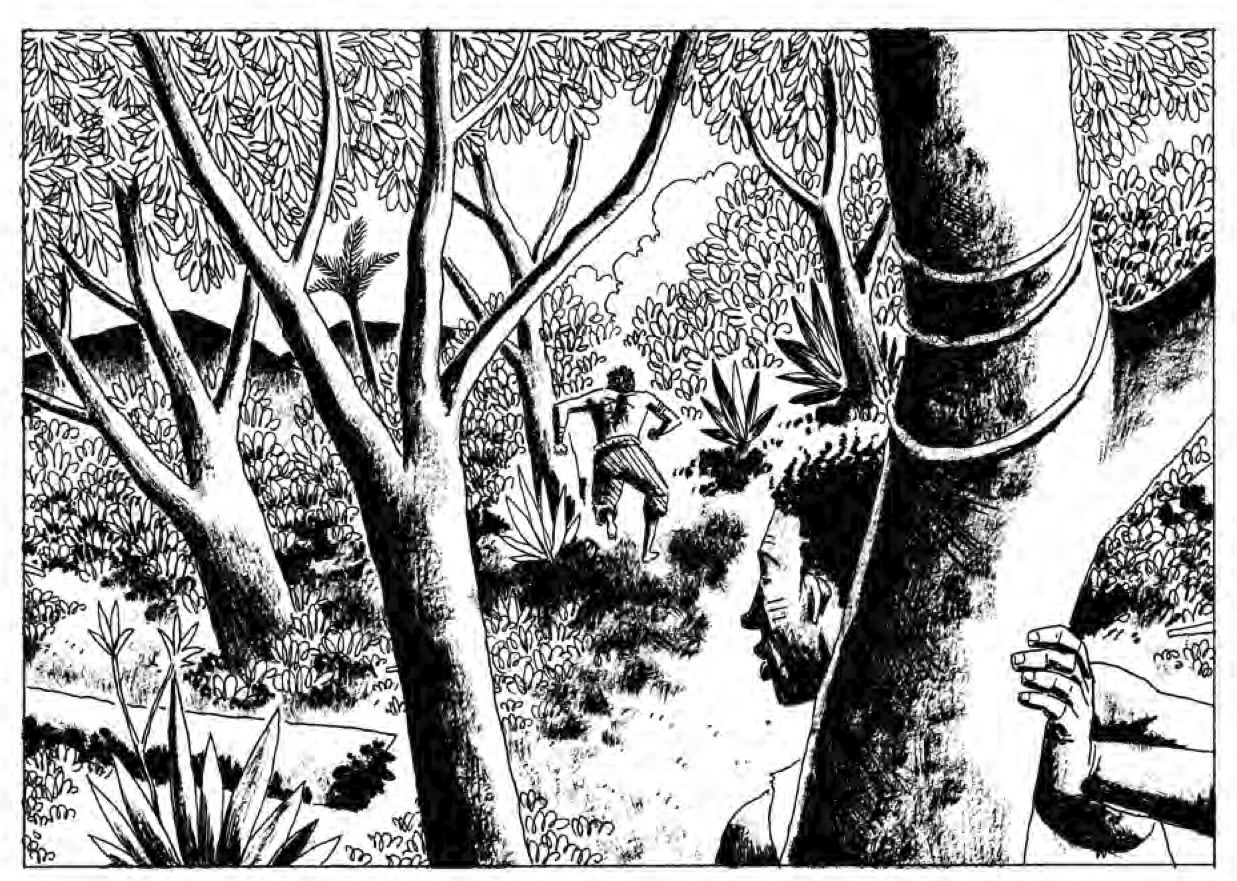
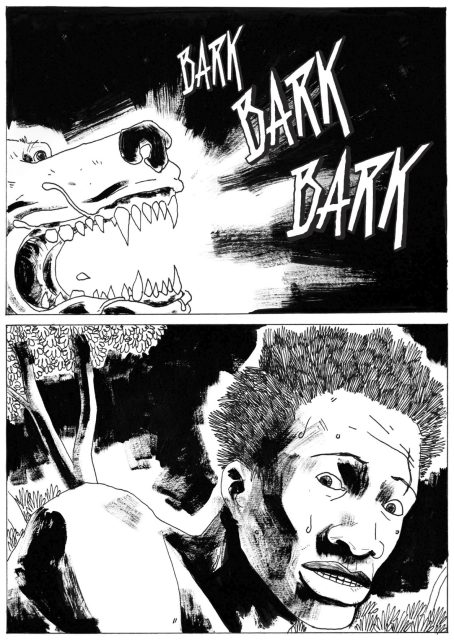
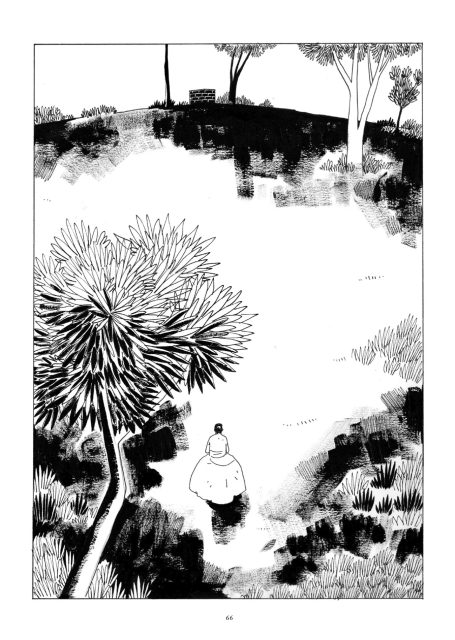
In Tiodora’s Letters, I worked a lot with ink and paper. I developed a different relationship with drawing. I changed my style toward something I had always, in a way, been pursuing—this relationship with black and white, with gray, with contrast, something that slightly evokes engraving.
I ended up painting much of the scene and figures with ink washes, then building the lighter parts using white paint or correction fluid. I really liked the result. It’s been another way of thinking about drawing and composition. I felt the need to develop other ways of drawing. I’m very happy with the outcome, with what I’ve achieved so far. I’m not an eclectic artist who changes style dramatically from one work to another. But I think Tiodora’s Letters shows a new phase in terms of composition, drawing, and textures. I liked it a lot. And of course, there’s a strong influence from Latin American artists as well, like Alberto Breccia and a bit of José Muñoz.
My memories of history classes in school about the end of slavery were centered around a narrative portraying the abolitionist movement as an initiative of white political leaders. Run for It, Angola Janga, and Tiodora’s Letters reinforce for me a lesser-known version of abolition, arising much more from the struggles and efforts of enslaved and formerly enslaved people. How do you see the contrast between these two “narratives”?
In Tiodora’s Letters, we see a glimpse of the early abolitionist movement through figures like Luís Gama and Ferreira Menezes, and the newspaperO Cabrião, with the indirect participation of Ângelo Agostini. It is always important to understand that, during this period of abolition, there was a true popular movement, perhaps one of the first and most significant in 19th-century Brazil, which reached a large part of society. By the last decades of the 19th century, from around 1870–80, slavery started becoming unsustainable. There was a huge popular outcry from people who no longer accepted such a system. Nevertheless, Brazil was unfortunately one of the last countries to abolish slavery, precisely because of the power of these wealthy landowners in maintaining the system, and always through great violence.
At that time, we had Luís Gama, Ferreira Menezes, José do Patrocínio, and various Black uprisings occurring in [states like] São Paulo, Minas Gerais, Paraná, and other nearby regions. For example, there was an attempted uprising in 1832 in Campinas, organized by a barber, a muleteer, and hundreds of enslaved people from the countryside.
In short, there are many examples showing that there was strong organization and struggle by certain Black groups for the end of slavery and genuine abolition. This greatly influenced the eventual political outcome. We should also not forget that, at the end of the 18th century and the beginning of the 19th century, the Haitian Revolution occurred, which caused enormous fear among slaveholders.
This period in the 19th century was extremely tense for those defending the maintenance of slavery; it was not a peaceful situation, even though it took Brazil a long time to officially abolish slavery. There are countless cases of violence, revolts, uprisings, and other forms of negotiation carried out by free Black people, who also made up a significant portion of the urban population in Brazil from around 1850.
What interests you most today about using comics as a medium? What attracts you the most about using comics to tell a story?
I still want to create narratives almost entirely without words, only using images. I love the possibility of telling stories through images, of creating new puzzles with drawing, text, layout composition, symbols, and concepts. And of course, I still want to continue developing my own drawing and my way of storytelling.
Which comics do you think most influenced the creation of Tiodora’s Letters? And which authors, artists, and works of fiction were most present around you during the production of this new work?
Some works served as inspiration. For example, A Infância do Brasil by José Aguiar; the comics and research of André Toral; Província Negra by Kris Zullo and Kaled Kanour; and the book Avenida Paulista by Luiz Gê, which begins by talking about São Paulo centuries ago. These were just a few of the narratives I revisited. And of course, unlike Angola Janga and Run for It, during this period I also had access to photographic works by artists like Militão Azevedo. These photographs of São Paulo from 1862 and 1880 were very interesting for understanding the growth of the city in that period.
The first time I interviewed you was in 2013. At the time, you celebrated an expansion of the “thematic context of national comics,” but you still considered “initiatives with more social themes, exploring the many universes of a large city through ordinary characters,” to be small. Almost ten years later, do you see more initiatives of this type in Brazilian comics?
Today I notice more initiatives in that sense. But, of course, that’s just my impression. I’ve been able to follow it a little more over the years. It’s important to bring new stories and other narratives beyond the universe of superheroes and other more hegemonic narratives. I still believe this is essential. It’s not just essential to tell stories about, let’s say, Black people, Indigenous people, women, or other marginalized groups. It is essential for the very continuity of comics, for them to be able to show their full potential to a wide audience. We won’t achieve that if we restrict ourselves to only certain types of formats and narratives. The audience deserves it, they need it, and the language of comics needs it in order to survive.
Back in 2017, you told me that your 11 years working on Angola Janga changed your “way of understanding the past and also the present, especially regarding old and new mocambos [runaway slave communities].” Did you have any similar lessons or deeper reflections during the years you spent working on Tiodora’s Letters?
Tiodora’s Letters is a book for reflecting on São Paulo about 150 years ago. It is important for rethinking the different physical, and even symbolic, spaces in São Paulo, and how the city has transformed so drastically over the past centuries.
