

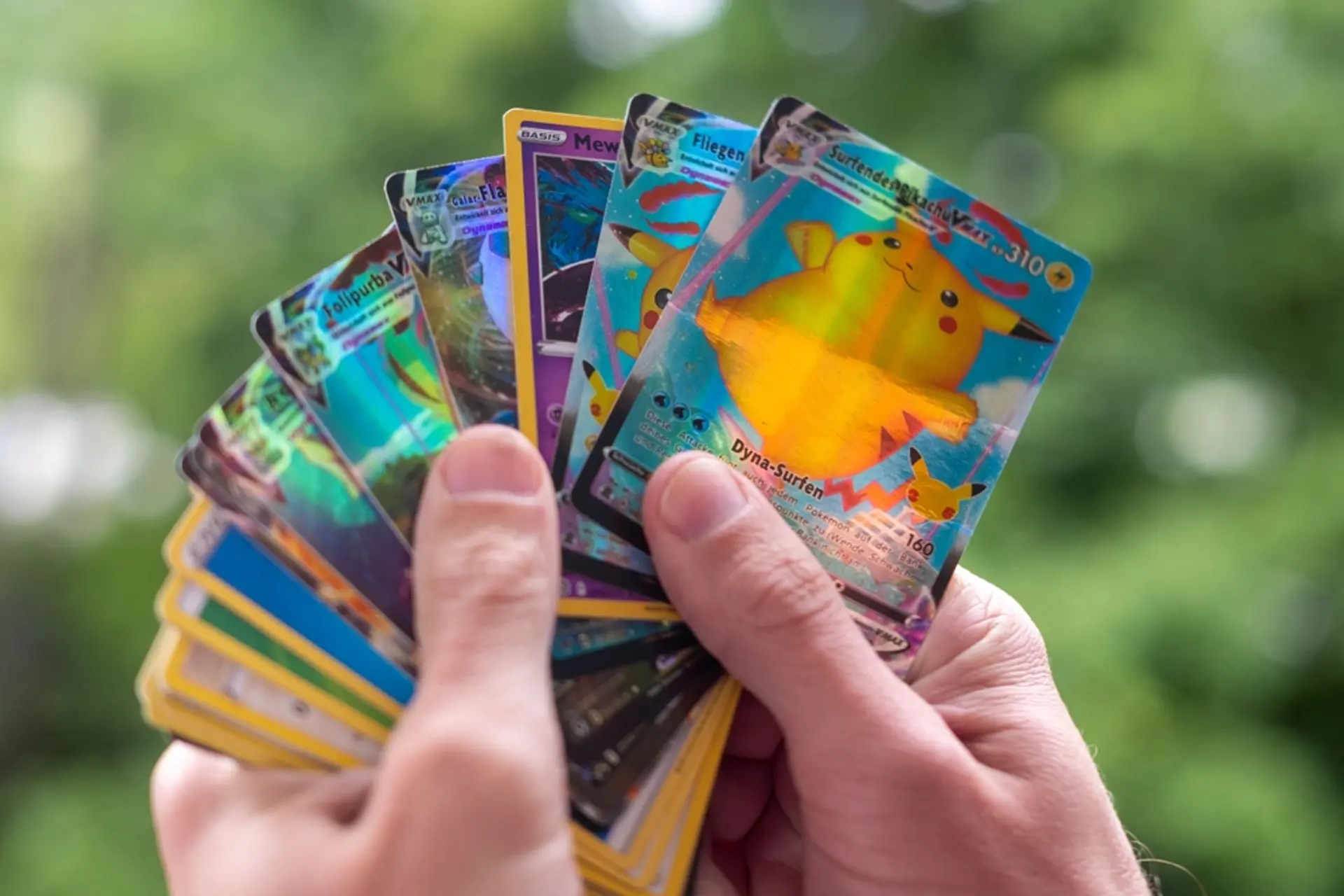
- On-chain TCG card-pack purchases hit a record $324.6 million in June, a fourth straight monthly high, in a sign that crypto capital is flowing into the market.
- Solana-based Collector Crypt held a 65% market share and drew short-term trading demand with its Turbo feature, while linked financial products including MLKY lending, TCG funds and offerings from VanEck continue to expand.
- A total of 71.8% of June trading came from instant buybacks (Turbo), underscoring the market’s reliance on chance-based card packs and highlighting risks including custody risk and blind-box regulation.
Forecast Trend Report by Period
Physical cards trade as NFTs around the clock
June pack purchases reach a record $324.6 million
Pokémon’s 30th anniversary revives collector demand
Instant buybacks account for 72% of trading
The market for “on-chain TCGs” — platforms where physical trading card game cards such as Pokémon, One Piece and Yu-Gi-Oh! are bought and sold on blockchain networks like crypto assets — is growing rapidly. By cutting the time required for grading, storage, shipping and settlement, and lowering barriers to cross-border transactions, the model is drawing both collectors and crypto investors.
Card-pack purchases on on-chain TCG platforms rose 34% from the previous month to $324.6 million in June, according to data compiled by Blockworks. That marked a fourth straight monthly record. The total was roughly double the March level. Purchases fell to about $270 million in July from June, but monthly trading volume still stayed near $300 million.
Pokémon’s 30th Anniversary, Instant Cash-Outs Fuel Trading Surge
A common model is to store a physical card in a vault and issue a non-fungible token representing rights to that card. When a user buys a virtual card pack on a platform, one physical card is assigned at random and the corresponding NFT is sent to the user’s wallet.
Specialist grading and custody firms such as PSA, CGC and BGS verify authenticity and grade. The blockchain records grading results and transfers of ownership. Because the card does not leave the vault, users can trade around the clock without waiting for international shipping. Those who want the physical item can return or burn the NFT and request delivery.
Growth in on-chain TCGs has coincided with a boom in the physical card market. Collector interest has revived as Pokémon TCG marks its 30th anniversary this year, and a 30th-anniversary expansion pack is set for a simultaneous global release on Sept. 16. It will be the first time a Pokémon TCG expansion pack has launched worldwide on the same day. Weekly revenue at tokenized Pokémon card platforms reached $7.4 million in the first week of May, up 337% from a year earlier. Google search volume for Pokémon cards also approached a record high.
Easier access to region-specific products is another reason for the market’s popularity. Promotional cards and packages released first in certain countries or sold in limited quantities previously required travel, purchasing agents or overseas shipping. On-chain platforms store those locallyl them to collectors overseas. Buyers can trade rights to those items without taking immediate physical delivery
The ability to cash out cards immediately, without going through grading and shipping, is also attracting investment demand. In physical card markets, sellers must find a buyer and then complete payment, packaging, insurance and overseas delivery. On on-chain platforms, only the NFT changes hands, reducing both trading costs and time.
The Block wrote that the on-chain card market tends to follow momentum in the physical card market with a lag. Crypto capital is moving into tokenized cards on expectations of rising card prices and platform rewards. Adam Hollander, OpenSea’s chief marketing officer, said tokenized Pokémon cards could become the NFT market’s next growth driver.
Collector Crypt Leads as Rivals Gain Ground
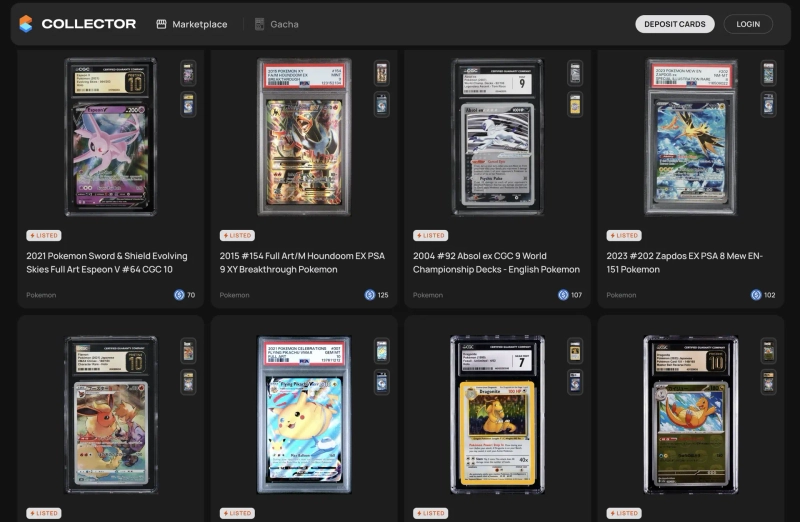
The market leader is Solana-based Collector Crypt. Card-pack purchases on the platform totaled $209.5 million in June, accounting for about 65% of the market. The figure fell to $156.7 million in July, but the platform retained the top spot with a market share of about 58%. More than 130,000 tokenized cards have been listed on Collector Crypt, with cumulative transaction volume surpassing $1.6 billion, according to the Solana Foundation.
A key driver of Collector Crypt’s growth is an instant buyback feature known as Turbo. If users pull a card they do not want, the platform immediately buys it back at 85% to 93% of its appraised value. Users can then use the proceeds to buy another card pack. The feature has drawn demand from crypto traders seeking fast turnover because it lets them recover funds quickly without shipping cards or placing a separate sell order.
Rivals are also gaining ground. Polygon-based Courtyard posted $85.3 million in trading volume in July. It has been expanding market share by charging no peer-to-peer trading fees and broadening its offerings beyond cards to comic books and coins.
Pudgitals has sought to differentiate itself by linking professionally graded physical cards and NFTs on a one-to-one basis. A separate Solana lending protocol, MLKY, has launched a service that lets users borrow the stablecoin USDC against tokenized cards from Collector Crypt and Pudgitals. That expands the market beyond simple trading into financial services that use collectibles as collateral.
Chance Studio, backed by Web3 venture capital firm Hashed, combines card trading with collection-sharing and community features. In Hong Kong, listed company MemeStrategy has set up a fund backed by top-grade PSA Pokémon cards.
Traditional finance is also moving directly into the TCG market. Global asset manager VanEck this month released 12,000 limited-edition sets of “Market Forces TCG,” a physical card game built around investment concepts. Earlier, affiliate SegMint launched “Synked Collect,” an app that tracks prices and holdings of TCG cards including Pokémon, One Piece and Magic: The Gathering and connects users for transactions. SegMint is also developing infrastructure for tokenization, authenticity verification and trading of physical collectibles.
Most Trading Comes From Instant Buybacks as Custody Risks Linger
Despite the market’s rapid growth, some critics say trading remains skewed toward chance-based pack opening rather than collecting. Blockchain research firm Poplilus analyzed Collector Crypt trading data and found that 71.8% of June card-pack purchases came from Turbo mode.
The value of cards physically delivered to users accounted for just 2.4% to 3.1% of total card-pack purchases. Peer-to-peer trading made up less than 1%. That means a large share of the market consists of users reselling cards back to the platform immediately after pulling them and then buying more packs, rather than holding them long term or selling them to other collectors.
Custody risk remains another issue. If a company storing physical cards goes bankrupt, or if cards are damaged or lost, the delivery rights and value tied to the NFT could be impaired. Critics say platforms need to clarify custodians’ insurance coverage, card inventories and the legal relationship between NFT ownership and rights to the underlying physical item.
Regulation of chance-based sales is another variable. Singapore’s government said TCG products will be included in blind-box rules being prepared this year as part of efforts to reduce gambling risks. Because on-chain card packs let buyers cash out outcomes immediately, they may face greater scrutiny over gambling characteristics than conventional physical card packs.
Ponyo, a researcher at Poplilus, wrote in a report that a shallow peer-to-peer secondary market shows the current ecosystem depends heavily on chance-based card packs rather than a collector economy. For the market to sustain growth, genuine collector participation and peer-to-peer trading need to increase together.
