Corporate interests have outstripped the supposed hegemony of nation-states for a while now. That fact has spilled beyond boardrooms and corner offices and into the realm of the everyday. The game is the same as it ever was, to make the line go up. Attended by that zero-sum focus on growth and an equally binary disdain for whatever gets in the way of it, oligarchs and their pet politicians are content to run the play that has almost always paid reliable dividends: pit the working class against each other.
The stakes, too, are the same as they ever were: survive or perish. With enough training, it is easy to see a competitor in the neighbor vying for the same ostensibly limited resources. It is a mentality that makes interlopers of everyone outside our social circle; familial, religious, or national. In this vein, the immigration crisis that has dominated headlines in recent years seems designed to foment the same hostilities that have always lent legitimacy to the geopolitical boundaries that constitute the borders of nations. Borders that, for the working class, only demarcate the limits of movement and of imagination.
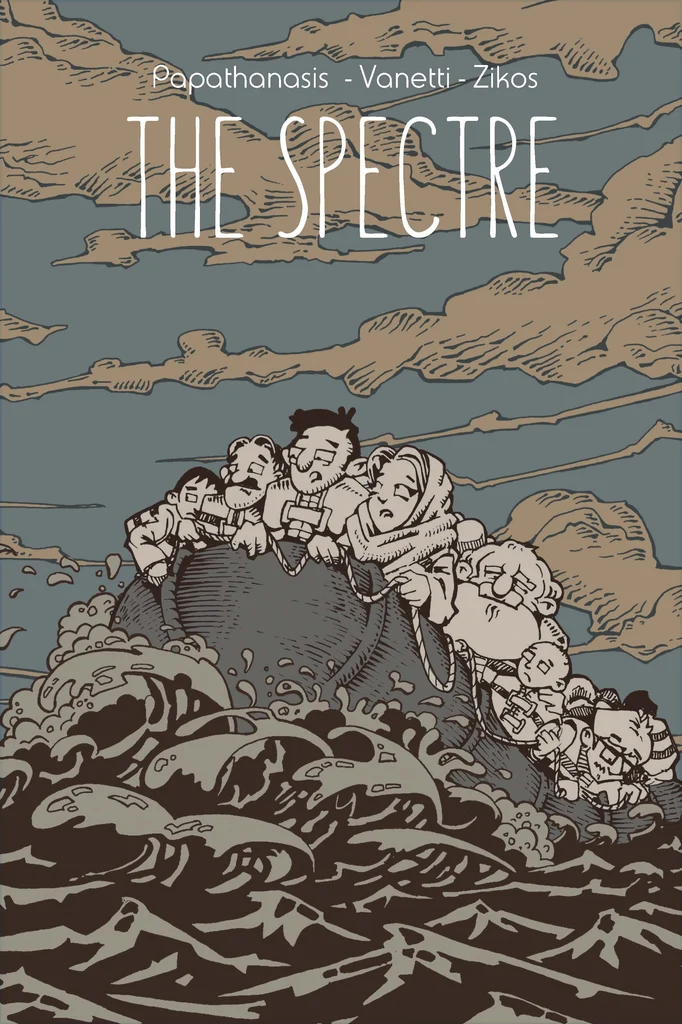
The Spectre—illustrated by Lefteris “Boban” Papathanasis and written by Boban, Mauro Vanetti, and Vangelis Zikos—argues that these old wars renewed can still be fought with old weapons; that the blunt force of solidarity can dull any cutting edge that seeks to divide the working class. The book takes aim at the phenomenon of “Red-Brown Politics,” in which the fascist nationalism of the the far-right makes common cause with the militant labor positions of Communism. Literalizing the conceit of philosopher Jacques Derrida’sSpectres of Marx, they enlist no less than Karl Marx to elucidate the timelessness of a class struggle that nonetheless feels unique to the current moment, making psychopomps of Marx and, later on, Lenin to usher the protagonist, an aspiring influencer named Diego, through his dark night of the soul.
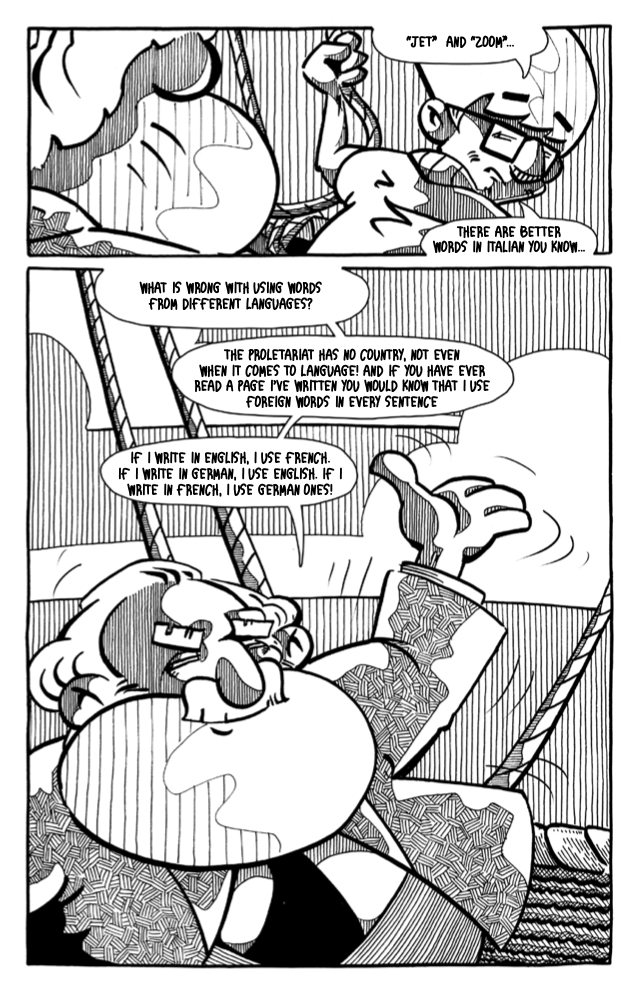
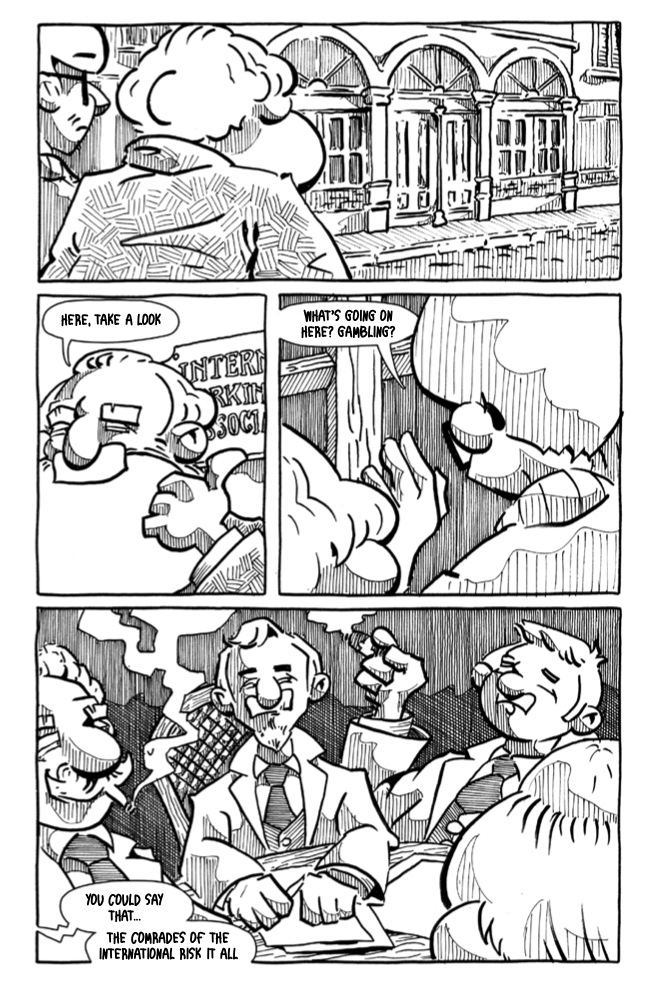
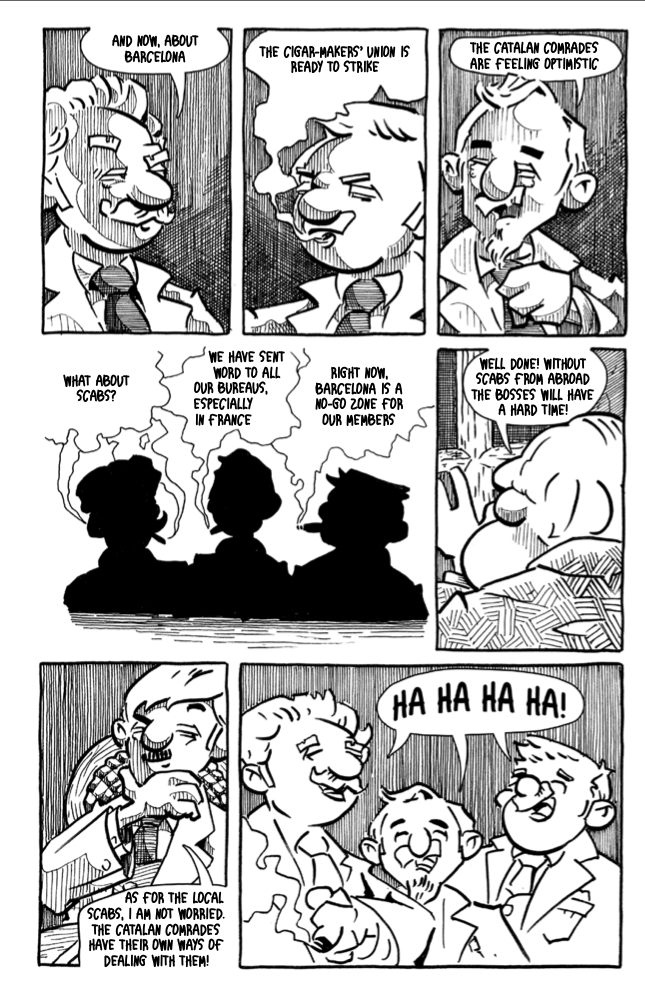
With a portly physique and an egg-shaped beard, Marx the comic book character is summoned into corporeality by the indignity of Diego’s misinterpretation of his class analysis. Diego embodies a prevailing sentiment that argues for nationalism under the auspices of class solidarity. Under the confining strictures of the nation-state, Diego assumes nationality as prerequisite of class. Diego reasons it is the influx of immigrants—and all their attendant needs and concerns—that undermines solidarity and power for the Italian working class. Even as a self-described devotee to the “Old Left,” Diego holds the same position as the xenophobic Right. Marx works mightily to expand Diego’s narrow vision of class solidarity. The phantasm philosopher spirits Diego to times and places that illustrate Marx’s conception of class solidarity, from a meeting of cigar-makers on the eve of a strike to a riotous rally on the eve of revolution.
In Marx’s utopia, destiny is ascribed by workers, not borders. Pundits like Diego either act in bad faith or misunderstand Marx’s vision. Diego’s position is foundational to what has come to be known vulgar Marxism, an oversimplification of the Marxist philosophy that rejects the necessity of international class solidarity to move Marx’s vision from the realm of the theoretical into the real world.
Typical of complaints emanating from the Right, Diego’s argument requires an out-group on whom the blame for every social ill can be placed. While I am not familiar enough with Southern European culture or Italian politics to speak with any authority on who Diego is meant to analogize in the book’s original context, there are numerous English-speaking commentators to whom Diego’s position can be mapped. Getting lost in the sauce knows no borders.
Nearly a decade ago, Irish writer Angela Nagle published “The Left Case against Open Borders” inAmerican Affairs, in which she argued that “[O]pen borders has long been a rallying cry of the business and free market Right,” before enumerating the various Right-wing think tanks who argue for free trade and globalization from a Libertarian perspective, as if two groups can’t want the same thing for different reasons. The piece was another example, typical of its era, of academic heterodoxy designed to court controversy and stimulate debate. But the 2018 article followed her influential 2017 book,Kill All Normies, which posited that the fringe extremism of online ecosystems was instrumental in securing Donald Trump’s first presidency and enshrining the legitimacy of the nascent populist movement known then as the Alt-Right. Taken together, these pieces paint a condescending picture of the American working class as marks and rubes that must be saved from themselves, but it isn’t much of a leap to say that the grievances of the Alt-Right served as a lingua franca to the cringe, contrarian causes that animate the Right as it exists today. Nagle still hasn’t quite pierced the veil of mainstream discourse, but populist soothsayer Tucker Carlson, who makes similar arguments, has never been more influential.
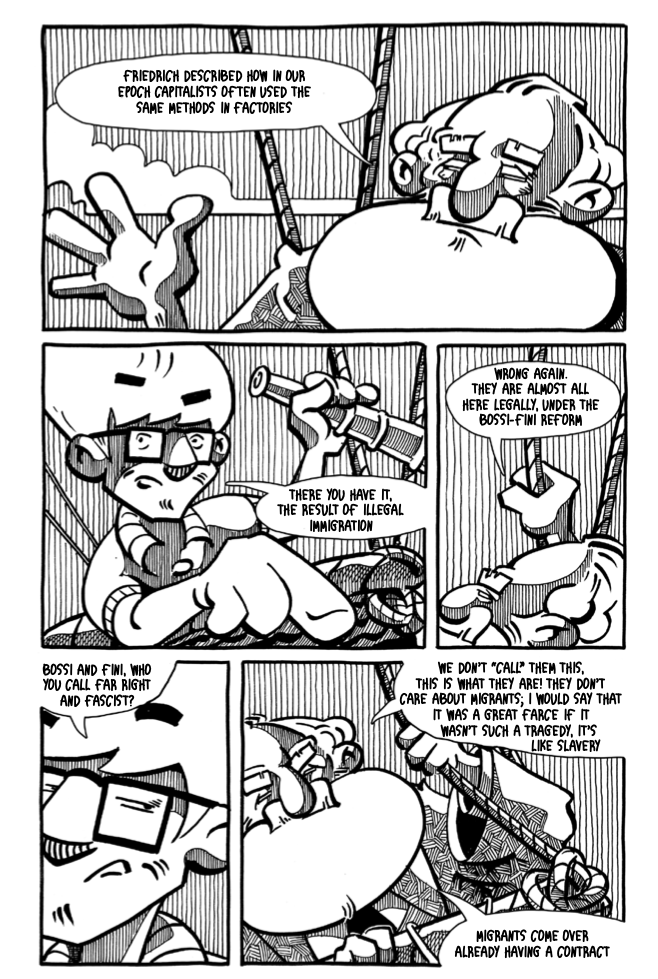
As comics go,The Spectre—a collaboration between Greek and Italian creators—offers a more swaggering and hopeful conception of an ascendant and effective Left than its North American counterparts. Left comics emanating from North America tend to focus, probably correctly, on the systems that immiserate and oppress people within its borders and throughout its empire. Racism is North America’s Original Sin. 250 years into its existence, America has yet to atone for its past, let alone come to grips with how that past informs its present.
The varied aesthetics of the long-running comics anthologyWorld War 3 Illustrated, for example, is an embarrassment of riches when it comes to introductions to radical perspectives. The constraints of the anthology format, though, preclude great depth on any subject. Even when arranged thematically, the assembly of stories can be dizzying. Make no mistake, I am heartened by the continued existence ofWorld War 3 Illustrated. I hope it goes for fifty more years. But to a reader who is not sympathetic to the possibilities that its existence invites, it isn’t hard to see the collection as a litany of marginal victories and outright defeats. It’s a potent reminder of all the work that needs to be done.
Conversely, whileThe Spectreis not exactly joyful, it is a refreshingly playful rejoinder to a grave debate. Boban employs a clean and buoyant bigfoot style. To many readers, their depictions will evoke the proportions of nineties Hip-Hop and Nü-Metal: bulbous, bouncy, and contorted into confident postures, like characters embroidered on a JNCO pocket. That aesthetic, of course, borrowed heavily from the graffiti of the late seventies and eighties and Boban’s depiction of Marx would look right at home emblazoned on the side of a slowly rolling boxcar. Boban’s economical approach delivers an incredible amount of dimension and texture with ostensibly simple hatching at different weights and in different directions, coupled with spot blacks. And though much ofThe Spectreconsists of characters in dialogue, making nuanced arguments, the precision of their thick lines is a pleasing counterpoint to the verbal density.
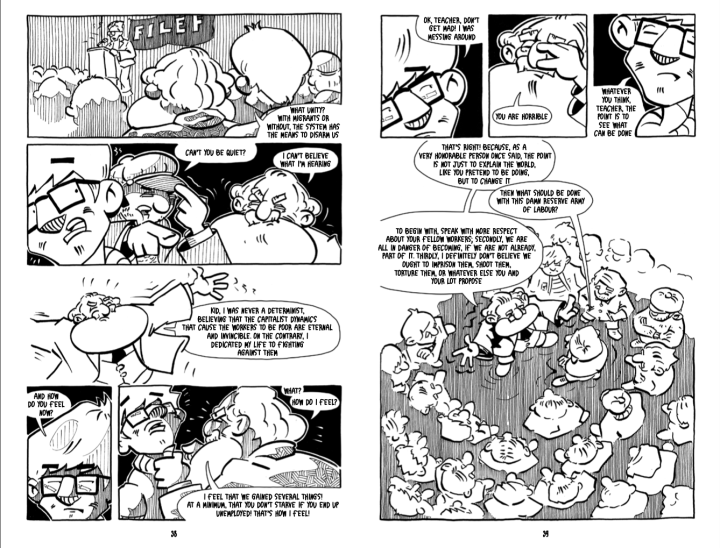
Even in translation,The Spectre’s depiction of Southern Europe does not offer one-to-one correspondence with the concerns of North America. But there are enough similarities to indicate that something systemic is amiss. The universality of experience both facilitates and necessitates the translation ofThe Spectreinto English from its original Greek. In the introduction to the English translation, attributed to Kersplebedeb, the publishers argue that:
Proletarian politics emerging [sic] from the actual lived experience of the proletariat. Which has always included people who have moved from one region or country to another is search of work or safety. Indeed, migrants have repeatedly formed a critically important section of the proletariat, bringing with them their knowledge and experience from different places and traditions of struggle.
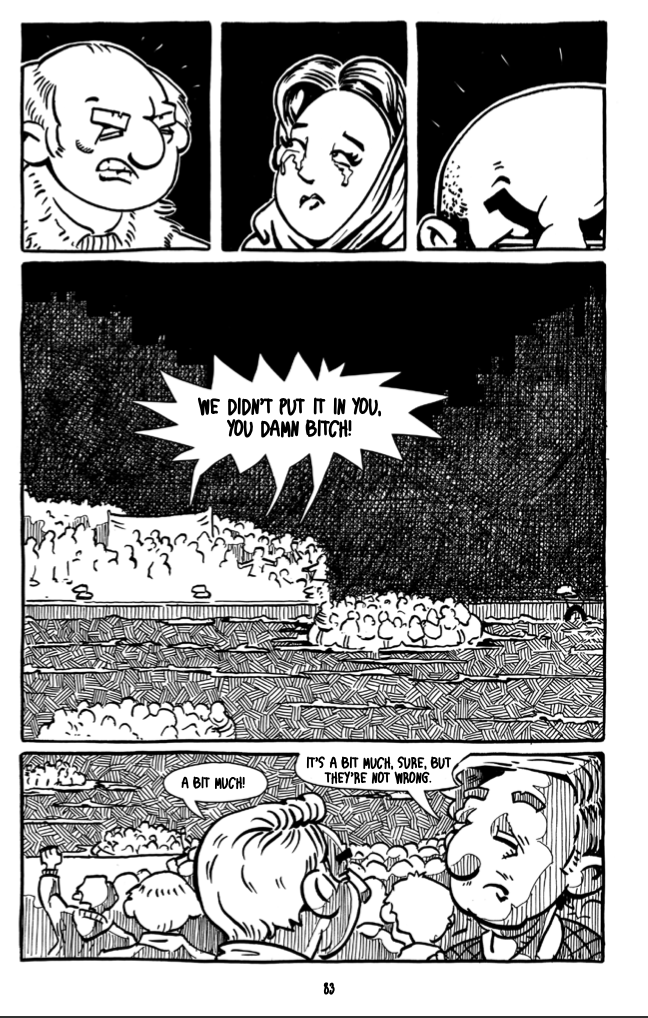
Late in The Spectre, there is a scene in which an anti-immigrant protester, a middle-aged man, locks eyes with a pregnant émigré, arriving to the mainland in an overcrowded raft.
“We didn’t put it in you, you damn bitch,” the assembled protesters shout in unison. A pair of old men observe the conflict at a casual remove. “It’s a bit much, sure, but they’re not wrong,” one of them remarks disinterestedly. As Marx and “the Lefties” arrive to enter the fray, Diego is caught, once again keeping company with the fascists. Admitting that he “should have stuck to the tried and true,” his “teacher,” Marx, hurls a brick that flattens Diego and the racist crowd, a blunt force of solidarity, dulling the cutting edge that seeks to divide the working class.