

The landscape of television in 2026 is as diverse and potentially oversaturated as ever. Since the advent of streaming, traditional networks and their online counterparts have battled for the hard-fought attention of viewers who are more distracted than ever by a glut of media options. That can make it hard to pick which shows to prioritize for viewing, let alone commit to one for a surplus of watching hours.
The cream always rises to the top, though, and there have been plenty of breakout programs that we’ve documented in our list of the best TV shows of 2026 so far. But this list is reserved for the ones that have struggled to find or maintain an audience: new and returning shows that have found themselves dead on arrival or unable to live up to ambitions set in an earlier season. From underwhelming network procedurals and sitcoms to high-concept ventures that immediately found themselves in the black void of streaming, where unremarkable programming goes to die, these shows have simply failed to make an impact.
Here are the most forgettable TV shows of 2026, so far.
The Audacity
Silicon Valley satire is one crowded subgenre at this point — between “Silicon Valley,” “Devs,” and “Succession,” audiences have already gotten various flavors of hitting the same targets. AMC’s “The Audacity” arrives on the back foot in a saturated field. Created by Jonathan Glatzer, the series follows a self-styled tech visionary (Billy Magnussen) and his codependent “performance psychologist” (Sarah Goldberg) as a data-exploitation scandal threatens to expose them both, with Zach Galifianakis, Lucy Punch, Simon Helberg, and Randall Park rounding out a sprawling ensemble of tech-adjacent archetypes.
The satire has some teeth when it focuses. Park’s paranoid, bunkered-down former hedonist is a highlight, and the show’s read on tech-bro siege mentality circa 2026 has some contemporary appeal given how fast the tech world keeps moving. But the show finds itself overstuffed, as there are too many characters competing for too little runtime, with secondary storylines diluting momentum. It has a pointed sense of sly ridicule for the absurd reality of the Valley’s hermetic culture, but not the same focus when it comes to working out season-long character arcs.
AMC seems to believe in it, since “The Audacity” is already renewed for season two, but the show itself seems to have slipped in and out of the conversation as a decently competent entry in a subgenre that’s produced several classics.
The Beauty
Perpetual prestige-trash generator Ryan Murphy churns out so much content that it’s a wonder he has any new directions for his polished but tawdry genre shows of little substance. But then again, perhaps “The Beauty” proves that he actually doesn’t. Matthew Hodgson’s adaptation of the Image Comics series arrives with a sticky hook: A sexually transmitted “virus” that grants users flawless beauty before killing them is being investigated by FBI agents played by Evan Peters and Rebecca Hall, with Ashton Kutcher cast against type as the tech billionaire who weaponized it.
The premise begs comparison to 2024’s Oscar-winning film “The Substance,” and Murphy indulges directly in that overlap. Gruesome transformation sequences are staged with the same appetite for spectacle that’s defined his “American Horror Story” legacy for 15 years (as well as the prolific release of his productions at large, which we’ve ranked from worst to best). It’s pretty much Murphy doing what Murphy does: gorgeous production design and a starry cast in service of themes about vanity and self-loathing that never develop past the incipient stage.
The show’s reception has reflected a split between those who are completely in the bag for Murphy’s regular stylistic toolbox and those who have seen through him for a long time. It’s hard to ignore that 11 episodes is a lot of runtime to spend circling a thesis about beauty standards without landing anywhere novel, especially with ideas that were explored with bombast very recently in the public consciousness. Murphy’s house style of empty, provocative pageantry continues unabated.
The Boroughs
The Duffer Brothers have successfully franchised the “misfit gang battles Amblin-style monsters” formula that built “Stranger Things,” and “The Boroughs” sees them executive producing a show that exports the vibe wholesale to a new cast, this time relocating the found-family heroics from suburban teenagers to retirees in a New Mexico retirement community. Created by Jeffrey Addiss and Will Matthews, the series recruits a stately ensemble — including Alfred Molina, Geena Davis, Alfre Woodard, Denis O’Hare, and Clarke Peters — and even casts “E.T.” star Dee Wallace for the prologue, in case you hadn’t picked up on the show’s intended lineage.
The show’s influences didn’t hurt its critical reception. It sits at 96% on Rotten Tomatoes, and there’s a general appreciation for its sincerity about aging and its willingness to have its older cast play adventure-story heroics usually reserved for adolescent stars. But all the praise comes with an unavoidable fact: This is the exact structural skeleton of “Stranger Things,” dutifully copied and pasted.
That’s the trap of a show this openly derivative. Even when it’s well-executed, “The Boroughs” struggles to become anything beyond “the show where ‘Stranger Things’ happens to old people.” When you stake your claim to existence by living in the shadow of a much more culturally influential property, the only path is to disappear as soon as you’ve announced yourself. That must be why Netflix canceled the show after just one season.
Finding Her Edge
Netflix’s teen-romance pipeline runs on a reliable formula, usually involving love triangles, high-stakes competition, and a soundtrack of algorithmically pleasant pop tracks. “Finding Her Edge” fills that slot with an unremarkable sense of coasting. Adapted from Jennifer Iacopelli’s YA novel, the series from Shelley Scarrow and Jeff Norton follows the Russo sisters, heirs to a wobbling figure-skating dynasty, as eldest daughter Adriana (Madelyn Keys) skates toward a fake-dating arrangement with her new partner, Brayden (Cale Ambrozic), while still carrying a torch for her ex-partner-slash-ex-boyfriend, Freddie (Olly Atkins).
To its credit, the ice-dancing sequences have modest filmmaking polish, and Keys anchors the melodrama with enough sincerity to occasionally convince you that the show is more than the sum of its parts. But writers with sharper credits elsewhere — such as Scarrow’s work on “Wyonna Earp,” which developed a passionate following that saw fans clamoring for a new season after its cancellation — flatten everything into the most predictable version of every scene. You can call the will-they-won’t-they resolution right from episode one.
It’s the kind of show Netflix thrives at producing: made to be half-watched while folding laundry or, like, doing taxes. Such shows are continually rewarded in the streamer’s algorithm, and “Finding Her Edge” earned a top-three global debut and has a second season on the way. Perhaps that speaks to the bleak reality of streaming services that sustain themselves on a business model of forgettable comfort food.
Going Dutch Season 2
Denis Leary continues his late-career run of commercial attempts in “Going Dutch,” casting him as a decorated colonel exiled to the least strategically important U.S. Army base on the planet, located in the Netherlands. The setup had enough promise for critics to greet the show fairly warmly, praising the father-daughter chemistry between Leary and his real-life daughter Devin Leary, who plays his estranged captain daughter, as well as the show’s willingness to needle both military bureaucracy and progressive pieties.
Another season later, that promise has been diluted into the type of show its premise always threatened to become from the outset: a parade of half-researched Dutch stereotypes — Tulips! Cheese! Thinly sketched Eurotrash accents! — standing in for actual cultural specificity, with jokes that would sound half-baked even on sitcoms with far less pedigree behind the production. Even sympathetic viewers noted that the show never figured out what to do with its ensemble beyond Leary and Danny Pudi, whose Major Shah was afforded a more compelling subplot compared to everyone else, who are forced to tread water in forgettable, overly-agreeable fluff.
Fox burned off the back half of Season 2 with little fanfare before quietly canceling the show in May. “Going Dutch” wasn’t ever bad enough to be memorable for its failures — instead, it gradually slipped out of the cultural consciousness entirely.
Imperfect Women
Apple TV has cornered the market on handsomely appointed mysteries fronted by actresses who deserve better material, and “Imperfect Women” is here to continue that important legacy. Adapted from Araminta Hall’s novel of the same name, showrunner Annie Weisman’s series stars Kerry Washington, Elisabeth Moss, and Kate Mara as three lifelong friends whose bond fractures when one of them turns up dead: Mara’s Nancy is out of the game before the first episode ends, leaving behind secrets that implicate the two women left behind.
There’s a level of pedigree that’s hard to ignore, and it’s led by a capable cast: Washington brings real precision to her role of controlled ambition, Moss contributes her reliable live-wire unpredictability, and Leslie Odom Jr. makes an impact as Washington’s charming brother. It’s also fairly ambitious — the dual-timeline structure and the film’s thematic framing devices signal a show in search of some kind of profundity about womanhood and the hidden fault lines in friendship.
Alas, it does a lot of reaching and not much actual grasping. Nothing here is irreparably broken, but nothing lingers with you, either. The mystery mechanics work well enough to keep pages turning, yet the emotional revelations land as obligatory beats necessary to push the plot forward. Reviews were torn between critics charmed by the cast and viewers who found eight hours a lot of time to spend on a show with so little urgency. Someone stop me before I write “‘Imperfect Women? More like ‘Imperfect TV Show.'” Ah, too late.
Malcolm in the Middle: Life’s Still Unfair
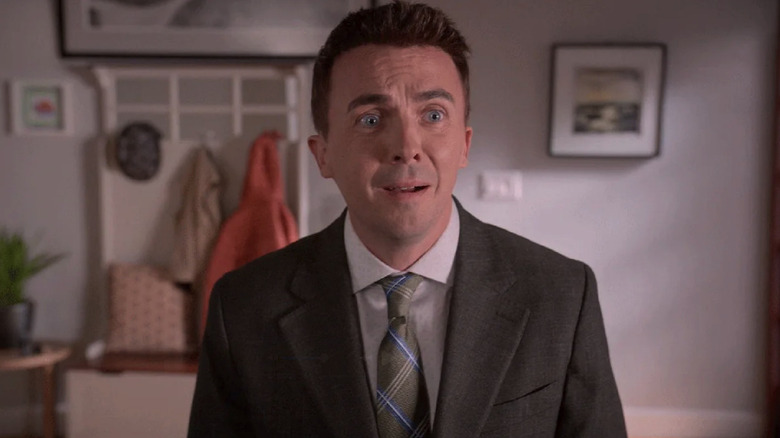
Reboot culture has trained audiences to brace for disappointment, so there was a palpable sense of relief when “Malcolm in the Middle: Life’s Still Unfair” played with a sincerity reminiscent of the original show, largely free of total embarrassment or cynicism. Original creator Linwood Boomer returned to write all four episodes, reuniting Frankie Muniz, Bryan Cranston, and Jane Kaczmarek as the Wilkersons gather for Hal (Cranston) and Lois’s (Kaczmarek) 40th anniversary. This is clearly something made by people who loved the original show, and it’s not just a network squeezing whatever juice was left from a dormant IP. It’s also, unmistakably, a footnote.
Four episodes totaling under two hours can’t replicate the chaotic ensemble rhythm the original series spent seasons building, and the compressed runtime leaves several character arcs feeling halfheartedly sketched. It’s easy to embrace as a warm, overdue reunion, but its pleasantness is hindered by an inert quality, hitting recognizable beats without adding much you can’t find with more dexterity in the original show.
The numbers were certainly strong, since it was Hulu’s biggest 2026 premiere at the time of release, which says more about the ease of recapturing fans with an old franchise than about quality. “Life’s Still Unfair” did what it set out to do and then basically evaporated, which is the most candid, distilled trajectory that all of these types of nostalgia exercises tend to follow. As spiritual solace, you can revisit the 15 best original episodes of “Malcolm in the Middle.”
Marshals
Taylor Sheridan is testing the mettle of his allegiant following with “Marshals.” The fourth entry in the “Yellowstone” franchise plucks Luke Grimes’ Kayce Dutton off the ranch and drops him into a CBS procedural about an elite U.S. Marshals unit, trading the original show’s operatic family dysfunction for standard-issue manhunts and standoffs. It’s a strange fit, as Kayce was never the most compelling piece of the Yellowstone puzzle, and centering a spinoff on him feels like an immediately moot endeavor.
Sheridan isn’t credited as a writer here — Spencer Hudnut runs the show — and the absence shows. Where “Yellowstone” at its best had a florid, self-serious sense of myth-making, “Marshals” settles for a competent case-of-the-week plotting structure dressed up in cowboy hats, with none of the franchise’s political bite or family-saga stakes. Critics were unkind, handing it the lowest scores of any Sheridan-adjacent series to date, and message boards have been loud in mourning what Yellowstone used to be before it, inevitably, dissolved into IP management. Everywhere you look, “Yellowstone” fans are debating if the show is actually a good spin-off.
The one thing that refutes the show’s potential “forgettable” status is its ratings: “Marshals” opened at number one and has camped out in Paramount+’s global top ten for months, proof that the Sheridan brand has the survival instinct of a cockroach. Season 2 is already shooting for a fall premiere, so the audience has proven louder than the critics — still, if “Marshals” fails to justify itself, viewers could soon be singing a different tune.
Scarpetta
Nicole Kidman’s recent run of streaming thrillers has become its own genre, and “Scarpetta” slots her into the role of Patricia Cornwell’s long-running forensic pathologist, with predictably starry results. Developed by Liz Sarnoff and directed in part by David Gordon Green, the Prime Video series splits its time between Kay Scarpetta’s present-day return to Virginia’s medical examiner’s office and her formative years cracking the case that made her career, with Rosy McEwen playing the young Kay opposite Kidman.
The dual-timeline device does give the show appreciable extra density, and there’s a stacked supporting bench: Jamie Lee Curtis, Bobby Cannavale, and Ariana DeBose all help prop up the generalized thriller elements you’ve come to expect from made-for-streaming series. Critics initially rallied around the show’s Certified Fresh debut, but the score cooled as the season wore on, as the messiness with which its prestigious parts have been shackled together became more and more obvious.
Kidman herself became a recurring complaint. Though she’s a perfectly magnetic actress, the actor feels miscast as a scrappy, chain-smoking shopkeeper’s daughter who clawed her way into a male-dominated field. It’s a backstory that Kidman’s pristine, sculpted frame and manners never sell. A cliffhanger ending seems to suggest a second season, and Amazon had ordered two from the start, but it’s not out of the question that the tepid response may have put “Scarpetta” on ice.
Vanished
Kaley Cuoco’s post-sitcom career has been a steady audition to prove she’s worth more than an extra face on “The Big Bang Theory,” but “Vanished” isn’t doing much to advocate for that project. (Though the now-canceled “The Flight Attendant” had a committed fan base.) Created by David Hilton and Preston Thompson, the MGM+ thriller strands Cuoco’s Alice on a train to the south of France when her boyfriend, Sam Claflin’s Tom, disappears mid-journey, sending her on a chase through charity fronts, trafficking rings, and a rotating cast of suspicious European allies whose trustworthiness remains consistently dubious.
There’s a serviceable genre exercise buried here. Cuoco commits to Alice’s unraveling, and her chemistry with Karinies most of the show’s actual pleasures, with a buddy dynamic that’s funnier and more alive than the central romance meant to drive the plot. The Riviera scenery contributes the European flavor the show is after, and there are some set pieces with proficient staging
But “Vanished” leans hard on dusty old genre furniture that could have used a polish. Also notable is the show’s treatment of its Middle Eastern settings and characters, which are used as plot and sepia-toned aesthetic devices rather than anything that contributes to the show’s actual texture. An overall muted reception ensures that “Vanished” is exactly what this show will be in the minds of viewers days after finishing it.
