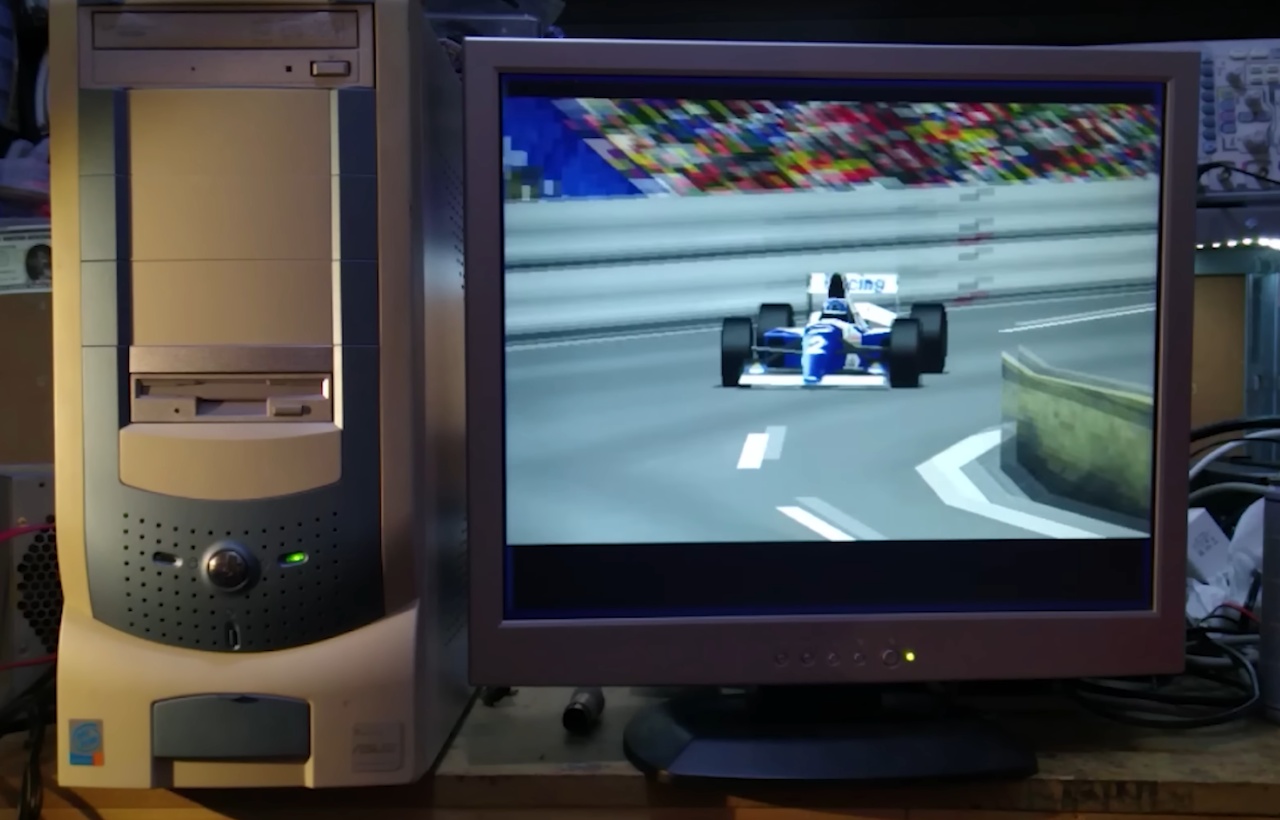
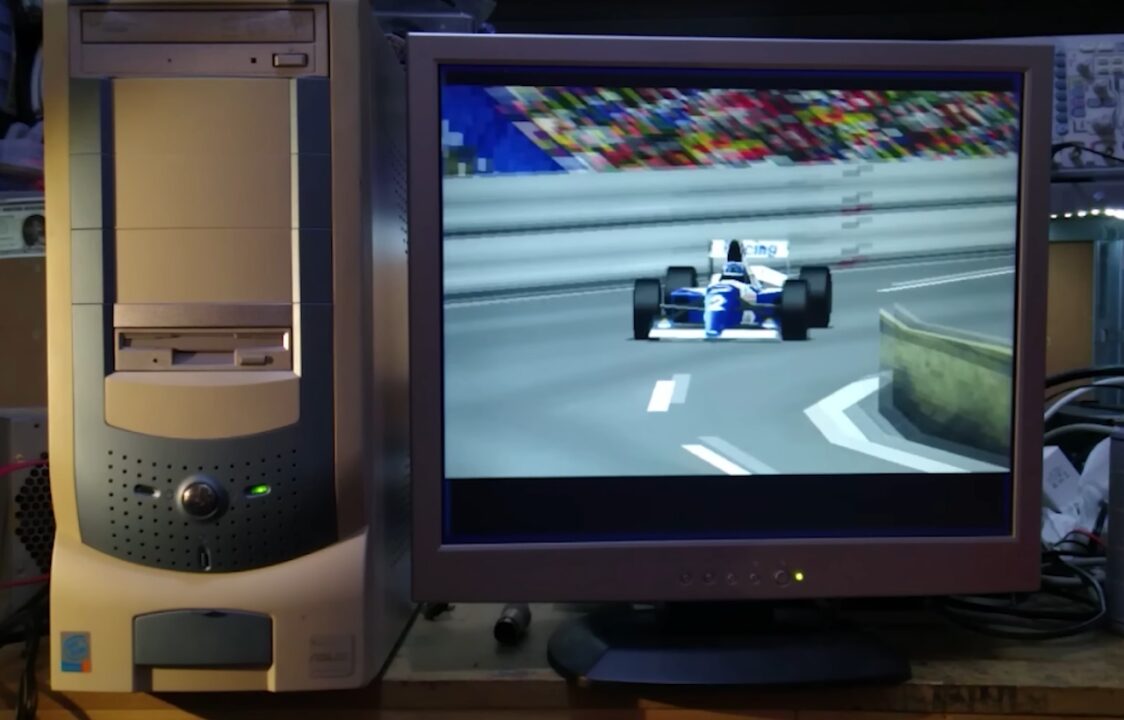
It might seem like a joke worthy of April Fools’ Day (watch your step!), but this has been on the Web for several days, and it’s real: TheRasteri previously shared several MS-DOS experiments and even developed accessories to improve compatibility with modern hardware. This time, though, he decided to go to extremes—building the fastest MS-DOS gaming PC. The rules are three: zero emulation, correct execution of the most popular games, and full audio support.
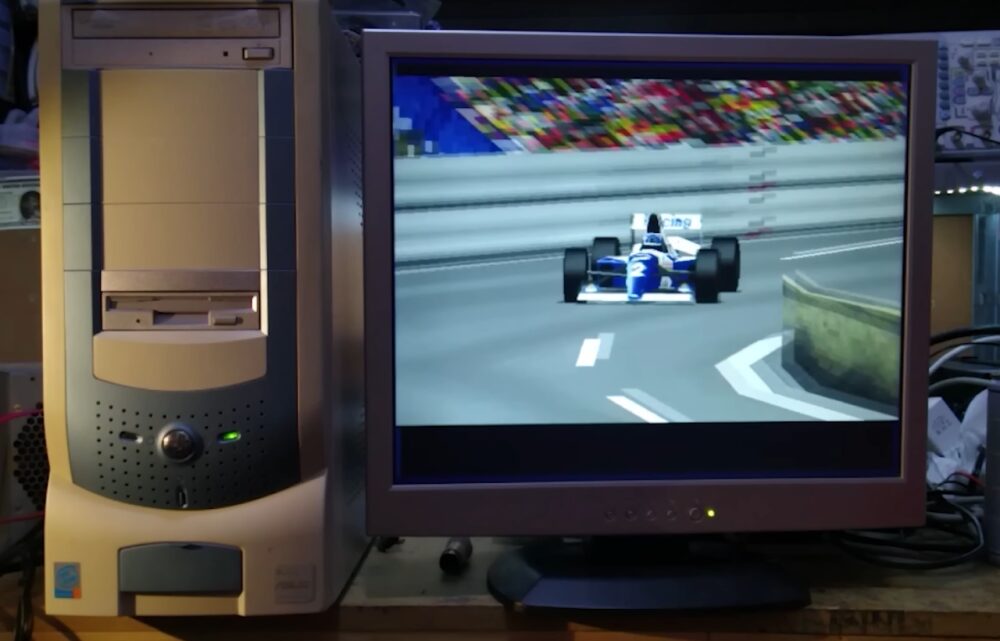
Let’s start with the obvious: it’s not that complicated to run MS-DOS games these days. The various flavors of DOSBox have significantly simplified the process, and as if that weren’t enough, there are also a large number of wrappers, ports, and special environments (e.g., ScummVM). In fact, MS-DOS emulation has reached such an advanced level that we can now reproduce the functions of 3Dfx graphics cards, sound cards, and other peripherals.
So why struggle with bare-metal installs of MS-DOS? A classic answer: because we can. You always learn something new when you do things the old-fashioned way, but that doesn’t make old hardware mandatory. Modern systems have several limitations (the lack of ISA slots comes to mind), but that hasn’t stopped TheRasteri on YouTube:
A Gaming PC with MS-DOS
TheRasteri is the same enthusiast who created the dISAppointment board prototype a couple of years ago, and that already gives us an idea of his strategy. Many modern chipsets have dropped residual ISA support, so the key is to find the exact combination of single-thread speed and compatibility. This led him to favor a fourth-generation Intel Core i7-4790k and a DFI HD100-H81 motherboard aimed at the industrial market.
Still, he couldn’t escape surgery: this motherboard doesn’t have an exposed LDRQ signal (essential for DMA access), and he had to locate it with the help of official documentation and an oscilloscope. Besides modifying the motherboard, he also needed a graphics card, but going with the fastest option for MS-DOS isn’t the best. TheRasteri determined that a GeForce 7600GT offers excellent performance at DOS resolutions and good compatibility under Windows 9x.
That’s right—TheRasteri chose Windows 98 to get a proper MS-DOS environment. The open-source project “Windows 9x QuickInstall” reduces the installation to a few seconds and is compatible with USB drives. The sound card is an Avance Logic ALS100 that starts immediately with Unisound, and after a slight adjustment, Doom ran perfectly. Now, moving on to benchmarks… his results weren’t that great. The problem was in the BIOS: one of the speed options remained hidden (TheRasteri modified its ROM with AMIBCP), and although he accidentally ripped the chip off the PCB, all the numbers improved. 174 FPS in Quake 1 at 1280×1024 is impressive, and it nearly reaches 500 FPS at 320×240.
The last phase of the experiment includes PCI cards, a Voodoo2, and even a recompiled version of Super Mario 64. To wrap up… is it a good idea? TheRasteri says no, because these machines “don’t want to exist,” but he also opens the possibility of creating an even faster machine, either
Read this article in another available language.
ItalianoDeutschPolskiFrançaisPortuguêsNederlandsEspañol
<img src="https://comicvibe.com/wp-content/uploads/2026/08/grid_image.jpg" alt="Double Trailer Flash: Bring Her Back and Karate Kid: Legends”>
Double Trailer Flash: Bring Her Back and Karate Kid: Legends
Cyber Writer: A Cyberdeck for Writing Without Distractions