

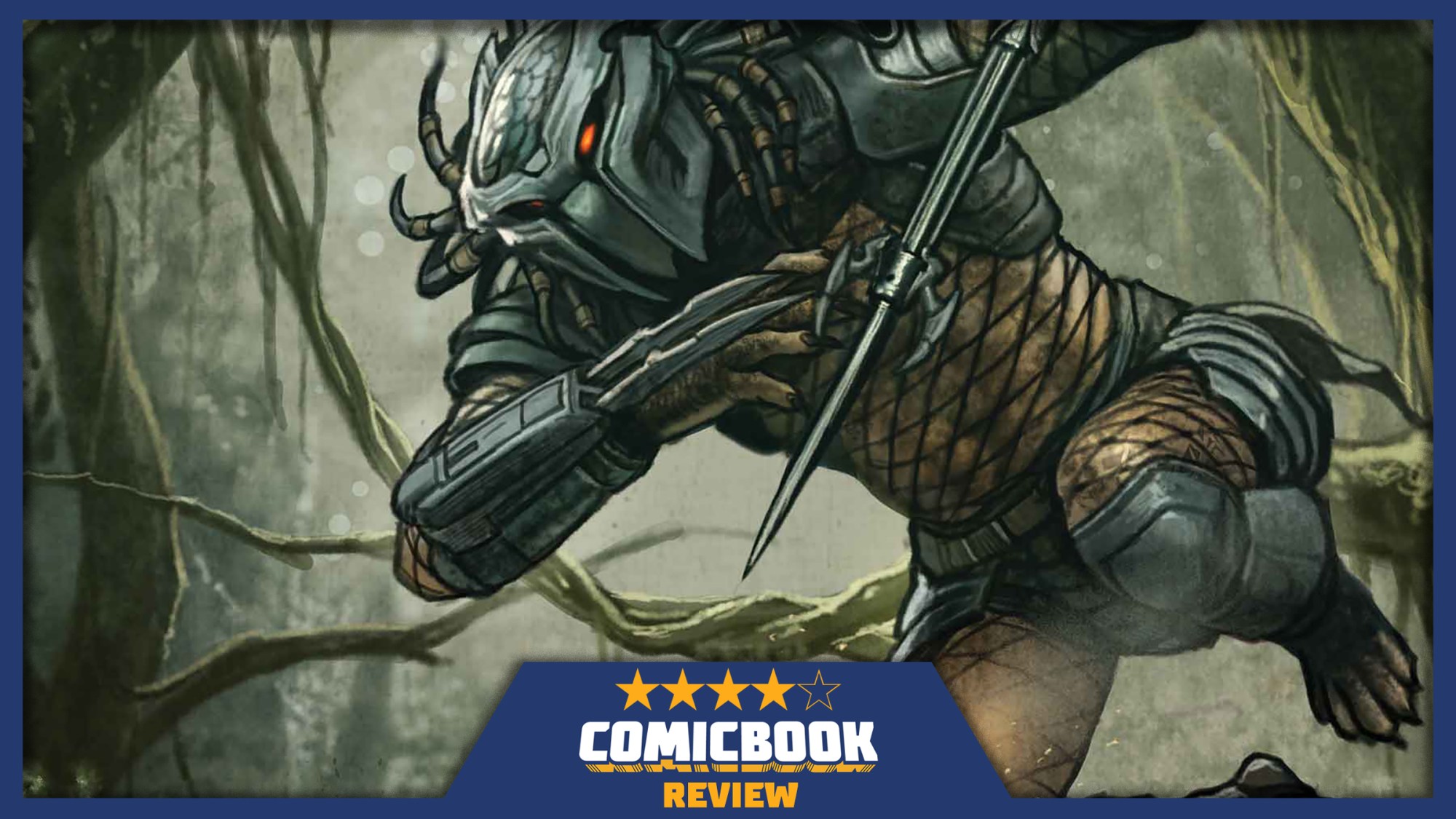
Disney owning everything is bad in some ways, but in others, it’s honestly kind of good. The Mouse owns Marvel, Star Wars, the Predator, the Aliens, the Planet of the Apes, and numerous other classic franchises and that means that we can get crossovers that we’ve always dreamed of thanks to Marvel Comics. Marvel’s line of Aliens vs. and Predatorvs. has given readers some excellent comics and their Planet of the Apes books have also been pretty great. That leads here, where two classic sci-fi franchises you never thought would meet end up clashing in Predator vs the Planet of the Apes, by from writer Greg Pak and artist Alan Robinson.
Videos by ComicBook.com
If there are two properties that I never thought I’d see together, it’s these two and yet there’s something so right about it. The Predators are some of the most formidable aliens ever and the Apes have long been one of sci-fi’s more beloved groups; they seem like they exist in different worlds in a way that, say, the Aliens and the Predators don’t. However, that’s part of what makes this comic so interesting. Pak and Robinson are able to find the sweet spot for these two franchises, creating a crossover comic that proves that when you put an ape on the cover, good things happen.
| Pros | Cons |
| Pak is able to give readers a fun first issue that plays more with Planet of the Apes iconography than Predator | There are several times when the differences in tone between the two properties is apparent and it sort of takes you out of the scene |
| Robinson’s art is detailed and pleasing to the eye, and his action scenes are top notch | |
| Zira and Cornelius’s reaction to the Predator is way more fun than it has any right to be |
Pak Is Able to Find a Way to Make the Two Properties Work With Each Other
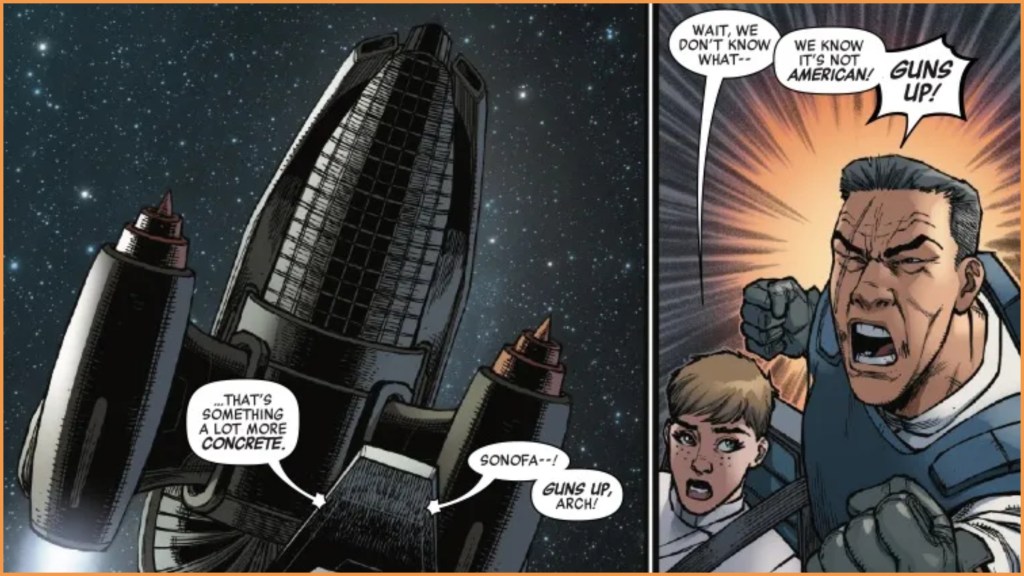
For me, Greg Pak is a writer who I’ll always associate with the Hulk, but he’s done a lot of work outside of the Jade Giant and his family of characters. Pak is the kind of writer who can take simple plots and make them sing and he does that here. In a lot of ways, this issue is a Planet of the Apes story, with a team of soldiers sent alongside a group of astronauts out to rescue the hero of the first movie, Colonel Taylor (who will become the heroes of the next movies, since Charlton Heston didn’t come back). It’s a great way to set up a story that honestly doesn’t seem like it has an easy ingress point; Pak could have just given us a story where the Predator shows up and just starts hunting the Apes and it would have been fine, but instead he finds an interesting way to use the lore of the original films to make this an actual story instead of just a slugfest.
The issue focuses a lot on Zira and Cornelius and I loved them the whole time. Pak takes their characterization as sort of naive scientists to the next level, as they first happen across the crashed soldiers and then watch as the Predator slaughters them. Their lack of fear, and desire to help the wounded Yautja, is gold. The human main character Arch is a cliche tough soldier, but that fits this kind of story to a tee. There are a few times when the tone of the scene is kind of marred by the difference between the two properties – the reaction to the Predator by the Apes sometimes feels a little less serious than it should be – but all in all, the writing does a fantastic job of hooking the readers into the story.
Robinson’s Art Is Out of This World
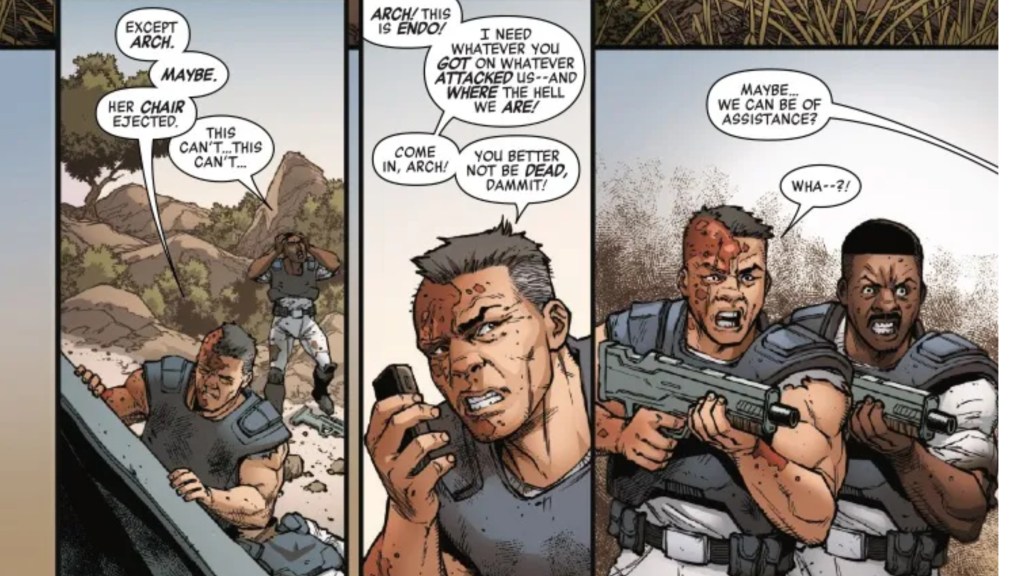
Marvel usually goes all out for the covers to their various Predator/Aliens/Planet of the Apes comics, but the interiors aren’t always the best. This is a problem across Marvel’s line, as the company pays for expensive cover artists and then goes with a lower-level artist on the inside. This can sometimes mean that the pages themselves aren’t always amazing; for every time we get an Esad Ribic or an Andrea Di Vito on one of these books, there are several issues with artists who are fine at best. Predator vs. Planet of the Apes #1 could have been more of the latter, but instead Alan Robinson is able to deliver the goods.
Right from the beginning, his detailed, expressive art draws you in. He does a fantastic job with the Apes; they look on model, but there’s a realism to them that don’t always get when you stay on model for them; we all love the make-up and costumes of original Planet of the Apes, but translating it well to the page can be difficult. His Predator is interesting; Robinson isn’t a horror artist, so he doesn’t really draw it as scary. Instead, to me at least, there’s a lot of old school comic villain to the alien. He draws the Yautja big, an imposing presence that is more comic book supervillain than brutal monster, and it works overall for the tone of this book. The action scenes as well are more comic book-y than realistic, but there’s nothing wrong with that; this is a comic book after all. They’re detailed and fluid, giving the issue some nice oomph in the middle.
Predator vs. the Planet of the Apes #1 is one of those comics where I didn’t really know what to expect from it. The first page wasn’t at all how I thought the book would begin, but it worked rather well, setting up what kind of story this comic would be. In a lot of ways, this book mirrors the events of the first movie and that’s part of what makes it work so well. Sometimes, if ain’t broke, don’t fix it. Pak and Robinson make a fantastic team, giving readers more than they bargained for on every page.
Predator vs. the Planet of the Apes #1 is on sale now.
What do you think? Leave a comment in the comment section below and join the conversation on the ComicBook Forums!
4 Perfect Cult Movies From 1987 That Every ’80s Genre Fan Still Rewatches Today
More Comics
-
Comics
1 day agoStrange Tales #89 Is a Pre-Fantastic Four Masterpiece From a Very Different Marvel
-
Image Courtesy of Marvel Comics Comics
1 day ago66 Years Ago The Real Hulk Debuted And You Probably Forgot About Them
-
Collectibles
1 day agoYou Can Still Own The Golden Age Debut of A Justice League Icon Without Breaking The Bank
-
Image Courtesy of DC Comics Comics
1 day ago17 Years Ago, Green Lantern Led the Perfect Zombie Story And It Still Needs an Adaptation
