

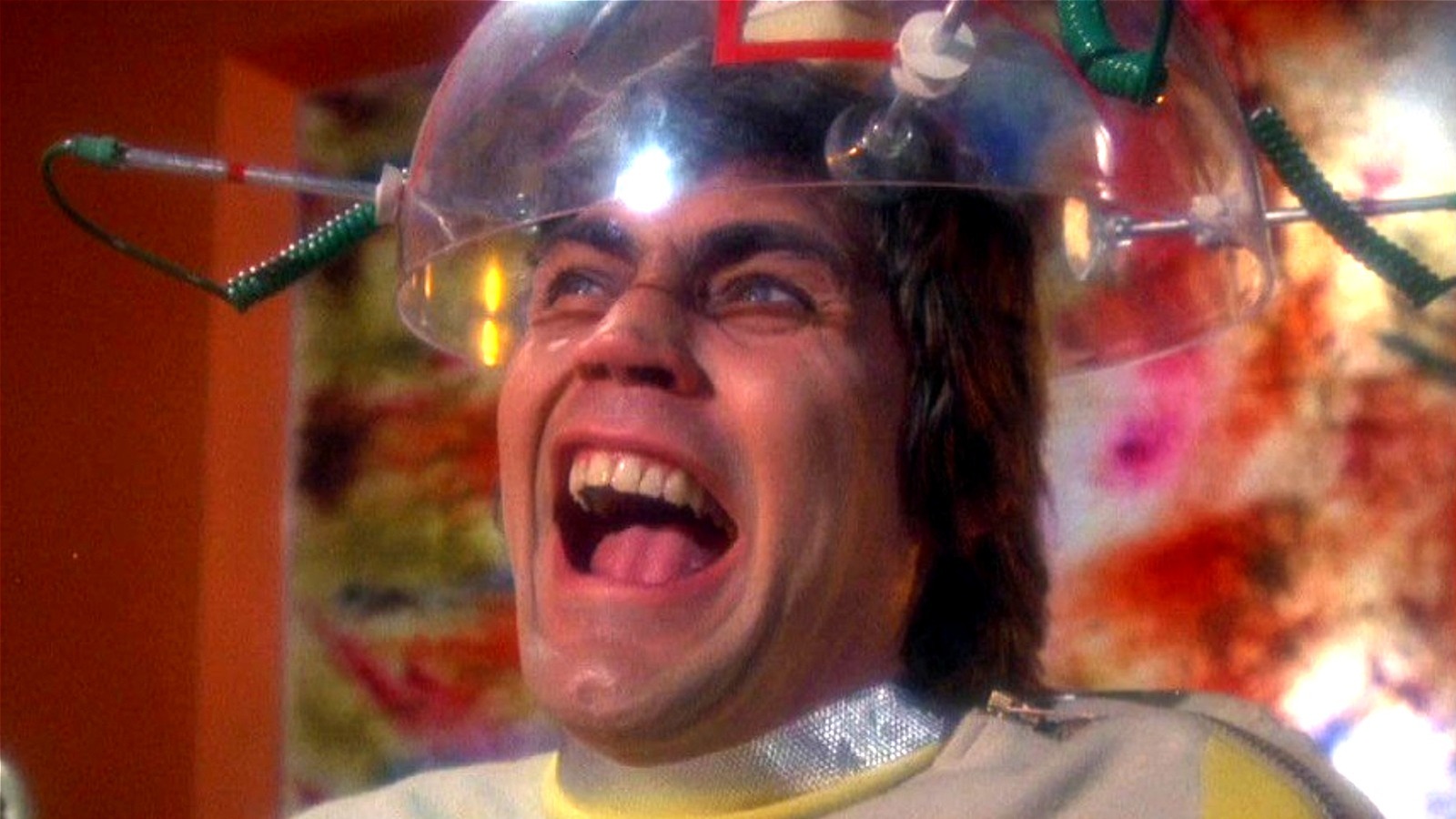
There are a number of TV shows that correctly predicted the future, but more often than not, it amounted to a lucky guess. That, or it was something that was more or less bound to happen eventually, like a certain team winning a championship or the climax of an event that was already somewhat in motion anyway. What’s far more impressive are shows that envisioned some sort of scientific or technological breakthrough decades before such a thing was remotely feasible, and that later saw that thing become a reality.
That’s what all five of these shows have in common. Each one described one or more advancements in science, technology, or other forms of human achievement that are either current realities or are actively in development and will realistically become realities in the near future. It probably won’t come as a huge surprise that all five shows are in the realm of sci-fi, as we’ve seen time and time again how often science fiction eventually becomes science fact. It would be great if there were some things that we left in sci-fi where they belonged, but we don’t need to go there.
The Six Million Dollar Man
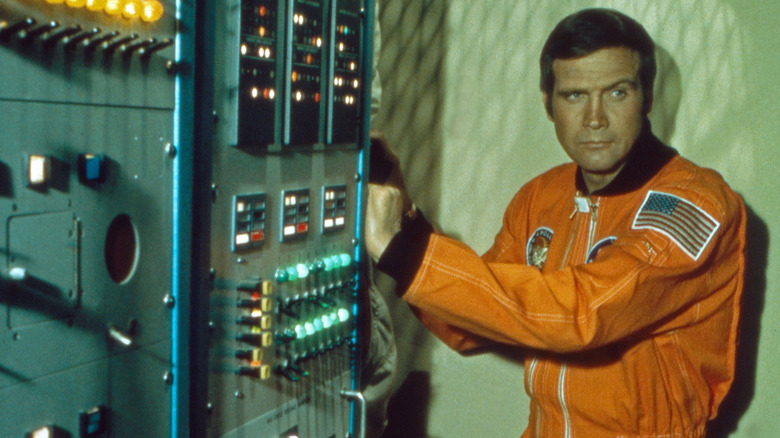
While it’s an old-school sci-fi TV show that should be required viewing, “The Six Million Dollar Man” has admittedly dated itself just by the nature of its title. A $6 million price tag no longer sounds like an almost unfathomable amount of money, even though that sum is equivalent to roughly $45 million today. Cue the scene in “Austin Powers” where Dr. Evil is laughed at for only demanding a $1 million ransom.
But “The Six Million Dollar Man” was ahead of its time in a less embarrassing way — it basically predicted bionic prosthetics. In the show, an astronaut named Steve Austin (Lee Majors) is severely wounded and needs life-saving surgery. Said surgery involves implanting him with various robotic body parts that turn him into a superhero. Ditto for Jaime Sommers (Lindsay Wagner), initially a character in “The Six Million Dollar Man” who subsequently had her own spin-off: “The Bionic Woman.”
Now, obviously, people in real life who get a bionic limb or are given bionic hearing aids don’t get superhuman strength or hearing as the show depicts. But cochlear implants and limb replacements are very much a reality for people who need them — and the iconic tagline “We can rebuild him; we have the technology” is now the reality for a lot of people who need rebuilding, as it were.
Space: 1999
Unless you set your story so far into the future that it doesn’t take place until after our sun dies, it’s inevitable that your series will eventually become a sci-fi show that takes place in a future that has already passed. This becomes far more obvious when you put the year in which your show is set right there in the title — and so, here we are, looking at the once-future set show “Space: 1999” as having taken place in a year that is now almost 30 years behind us.
While it was a little presumptuous about the year in which it would happen, “Space: 1999” does imagine a future where the moon has infrastructure that allows for people to live there full-time in a self-sustaining environment. Obviously, we aren’t quite there yet, but there is legitimate, active work being done to make that a reality — it seems like it’s more a matter of “when” than “if” at this point.
That being said, one could argue that the International Space Station already realizes the off-earth, long-term habitation that “Space: 1999” envisioned, as it has been continuously in flight and inhabited since the year 2000 — only a year after “Space: 1999” takes place.
Doomwatch
Even back in 1970, when the BBC sci-fi series “Doomwatch” premiered, people were already aware of the dangers of improper disposal of chemicals and synthetic waste — in this case, plastic. In not only acknowledging those issues but finding ways to address them, “Doomwatch” is now considered ahead of its time, choosing to use very real issues as the catalyst for the problems the show’s characters had to solve. Those characters were members of a government agency started specifically to deal with environmental and technological ills, led by Doctor Spencer Quist (John Paul).
But “Doomwatch” didn’t just predict the future insofar as it knew where things were headed in terms of what humans were doing to the planet in general. The show’s very first episode, titled “The Plastic Eaters,” deals with a man-made virus that attacks and eats plastic. Doctor Quist and his team must figure out a way to stop the spread of the virus before it eats all of the plastic on Earth.
However, in an interesting reversal, science did eventually discover a microbe that eats plastic — only it’s being engineered to be used in eating the plastic waste that is overrunning our landfills and oceans. So while “Doomwatch” did predict plastic-eating bacteria, it didn’t consider that it could be used for good.
Logan’s Run
Just as “Logan’s Run” is an example of a sci-fi movie that predicted real technology — namely, dating apps and smartwatches — the “Logan’s Run” TV show also imagined technology of its own that became a reality. A loose reboot of the film, TV’s “Logan’s Run” takes place in a future where everyone is required to die when they reach the age of 30. But Logan 5 (Gregory Harrison) and Jessica 6 (Heather Menzies) have gone rogue, on the run and searching for sanctuary from the people who enforce the death-at-30 rule.
Fortunately, “Logan’s Run” didn’t predict a future where people are only allowed to live for 30 years. But while it shares most of its envisioned future technology with its film namesake, the show can claim solar-powered vehicles as an invention that eventually became more commonplace. There are already smaller vehicles that get all of their power from solar energy — such as golf carts and motorbikes — and some existing cars run on a hybrid of solar power and battery.
Technically, that would be enough to declare the solar cars of “Logan’s Run” as being an accurate prediction. But several companies are currently working to develop cars that run entirely on solar power, so we might yet see true solar-powered cars in the near future.
British television was firing on all cylinders in 1970 in terms of prescient sci-fi, it seems, as that was also the year that “UFO” debuted. Though it didn’t do as well as “Doomwatch” and got only a single season before being canceled, it’s a ’70s TV flop that is actually worth watching, which focuses on a secret United Nations organization tasked with trying to not only prevent an alien invasion but also keep the public blissfully unaware that one is even happening.
Depending on who you ask, “UFO” correctly predicted both alien invasions and governments keeping the truth about alien invasions from us. But once you start going down that road, you can argue that almost all sci-fi has either correctly predicted the future or is correct about things that are already happening. Instead, we’re sticking with proven, verifiable facts here — and “UFO” predicted numerous technologies that are now part of our everyday lives.
From teleconferencing to cordless telephones and personal music players, the writers of the show seemed to have a pretty good idea as to what our lives were going to look like in terms of daily-use tech in the future. “UFO” also correctly predicted a lot of things about artificial intelligence, including its use in analyzing data, computing formulas, and recreating believable human speech.
