

![How will Flow Studio, a 3D compositing tool usable for everything from movies to VTuber videos, change video production? [Developer Interview]](https://comicvibe.com/wp-content/uploads/2026/07/9fab6334aeb1a94bacfdf22818554e5f-kix.ly369ee1lrwf.webp "How will Flow Studio, a 3D compositing tool usable for everything from movies to VTuber videos, change video production? [Developer Interview]")
Virtual characters appearing in the real world and moving around as if they were truly real… Such expressions, which previously required extremely difficult technology, are now becoming easily achievable. One such technology that is attracting attention is Autodesk’s live-action x CG compositing app, “Flow Studio.”
This software allows for the seamless integration of 3D characters into pre-recorded footage and is used in a wide range of fields, including filmmaking and animation. This year, the MoguraVR editorial team also collaborated with VTuber Shokudo Omurice to create promotional content. The technology attracted attention not only from viewers but also from active VTubers, who expressed interest in using it themselves

VTuberが日常に溶け込む!? 実写×CG合成ツール「Flow Studio」のスゴすぎる可能性に迫る
VTuberが現実世界に飛び出し、本当に実在しているかのように動き回る——。そのような光景は、ファンにとって、いつか見てみたい夢のひとつ。これまで多くのクリエイターがその実現に向けて、AR技術を使い、様々な…
VTuber2026.03.02sponsored
Flow Studio has recently received another update, adding a new feature called Wonder 3D. This allows users to generate 3D characters and objects that can then be used directly as assets within Flow Studio. How will this change the landscape of video production?
This time, we conducted an interview in Tokyo with Todorovich Nikola, the developer of “Flow Studio,” during his visit to Japan. We asked him in detail about the development concept of “Flow Studio” and the potential for AI functionality to transform the video production process
Profile: Nikola Todorovic
Co-founder of Wonder Dynamics. Entrepreneur and VFX (visual effects) supervisor. Throughout his career as a filmmaker, he has been active in the field of visual effects technology, and based on that experience, he co-founded Wonder Dynamics with co-founder and actor/producer Tye Sheridan. Subsequently, he developed Autodesk Flow Studio (formerly Wonder Studio). He was also selected as one of The Hollywood Reporter’s “Top 25 People in AI Shaping the Future of Hollywood.”
The $100 million budget hurdle and “storytelling without permission”
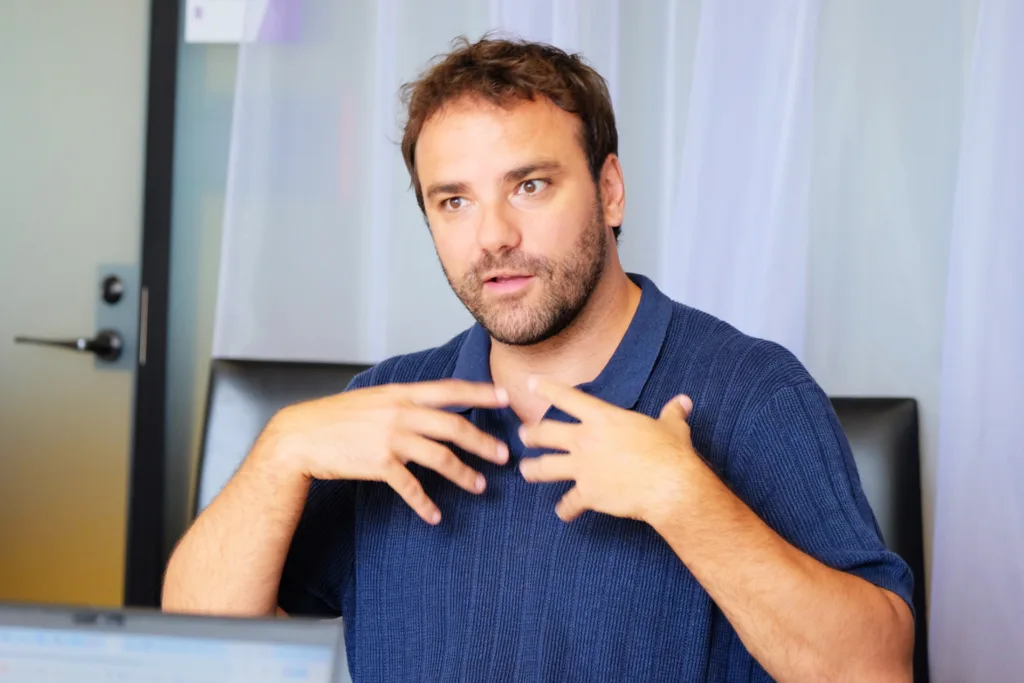
–Today, we’d like to hear about the new features of Flow Studio, as well as future prospects, such as what role AI technology will play in video production. First, could you tell us what Flow Studio can be used for and what it can achieve?
Todorovich Nikola:Our initial focus was on speeding up the process of creating CG characters for movies
This is made possible by a technology called “AI Motion Capture” incorporated into Flow Studio. It captures the actors’ performances and movements, converts them into CG characters, and then automatically performs animation, lighting, and compositing
—What prompted you to develop this technology in the first place?
Todorovich:It all started around 2016-2017 when I tried to write a movie script with co-founder and actor Tye Sheridan (*)
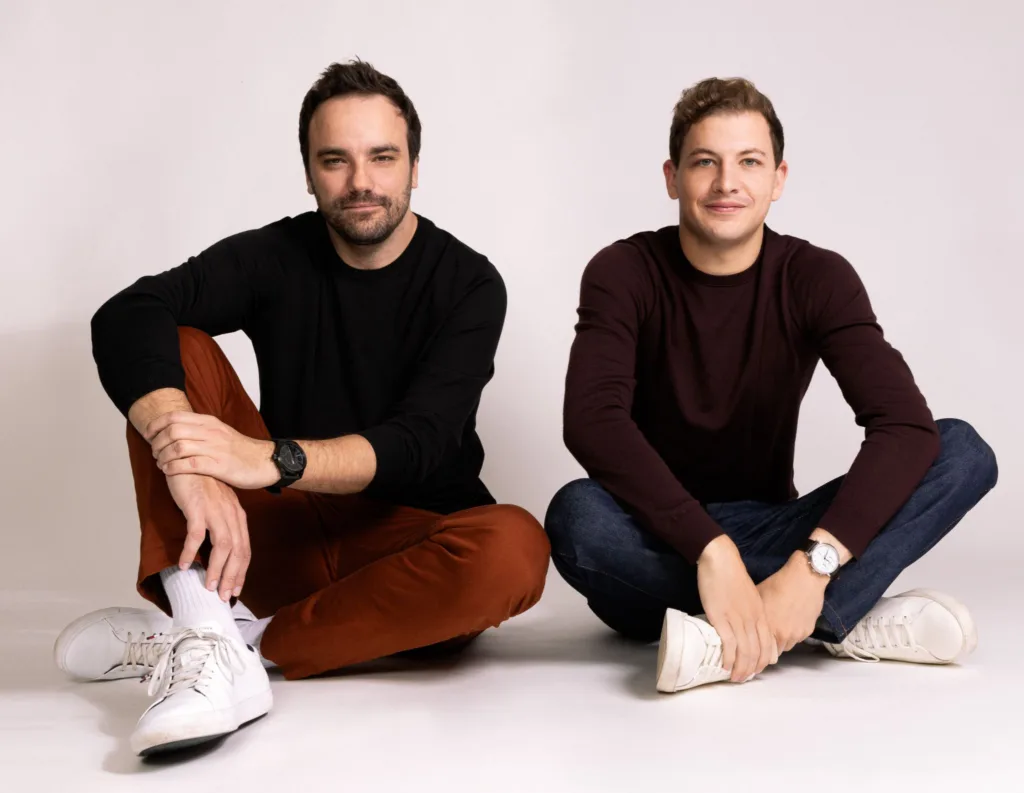 (*Right: Tye Sheridan: Co-founder of Wonder Dynamics and American actor. Known for his roles as Scott Summers in the X-Men series and Wade Watts in Ready Player One.)
Our initial idea for the film was to depict a future where humans and robots live together. However, when we tried to fully implement CGI, we realized it would require a budget of around $100 million, which was far beyond our reach and simply too expensive
That’s where we turned our attention to generative AI technology. We wondered if we could use AI to reduce costs and speed up the work process
Back then, the term “generative AI” wasn’t yet commonplace, so we started by researching the fields of self-driving cars and robotics. We focused on the technology of using computer vision to understand the surrounding world, and that’s how we started this project to make our own film
Originally, we started this project to make our own film, but we soon realized that this wasn’t just a problem for the two of us, but a much larger issue. We felt that we weren’t the only creators who were deeply frustrated by the high costs of video production. So, we decided to first bring this technology to life and make it available to people
—Was the initial concept for the film you were planning to make, which would combine real-world spaces with CGI, present from the very beginning?
Todorovich:Yes. What we were thinking of was exactly combining CG characters with live-action footage
However, as we developed the tools, we realized the wide range of applications for this technology. It can be used for full animation production, as well as for VTubers, games, and even advertising. We became convinced that it could be widely used in all kinds of content creation
This is because the production process, which involves capturing movement using motion capture and then applying lighting and composition to it, is very similar in all aspects, whether it’s a movie or a VTuber
—By the way, was the original film itself ever completed?
Todorovich:No, not yet (laughs). We believe this technology has greater potential than our own films, so we’ve chosen to focus on technological development
In the process, we met many people in similar positions to ours—creators who were facing the difficulties of telling stories. Hollywood is perceived as a very closed world where you always need someone’s “permission” to tell a story. Many creators, including ourselves, are not happy with this situation
Therefore, we proposed the concept of “Storytelling Permissionless” (*)
YouTube revolutionized the way content is distributed, allowing creators to tell their stories without needing permission from anyone. We were excited by the possibility that developing this technology could bring the same kind of transformation to the film industry as YouTube had done
The affinity with Japanese VTuber culture and the coincidence with ‘Ready Player One’
–I feel that Flow Studio is a good fit for Japan’s VTuber culture. When we had a VTuber actually use it in a previous interview, it was well-received, and we received many comments from active VTubers saying they wanted to try it. What are your thoughts on ideas for using it in the VTuber field like this?
Todorovich:Interestingly, we have several engineers who are big fans of VTubers, and we learned about this culture through them early in the development process, around 2019-2020
For us, that use case (VTubers) seemed very natural. After all, these tools are simply means of telling stories and expressing oneself
I myself sometimes feel uncomfortable speaking in front of a camera, so I’m drawn to VTubers who can tell stories through characters, and I actually follow several accounts. That’s why I’m so happy to be accepted into this culture
Interestingly, the time we started our studio coincided with the time when our co-founder, Ty, was involved in the film “Player Ready One.” In a sense, that film depicts the very future that all VTubers are heading towards
Furthermore, on set, Ty himself experienced firsthand just how heavy and burdensome conventional motion capture suits are for the performers. Knowing how difficult it is to create a work of that scale, he was convinced that “motion capture suits are unnecessary. Let’s make it simpler,” and proceeded with technological development with that conviction
Now, using Flow Studio, you can, for example, take your virtual character out into the real world while staying in your living room, and make it move around in accordance with its surroundings. With conventional methods, the technical hurdles and costs were high, making it not so easy to achieve
–The ease with which real-world scenery and VTubers can now be combined makes me think this could be a major stepping stone for creating reality-based video content like vlogs. In Japan, its use is particularly prominent in VTuber culture, but globally, in what kinds of fields is Flow Studio being used?
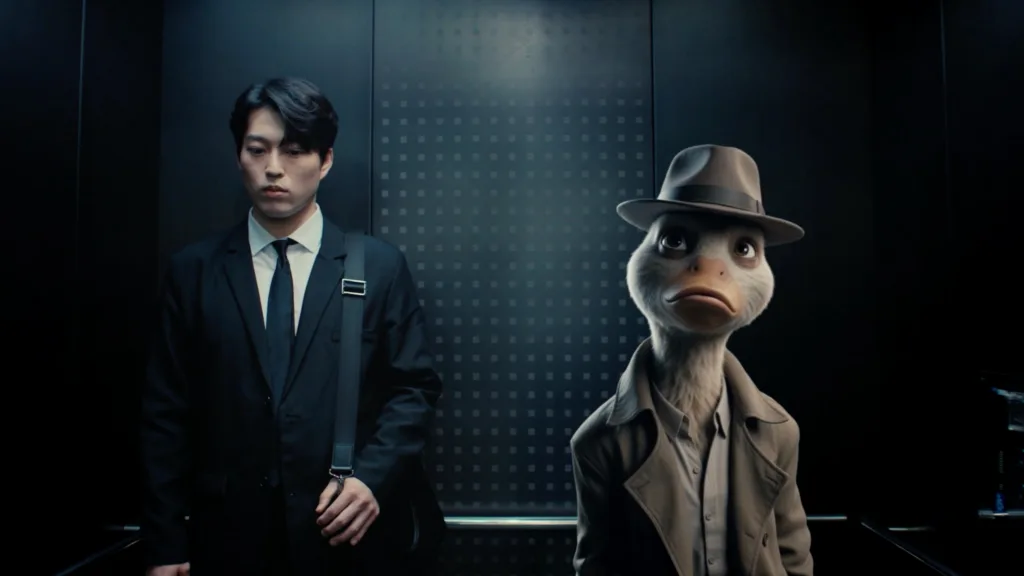
Todorovich:It’s used in a truly wide range of fields. From visual effects (VFX) and animation production for movies and television programs to short-form content for YouTube and social media, it’s widely utilized
Furthermore, leveraging the strengths of motion capture, it is being used in game development animation and in advertising and marketing fields, and of course, it is also widely used by major Hollywood film studios
—Are there any famous works or other examples where it has actually been used?
Todorovich:There are many cases that we are not fully aware of or cannot disclose, but one example is “The Electric State,” by the Russo brothers, directors of the “Avengers” series. With this Netflix film, we not only used the tools, but we also directly collaborated and were involved in the production
In television series, it has been used in “Superman & Lois.” It has also been used in TV shows that don’t usually use CGI, such as “Masked The Singer,” which might be a similar use to real-life VTubers
–In Japan, it seems that it’s gradually gaining traction at the individual creator level, but from what I’ve heard about overseas, it seems to be particularly prominent in large-scale studio use
Todorovich:It’s used by a wide range of people. Some creators use it on an individual level, others in small production companies with 10-15 people, and of course, major studios use it as well
We have direct contact with major studios, so we’re able to keep track of their usage, but at the smaller level, we don’t have a complete grasp of who’s using what and where. Occasionally, people will come up to us and say, “Actually, we used your work on that project.”
Interestingly, when we launched the service in 2023, approximately 500,000 people signed up for our waitlist, and one of the very first customers to sign up and contact us was actually from Japan. We were surprised and delighted to see that
This prevents the “black box” effect caused by AI and guarantees creators’ editing rights
—You’ve used it with various companies and individual creators so far. What kind of feedback have you received from users?
Todorovich:Many people are very pleased with how easy it is to use
Many people find CG and VFX tools difficult to learn and have a negative impression of them, but they are pleased that this tool is easy to use. In particular, we receive many comments such as, “I can now create stories that I had to give up on before due to budget constraints.”
This relates to why we developed this tool, but currently, most AI video generation tools simply output videos and do not allow for detailed editing. The problem with AI models that generate videos from text is that once the video is completed, it becomes like a “black box” where you cannot edit the finer details
Therefore, we built a system where AI completes 60-70% of the work, and then creators can use external 3D tools such as Maya and Blender to make fine adjustments and edits themselves
In other words, users don’t receive a finished, black-boxed video; instead, they receive various elements such as motion capture data, camera tracking, and lighting information, and they can control these elements themselves to create the final product
This is the greatest compliment we receive in the feedback we get. Many artists don’t like the random, roulette-like results that AI provides, and they deeply understand why this approach is important because they seek artistic control and reproducibility
“Wonder 3D” democratizes character creation, overcoming the biggest hurdle in 3DCG
–I’d like to ask about the newly added “Wonder 3D” feature. What prompted you to add this feature to Flow Studio?
Todorovich:Our initial plan was to provide an end-to-end solution that could be used even by people who are not familiar with CG technology
Character creation is one of the biggest bottlenecks in live-action compositing and animation production. No matter how democratized and simplified the animation and lighting processes we make, if there isn’t a sufficient library of characters available to start with, users will quickly lose interest and give up on using the tools
That’s why developing “Wonder 3D,” which uses AI to easily create characters, was a natural progression for us. It allows us to seamlessly handle everything from character creation to the final video
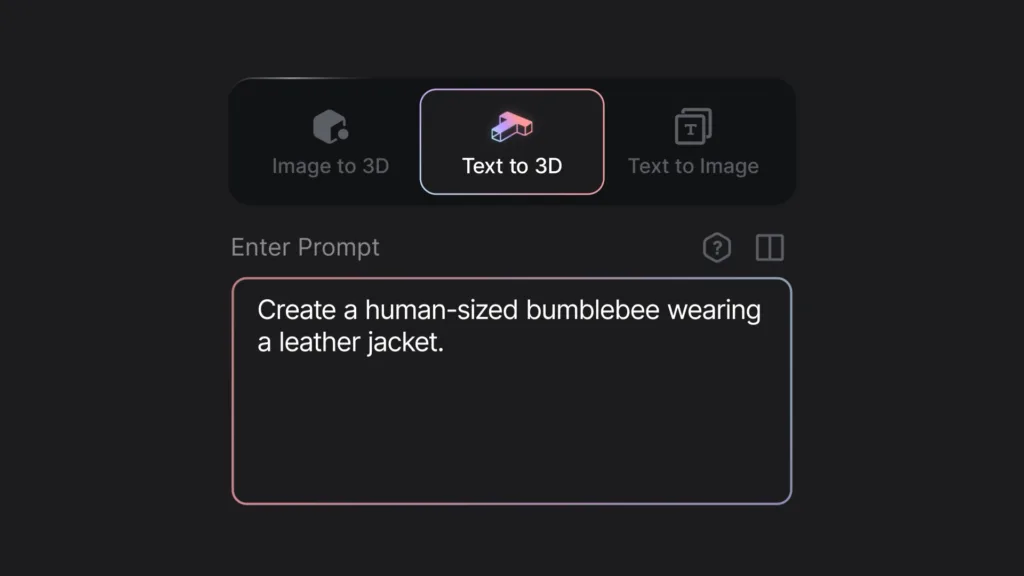 (Instruct the 3D model you want to create in writing. “Make a human-sized bee wearing a leather jacket.”)
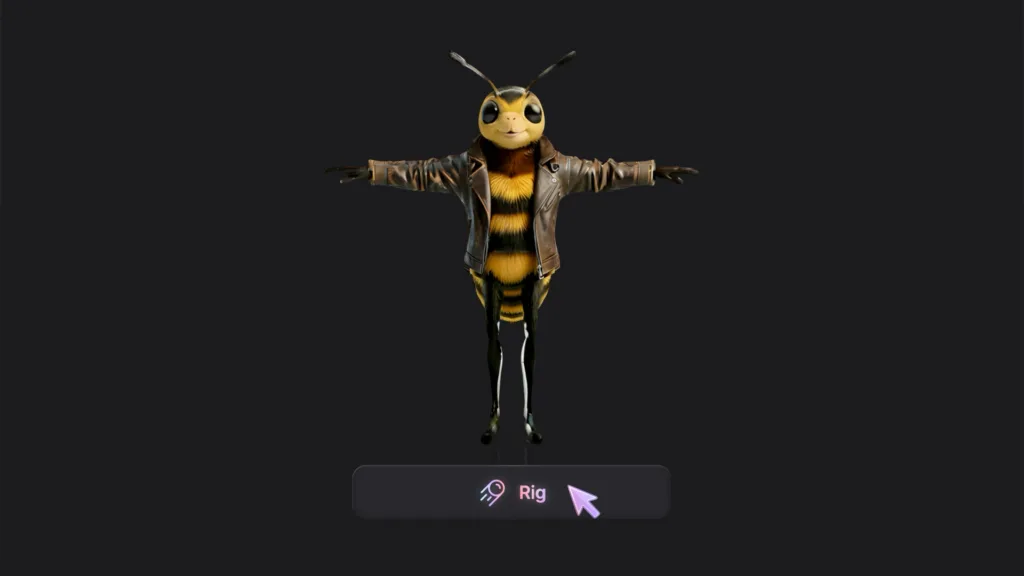 (Completed 3D model)
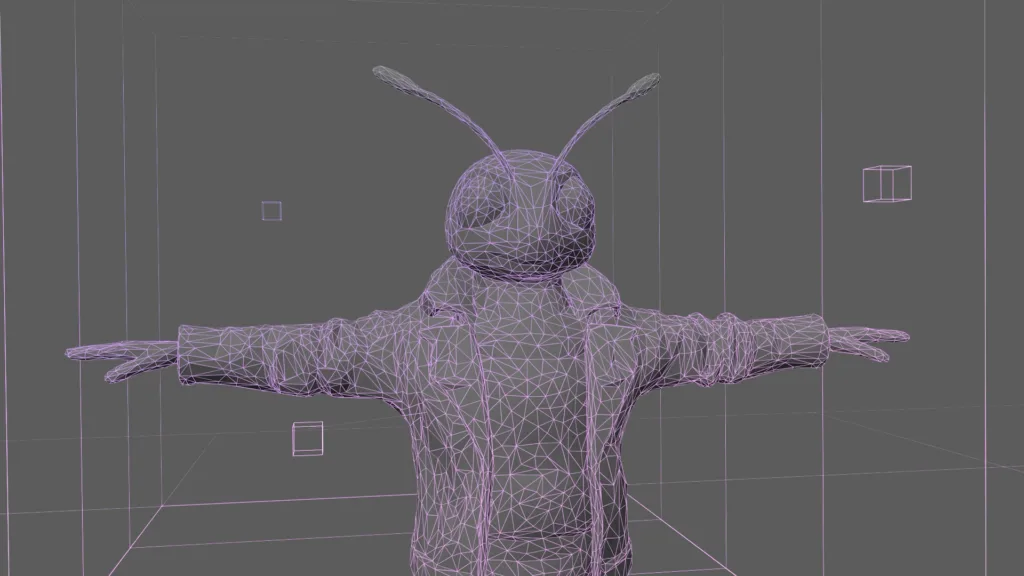 (The shape of the output model can be finely adjusted using software such as Maya.)
In addition to “Text-to-3D,” we have also released “Text-to-Image” functionality, as this is important for exploring how you want your character to look
You generate character images by entering prompts, adjust them until you’re satisfied, and then convert them into 3D assets as concept art. After that, you rig them (add bones and joints), save them to your library, and you can use them anytime for motion capture, live-action compositing, animation, and more
—I see. Is that because you received feedback from major animation and video production companies saying that “creating characters and objects with 3DCG is difficult”?
Todorovich:Rather than from large corporations, we received more feedback from individual creators and small teams with limited numbers of people
Having previously worked in the VFX world, I know firsthand how incredibly costly and laborious character creation can be. It sometimes took more than six months to create a single character, so I’m hoping that AI will speed up that process
–Could you tell us a little more about the features of “Wonder 3D”? Is it possible to determine the avatar’s movements within Flow Studio without having to set up the skeletal structure or anything like that using external tools after exporting the 3D data?
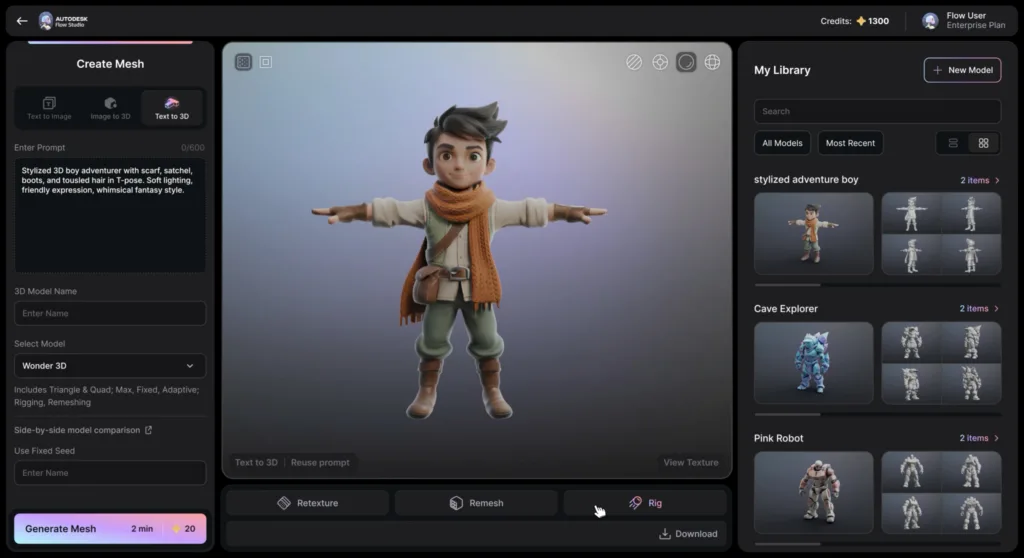 (Humanoid model exported from Wonder 3D)
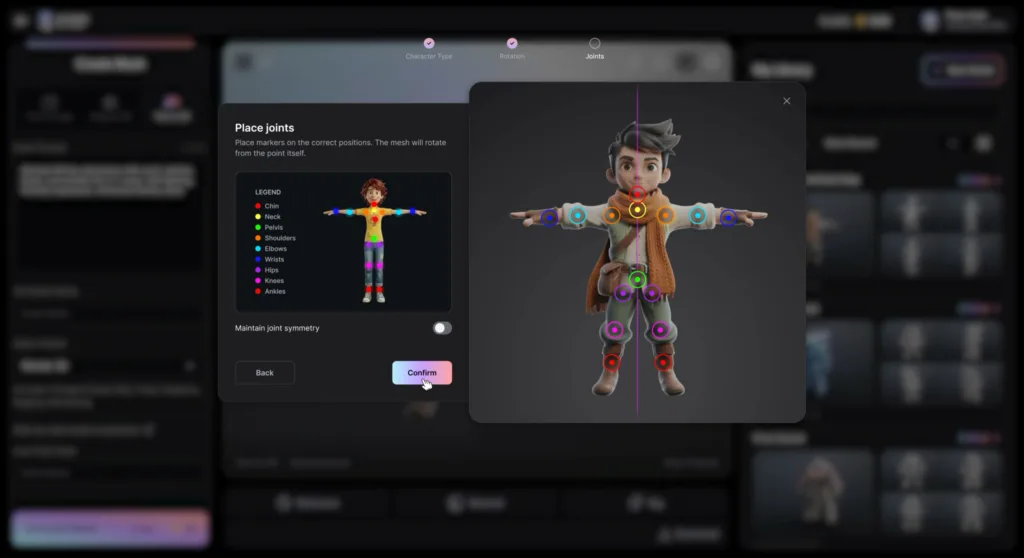 (The AI rigging function allows for bone configuration, making it possible to use it as an avatar that replicates human movements.)
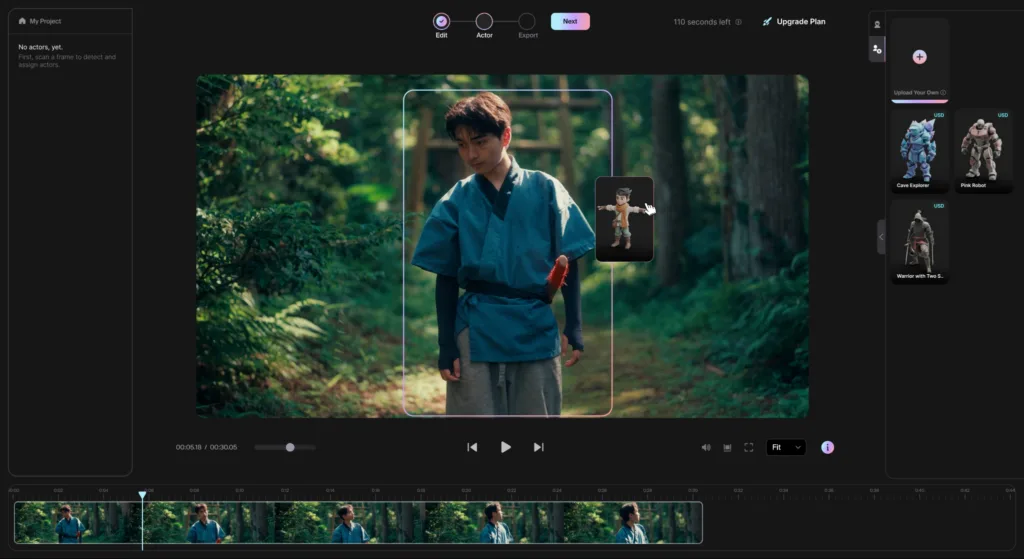 (The generated avatar can be imported directly into Flow Studio.)
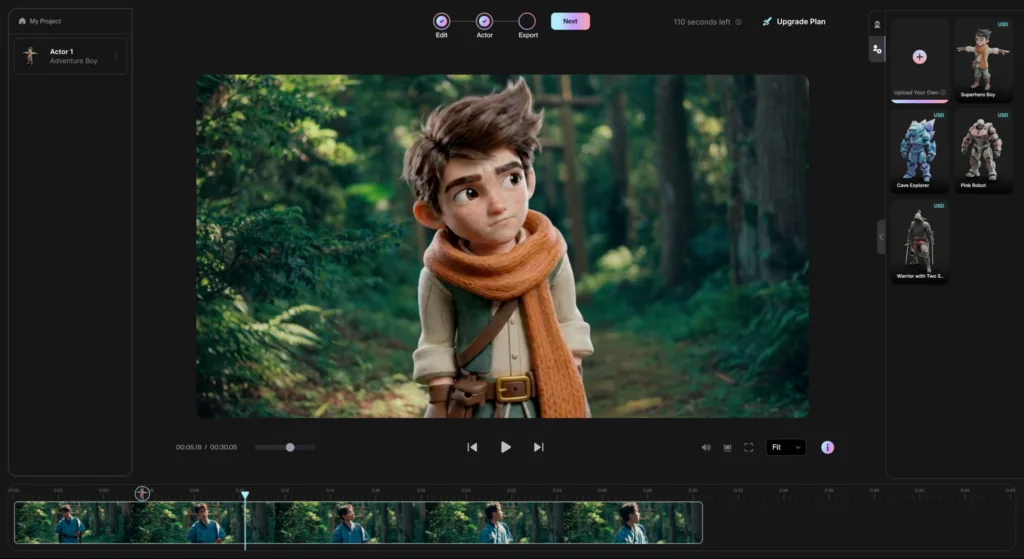 (By compositing it with live-action footage, it becomes possible to create images that make it seem as if the 3D character has appeared in reality.)
Todorovich:By simply entering prompts, you can convert assets, whether they are characters or objects like chairs, into textured 3D models
Alternatively, you can generate an image on that image. For characters, you can set up the skeletal structure using AI rigging, bring them to life using AI motion capture, and then use them for animation or live-action compositing
This allows you to start from the concept stage of creating a character in Wonder 3D, record live-action footage of yourself acting as the actor for the completed 3D character, and then reflect that movement onto the CG character to create animation—all in a single, integrated process. You can also use neural layers to refine facial expressions and hand movements
—That’s amazing. I think it will make it easier for people who want to create 3DCG but felt it was too difficult, as well as for creators who want to make simple videos
Todorovich:When I was working in compositing, I was always frustrated by the slowness of some parts of the CG production process. In product development, we conduct internal verification tests to ensure that even people who have never used 3D software or compositing tools before can use them easily, without specialized skills
Because some of the best storytellers may not be technically skilled, but they have an exceptional talent for telling stories
For example, there are many VTubers with incredible talent, but they aren’t necessarily skilled in using 3D software. I think this could be useful for people like them as well
Will AI take away the jobs of creators? AI as an assistant to expand human creative activity
—Do you think the trend of using AI in CG compositing will accelerate even further globally in the future?
Todorovich:I believe that the use of AI is now unavoidable in the world of 3DCG
However, we are very conscious of wanting to stand on the side of “ethical and good use of AI.” In other words, the artist should always come first, and AI should be used as an assistant to speed up the technical aspects of the work
I don’t think you can create movies or VTuber content exactly as you want just by typing prompts. It’s extremely difficult to control emotions and reactions solely through prompts. That’s why I love actors’ performances
Because we ourselves come from the world of film, we believe that artists should lead their own performances, and AI should be there to support and encourage their expression. We place great importance on developing this technology in a responsible manner
—Amid concerns that AI might take away people’s jobs, I felt that you were approaching the issue with great sincerity
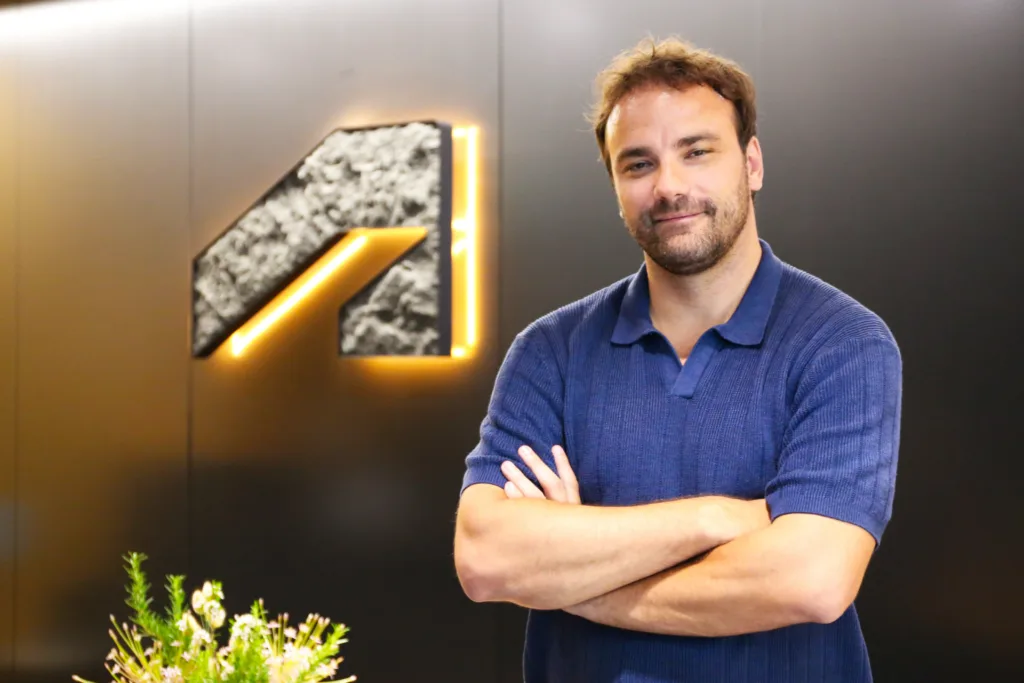
Todorovich:Thank you. I believe that when people engage with art, they highly value the human elements embedded in the work. If they found out that a work of art was entirely generated by AI and had no human involvement whatsoever, they would not appreciate it
We love art and support creators because we know that it’s not something that can be created overnight. That’s why we find value in art. If it becomes merely a prompt, I think people will stop appreciating it
From a technical standpoint, the role and value of humans should actually increase. We believe that AI is raising the “upper limit” and “starting line” of expression. In short, for our readers, “with the support of AI, we will be able to achieve more.”
That’s why, while the importance of humans is increasing, I believe it’s dangerous to ignore AI. Because we’re going to see more and more artists accomplishing things on their own that previously required large-scale assistants
In conclusion, I believe the true vision of AI is to empower small teams and individuals
What was previously only possible for large production companies with enormous budgets will become achievable for small teams and individuals. Contrary to common concerns, AI will actually empower us to do more and create bigger things
In the future, creators who make vlogs may be able to use AI to produce movies, music videos, and other content, building their own unique intellectual property from scratch. It would be like small studios and individual creators becoming capable of doing what film studios are currently doing. I look forward to such a future
–Thank you for sharing your valuable insights
“Flow Studio” is available here: https://www.autodesk.com/jp/products/flow-studio/overview
