


Wed, November 25, 2026 at 2:00 PM UTC
The new Jean Grey series offers both MCU fans who don’t follow comics and dedicated X-Men readers a quality comic book experience. Spider-Man: Brand New Day inspired new interest in the psychic Mutant heroine. The X-Men are also hotter than ever in the buildup to Avengers: Doomsday. Yet this new series, while mired in the continuity of the current comics, manages to make it all easily accessible.

The past few years have been difficult ones for Jean Grey. She finally achieved balance with the Phoenix, the cosmic representation of death and rebirth she’s hosted for some time. However, the need to reform the Phoenix’s reputation sent her into deep space to do what good she could.
This journey has separated her from her husband, <a href="https://www.superherohype.com/tag/cyclops” rel=”nofollow noopener” target=”_blank”>Scott “Cyclops” Summers. Thankfully, a long distance relationship is a lot easier when you have a psychic connection that spans across the stars. Unfortunately, that connection just broke.
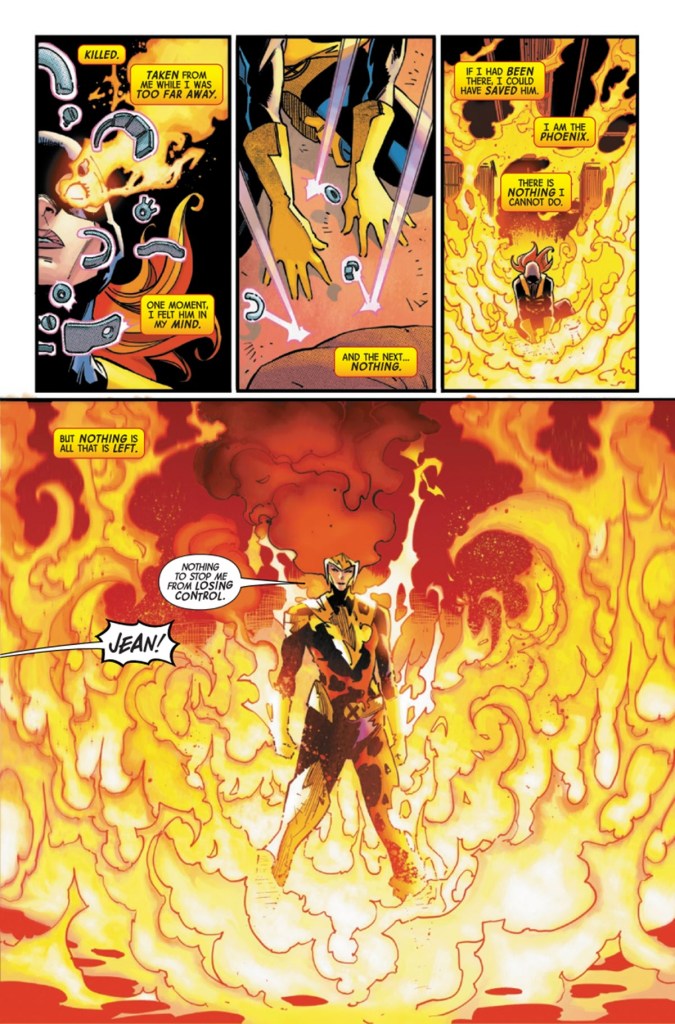
Cyclops recently died a hero’s death, trying to thwart the mad schemes of Hank “The Chairman” McCoy. The loss of both her husband and one of her oldest friends pushed Jean Grey over the edge. This leaves the Phoenix in control and out for blood.
The good news is that Cyclops prepared for just such an emergency. He left instructions on precisely what to do if he died and Jean Grey went mad with grief. That bad news is it still leaves a small group of allies staring down an entity that can destroy planets with a thought.
You Don’t Need Years of X-Men History to Appreciate This New Look at Jean Grey
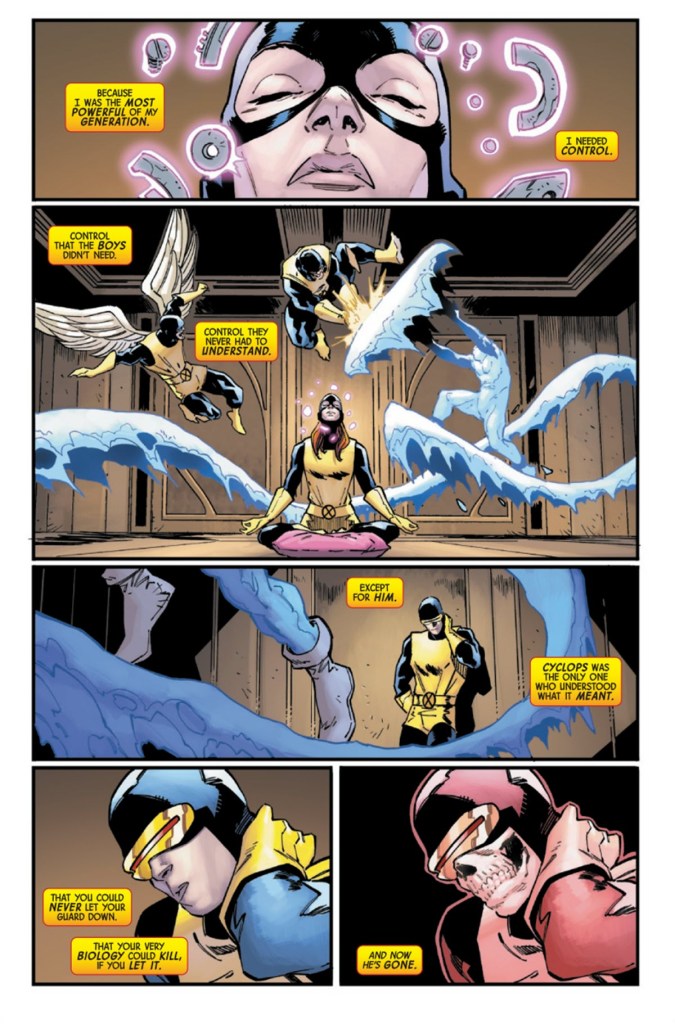
Despite the plot centering around a cosmic crisis, the focus of Jean Grey #1 is firmly set upon the titular telepath. Jed MacKay uses the death of Cyclops, which he arranged in the monthly X-Men comic, to setup an extensive study of the woman behind the Phoenix. This is welcome, as far too many X-Men writers have let her powers dwarf good characterization.
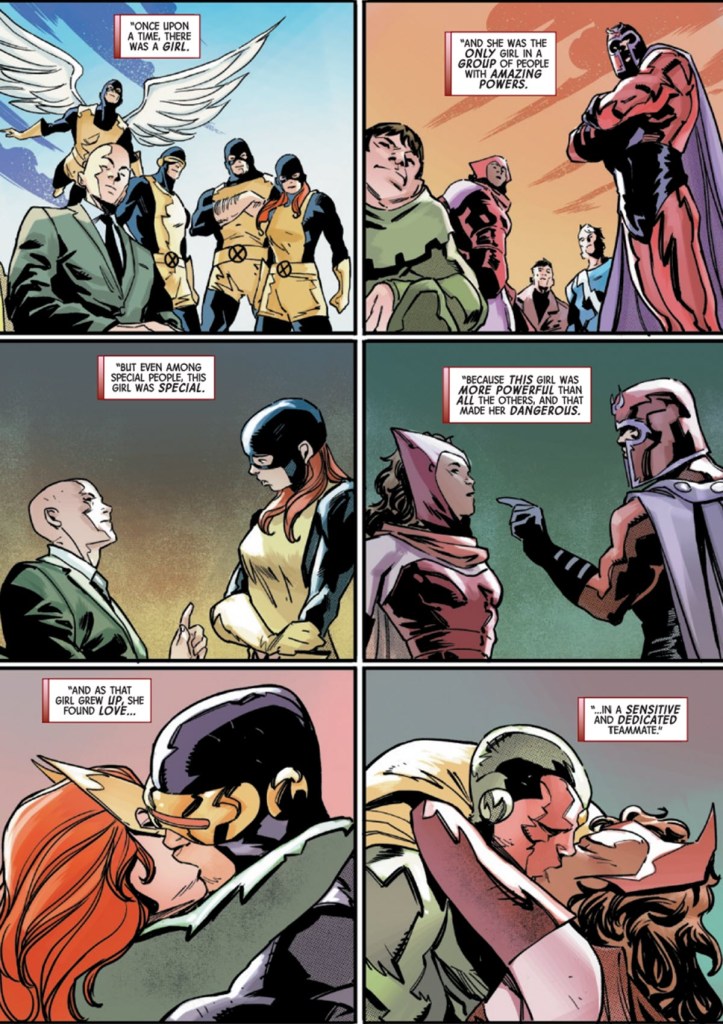
A series of flashbacks reveal who Jean Grey is outside her abilities. It shows us why she loves Cyclops so much, rather than hitting us over the head with their relationship. It also establishes a connection between her and Scarlet Witch. It’s a relationship based not only on their shared status as the only women on their teams, but as women who became mothers under unusual circumstances. This is one example of the complex Marvel history which MacKay makes easily accessible to new readers.
Unfortunately, the artwork is the Achilles’ heel of Jean Grey #1. Roge Antonio is a skilled artist, but some of the work in this issue seems rushed. A larger issue, however, is how Antonio’s pencils clash with the colors of Edgar Delgado.
The finished art seems too light and undefined. Highlights and soft white outlines are used in many panes to define the characters rather than shadows and dark shades. The end result is many pages that look washed out or where the characters vanish into the backgrounds. This is particularly prevalent when Jean Grey stands before a fire. Again, both Delgado and Antonio are good at what they do. I question how well, however, they work paired together.
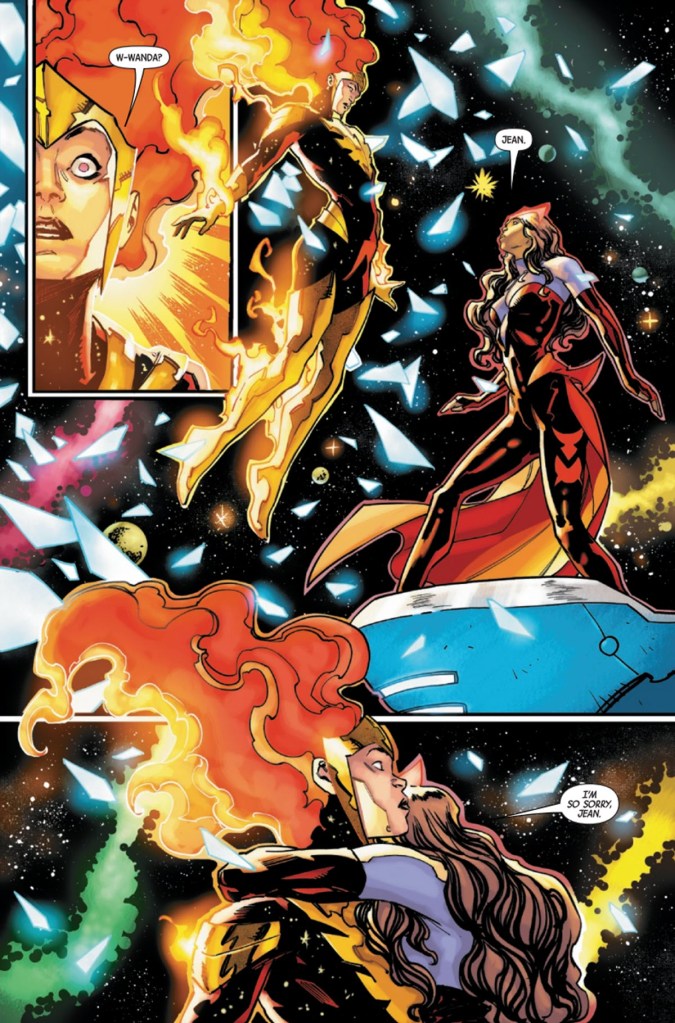
Despite some occasional oddities in the artwork, though, this book is a rare treat. Whether you’re curious about the character after her MCU debut, or need an entry point into the modern X-Men comics, Jean Grey #1 is a must-read.
