

There were 2,028 press releases posted in the last 24 hours and 506,236 in the last 365 days.
N4D Showcases AI 3D Modeling for Collectible Figure Designers
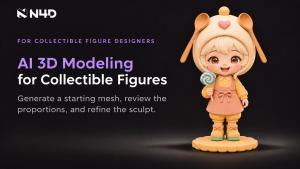
The candy shop figurine modeled in N4D holds a blue spiral lollipop and stands on a scalloped cookie base. Wooden spoons frame its hood.
<img src="https://comicvibe.com/wp-content/uploads/2026/11/two-ways-to-start-a-figurine-mo.jpeg” alt=”A character sketch and a short text prompt appear beside a 3D model of the candy shop figurine.”>
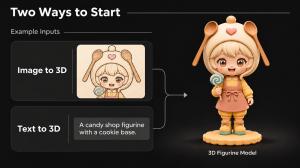
A reference image and a text prompt are two possible starting points for a 3D figurine model.
Character proportions and a close-up of the lollipop grip on the N4D candy shop figurine.
A candy shop figurine generated in N4D shows how designers can assess a character’s proportions, accessories, and display base in 3D.
We want to give designers a model they can examine right away and leave the expression, pose, and finishing choices in their hands.”— Feihu Zhang, CEO of Neural4D
SAN FRANCISCO, CA, UNITED STATES, November 25, 2026 /EINPresswire.com/ — Neural4D (N4D), an AI creative platform for 3D content, today showcased a candy shop figurine model illustrating how collectible figure designers can assess character proportions, accessory connections, and base design before further sculpting and prototype preparation. Its Image to 3D and Text to 3D tools let designers begin with visual references or written concepts.
Designers with a sketch or concept image can use Image to 3D to turn that reference into a base mesh. Text to 3D generates a starting mesh directly from a written description of the character’s pose, proportions, and accessories.
Designers who want to review the character in 2D first can create concept art with N4D’s Image Generation tool or another image generator, then bring the selected image into Image to 3D.
A reference image and a text prompt are two possible starting points for a 3D figurine model.
A Candy Shop Figurine Made in N4D
The featured character combines an oversized head and compact body with spoon-shaped decorations framing the hood, a blue spiral lollipop, and a scalloped cookie-shaped base. The spoons give the character a distinctive silhouette, while the apron bow and spiral candy provide smaller details to review at the intended figure size. Together, these features offer concrete points for assessing proportions, accessory connections, and the relationship between the character and its base.
What Designers Can Check in the Model
A front view helps designers judge how the face and accessories look together. During a closer review, they can rotate the model to inspect how the lollipop joins the hand and how the spoon handles sit against the hood. A gap that looks clear from one angle can disappear from another.
Character proportions and a close-up of the lollipop grip on the N4D candy shop figurine.
Designers can download the mesh as OBJ or GLB and open it in their sculpting software. If a prop like the lollipop stick looks too thin at the intended display size, a designer can increase its thickness and check how that affects the outline. N4D’s workflow for creating 3D printed figures brings together model generation, refinement, and preparation for physical prototyping.
“When you rotate a character for the first time, you can see where the drawing needs a decision in three dimensions,” said Feihu Zhang, CEO of Neural4D. “We want to give designers a model they can examine right away and leave the expression, pose, and finishing choices in their hands.”
The scalloped base gives the figurine a display footprint and repeats the curved edges of the costume. If the designer moves on to a prototype, they can check where both boots meet the base, decide whether to print the base separately, and plan how the pieces would join before slicing.
Small details also change with scale. An apron bow or the ridges of the lollipop’s spiral may be easy to see in the viewer and need more depth on a smaller print. Designers can review those details at the intended size and check the mesh and wall thickness in their print preparation tools.
Designers can start with Image to 3D or Text to 3D in N4D Studio. The free plan allows generation and preview for evaluation. Model downloads and commercial use require a paid subscription.
N4D’s guide to creating a toy prototype for an original collectible figure explains how to evaluate the first physical sample and use the findings to refine the design.
Refining and Presenting a Figurine Design
AI Texture generates PBR-compatible textures from a text prompt or reference image for models created in N4D Studio. Designers can explore finishes such as matte fabric and glossy candy on the figurine. Remesh lets designers choose an output topology and target face count for a model with triangle topology, then review how the new mesh handles the silhouette and small details before editing. For a design presentation, Video Generation combines a still image with a motion prompt to create a short clip featuring the character concept.
Neural4D is an AI creative platform for generating 3D assets, images, and video. Its proprietary Direct3D technology powers its 3D generation tools, including Image to 3D and Text to 3D. Neural4D develops tools for independent creators and production teams working across digital content and physical prototypes.
Name: Neural4D
Email: support@neural4d.com
Website: https://www.neural4d.com
Neural4D
N4D
Visit us on social media:
LinkedIn
Instagram
Facebook
YouTube
TikTok
X
Other
EIN Presswire provides this news content “as is” without warranty of any kind. We do not accept any responsibility or liability
for the accuracy, content, images, videos, licenses, completeness, legality, or reliability of the information contained in this
article. If you have any complaints or copyright issues related to this article, kindly contact the author above.

