

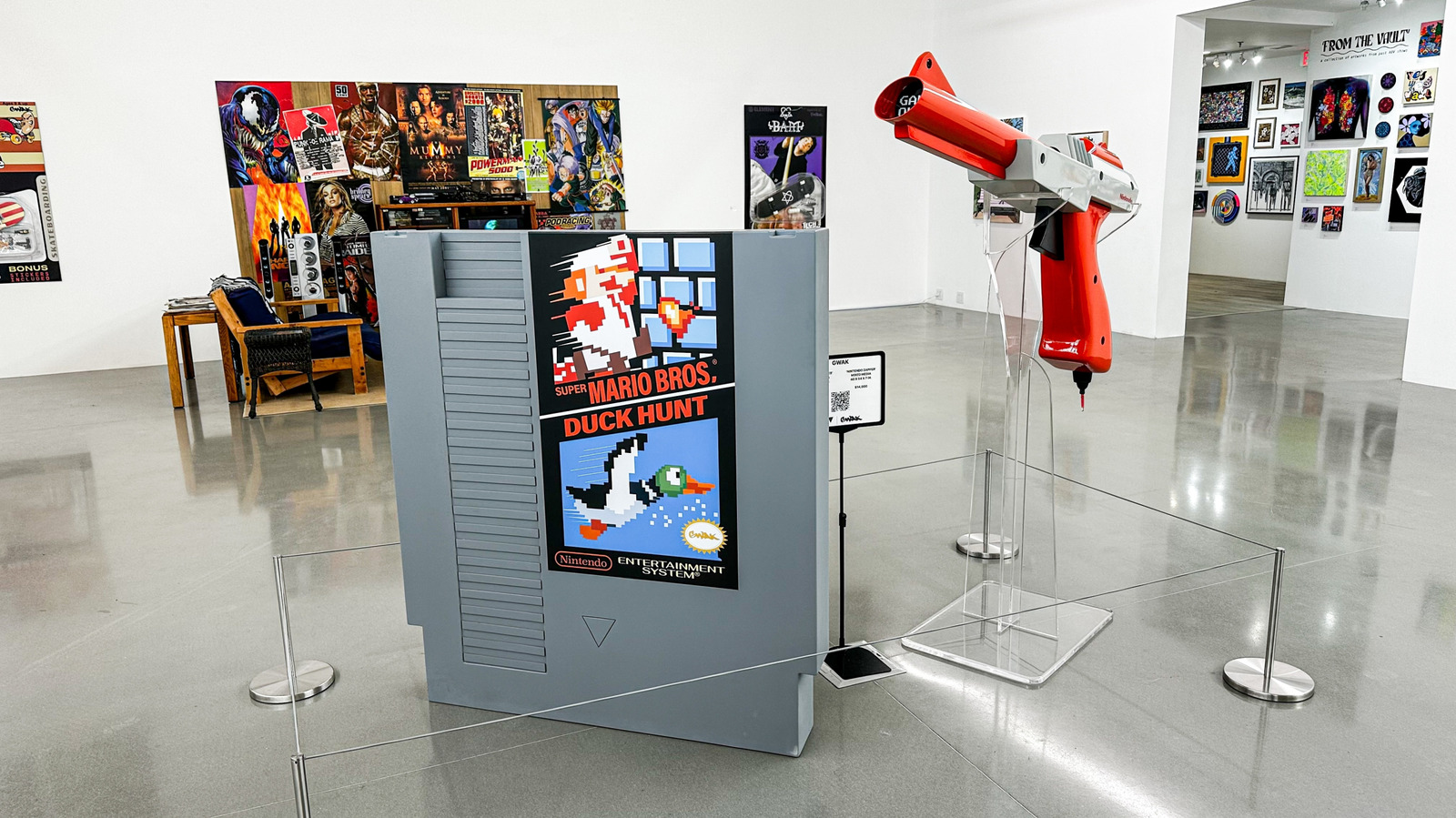
Reports about the original Nintendo Entertainment System (NES) price widely conflict, depending on where you look and which bundle you choose. Newspaper/magazine scans and various articles list the bundle with the Control Deck and “Super Mario Bros.” retailed for anywhere between $90 and $130. The Deluxe set that came with extras, on the other hand, could be anywhere from $180 to $250. For the sake of comparison, we’re using the $90 price tag for the control deck/”Super Mario Bros.” bundle and $200 for the Deluxe set. In 1988, Nintendo introduced other premium editions, like the Action Set, along with additional sets in subsequent years.
Meanwhile, Nintendo launched the Switch 2 for $450, but new bundles shot up to $500 in September 2026. Looking back at just the Control Deck edition, after adjusting for inflation, the 2026 price comes out to $276.68 according to the U.S. Bureau of Labor Statistics’ calculator (September 2026 data), which is a little more than half the cost of a Nintendo Switch 2. Funnily, you get slightly more at $276, including an additional controller and “Super Mario Bros.”
You can also look at it backward and figure out what a Nintendo Switch 2 would have cost in 1986. The 2026 $500 price is equivalent to $162 in 1986, which is closer to the more expensive package from then — $200 is $614 after inflation — but nowhere near the $90 core one. The Deluxe Set also came with more accessories and two Game Paks, so you’re getting more bang for your buck. Nintendo Switch 2 bundles include only one digital game and a three-month online membership, for $530 to $550.
How much does an old NES cost in 2026?
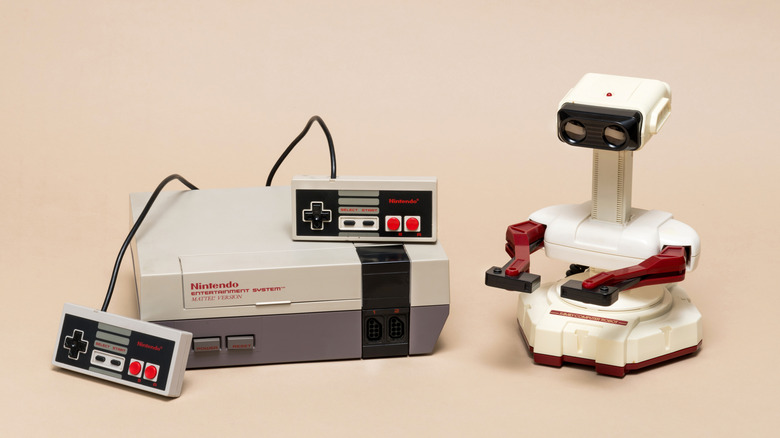
If Nintendo released the NES brand-new today, it would likely cost well above its inflation-adjusted historical price, possibly being more in line with the Nintendo Switch 2’s price range. That’s because inflation, modern hardware expectations, and Nintendo’s brand strength drive a higher price point. Ironically, a second-hand NES can end up being worth more than you’d get at release, because collectors’ interest is high and supply is now finite. Part of it is model and edition disparity, since some releases were different and considered legacy, like the NES Deluxe Set.
Then, if you’re looking to buy certain accessories, like the NES Zapper for Duck Hunt, it could end up costing a bit more than getting the core, loose console. According to PriceCharting, a second-hand console without the box or anything included is around $97, while a new, ungraded one is $1,162. It’s a bit of a jump, but that’s par for the course when the system came out in 1985 for test markets and launched everywhere else in 1986.
Will Nintendo console prices go down?
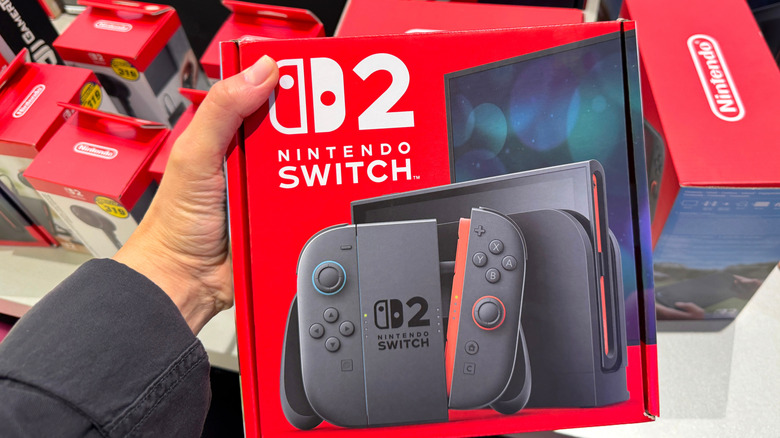
It wasn’t uncommon to slash a console’s MSRP to stay competitive with other gaming products in the ’90s or even early aughts. Nintendo dropped the N64 from $199 to $149 and the GameCube from $199 to just $99. The problem now is that Nintendo has the leg up with the first-mover advantage: the Nintendo Switch 2 was released before Sony and Microsoft’s next-gen consoles, neither of which has been officially unveiled.
Comparatively, it also happens to be the cheapest current-gen console you can get. So the pressure to cut the price and make the system more enticing to consumers is lower than it would be if Nintendo’s competitors released a new console around the same time. Another factor is that Nintendo has changed its strategy over the years by introducing revised, lower-priced versions. A more recent example is the Nintendo Switch.
The original Nintendo Switch had an MSRP of $300 and was raised to $339; the Nintendo Switch OLED had an MSRP of $350 and was later adjusted to $400. Finally, while those models seem a little pricier for a last-gen system, Nintendo released the Nintendo Switch Lite to scale it down for those who want the core experience for $200 – $230 after the price hike. In the current market, the $230 price makes more sense compared to the most premium model, the Nintendo Switch OLED.
