

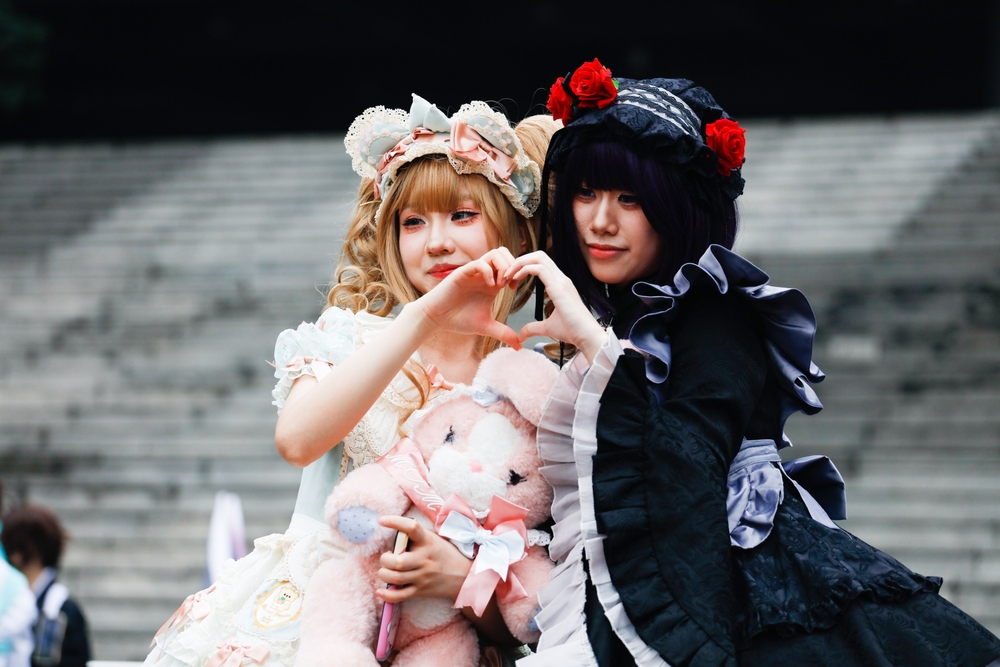
The practice of wearing a costume depicting a character from manga, video games or films is now widespread amongst young Chinese people. And it often happens that they find themselves in front of churches to take their photos. An AsiaNewsmunity
- China
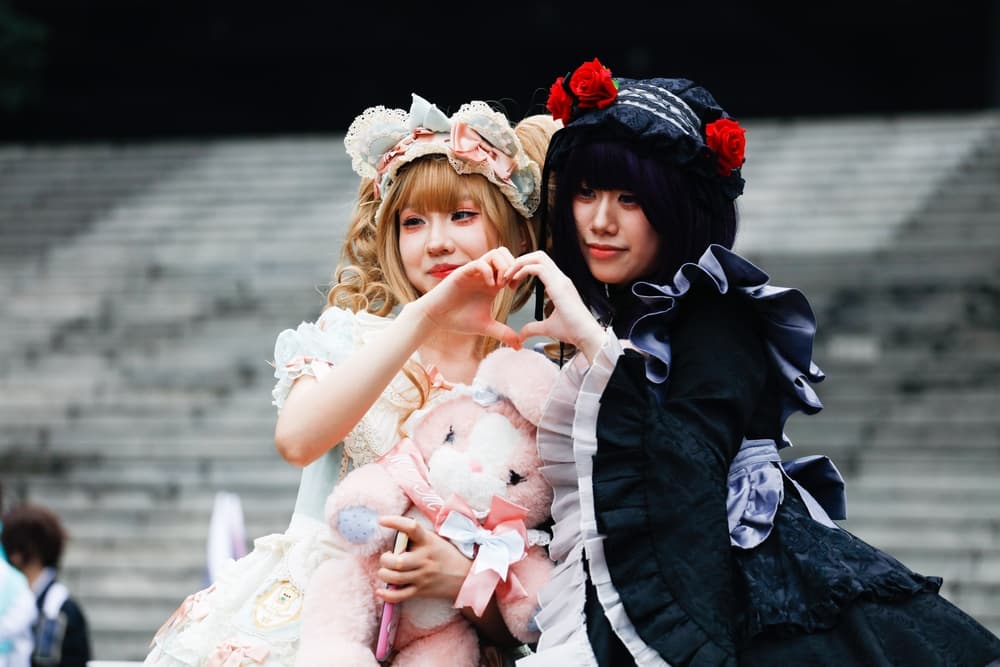
Milan (AsiaNews) – A trend now widespread in Chinese cities is leading some young people to seek out churches as ‘alternative’ backdrops for their selfies. An AsiaNewsit is provoking within Christian communities
Cosplay – the practice of wearing a costume representing a character from manga, anime, video games or films – is a widespread phenomenon in Chinese cities.
Walking through the cities, it is common to come across young men and women in fancy dress. The more time you spend in China, the less you notice them; they become a familiar sight. Yet at times, even if you’ve got used to them, seeing them ‘out of context’ – for example, on the underground, in the supermarket or queuing at a café – creates an almost comical effect and makes you smile.
At first, I didn’t pay much attention to it; I regarded it as simply a widespread Asian fashion trend. I associated it with that typical Chinese style featuring soft toys, glitter and cartoon-style designs used as accessories or printed everywhere, which, as with cosplay, I rather superficially attributed to a sort of reaction from a people who had been in uniform for far too long.
The whole point of cosplay is to have your photograph taken. Social media and WeChat groups share photos and ideal locations for photo shoots; special events are often organised where cosplayers gather to take photos of one another, with the ultimate aim always being to post them online. It is, however, considered a phenomenon for the very young – something typically done by those aged between thirteen and seventeen.
It is curious that photo gatherings sometimes take place in front of churches. In their eyes, churches have a rebellious charm; they hold the appeal of the unusual, and besides, they are beautiful. So at weekends, the squares in front of churches are often filled with cosplayers intent on taking photographs in front of the façades, embracing statues of the Virgin Mary or surrounded by angels. This is a widespread phenomenon in all cities, so much so that the most attentive and lively parishes are well-organised and usually have volunteers who make a point of approaching these young people to explain what a church is.
‘Underground’ venues featuring crucifixes and Madonnas
This transgressive aesthetic linked to the church is a peculiarity I’ve also come across in certain venues that seek to recreate what we used to call ‘underground cultures’. Indeed, the trendiest cities sometimes have nightspots that aim to offer an alternative style, without, however, truly representing moments of counterculture, but rather an alternative aesthetic (always worth photographing) paired with a specific style of dress and behaviour (namely, drinking alcohol and listening to techno music).
In these places, I’ve found crucifixes and Madonnas with the Child used as decorations, displayed prominently – I suppose as signs of provocation and transgression, certainly of diversity.
The Chinese twist is that in these venues, the police are still on hand to keep an eye on things!
They avoid apps and social media to create an air of mystery around themselves; slightly tipsy minors are tolerated, and alongside crucifixes and Madonnas, mild pornographic imagery is also permitted… but the police are always there! All this, in my view, suggests that it is not really a counter-culture so much as a ‘plaster’ for young people, tolerated and controlled to provide a sort of outlet – as harmless as possible – for the big city.
Returning to the cosplayers, a peculiar incident once took place in a parish with a church particularly suited to photography – one of those that faithfully replicate certain famous European cathedrals.
As on every Sunday, the square was packed with young people in fancy dress posing for photos, and amongst them were a few girls dressed as nuns who then entered the church during Mass. These girls didn’t know what a nun actually was, but they’d seen them on previous Sundays and had decided to copy their ‘alternative style’… Incidentally, nuns in China are not allowed to wear their habits except on rare occasions linked to the liturgy.
The incident caused quite a stir in the parish, and we discussed it at length amongst ourselves. That was when I realised that the Chinese have many different views on the matter, and listening to them debate it helped me to see the phenomenon of cosplay in a different light.
As with any activity involving young people, there are both elements of light-heartedness linked to a fun trend, and something deeper when the balance is lost. Sometimes these young people remain in costume all the time, with the aim of taking on the character’s personality. The costume is no longer just a temporary mask but a tool for moulding one’s own personality in the character’s image.
A woman who used to do cosplay as a teenager told me: “When I dressed up, I wasn’t myself anymore, but I was Judy (the character she was cosplaying as); since Judy is sweet but also strong, I too became sweet and strong. It’s not like when you put on make-up or wear a nice dress for ordinary photos – in that case, it’s you taking photos of yourself. In cosplay, you want to become someone else.”
According to many of those parishioners, cosplay is the embodiment of the emptiness felt by young people who are fleeing reality. A way to escape meaninglessness. They are probably right to a certain extent; when a trend goes beyond the balance of spontaneous fun and becomes a way of life, perhaps it is a symptom of something else. It may be seen as a way of masking one’s own fragility or as a means of finding a ‘true self’ beyond mass society. A ‘true self’ that, however, remains tied to fictional characters.
It is certainly a characteristic of the Asian world, a phenomenon that began in Japan and has taken hold particularly in Korea and China – a phenomenon through which avenues of understanding open up into that boundless universe that is Asian youth.

4 Comments
Pingback: K-pop idols turn Korean teachers in new YouTube series featuring language challenges, cultural lessons and global fans - Comic Vibe
Pingback: 5 Clive Barker Stories That Should Be Adapted Into Horror Video Games Next - Comic Vibe
Pingback: Absolute Superman #25 Preview: Superman's Brain Hurts - Comic Vibe
Pingback: Tootu Madike director Chandra Keerthi announces second directorial Coffee Bite - Comic Vibe