

The PC modding community continues to push the boundaries of NVIDIA’s proprietary technologies, and the latest breakthrough is particularly impressive. NVIDIA DLSS Ray Reconstruction can now run on AMD Radeon GPUs, courtesy of a new update to the increasingly ambitious DLSS-NR-on-AMD project.
Developer danielblnc has released version 0.8.0 of DLSS-NR-on-AMD, bringing support for virtually all of NVIDIA’s modern DLSS feature set to AMD’s RDNA 3 and RDNA 4 architectures. What originally started as an effort to bring DLSS 5 Neural Rendering to Radeon GPUs has now expanded to include DLSS Super Resolution, Ray Reconstruction, and Frame Generation, including Multi Frame Generationup to 4X.
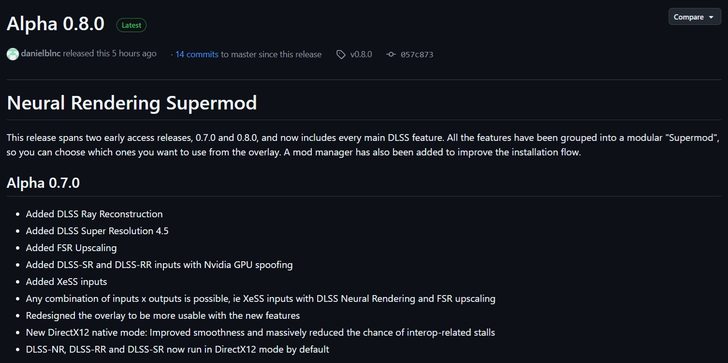
Perhaps the most interesting addition is <a href="https://www.nvidia.com/en-us/geforce/news/gamescom-2026-dlss-4-5-ray-reconstruction-release-announcements-trailers/” rel=”nofollow noopener” target=”_blank”>DLSS Ray Reconstruction, NVIDIA’s AI-powered technology that replaces conventional ray-tracing denoisers with a neural network to reconstruct higher-quality ray-traced effects. Until now, Radeon users have largely had to rely on AMD’s own FSR Ray Regeneration or conventional denoising solutions.
Even more impressive are the early community results. In a Reddit post, a user showcased DLSS Ray Reconstruction running in Cyberpunk 2077 on an AMD Radeon RX 9070 XT paired with a Ryzen 7 9700X, at 1440p with maximum graphics settings and Path Tracing enabled.
NVIDIA’s Ray Reconstruction working on AMD
byu/Plus-Raspberry-9551 inradeon
The accompanying screenshots compare the game’s visuals with Ray Reconstruction disabled and enabled. Interestingly, the user reports zero performance loss when enabling NVIDIA’s neural denoiser on their Radeon GPU, although this remains an individual result rather than a comprehensive performance evaluation. Other community reports suggest performance can vary considerably depending on the configuration.
According to the developer, the project doesn’t simply translate NVIDIA’s runtime instructions. Instead,it uses a custom implementation of the neural network execution runtime, including AMD-specific HIP kernels, memory layouts, and game integration. Users must supply their own NVIDIA DLSS DLLs, as the mod doesn’t distribute NVIDIA’s proprietary binaries.


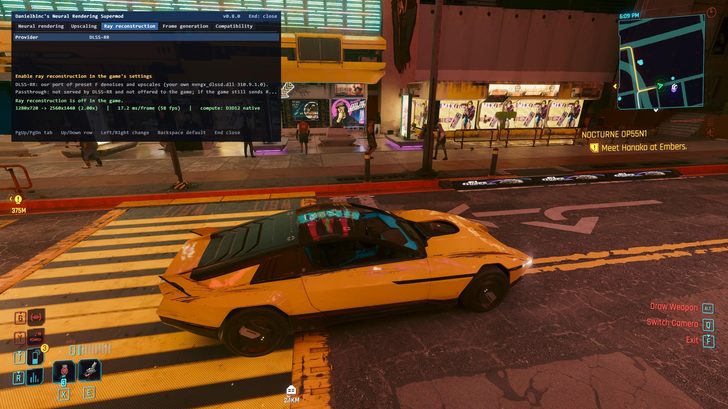
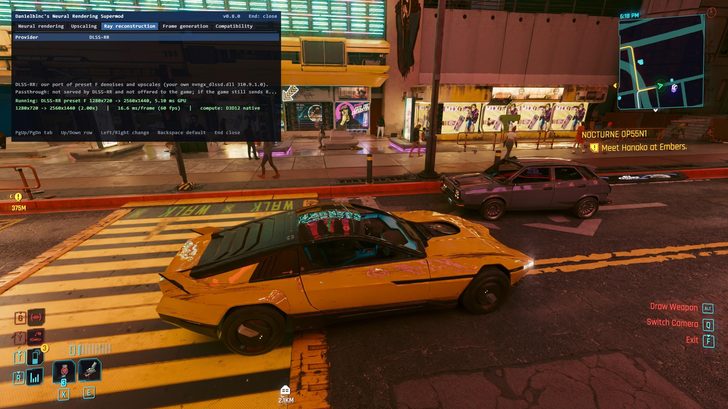
The latest version also introduces the NeuralHub management interface, which simplifies installation, game detection, and configuration. Users can import the relevant DLSS DLLs and enable their desired features in compatible DirectX 12 titles. The developer lists Windows 11 and AMD Adrenalin 26.1.1 or newer among the requirements, while Frame Generation currently requires GPU spoofing and the necessary DLSS FG inputs.
As for older Radeon hardware, RDNA 2 support remains experimental, with DLSS 5 Neural Rendering already supported and additional DLSS features planned for subsequent releases.
Of course, this is still an unofficial, experimental implementation, and compatibility, visual fidelity, and performance aren’t guaranteed across every game. Nevertheless, the fact that NVIDIA’s Ray Reconstruction, DLSS Super Resolution 4.5 upscaling, Multi Frame Generation, and DLSS 5 Neural Rendering can now be made to run on competing Radeon hardware is a remarkable achievement for the modding community.
About the author: Sebastian Castellanos is a data scientist by education and training. He’s also deeply passionate about PC gaming hardware and software. He has recently started writing technical articles and guides on Wccftech about PC hardware, games and mods.
Follow Wccftech on Google to get more of our news coverage in your feeds.
Deal of the Day


