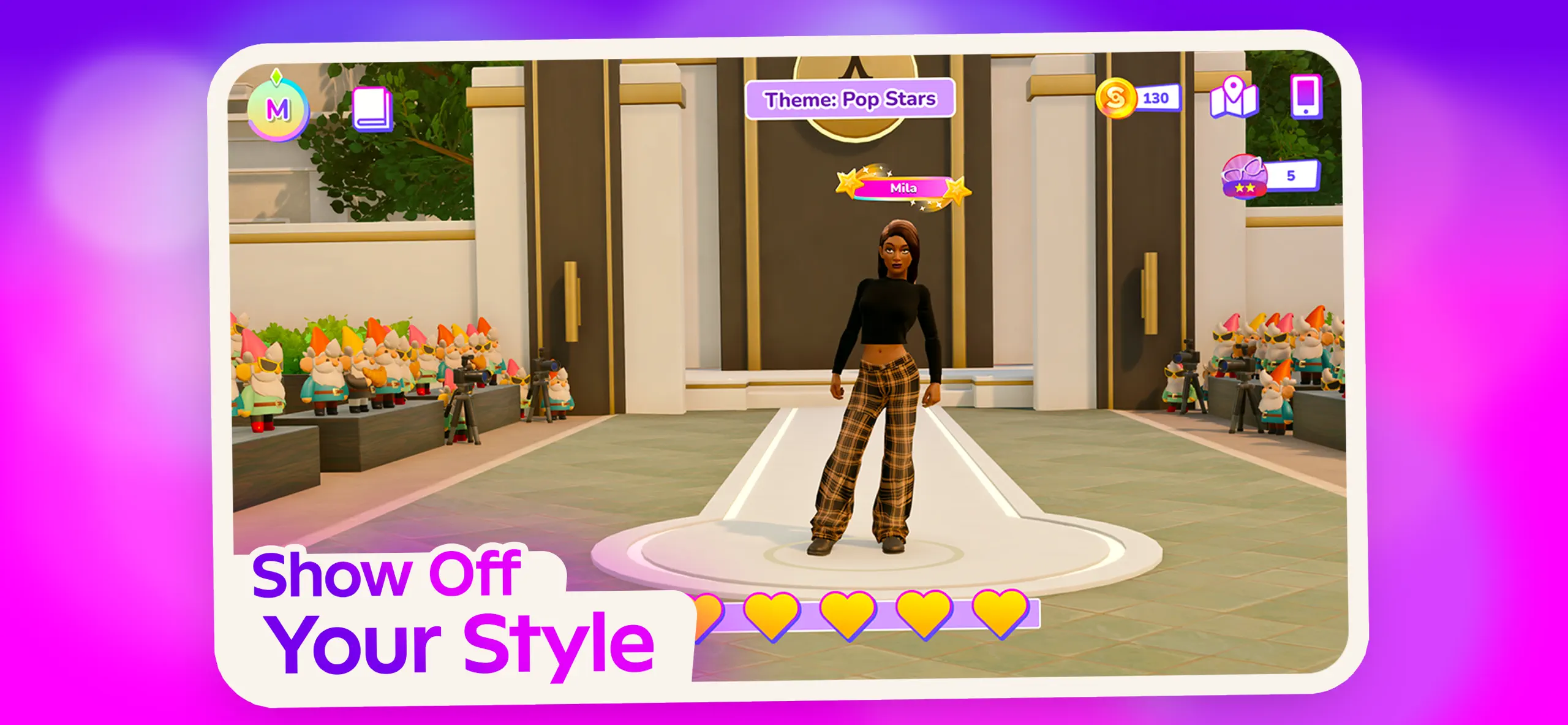
From 2023 The Sims Project Rene was developed as a Roblox copy.
The Sims Project Rene‘s development has been anything but a clear goal. The development of this game started in 2018 with the intention to make it a next-generation Sims game. Fast-forward to 2023 and the game’s only goal is to “beat Roblox”.
We suspected on the game getting a different approach ever since 2023 and 2024 Playtests slowly started coming out. By the year 2025 we already had a first Playtest that looked like a copy from Roblox’s Dress to Impress.
How The Sims Project Rene Became A Roblox Copy
Senior User Researcher Nate Bonham, who worked on The Sims Project Rene from October 2023 to June 2025 shared some information on the time he spent working on this project.
In a design studio reframe document that they’ve shared, Nate explains that their work started in 2023. Before that, they revealed that The Sims Project Rene had “Content and experiences in early development [that] reflected a PC-first, single-player mindset.” Revealing that originally the game started out as a PC-first, single player game (or at least with that mindset)…until they shifted to making the game a Roblox competitor. The design documents reveal how the User Researcher helped bridge the gap between current generation trends and development tasks in the Maxis team.
Here’s what they said about their goal objective at EA and Maxis:
Project Rene targeted a younger, mobile-first, multiplayer generation. It was a new kind of game for a studio whose last major release, Sims 4, had come out in 2014, built by a team that knew how to make single-player experiences for longtime PC simmers.
That player base was aging out of the franchise, and the studio needed a new audience to build for, but it didn’t know much about mobile-first, multiplayer players. Content and experiences in early development reflected a PC-first, single-player mindset, and ideas didn’t consistently align with what this new audience actually wanted. Those gaps surfaced later through research and playtesting, creating rework and slowing the team down.
You could see it in the jeans. Teams were still designing skinny jeans as in-game cosmetics, while the audience they were trying to reach had started calling those same jeans “mom jeans” and moved on to baggy.
This new audience had grown up very differently than the people making the game, and differently than the players Maxis had served for the last decade. The game wasn’t speaking to them yet.
The studio needed a shared, contemporary understanding of this audience: something that could seed brainstorming, guide decisions through iteration, and help build a game that could attract these players and keep the studio financially healthy and relevant. I set out to build that understanding.
The results? All developers in the Maxis studio having to sit down and play Roblox, devote time to understanding their player audience and trying to reverse-engineer all of its main <a href="https://comicvibe.com/gta-6-ps5-features-revealed-by-playstation-ahead-of-launch/” title=”GTA 6 PS5 Features Revealed by PlayStation Ahead of Launch”>features.
Building a Shared Understanding
The studio didn’t know enough about this new generation of players: how they socialized, their tastes in fashion, the texture of their everyday lives. This was a social life-simulation game, so how closely the experience reflected that audience would decide whether it succeeded.
To build that knowledge, I pivoted the team from evaluative research, which tests ideas that already exist, to foundational and generative research: focus groups, fashion studies, and workshops. I partnered with our consumer insights team and our social design specialist to lay a new foundation design and development could brainstorm from.
There’s even one picture in the full slideshow presentation showcasing a huge amount of “WHY?!” from game developers when seeing Roblox as the game’s main inspiration.
The result in the end was The Sims Team sitting down together to play Roblox and trying to figure out how they can copy its success to The Sims Project Rene.
Bringing the Studio Into the Audience’s World
Understanding how this new generation played meant making sense of Roblox: this audience had grown up playing it, and it shaped their model of online play in a way the studio didn’t yet understand. I ran an onsite workshop where developers played Roblox together and wrote down their questions and reactions as they went. What came out of it was a clearer picture of the gap: the team felt they were being asked to lower their craft to match Roblox, and couldn’t make sense of why our audience found it fun.
That gap is what led me to pioneer a new approach to competitive analysis: ride-along interviews instead of the usual benchmark, where Roblox players shared their screens and narrated their own play while I asked questions live.
“What players expect, hope for, and remain skeptical of in a new game”“Developers’ own reactions from that first workshop, with the main question being “why?” “
Nate later explained their scaling to approach the Roblox-styled development onto The Sims Project Rene. Saying that it isn’t much about making a game with better graphics (or higher fidelity in this case), but rather holding the space in the servers for quirky, motivational and
Scaling the Approach
Leadership took the way I’d studied Roblox players and turned it into a model for the rest of the studio. They formed three pods, each consisting of a PM, a designer, developers, and researcher, and assigned each pod a Roblox genre with real potential for multiplayer and simulation in our own game.
“It isn’t about making a higher fidelity version of Roblox. In fact their players don’t really care about that much. It’s about understanding the motivations, mental models, and behaviors of an audience that grew up playing Roblox so that we can build an exemplary experience that delights and retains that audience.”
The developer later concluded their portfolio page with a confirmation that the Maxis team was able to successfully change their approach. From making original Sims games based on the previous game’s success to just blatantly trying to copy a different IP.
Impact
At the beginning of this work, product decisions were largely informed by assumptions carried forward from previous Sims titles.
The game manager overseeing the whole project later presented this work to the studio, crediting it with shaping the multiplayer and social direction, prioritizing character-creation features, substantiating the switch to direct controls, and settling the final art and UI style. Developers who once dismissed Roblox started inviting me into their standups to explore it together, and somewhere along the way, the team made sure the in-game jeans were baggy, too.
Thanks to denvlk on ATRL for finding this portfolio!
Where is Project Rene now?
According to a reliable The Sims insider – the game is already finished. However, it’s currently been put on hold, as EA is not sure that the game will make sense to be put out next to The Sims 4. Currently the name of the game is titled “The Sims Together” or in some variation of that according to insider:
Project Rene is ready to go but has been put on hold, EA aren’t sure if the game leans enough into the Sims 4’s brand to make sense enough to put out, but can give the greenlight whenever. Last name I heard was “The Sims Together” or some variation of.
What are your thoughts on the current development information we have on The Sims Project Rene and its clear intentions to compete with Roblox? Let us know in the comments below and stay tuned on Sims Community for the latest game coverage!