

Yu-Gi-Oh! Didn’t Die Overnight. Here’s the 25-Year Slide.
Fading stories, aging fans, impossible card rules, and a company that stopped needing the anime.
ByJinPublished about an hour ago•5 min read
<img src="https://comicvibe.com/wp-content/uploads/2026/10/wEtFPZYD6AJYWWbN65zxsETkIk.jpg” alt=””>
Introduction: The Quiet End
In 2025, after 25 years, the Yu-Gi-Oh! TV anime series ended.
The news moved through fan circles. Outside them, it barely landed. No farewell special. No trending topic. Not much regret. An IP that once had kids arguing at recess over Blue-Eyes White Dragon and Red-Eyes Black Dragon left almost in silence.
The fall took more than two decades. Four forces drove it: fading stories, a broken fanbase, the rising barrier of the card game, and Konami’s changing priorities. Each one made the others worse. Together they created a slide that became hard to stop.
This article looks at each part of that slide.
Chapter 1: The Stories Lost Their Center
1.1 The Takahashi Era
To see why Yu-Gi-Oh! declined, look at why it worked at first.
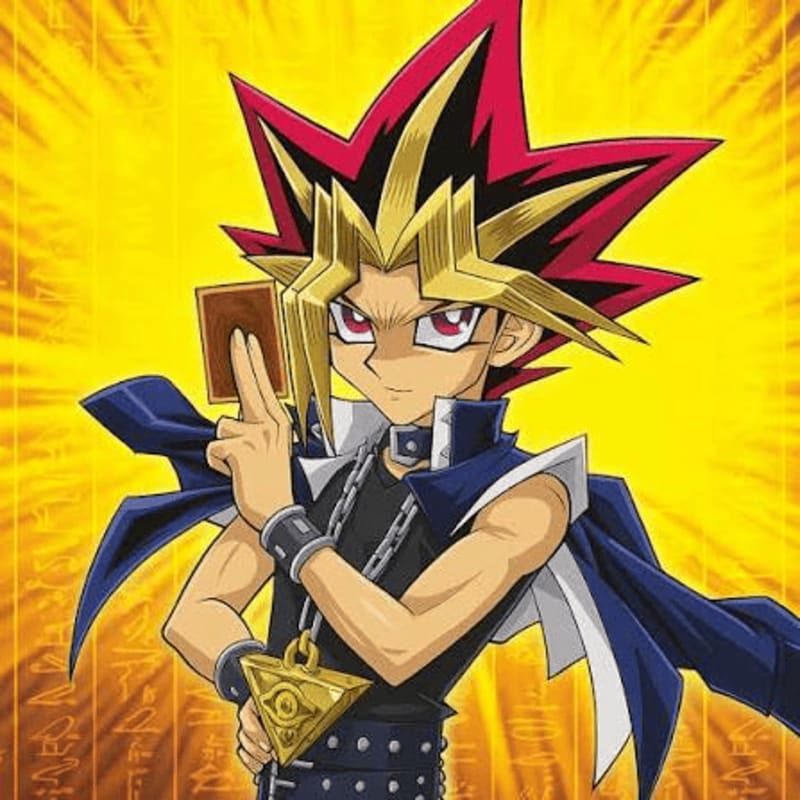
The original series succeeded because Kazuki Takahashi wrote it as an author, not as a card promoter. Atem was a pharaoh, but he never treated ordinary people as lesser. Katsuya Jonouchi was ordinary: average talent, poor grades, no noble blood. Takahashi spent hundreds of chapters showing him grow. Dark Yugi never mocked that. He wanted Jonouchi as an equal. He helped him become stronger, even strong enough to surpass him.
After the final duel, Jonouchi told Dark Yugi, “Even if you’re a king, you’re still Yugi. Even after a thousand years, we’ll still be friends.”
Dark Yugi did not turn and wave. He paused.
That pause said more than a speech. It made the bond between a pharaoh and a high school student real without explaining it.
Takahashi’s values ran through the original: kings and commoners are both human. No group is naturally noble or inferior. The main cast and supporting cast had complete arcs and stable personalities. That is why the original could be more than a card commercial. It became a generational memory.
1.2 After Takahashi
After the original ended, Takahashi stepped back into an original-concept and character-design role. Story creation passed to the anime writing team. That handoff began the narrative decline.
Shin Yoshida was one of the most controversial writers of the post-Takahashi era. Many old fans see his Doma arc as the start of character collapse. Characters lost their sense of self. They seemed unable to exist without someone else. Shipping bait crowded the story. Character logic gave way to emotional manipulation. Worse, Yoshida publicly and indirectly smeared Dark Yugi as “cold-blooded.” That ignored who Dark Yugi was. He sacrificed himself three thousand years earlier to protect his country. Three thousand years later, with no memories, he still saved the weak without thinking.
When a writer does not understand or respect his own characters, the story’s foundation shifts.
Takahashi’s characters were independent people. Yoshida’s characters were pieces in a relationship. When characters lose their wholeness, the story loses its emotional force.
1.3 ARC-V
If Yoshida’s problem was misunderstanding, Tsutomu Kamishiro’s work on Yu-Gi-Oh! ARC-V was a full disaster.
ARC-V began with a dimensional war and multiple summoning methods. For a while, fans thought the series might revive. Then the plot spun out. Yuya Sakaki was written inconsistently. Supporting characters became tools. Villain motives stayed vague. The series ended with the infamous card-picking ending.
One episode’s approval rating fell to 2.8%, the worst in series history. A normal seasonal anime usually sits between 60% and 80%.
Yuya also had bad luck. He suffered from Yoshida in the manga and Kamishiro in the anime. That double dose turned a promising protagonist into a joke. When viewers mocked him as “Tomato,” the damage went beyond one character. It hit the credibility of the whole IP.
Chapter 2: The Fanbase Broke
2.1 The Ratings
Fans often assume that after the original, GX and 5D’s were still huge. The ratings say otherwise.
2.2 A Shrinking Circle
Later entries split the audience.
ZEXAL was first panned for its childish hero and the “Kattobingu” catchphrase. It recovered some reputation when its later story improved. ARC-V’s collapse broke fan trust.
The series also moved from a mass IP to a niche hobby. Core fans still talked about new decks and rules, but those talks rarely left the bubble. Because the anime’s quality was unstable, new child viewers had trouble entering. The fanbase aged. New blood did not arrive.
An IP that lives on nostalgia alone is already in decline.
Chapter 3: The Card Game Closed the Door
3.1 The Entry Barrier
After more than twenty years, Yu-Gi-Oh!’s rules and effects have become extremely complex. The card pool is huge. Chain mechanics are tangled. The ruling system known as “K language” creates a learning curve that newcomers struggle to climb. A new player faces tens of thousands of cards and combos that can take dozens of steps. In a fast entertainment market, that barrier keeps people out.
3.2 Balance
The game experience also became a problem.
Power creep made new cards far stronger than old ones. First-turn advantage grew so large that many duels were decided before the opponent played. Many players call modern Yu-Gi-Oh! a rock-paper-scissors game. Whoever goes first wins.
That frustration pushed away newcomers and discouraged veterans. When competitive pressure replaces fun, the IP’s basic appeal starts to dissolve.
3.3 A Narrower Label
As the card game’s barrier rose, the public’s view of Yu-Gi-Oh! shifted. It went from “an anime IP with a great story” to “a very difficult card game.”
That label narrowed the audience. Even if the anime improved, non-card players would struggle to care. The IP’s base became a shrinking hardcore circle.
Chapter 4: Konami Changed Its Priorities
4.1 Re
Konami’s response to the crisis made the anime’s decline worse.
The company put more reitional OCG anime production lost budget, manpower, and scheduling. Animation quality, script polish, and music all shrank. The result was a cycle: poorer production led to worse results, and worse results led to poorer production
4.2 The Anime’s Role Shrank
The OCG card game can generate huge profits on its own. That made the anime’s value as a card commercial fall.
When an anime exists only to give new cards screen time, narrative quality stops being a priority. Producers no longer need a good story. They need the new summoning method to look cool.
That logic ended the TV anime in 2025. A series that lasted a quarter of a century ended because it was no longer needed.
Conclusion: The Audience Left Quietly
Why did the Yu-Gi-Oh! anime decline season after season?
The causes stacked. Fading stories stripped the show of its emotional pull. A broken fanbase removed the soil for growth. The card game’s barrier shut out new viewers. Konami’s priorities changed the anime’s purpose.
These forces fed each other. The slide became hard to reverse.
Takahashi’s idea that kings and commoners are equal, and the emotion that let Jonouchi say they would still be friends after a thousand years, were drowned out by commercial logic and writers’ personal agendas.
The audience is not stupid. When they see loved characters rewritten, and stories they cared about treated carelessly, they do not argue. They do not protest. They leave.
When Dark Yugi left, Jonouchi said they would still be friends after a thousand years. Dark Yugi paused and did not look back.
This time, as the Yu-Gi-Oh! franchise turned to leave, fewer people paused.
maturefan fictionfeaturecosplayindustrygaminglistcelebritiescollectiblesentertainmentcomicsfact or fictionhow tomovie
