

There is something almost perfectly ironic about Primetime arriving in cinemas in 2026. The film is about a moment when television had an extraordinary amount of power: when millions of people could watch the same programme, at the same time, and collectively decide who deserved their attention, outrage or condemnation. And yet, watching it now, the film feels less like a period piece and more like an origin story for the internet we live on today
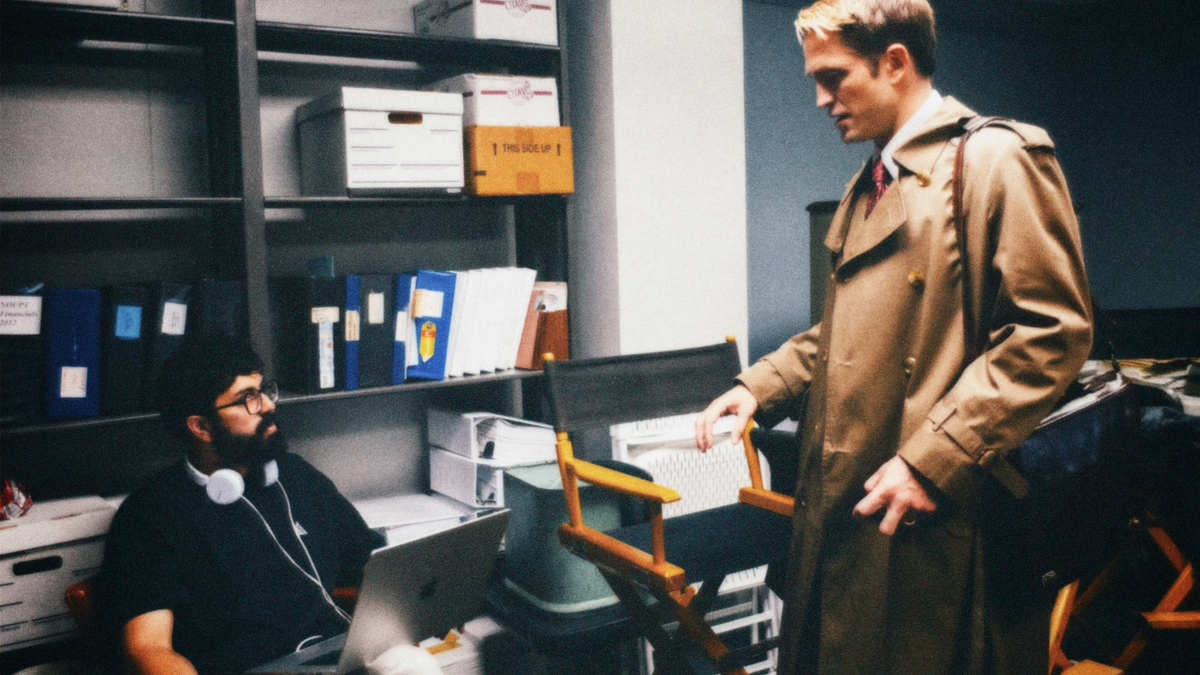
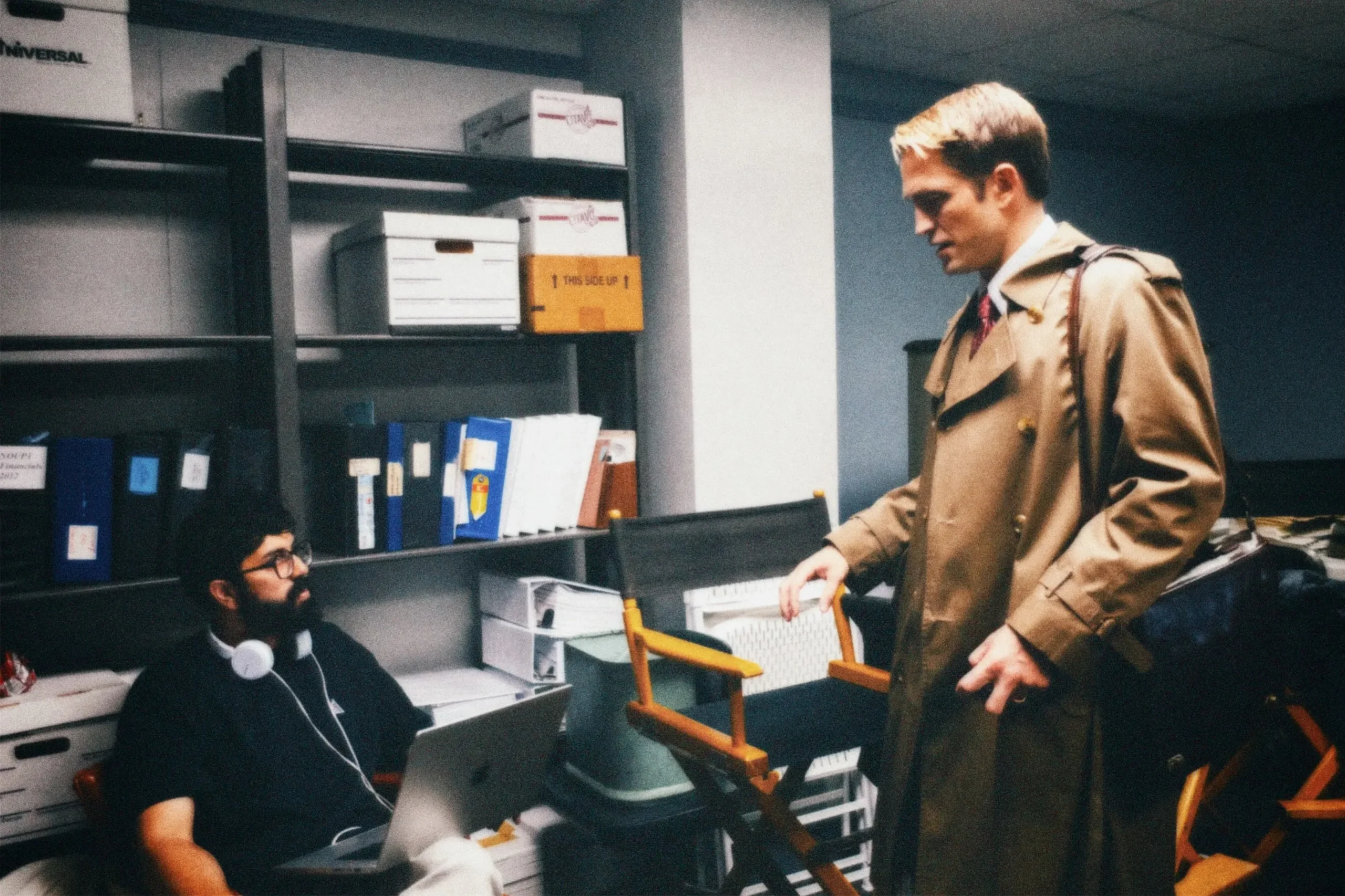
At the centre of it is Chris Hansen played by Robert Pattinson, the journalist whose To Catch a Predator segments on Dateline NBC became one of the strangest television phenomena of the mid-2000s. The premise was straightforward and deeply unsettling: adult men who had allegedly travelled to meet minors after communicating with decoys online were confronted on camera by Hansen, often in the now-iconic suburban houses set up for the sting. The confrontations were uncomfortable, sometimes absurd, frequently shocking, and enormously popular. Hansen’s calm delivery, his increasingly famous “Why don’t you have a seat over there?” persona and the sheer spectacle of watching someone realise they had been caught turned the series into something far bigger than a news segment. It became a pop-culture phenomenon, spawning parodies, memes and an entire generation of people who could recognise Hansen’s voice and cadence instantly.
For anyone who wasn’t around then, it can be difficult to explain just how much To Catch a Predator occupied the cultural conversation. This was still the era of appointment television, before social media had fragmented audiences into millions of individual feeds and before every person with a smartphone could become their own broadcaster.
There was a sharedness to television that is difficult to recreate now. You watched something, and then you went to school, work or college and everyone was talking about the same thing. To Catch a Predator somehow managed to sit at the intersection of investigative journalism, true crime, reality television and pure spectacle, becoming a show people watched not only because they thought it was important, but because they found the act of watching people get caught intensely compelling.
Writer Ajon Singh, who co-wrote Primetime with Luke Dittrich, remembers that fascination first-hand. Growing up in a family of Indian immigrants, television was one of the ways he absorbed American culture, and Dateline NBC was part of the household viewing diet. He watched To Catch a Predator when he was young, initially drawn to Hansen and the strange theatricality of the programme, but only began to understand its larger implications years later. “I became such a big fan of Chris Hansen and his show,” Singh tells ELLE. “And then 10 years later, when I could really grasp it, I started to realise just the weight of what was being discussed on that show.”
That distance was important. As a child, Singh was watching Hansen as a television personality. As an adult, he began looking at the programme as a peculiar artefact of American media culture, one that had somehow managed to turn an extremely serious subject into hugely successful primetime entertainment. “What a strange time in American culture,” he says. “There were all of these huge television shows on, and To Catch a Predator was sort of lurid, it was sort of strange. And for some reason, it was doing as well as any great scripted or fictional show in America.”
That question became one of the starting points for Primetime. Rather than making a conventional biographical account of Hansen or a straightforward retelling of To Catch a Predator, the film uses that cultural moment to examine something much more uncomfortable: our appetite for watching justice being served. Why did audiences find these confrontations so satisfying? Was it because Hansen appeared to be doing what institutions often seemed incapable of doing, delivering an immediate form of punishment to people accused of horrific behaviour? Or was there something more primal in the spectacle itself, in watching somebody exposed, humiliated and stripped of their ability to control the narrative?
It is a question that feels particularly loaded in 2026, when the world has moved from television as the dominant broadcaster to an internet where practically everyone can broadcast themselves. The recent fixation around the Epstein files, alongside years of online conversations about powerful men, institutional accountability and the public exposure of alleged wrongdoing, has made the themes at the heart of To Catch a Predator feel less like relics of the 2000s and more like an ongoing cultural obsession. The difference is that today, the audience isn’t merely watching the spectacle. It can participate in creating it.
That evolution is central to what Singh finds fascinating. In t, one of Hansen’s lines compares the old public pillory with the modern television screen: “There used to be a pillory in every civilised town. Now there’s a television and I’m on it.” Singh sees that not simply as a comment on Hansen, but as a way of understanding the human desire to watch wrongdoers punished. Public humiliation is hardly a new invention. What television did was package it for millions of people sitting at home, and what social media has done since is put the machinery of that spectacle in almost everyone’s hands.
“I think social media has definitely preyed on maybe our worst instincts,” Singh says. “We’re now the copycats of Chris Hansen.” The comparison is telling because the online versions of Hansen’s work can be significantly more aggressive than the original television programme. Today, creators can confront alleged predators on camera, livestream the interaction, publish their identities, mobilise their followers and turn the entire process into a content ecosystem. The moral question therefore becomes increasingly difficult to separate from the question of performance: are people exposing wrongdoing because they believe it is the right thing to do, because they want to be seen doing the right thing, or because the internet has made outrage one of the most reliable forms of engagement?
Primetime refuses to provide a neat answer, and Singh was deliberate about that. The film doesn’t present Hansen as a villain, even though that is one of the easiest readings audiences might take from its premise. “A big part of it was, first of all, I strongly believe in letting the audience sort of interpret things,” he says. “I don’t want to moralise. I don’t think that, to me, is my style of storytelling.”
That distinction matters because the film isn’t interested in pretending Hansen’s work had no value, nor is it interested in simply turning him into an egotistical monster. Singh was a fan of Hansen long before he made the film, and he continues to follow his work. What interested him was the contradiction within a person who can genuinely believe in the importance of what he is doing while simultaneously becoming famous, professionally successful and culturally significant because of it. “What Chris does is very complicated,” Singh says. “All I intended to do with Hansen was show him as a complicated person.”
That complication is also embedded in the film’s visual language. Primetime is deliberately framed in a 4:3 aspect ratio, evoking the proportions of a television screen rather than the expansive widescreen compositions audiences have become accustomed to seeing in contemporary theatrical films. It is an immediately noticeable choice when you’re sitting in a cinema: the image doesn’t completely consume the screen, instead appearing almost like a television broadcast transplanted into a movie theatre. The effect reinforces the film’s central preoccupation with television as both a medium and a machine for spectacle. Even while watching Primetime in a cinema in 2026, you are constantly being reminded that its world was created for the television box.
There is something almost mischievous about that choice, because Primetime is ultimately a film about the cultural power television once had and the way that power has mutated rather than disappeared. In the mid-2000s, To Catch a Predator could turn Hansen into a household name because there were relatively few channels through which a journalist could become a mass cultural figure. Today, a person can achieve the same kind of visibility through a TikTok account, a YouTube channel, a livestream or a viral confrontation. The screen has become smaller, but the spectacle has become much larger.
The film’s strangest visual metaphor comes in the form of a monster that follows Hansen throughout the story. It might initially seem like a surreal invention, but Singh’s inspiration was actually rooted in a real story he came across in The New York Times about child disappearances in Uttar Pradesh in the early 1990s. According to the accounts Singh found, children were disappearing from villages and communities began blaming one another, eventually turning towards public punishment. When the Indian government investigated, wolves were identified as the likely explanation, but some villagers insisted they had encountered something much more mythical: a wolfman.
Singh was fascinated by the collision between a real news story, collective fear and folklore, particularly because of Hansen’s own history of reporting on child labour in India. “I know Chris Hansen had done a segment about child slave labour in India,” he says. “So I was like, what if I took these two stories, and I created sort of this mythical background?”
The monster becomes less a literal creature than an embodiment of the psychological and emotional weight Hansen has accumulated. Singh had watched interviews in which Hansen spoke about the nature of his work and his approach to processing it, and the idea of an external creature following him became a way to visualise something that otherwise could not be seen. Hansen’s pursuit of evil begins as a television assignment, but gradually becomes something much larger in his own mind. By the second half of the film, Singh describes him as undergoing a kind of metamorphosis, moving beyond the immediate goal of making a successful television programme towards the almost messianic idea of defeating evil itself.
That shift is where Primetime becomes especially relevant to the culture of the present. The internet is full of people who have transformed personal morality into public identity. There are creators whose entire platforms are built around exposing scammers, confronting alleged predators, filming acts of charity or publicly calling out brands and individuals. Sometimes those actions have tangible consequences. Sometimes the camera itself becomes part of the performance. And increasingly, the question isn’t simply whether something is right or wrong, but whether broadcasting yourself doing the right thing changes the nature of the act.
Singh doesn’t pretend that Primetime resolves that debate. “I don’t actually know,” he admits. “I’m still sorting out how I believe.” In many ways, that uncertainty is exactly what makes the film interesting. It would be far easier to make Hansen either a hero or a villain, but both options would ultimately allow the audience to leave the cinema feeling morally comfortable. Primetime instead asks us to sit with the uncomfortable possibility that a person can believe in justice and still enjoy the power that comes from being the person delivering it.
Perhaps that is also why the film has found such an interesting second life online, particularly among Indian audiences, where there is already a very real appetite for anything Pattinson does. Clips from the film have been edited with Indian news-channel audio, making Pattinson’s version of Hansen look as though he has wandered directly into the world of Indian primetime news.
It is the kind of internet remix that only makes sense once you remember just how beloved Pattinson is in India, where his career has given audiences everything from the Twilight heartthrob to the more eccentric, unpredictable choices that followed. Now, that fandom has collided with Primetime‘s very specific visual world, with Indian viewers turning scenes from a psychological thriller about American television into something that looks bizarrely at home on an Indian news channel. The edits are funny, but they also underline the universality of the film’s central idea: every country has its own version of the television spectacle, its own appetite for outrage and, increasingly, its own way of turning that spectacle into content.
When Singh hears about the edits, his reaction is immediate: “Oh my god, I love it.”
There is another reason the Indian response has clearly meant something to him. Singh’s surname has become a small point of recognition for Indian audiences watching an A24 film about one of the most recognisable figures in American television. “There’s only a handful of Indian and Indian-American people in this business,” he says. “The amount of support I think when people saw that my last name was Singh was like crazy.”
And perhaps that is the most unexpected journey of Primetime: a film born out of Singh’s childhood fascination with an American television phenomenon has travelled all the way back to India, where viewers are now turning its scenes into memes and edits of their own.
Two decades ago, Chris Hansen had the primetime screen. Today, the screen belongs to everyone.
Also, Read:
Will The ‘Gilmore Girls’ Documentary Finally Answer That Infuriating Cliffhanger?
