

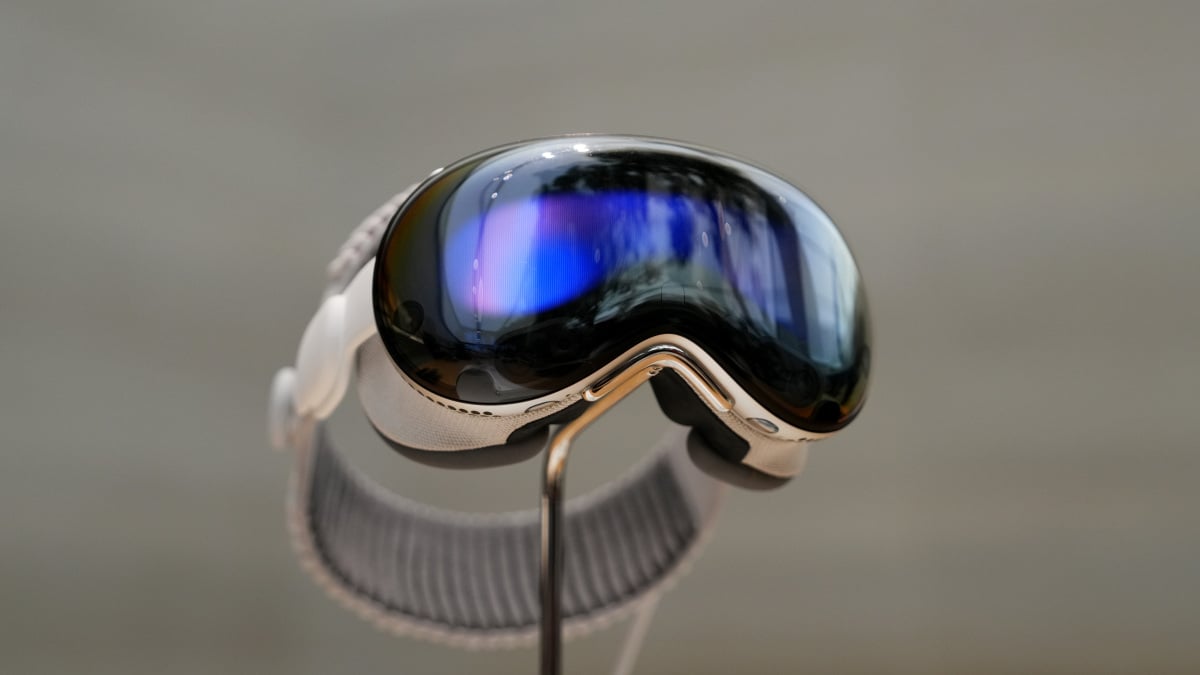
Apple’s plans for the Vision Pro are shifting again as Meta’s lightweight VR glasses shape the expectations of future VR headsets.
According to Bloomberg‘s Mark Gurman, Apple is exploring a redesigned headset that follows the same core philosophy as Meta’s, i.e., moving the compute components out of the headset and into an external puck. But the project, code-named N224, is reportedly on life support. It’s facing pushback from some senior executives and is unlikely to ship before late 2028, if it ships at all. For now, Apple’s attention has moved toward simpler smart glasses without displays.
The shift comes days after Meta unveiled its VR Glasses at Meta Connect 2026. The $1,299 headset, due in spring 2027, weighs about 100 grams. That’s roughly a fifth of Meta’s own Quest 3 and a small fraction of the Vision Pro. Gurman, who has used the Vision Pro since launch, argued in his Power On newsletter that Meta’s glasses are what Apple’s headset should have been.
When the Vision Pro launched in February 2024, it drew attention for its impressive displays and eye-and-hand controls. It also drew complaints about its weight, its price, and a shortage of reasons to wear it beyond watching videos. It was a striking proof of concept, much like Samsung’s Galaxy Z TriFold, but more a showcase for enthusiasts than a device for everyday people.
Mashable Light Speed
By clicking Sign Me Up, you confirm you are 16+ and agree to our Terms of Use and Privacy Policy.
Meta’s ability to make their VR headset lighter was simply to move the heavy parts off your face. The processor and battery live in a separate module that clips onto your clothing and connects to the glasses by cable. Gurman reports that the module is about the size and weight of the Vision Pro’s external battery pack.
The Vision Pro started at $3,499 and can weigh up to about 800 grams, depending on the headband. Meta chose comfort and price over high-end quality, which is always a winner for consumer buy-in.
Apple saw the problem coming there was consideration in moving processing to a separate home device, but the team rejected the idea. Since launch, Apple has shelved at least three projects meant to fix the Vision Pro’s biggest flaws:
-
N107: a headset that would have offloaded computing to a Mac or another device.
-
N100: a “Vision Air” that would have moved more components into an external pack.
-
N109: a lighter, cheaper model with a less powerful chip.
Gurman reports that some senior Apple leaders believe a separate puck leads to a poor experience and prefer an all-in-one design. However, as Gurman writes, new CEO John Ternus has long been privately skeptical of a headset this heavy and expensive, though he has spoken optimistically about it in public. The Vision hardware team has also been moved lower in Apple’s org chart, its former hardware chief left for OpenAI, and the team recently went through layoffs.
Even if Apple does commit, a new headset likely wouldn’t arrive before late 2028 or early 2029.
Chance Townsend is the General Assignments Editor at Mashable, covering tech, video games, dating apps, digital culture, and whatever else comes his way. He has a Master’s in Journalism from the University of North Texas and is a proud orange cat father. His writing has also appeared in PC Mag and Mother Jones.
In his free time, he cooks, loves to sleep, and greatly enjoys Detroit sports. If you have any tips or want to talk shop about the Lions, you can reach out to him on Bluesky @offbrandchance.bsky.social, by email at [email protected], or on Signal at 224-417-6628.
