

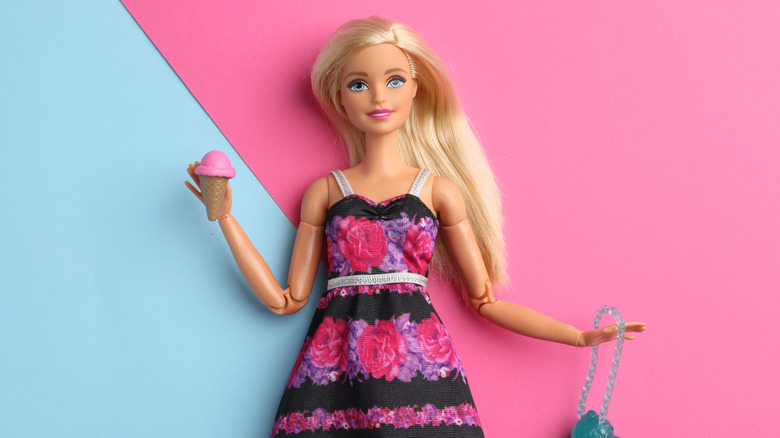
Among the toys that debuted at the American International Toy Fair in 1959 was one that would become an instant success. In a now-iconic black and white swimsuit, Barbie was born. While Barbie’s origin story varies, Ruth Handler, co-founder of Mattel, said she was inspired by her daughter, Barbara, to create a doll that would inspire little girls to dream big. And once Barbie was launched into the zeitgeist, toy experts agree — her impact was immediately monumental. In a time when women were most encouraged to be homemakers, Barbie encouraged young girls to think differently, says Lynn Rosenblum, a longtime toy industry analyst and associate professor of toy design at Otis College of Art and Design. “Not only was she the first fashion doll with a job — teenage fashion model — but she has held over 200 careers and done so with style,” Rosenblum explains. “She was an astronaut, computer engineer, a UN ambassador, and even ran for president in 1992.”
Bob Friedland, a toy expert who ran communications for Toys”R”Us and FAO Schwarz, said it was Barbie’s dynamic life as an adult that broke the existing doll mold. “(Barbie) gave kids a new way to play that set a standard for fashion dolls that’s still followed today,” he says. “They have long hair that can be styled, they have stylish outfits and accessories, and you can personalize them so they’re your doll while still being Barbie.”
Beyond dolls, there are many toys that wouldn’t exist without Barbie. “[G.I. Joe] was created because Hasbro wanted to make a boy version of Barbie,” says Friedland. “They rebranded the line as ‘action figures’ because they felt that boys wouldn’t play with dolls. And if you follow that thread, we might not have action figures at all without Barbie.”
Barbie’s ongoing impact and relevance
Of course, a woman with such a major cultural impact has not been without her controversies. Across generations, Barbie has been scrutinized for her impossible physical proportions, leading to research published in the journal Developmental Psychology that linked the doll with body image issues in young girls. Other problems have stemmed from gender stereotypes perpetuated by the brand, observations of limited representation across skin tones and disabilities.
But with each problem, Mattel has taken on the feedback and updated Barbie and her world accordingly — most recently through their campaign, the Power of Representation. “Barbie is a story about how you can evolve a brand to stay relevant, and it’s something Mattel was very successful at from 1959 through the early 2000s,” says Bob Friedland. Even today, years after the major success of Greta Gerwig’s “Barbie” movie, starring Margot Robbie as Barbie and Ryan Gosling as Ken, Barbie is still figuring out ways to evolve. “Combining nostalgia product lines and movies and lending Barbie to other toy brands like Playmobil and Play-Doh shows that Mattel is trying to pull every lever to hit us in the feels while attracting younger kids,” says Friedland.
Lynn Rosenblum, who worked on the Barbie team at Mattel in the late ’80s and early ’90s, says the doll has staying power. “I’d never presume what the doll designers at Mattel will come up with next, but what I do know is that if you <a href="https://comicvibe.com/how-to-watch-the-utah-mammoth-on-tv-this-season/” title=”How to watch the Utah Mammoth on TV this season”>watch trends, Barbie will be there,” she said.
