

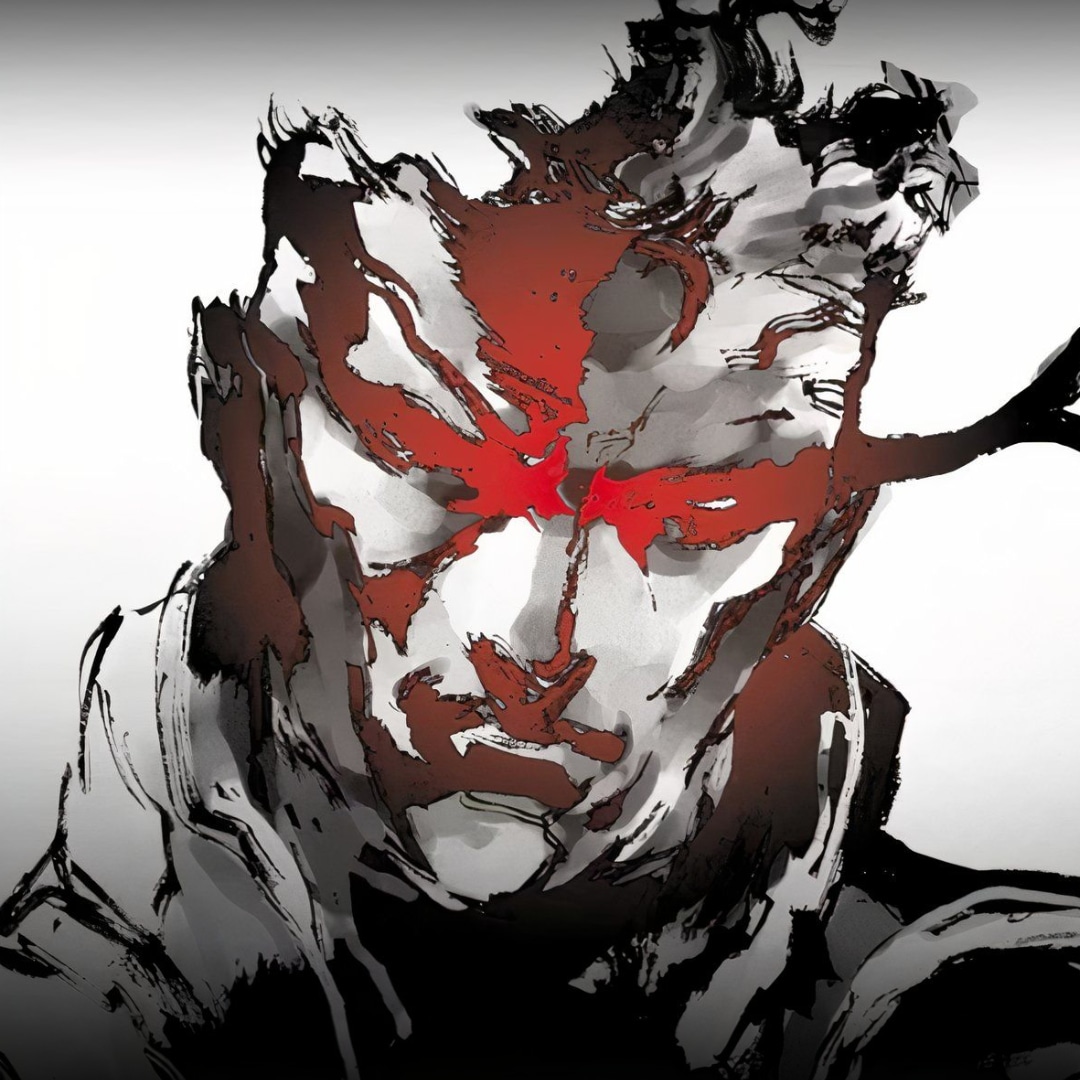
Playing Metal Gear Solid for the first time in 2026 reveals a game that can feel frustratingly old-fashioned, but is still ahead of its time.
No one can play every game. No one can be completely comprehensive. I’ve been upfront about the gaps in my gaming knowledge, particularly around classic RPG franchises like Final Fantasy and Dragon Quest. These gaps are largely because, throughout the 1990s and 2000s, I was a Nintendo-centric gamer. I never owned the original PlayStation, and the PS2 and PS3 took a backseat to the GameCube and Xbox 360. I was happy with my lot, with one exception. I always wanted to play Metal Gear Solid.
I somehow never got around to playing it, despite having the ability to do so on several occasions. Even when it was ported to the GameCube as Metal Gear Solid: The Twin Snakes, I deferred. On paper, it looked like a better version, but the critical reception was frosty and fans seemed to prefer the original. And then, as the series continued and became more self-referential, I began to lose interest.
In 2023, when publisher Konami released Metal Gear Solid: Master Collection Vol. 1, my interest was piqued again. This compendium of games, add-ons, and bonus items is exactly the type of curated retro experience to excite me, and the opportunity to play through the series was appealing. However, caution struck once more. The Nintendo Switch edition, my preferred platform, had some performance issues across the collection, making it the least optimal way to play.
Thankfully, the arrival of the Nintendo Switch 2 heralded an update that enhanced performance across both platforms. That meant the time had finally come to enter Shadow Moses and make my own determination on whether Hideo Kojima was a genius or, as some critics say, a pretentious creator.
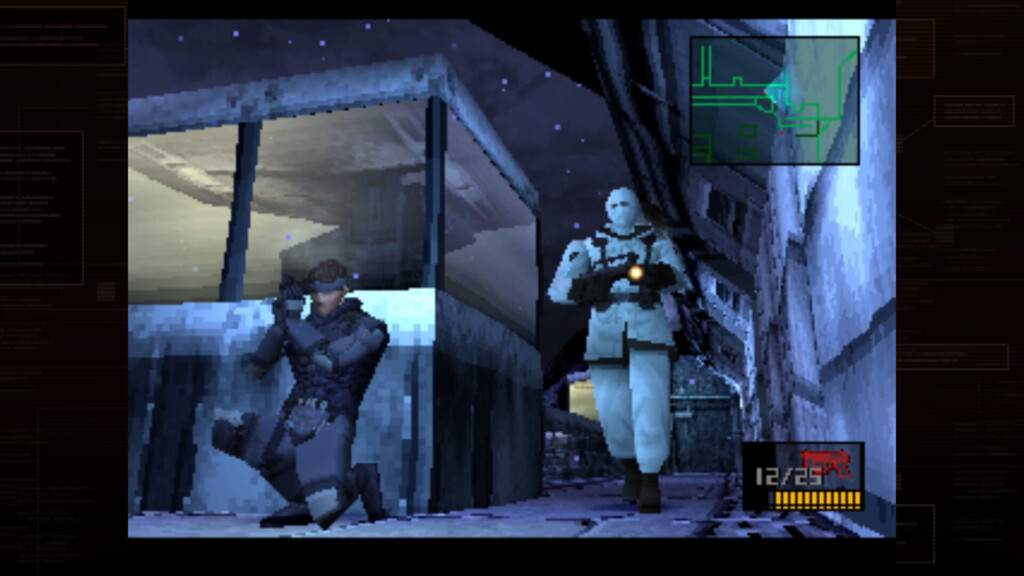
Entering Shadow Moses
And what a curious game this is. On the one hand, its ambition, scope, and impact cannot be overstated. On the other, at first blush, it’s infuriating, needlessly obtuse, and frustrating to control.
The nearest personal touchstone is GoldenEye 007. To say that Rare’s Nintendo 64 shooter was an obsession is an understatement. I must have played through the campaign on all three modes 50 times, and if you told me I had played 300 hours of multiplayer, I wouldn’t be surprised. I can still play the game all these years on, needing just a few minutes to get comfortable with its idiosyncratic controls. However, I know that many players new to Bond’s adventure struggle with those controls to the point that the game feels almost unplayable.
My experience with Metal Gear Solid wasn’t quite that drastic, but I initially found the game fiddly and counterintuitive. That’s what 30 years of standardisation does, I suppose, but the game’s perspective shifts, UI, and button mapping felt off for the longest time. I got there eventually, but the acclimatisation took a while, making me think it was perhaps a deliberate choice. An intentional fussiness designed to create tension and panic.
The Key Card
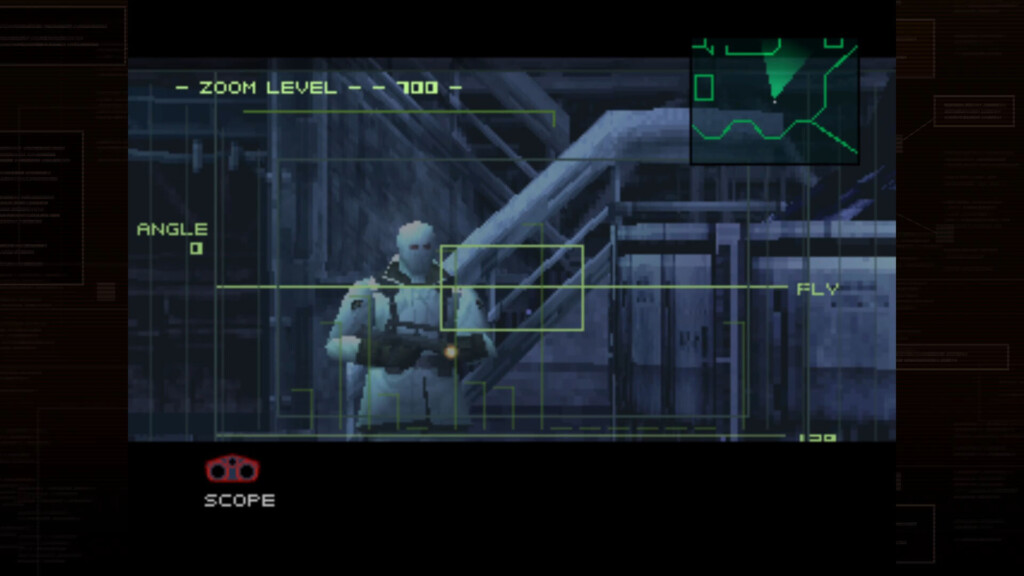
I was also surprised by the game’s overall structure. It’s restless, almost like a collection of mini-games strung together, with each offering a twist or evolution of the game’s mechanics. One section, for instance, is a button-mashing minigame to resist torture. Shortly after is an extended run-and-gun action sequence that must have dazzled in 1998 with its dizzying use of three dimensions. Then there are the sniper encounters, a missile-guidance sequence through a maze of corridors, a fistfight on a giant mech, and many other bite-sized set pieces.
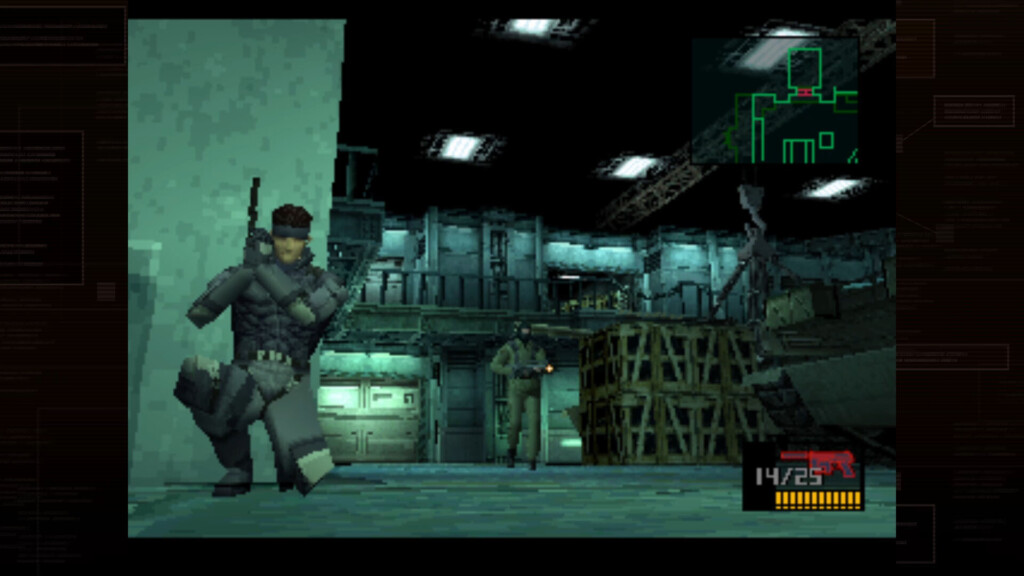
All of these moments are punctuated by stealth sequences that still hold up, with an underlying tension and malleability that allows them to play out differently each time, depending on how you move through the environment and the gadgets you use.
Metal Gear Solid is a game that invites the player to learn its space. For the first few hours, I was frustrated by the back and forth and the reliance on key cards to gate progress. And then something clicked. The more I explored and experimented, the more familiar the layout of Shadow Moses became, until I gradually felt like its master. A threatening and confusing space eventually becomes a familiar one, making previous challenges easier to overcome and previously daunting locations almost routine.
The Memory Card
The main challenge to enjoying the game today isn’t the controls, despite my tangled fingers, or its knotted narrative. It’s context and environment.
When Metal Gear Solid was released in 1998, games were on physical media. It was still part of the experience to read the manual, devour the box art, and pore over magazines for tips and tricks. Game controllers were still tethered to their systems. Managing memory cards was an everyday concern. Metal Gear Solid, famously, breaks that wall between the game and the player, making the act of playing – and the technology between the player and the game – part of the experience.
On modern systems, Konami has devised all sorts of virtual solutions to allow the game to be played in a way akin to its first outing, but it can never quite recreate its original impact. And coming to it with nearly 30 years of subconsciously absorbed knowledge, I can never quite experience the magical things the game does in the same way. Those “aha” moments have to be nurtured and controlled for me, rather than discovered through exasperation and experimentation. I can recognise these achievements, but my emotional response is undoubtedly different.
The Codec
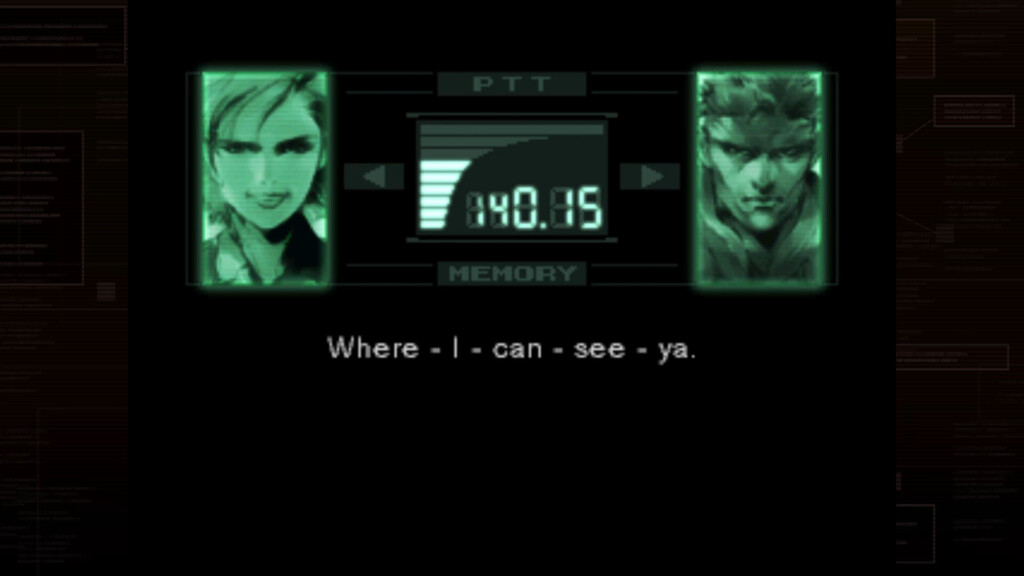
Even filtered through that altered lens, the story still lands, particularly in its cutscenes and extended dialogue sequences, which are delivered like a visual novel through the in-game Codec.
The Codec exchanges are frequently verbose, but full of strong characterisation and personality. The dialogue cleverly threads the needle between narrative exposition and world-building while also offering hints about combat encounters, gadgets, and environmental challenges.
The cutscenes are another treat. Obviously, they are fairly crude by modern standards, but it’s clear how impressive they would have been in 1998. Frankly, I wasn’t prepared for just how camp this game is, and I mean that as a compliment. It’s a hoot from start to finish. The performances are arch, but delivered with such conviction that the ridiculous story twists and dialogue land perfectly. It’s all set against Kojima’s broad-brush global concerns, making for a curious sweet and sour cocktail. Somehow, it works.
These days, Kojima’s games have a reputation for sprawling, wayward cutscenes, but Metal Gear Solid is fairly tame in this regard. I can see why these sequences were acclaimed, but also why Kojima perhaps took the wrong lessons from that praise.
The audio deserves its own mention, too. The performances are backed by a peerless soundscape. Every sound effect, from the Codec’s beeps and bloops to the ambient hum of Shadow Moses, is perfectly executed, while the dynamic soundtrack adds a subtle layer of tension and atmosphere. No notes.
Game Over?
It’s hard to know what I would have made of the game in 1998. I suspect I would have enjoyed it even more. Back then, I had the time and compulsion to poke at games and explore every corner, to embrace the trial and error to find the answers, whether through a Codec conversation, the inventive use of an item, or something to be uncovered in the environment.
Still, there’s a lot to admire in Metal Gear Solid. For a relatively short game, it’s generous in what it offers. It has impressive production values, that clever meta layer, and a deeply silly story that shines because of its earnest delivery.
I can’t say that I truly love Metal Gear Solid, but it is an undeniable accomplishment. It’s dated, but still sophisticated in its own way, just like GoldenEye 007. I still don’t know if Kojima is some kind of genius, but this is a good game, and it has me intrigued enough to continue with the franchise. Perhaps, 28 years on, that is achievement enough.
From the Backlog is a semi-regular feature where we finally play the games everyone else finished years ago and see if they still live up to the hype (or at least justify that third time we bought them). View the archive.
