

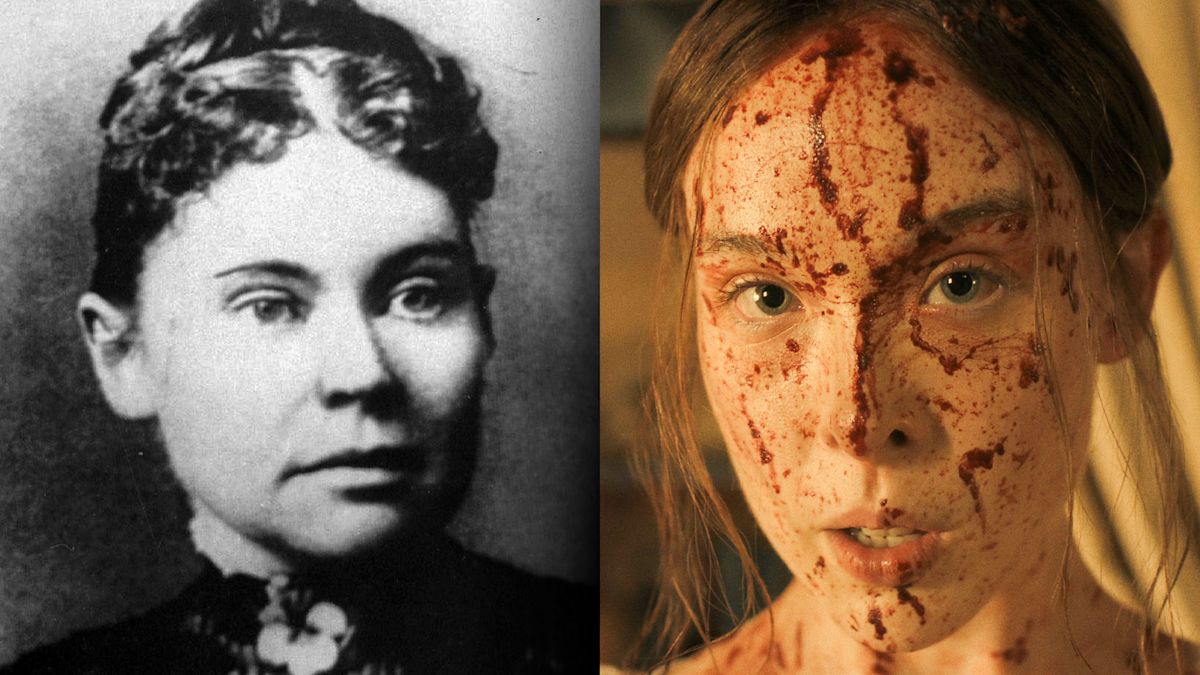
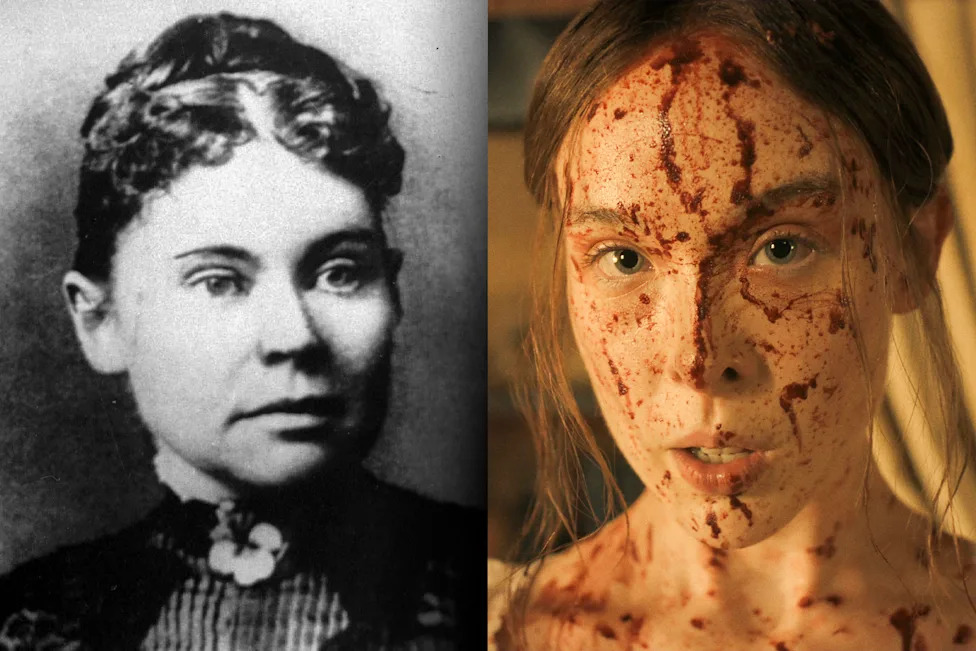
More than 130 years after Lizzie Borden was acquitted of killing her father and stepmother, their deaths remain one of the most famous unsolved crimes in U.S. history. Now Netflix is offering its own version of what happened.
The true-crime dramaMonster: The Lizzie Borden Story, streaming now, stars Ella Beatty as Lizzie. Her father and stepmother are played by Charlie Hunnam and Rebecca Hall, while Vicky Krieps plays Bridget “Maggie” Sullivan, the family’s live-in maid.
It’s the fourth season of the Monster anthology series, which previously dramatized the stories of Jeffrey Dahmer, brothers Erik and Lyle Menendez and Ed Gein, whom Hunnam played last season.
The real case has fascinated people in the U.S. for generations and inspired the famous rhyme that begins, “Lizzie Borden took an ax.” But in reality, she was found not guilty, and no one else was ever charged.
Here’s what the historical record shows about the killings — and where Netflix’s version departs from it.
Who was Lizzie Borden?
Lizzie was born in Fall River, Mass., in 1860. Her mother died when Lizzie was a young child, and her father, Andrew Borden, later married Abby Durfee Gray.
Andrew became wealthy through business and real estate but was known for living frugally. Despite his fortune, the family remained at 92 Second St. rather than moving to Fall River’s more fashionable Hill neighborhood.
Lizzie and her older sister, Emma, were unmarried and continued living in the family home as adults. There were tensions within the household, including disputes involving Andrew’s money and property.
Lizzie was 32 at the time of the killings. She was active in Fall River’s Central Congregational Church and other religious and social organizations, and her status as a respectable, churchgoing woman would become significant during her trial.
What happened to Andrew and Abby Borden?
Andrew, 70, and Abby, 64, were killed inside their home on Aug. 4, 1892.
Evidence indicated that Abby died first. She was found upstairs in a guest bedroom. Andrew had left the house earlier that morning and was killed after returning home. His body was found on a sofa downstairs.
The injuries were consistent with blows from a sharp cutting instrument such as a hatchet. William Dolan, the medical examiner who performed the autopsies, documented 10 wounds to the left side of Andrew’s head and face and 18 wounds to Abby’s head, along with further injuries to her back and face. No weapon was ever conclusively identified as the one used in the killings.
Emma was away from home. Sullivan, the maid, was working at the house, while Lizzie later said she had been in the barn shortly before discovering her father’s body.
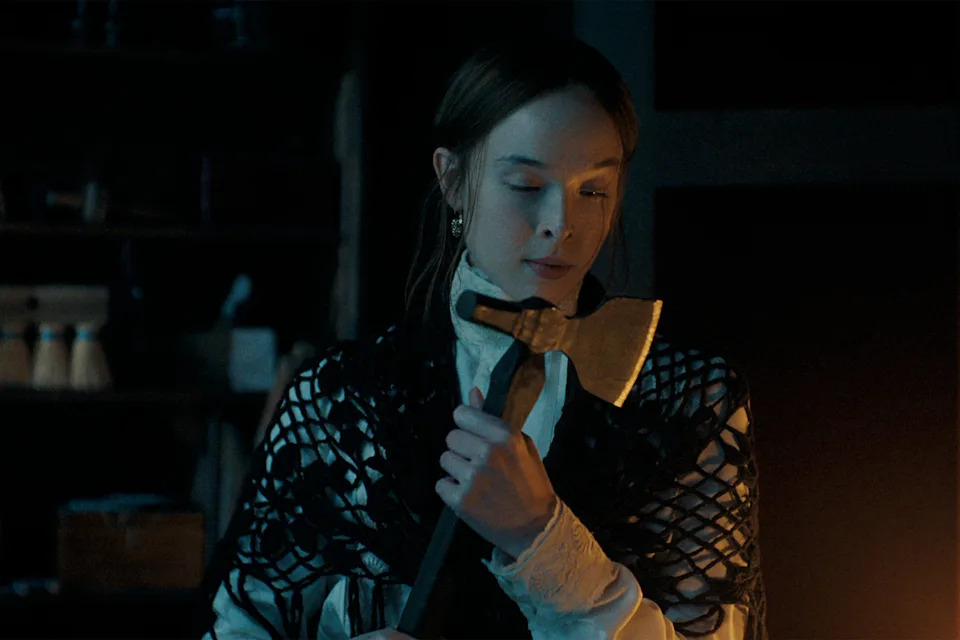
Sullivan testified that she had gone up to her third-floor room and lain down when she heard the City Hall bell strike 11. About 10 or 15 minutes later, she heard Lizzie call for her.
“Come down quick; Father’s dead; somebody came in and killed him,” Sullivan recalled Lizzie saying. Her account of that morning shifted in places between the inquest and the trial.
Sullivan and neighbor Adelaide Churchill subsequently discovered Abby’s body upstairs.
Lizzie was arrested on Aug. 11, one week after the killings, according to the Library of Congress.
Why was Lizzie Borden suspected?
Police recovered several axes and hatchets from the property, but none were conclusively identified as the weapons used in the killings.
Harvard chemist Edward Wood testified that stains on two axes and two hatchets tested negative for blood. He also examined the clothing Lizzie turned over to investigators. A small blood spot, about the size of a pinhead, was found six inches from the bottom of a white skirt. Wood said it was consistent with human blood, but told the defense on cross-examination that he could not rule out that it was Lizzie’s own menstrual blood.
Eli Bence, a clerk at a Fall River drugstore, said Lizzie had tried to buy prussic acid, a poison, on Aug. 3, the day before the killings. He said he refused to sell it without a doctor’s prescription. Lizzie denied trying to buy the poison. The judges later excluded Bence’s testimony from her trial.
Several days after the killings, Lizzie’s friend Alice Russell saw her burning a dress in the kitchen stove, Russell later told a grand jury. Lizzie said the dress had been stained with paint.
Russell had testified previously without mentioning the dress. After consulting a lawyer, she returned to the grand jury and disclosed what she had seen. Lizzie was indicted the following day.
What happened during Lizzie Borden’s trial?
Lizzie’s trial began in New Bedford, Mass., on June 5, 1893.
The prosecution had no eyewitness to either killing, no confession and no weapon conclusively linked to Lizzie. Her defense emphasized the lack of a proven weapon used in the killings and the absence of bloodstained clothing.
Lizzie’s gender and social standing became other factors in her defense. Women could not serve on the jury, and her lawyers drew on contemporary ideas about how a respectable Victorian woman should look and behave.
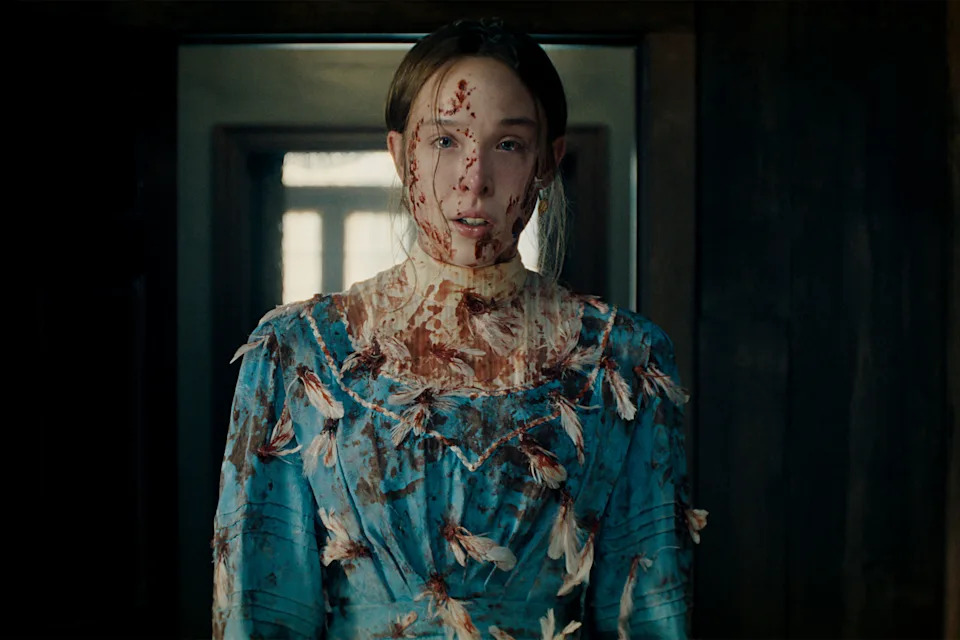
She “presented herself as a helpless maiden,” Joseph Conforti writes in Lizzie Borden on Trial: Murder, Ethnicity and Gender. “Her lawyers told her to dress in black. She appeared in court tightly corseted, dressed in flowing clothes, and holding a bouquet of flowers in one hand and a fan in the other.”
Her defense also emphasized her relationship with her father and challenged the prosecution’s argument that she had a motive to kill him.
The judges excluded some evidence sought by prosecutors, including Bence’s testimony about the attempted prussic acid purchase.
On June 20, 1893, the jury found Lizzie not guilty. No one else was ever prosecuted for the deaths of Andrew and Abby Borden, and who killed them has never been established.
What happened to Lizzie Borden after the trial?
Lizzie remained in Fall River after her acquittal. Two months later, she and Emma moved to a large house in the city’s wealthy Hill neighborhood that became known as Maplecroft.
But the acquittal did not end public suspicion. Lizzie was shunned by some members of Fall River society and remained closely associated with the killings for the rest of her life.
Emma left the house in 1905 after the sisters had a falling-out. According to Smithsonian, they never saw each other again.
Lizzie died in 1927 at age 66. Emma died nine days later.
Did Lizzie Borden really use an ax?
The famous rhyme goes, “Lizzie Borden took an ax and gave her mother 40 whacks / And when she saw what she had done, she gave her father 41.”
But several details are wrong. Abby was Lizzie’s stepmother, not her mother. The weapon was more likely a hatchet than an ax. And the arithmetic is far off: the autopsies recorded 18 wounds to Abby’s head and 10 to Andrew’s, not 40 and 41.
The rhyme also presents Lizzie as the killer, even though a jury acquitted her.
Is Netflix’s ‘Monster: The Lizzie Borden Story’ accurate?
Monster makes a major addition to the historical story: It portrays Lizzie and Sullivan, who is called Maggie, as lovers.
Netflix describes its Lizzie and Maggie as trapped in “a house built on humiliation and cruelty” and escaping “into a fantasy of sex, power, and revenge.” Its trailer portrays Maggie encouraging Lizzie toward the killings.
But there is no definite historical evidence that Lizzie and Sullivan had a sexual relationship. The speculation about Lizzie’s private life with the most behind it concerns a different woman: the actor Nance O’Neil, whom Lizzie befriended around 1904 and whose place in her life was widely reported as the cause of the break with Emma. Jessica Barden plays O’Neil in the Netflix series.
The show is not the first to imagine a romance for Lizzie. The 2018 film Lizzie, starring Chloë Sevigny as Lizzie and Kristen Stewart as Sullivan, portrayed the women as lovers.
Cara Robertson, author of The Trial of Lizzie Borden, told the BBC that writers and filmmakers have repeatedly imagined romantic relationships for Lizzie when dramatizing the case.
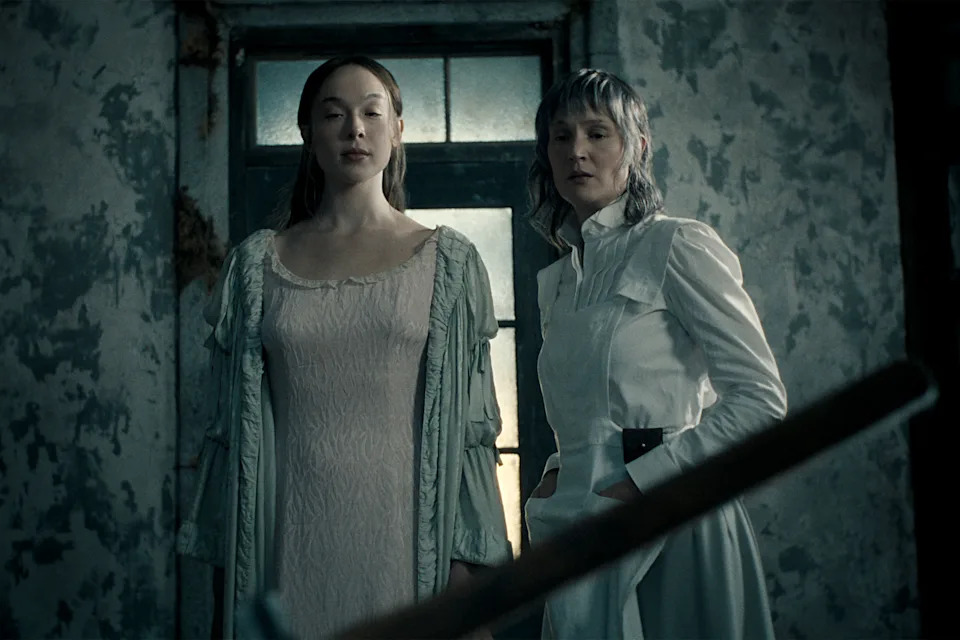
The series takes a larger liberty: Sarah Paulson appears as Aileen Wuornos, the Florida serial killer executed in 2002, more than a century after the Borden killings.
One detail in the Netflix series does come directly from the historical record: Sullivan really was called Maggie by Lizzie and Emma. At Lizzie’s trial, Sullivan testified, “In the household I was sometimes called Maggie, by Miss Emma and Miss Lizzie.”
Beatty has been clear that Monster is not intended as a straightforward reconstruction of Lizzie’s life.
“Immediately when the audition came up, I listened to every true crime podcast that I could find to learn the facts of the case,” she told Netflix’s Tudum. “My job was to explore the character that Ian and Ryan had created and take all thet into the very fictionalized version of the woman that we created for the show.”
How have other movies and TV shows portrayed Lizzie Borden?
The 1975 ABC film The Legend of Lizzie Borden starred Bewitched‘s Elizabeth Montgomery and depicted Lizzie committing the killings, despite her real-life acquittal. Montgomery received an Emmy nomination for the role.
Christina Ricci starred in Lifetime’s 2014 film Lizzie Borden Took an Ax, which depicts Borden committing the killings. Ricci returned the following year in The Lizzie Borden Chronicles, which imagined a series of crimes surrounding Lizzie after her acquittal.
