

Related reads:BLACK TORCH Interview: Tsuyoshi Takaki on Finally Bringing His Cancelled 5-Volume Manga to Anime, Chainsaw Man Comparisons (EXCLUSIVE)
IGN Otaku Update is IGN India’s original column series exclusively dedicated to covering the animanga fandom and market.
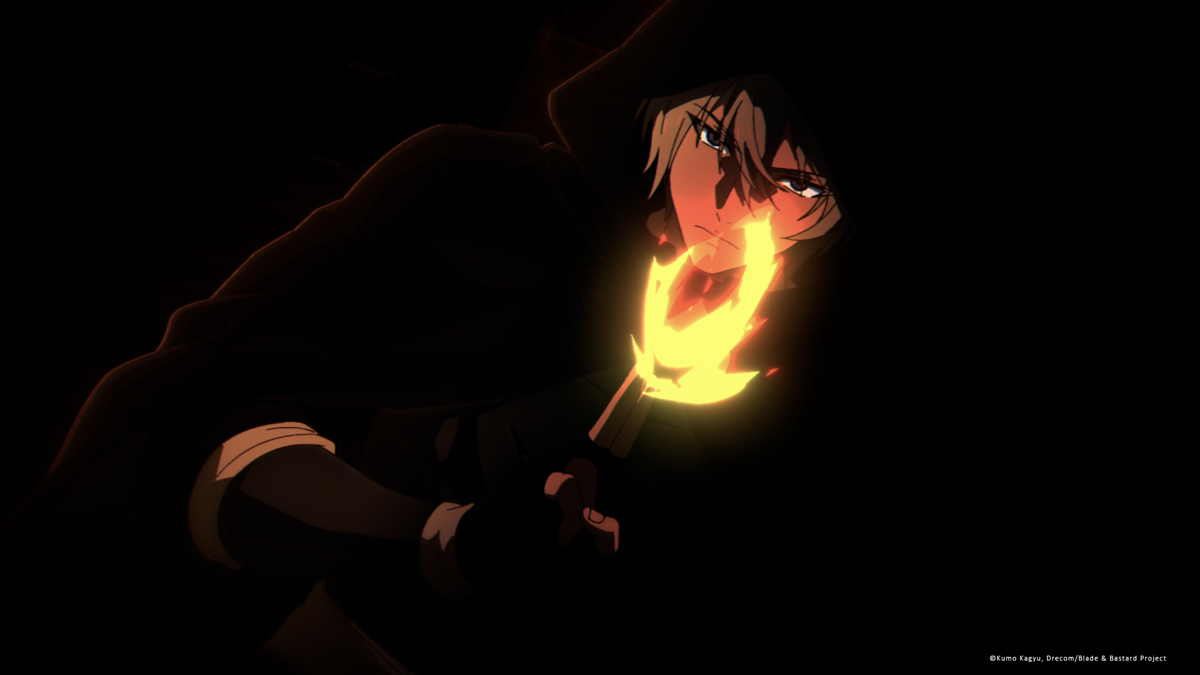
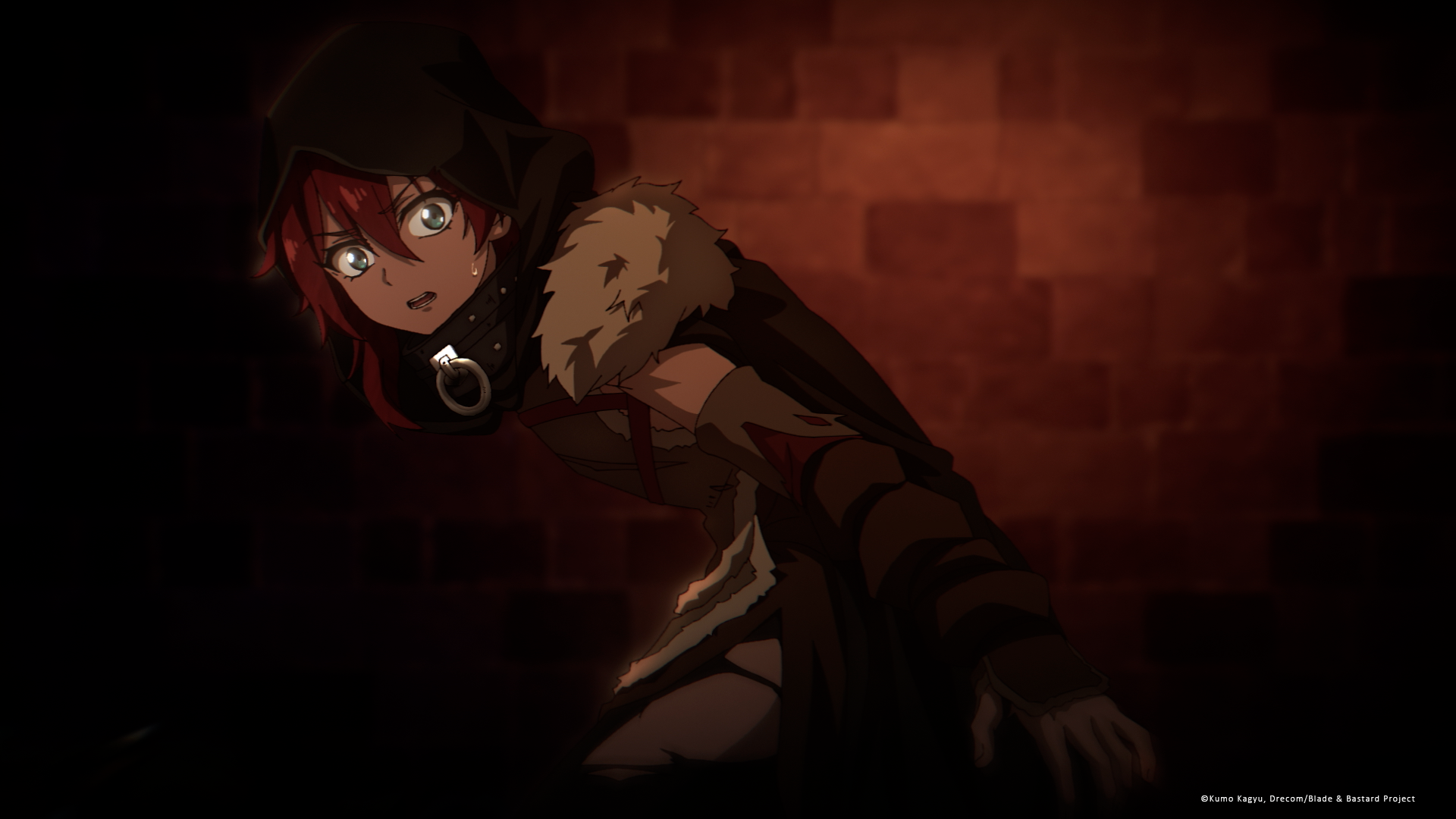
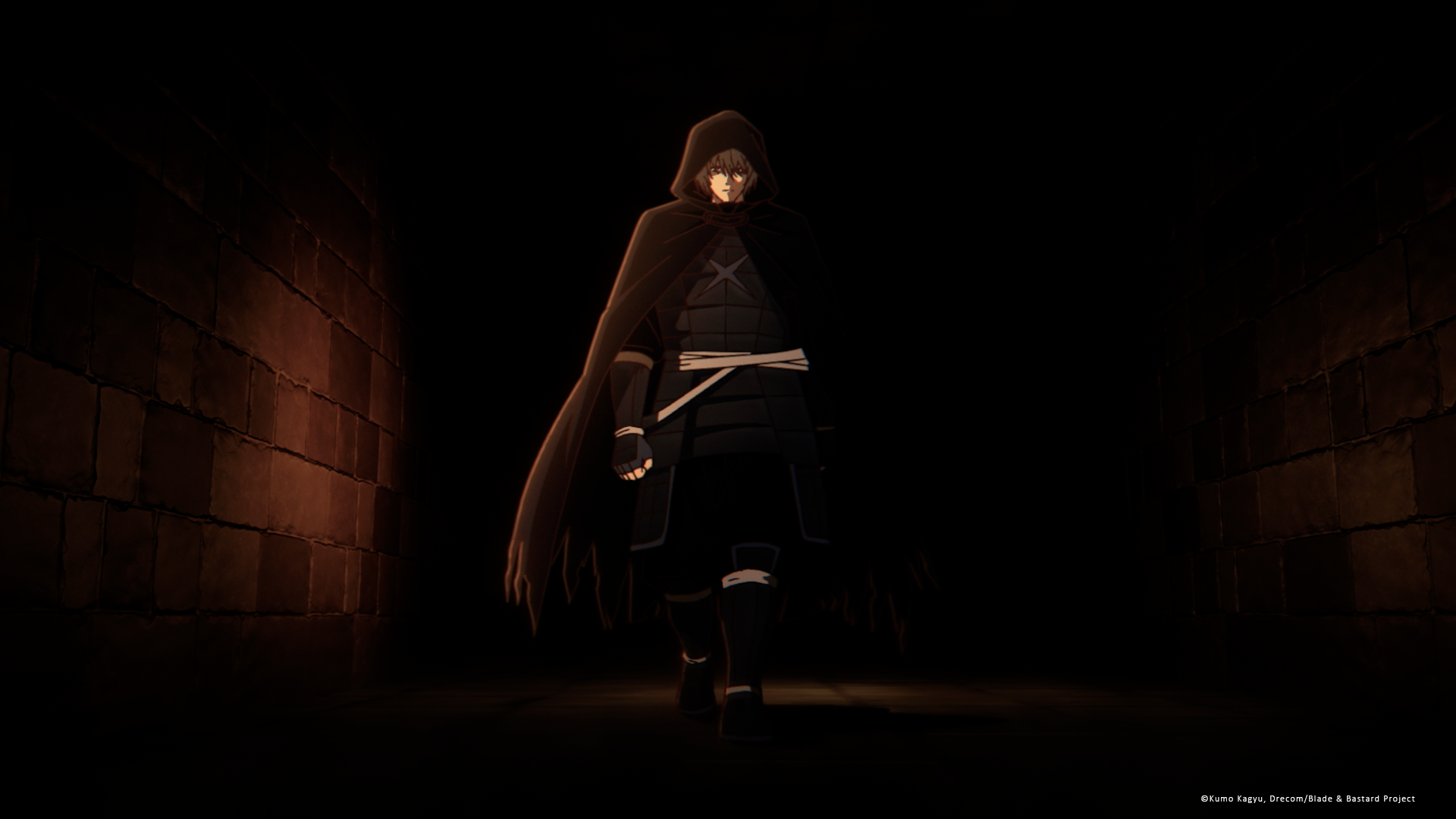
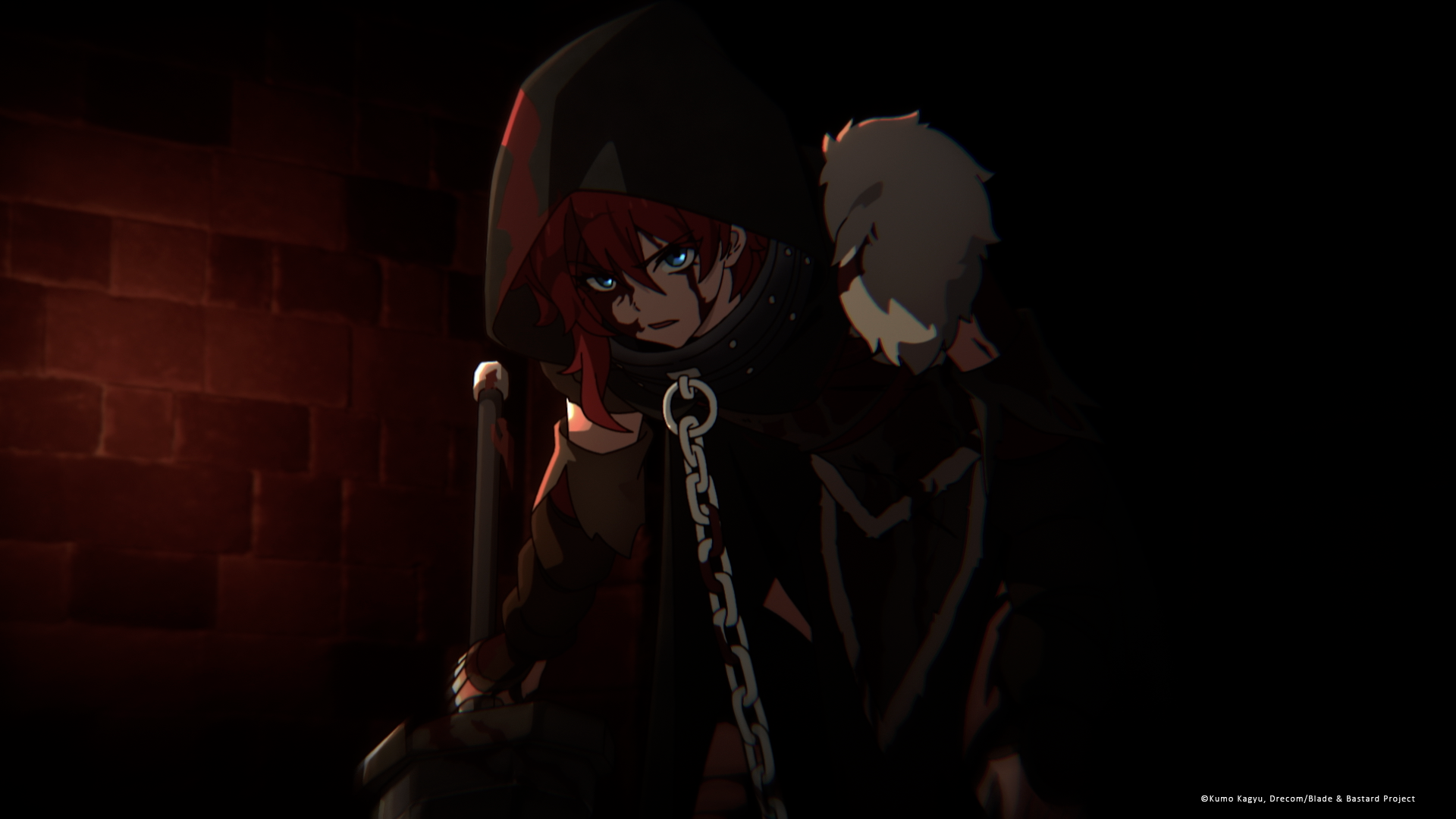
Kumo Kagyu built his name on Goblin Slayer, a series that took the anonymous, grinding lethality of tabletop RPGs and turned it into one of the darkest hits in modern light novel fiction. His other work, BLADE & BASTARD, takes that same unsentimental relationship with death and grafts it directly onto Wizardry, the 1981 dungeon crawler that helped invent the genre Goblin Slayer was already commenting on. Iarumas, an adventurer who wakes up with no memory of who he was, spends his days hauling corpses out of a labyrinth to check whether they’re salvageable for resurrection or bound for the ash heap. Garbage, the swordswoman he ends up traveling with, is the sole survivor of a party that wasn’t so lucky. Studio Xingfu’s anime adaptation, premiering in 2027, inherits a story where dying, turning to ash, and occasionally getting resurrected wrong is just Tuesday.
In this edition of IGN Otaku Update, I spoke exclusively with Kumo Kagyu about adapting his own novels for the screen, what he asked the anime staff to protect and what he was happy to hand over entirely, and why writing inside Wizardry’s decades-old rules felt more like an act of respect than a constraint. He also got into the Game Boy games he’s been replaying for “research,” the tabletop campaigns currently eating his free time, and the one gamebook series he credits with making him a writer in the first place.
Rayan Sayyed: Please introduce yourself to our readers.
Kumo Kagyu: Hi, I’m Kumo Kagyu. I’ve spent my life completely immersed in tabletop RPGs, American comics, movies, and all sorts of other things, and somehow, before I knew it, I had become a novelist. Even now, there’s still a part of me that wonders, “Am I really a novelist…?” I always thought of myself as sitting on the same side as everyone else, just watching things and enjoying them as a fan. But I was fortunate enough to be given the opportunity to write a novel based on Wizardry, which then became a manga, and now an anime—and somehow that has even led to opportunities like this interview, where I get to talk to all of you about it. It’s a pleasure to meet you all.
If you had to introduce BLADE & BASTARD to someone who knows nothing about it, what would you want them to understand about its world before they watch the anime?
BLADE & BASTARD is a fantasy novel based on Wizardry. That said, it doesn’t take place “inside a game,” and it isn’t a world where people have things like visible skills or status screens. Resurrection magic exists in this world, and even if a resurrection fails and someone is reduced to ash, there may still be another chance to bring them back—as long as their soul hasn’t been lost entirely. Because of that, the value people place on life and death has become considerably more tenuous. So, broadly speaking, you can think of it as a story about adventurers who venture deeper and deeper into an underground dungeon in a world like that.
Looking back over the production so far, was there a moment where you realised, that the anime had found its own identity rather than simply becoming an adaptation of the novels?
Personally, I think hearing the characters actually speak through the voice actors is a huge part of it. Seeing them take visual form through the novel illustrations and then the manga was significant too, of course. But hearing the actors perform the characters often makes even me realize, “Oh, so this is what this person was really like.” After all, I didn’t start writing the story thinking, “Someday this is going to be animated and everyone’s going to have voices.” Which is why I’ve ended up making Tomori Kusunoki, who plays Garbage, do an awful lot of roaring and yelling. S-so…thank you very much, and I’m terribly sorry…!
After Goblin Slayer, what inspired you to write a Wizardry story centered on a mysterious adventurer like Iarumas and the people of a dungeon world where death and resurrection are commonplace?
It really comes down to one thing: I love Wizardry. The project itself actually wasn’t my idea. Drecom approached me and officially gave me the opportunity to write a novel based on Wizardry. My reaction at the time was basically, “Wait, you’re really letting me write this?!” In Wizardry, adventurers die. They turn to ash. They get resurrected. Resurrection fails and they’re lost forever. That’s all part of everyday life. To borrow the title of an older Japanese Wizardry novel, that sense of having “youth and ashes side by side” is, to me, very much what the world of Wizardry is about.
As for the protagonist, in Goblin Slayer Side Story II: Dai Katana, I’d already written a story about novice adventurers taking on a dungeon from the very beginning. So this time I thought, “All right, then let’s make the protagonist a veteran adventurer.” I also wanted him to be someone longtime Wizardry fans could project themselves onto or identify with. That was the thinking behind making Iarumas the protagonist.
Since the anime was announced, you’ve spoken about your long-standing admiration for Wizardry. Now that you’ve seen the production take shape, has there been a moment where you thought, “This is exactly how I imagined this world”?
Hmm…I’m not sure I can explain this very well. Wizardry is a series that inspires a different image in the mind of almost every person who has played it. So I don’t think it would be right for me to come along and declare, “This is what Wizardry is!” and impose my own interpretation on everyone else. So rather than trying to create “exactly the world I imagined,” I think what we’re really trying to create is “a world that everyone can look at and feel is Wizardry.” That’s why I’d be very happy if people watch the anime and think, “Yes—this is exactly the world I imagined.” On a more personal level, when I first heard the lyrics for the theme song, I remember thinking, “They really understood what BLADE & BASTARD is about!” That was definitely one of those moments for me.
As the scripts and storyboards came together, were there any parts of the novels where you encouraged the staff to expand, simplify or reinterpret events for television?
Yes. When I write the original novels, one thing that matters a great deal to me is taking the various systems, jokes, and techniques that existed in Wizardry—including techniques players themselves came up with—and asking what those things would look like from the perspective of people who actually live inside that world. These days, there are plenty of otherworld fantasy stories where game systems are reproduced almost exactly as they are, with things like skills and stats literally visible to every character. But Wizardry and its various adaptations have traditionally taken a different approach. So I’ve always been very conscious of the idea that, while this is a work based on a video game, it is not a story that takes place inside a video game. At the same time, I knew that if the anime tried to reproduce every single little reference and detail from the novels, some viewers simply wouldn’t be able to follow it. There also wouldn’t be enough screen time, and it could easily become far too drawn out. But anime screenwriting isn’t my area of expertise, and animation has its own methods of storytelling and direction. So I also felt that those decisions were probably best left to the anime staff.
What I did instead was make a document covering the entire novel series. For every volume and every scene, I listed things like: “This scene was written with this intention,” “This particular element comes from this aspect of Wizardry,” and “This reference is about this important—or this unimportant—to the overall story.”
Basically, I tried to separate the things that were merely fun asides from the things that mattered to the plot, and from the things that I really hoped they would preserve specifically because they were essential to Wizardry. I explained all of that, handed the file over, and then said, essentially, “All right—the rest is up to you.” After that, if the staff had questions, I would dig through reference material and answer them, or we would discuss things together during script meetings.
I also told them that I’d really appreciate it if they paid close attention to the backgrounds, props, and other elements that establish the setting, because this is very much an old-school fantasy world. And I don’t mean that one kind of fantasy is superior or inferior to another—they’re simply different genres. A lot of the fantasy anime that are currently mainstream in Japan involve summoning or reincarnation into another world, whereas Wizardry has a very clearly different kind of setting and atmosphere.
But when you simply say “fantasy,” plenty of people naturally picture the former. So I felt it was important to communicate: “No, this isn’t quite that kind of world.”
And when it came to the battles and other action scenes…well, animation has movement and sound in addition to visuals. Those are things only anime can really do, so on that front I basically said, “Please, go for it.”
I’m a big fan of period dramas and historical fiction myself, so I’ve always been rather particular about sword-fighting choreography. For example, Garbage isn’t just swinging her greatsword around through brute arm strength. She makes use of the sword’s weight and mass, using centrifugal force to swing it. That’s the kind of detail I really wanted them to convey properly.
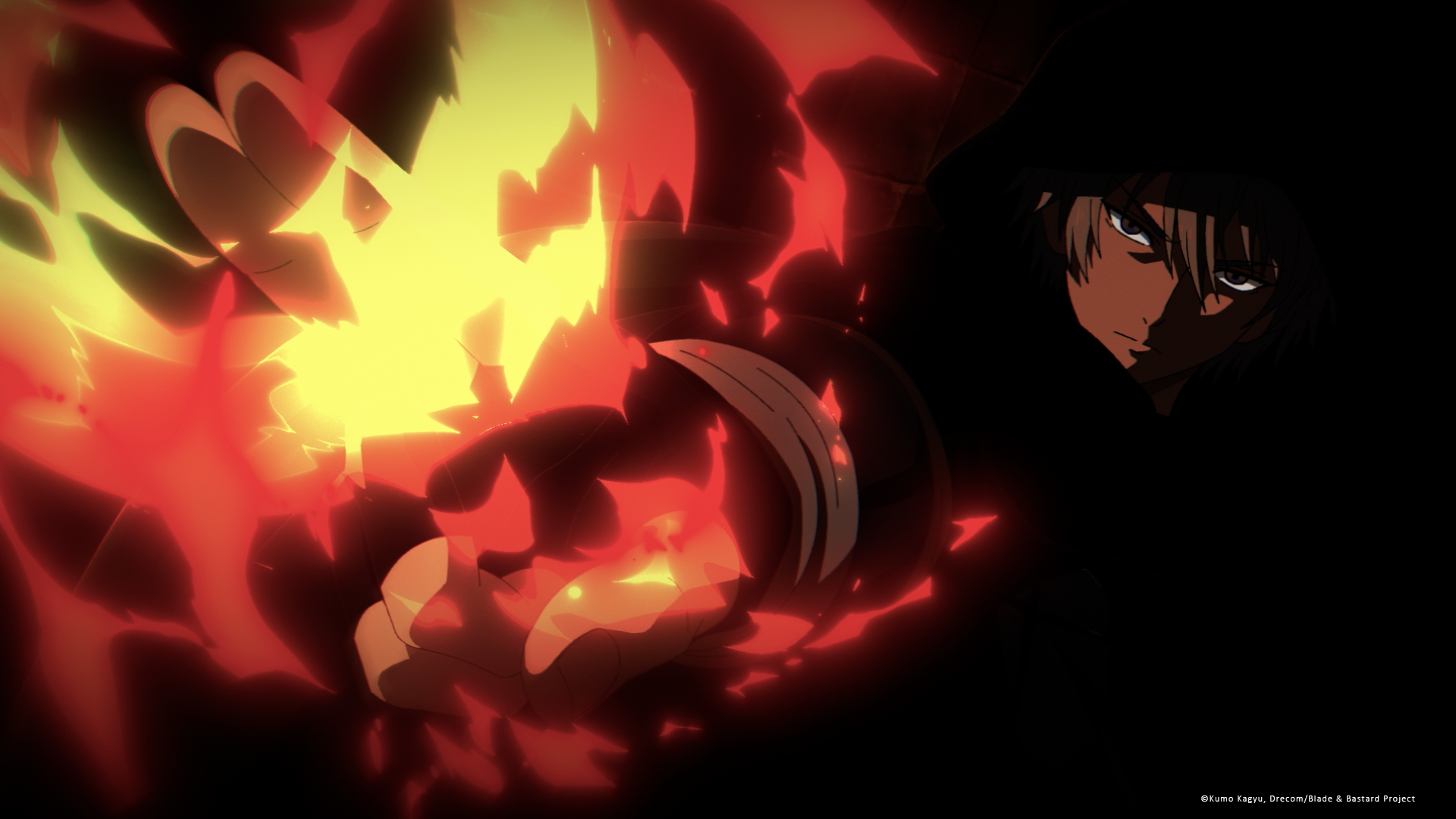
The manga adaptation depicted that sort of thing very carefully, which made it extremely helpful whenever I needed to explain what I meant.
…Now that I’m actually saying all this out loud, I’m starting to sound like an incredibly fussy and annoying original author, aren’t I? (laughs) Which is exactly what I’ve been trying not to become.
So my approach to supervision has basically been to explain up front, “This is generally how I picture things in the original novels,” and then leave the rest to the anime staff. If something comes back that is clearly heading in a completely different direction, I’ll say, “No, that’s not quite it.”
And if they want to adjust something specifically for animation, or they have questions or want to discuss something, I’m always happy to talk it through with them.
The anime staff have also been very thoughtful and straightforward with me. If there’s something they don’t understand, they tell me they don’t understand it. If there’s something they want to change, they tell me they want to change it rather than trying to gloss over it. Because of that, I feel very comfortable entrusting the adaptation to them.
BLADE & BASTARD often begins not with a heroic adventure, but with resurrection after death or the aftermath of tragedy. Did focusing on those aspects of dungeon life change the kinds of stories you wanted to tell?
Well, Wizardry was never really a heroic adventure story to begin with. It’s a game where the Level 1 adventurers created by the player gradually become heroes—or fail to become heroes because they die, turn to ash, or get lost forever along the way.
And the story that emerges is completely different for every player. One person might have gone straight from the Monster Allocation Center down to the ninth basement floor without much trouble. Someone else might have thought, “There has to be something hidden here,” and carefully searched every single floor starting from the first. One party might get wiped out along the way. Someone’s character might disappear. Or perhaps someone else simply wins without much trouble at all. The experience can be completely different depending on the player.
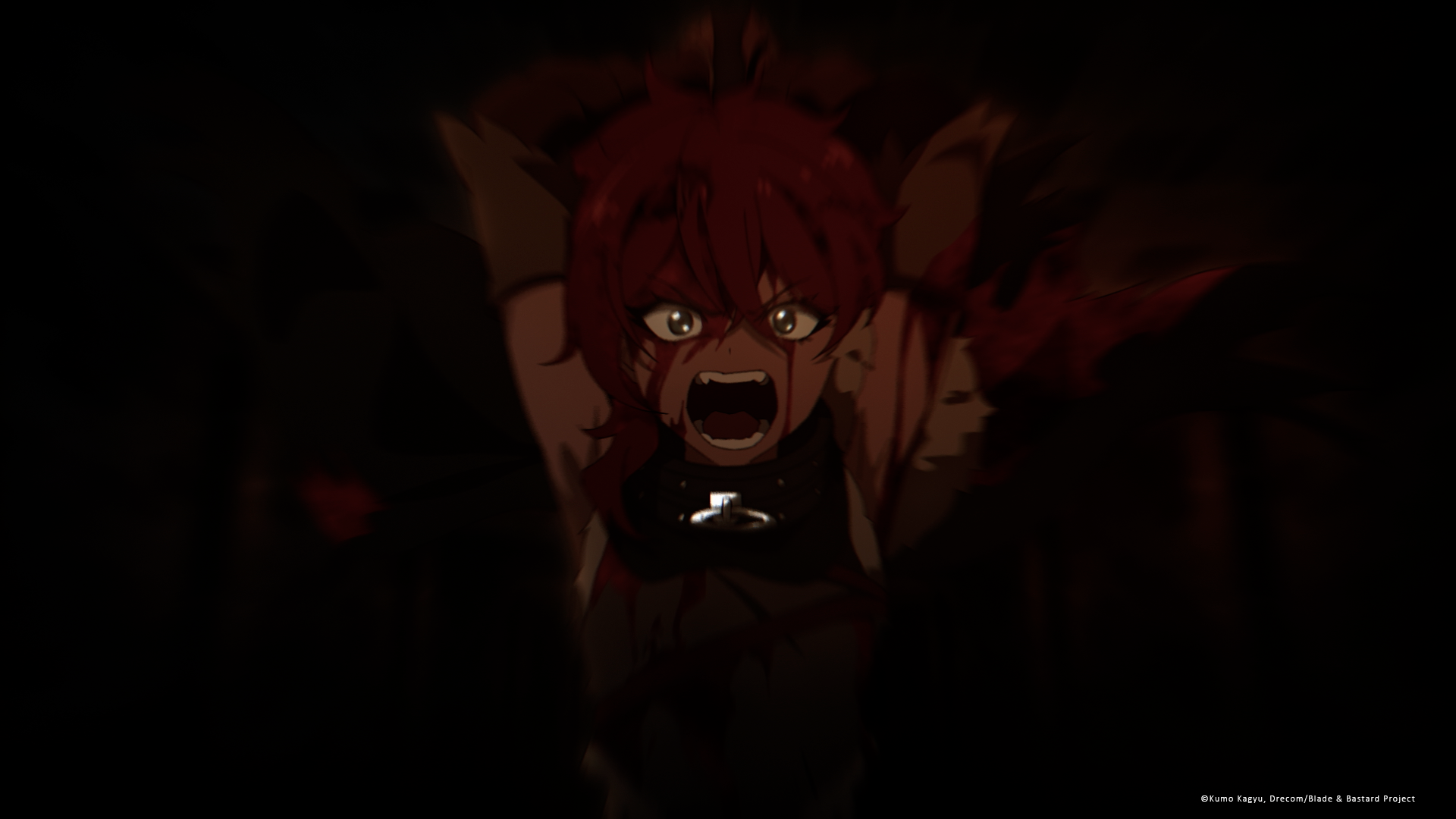
TRPGs are much the same way—although thankfully, systems where your characters die or are permanently lost quite so easily have become less common these days. So in that sense, it’s something I’ve been familiar with since Goblin Slayer.
Terrible things happen. But there are still people who keep moving forward. All kinds of people are living their lives, thinking all kinds of things, and the world keeps turning around them. You don’t know whether things will work out. But the act of trying—the act of taking on the challenge—is always something precious.
That’s something I’ve continued to value, so in that sense…I don’t think what I want to write has really changed. Probably. (laughs)
Was there a particular chapter that everyone agreed would be especially difficult to adapt?
I’m not sure there was one particular chapter that everyone agreed was especially difficult to animate. The thing that I think everyone, myself included, struggled with was simply the question of runtime. Volume 4, for example, is a collection of short stories. And the same issue comes up with the other volumes too: there are so many things you want to include, but when you only have thirty minutes per episode and a fixed number of episodes, there’s simply no way to do everything.
Everyone put a tremendous amount of thought into how the episodes should be structured, and I’m genuinely very grateful for that.
This is your first major series built inside someone else’s established universe rather than one you invented outright. What did working within Wizardry’s pre-existing rules and lore open up creatively that starting from a blank page didn’t?
Well, first of all, I thought, “I’d better make sure I don’t make the longtime fans angry…” (laughs)
Because if a world already exists, and if there are already so many different works within it, that means every one of those works has somebody out there who loves it. And if that’s the case, I don’t think I have the right to casually disregard any of them. That’s the mindset I’ve tried to write with.
At the same time, if someone encounters Wizardry for the first time through this series, I hope it makes them think, “Hey, Wizardry is pretty interesting.”
And as for the longtime fans, I’d be very happy if they could watch over me warmly while thinking something along the lines of, “Look at this youngster. He got influenced by all our stuff and went and wrote this.” (laughs)
If someone played decades of Wizardry but had never read one of your books, what do you hope they would recognise immediately when watching BLADE & BASTARD?
Probably the way people die all the time, get resurrected all the time, turn to ash all the time—and then occasionally disappear for good. That sort of thing.
I’d also be very happy if longtime fans notice all the little Wizardry-related elements, references, and jokes tucked away throughout the story and get a grin out of them.
That said, I grew up with a lot of the various Japanese Wizardry-related works—novels, comics, and so on—so there may be certain things that readers from other countries simply aren’t familiar with.
For example, do people outside Japan know the Game Boy Wizardry Gaiden series? I genuinely have no idea!
So there may also be places where my image of Wizardry is a little different from yours.
If that happens, I hope you’ll just laugh and say, “Look what this guy went and wrote,” and forgive me.
Are you playing any other video games right now? Can you please tell us about your favourite games as well?
You mean besides Wizardry, right? Recently, I bought a Game Boy-compatible handheld because I wanted to go back and do some location scouting—well, “research,” I suppose—for the Wizardry Gaiden games.
The problem is that I still haven’t worked up the courage to try replacing the button batteries in the cartridges. So before I tackle that, I’ve been replaying Ninja Gaiden Shadow for the first time in ages. Dealing with the ninja in Stage 4 who jumps and throws shuriken is hard!
I always end up being too stingy with the Fire Wheel Art…so right now I’m experimenting with whether I should jump over the first projectile and then run underneath him once he jumps. My Ryu Hayabusa still has a long way to go…
I swear I used to be able to beat this game! I also absolutely love the Game Boy version of Bionic Commando, so after Ninja Gaiden Shadow, I’m thinking I might replay that one too. The setting and story were reworked from the NES version, but it’s extremely easy to play and, more importantly, incredibly cool. There’s a stage where you use the grappling wire to swing your way beneath an airborne battleship, and when you get the movement just right, you start thinking: “WOOOOOO! I AM THE INVINCIBLE BIONIC COMMANDO!” It’s ridiculously fun.
Seriously, Bionic Commando is a fantastic game. Everyone, please play the Game Boy version. For Game Boy RPGs, there’s also Ayakashi no Shiro, which is a Japanese-style 3D dungeon RPG starring a ninja. I’d like to go back to that one as research too. And I want to play The Legend of Zelda: Link’s Awakening again. That was the first Zelda I played as a kid.
I’m also exactly the right generation for the original Pokémon games, so those too. Then there’s GeGeGe no Kitarō: Yōkai Sōzōshu Arawaru!, Dragon Quest Monsters… The Game Boy Color versions of Dragon Quest I & II and Dragon Quest III are classics too… Hmm. I really do need to learn how to replace those button batteries… As for favorite games, I absolutely love the Super Famicom game Assault Suits Valken.
There’s a Nintendo Switch version available now too, so please play it! It’s a really fun mecha action game. The protagonist is just one soldier. He isn’t in a position to single-handedly decide the course of the war—well, granted, he does end up fighting the decisive superweapon near the end.
But even so, the story says that there is meaning in trying to survive for someone else, and in doing what you can to bring a war to an end. I love it enough that I’ve even made fan works based on it, but hardly anyone around me has actually played it. So please allow me to use this opportunity to promote it. It’s good…! Really!
On PC, I like things like Hotline Miami and Katana ZERO. It’s not that I never play newer games—I’ve played things like Marvel’s Spider-Man and Legend of Mortal, for example!—but in the end, I suppose I just really love pixel-art action games.
I also play a lot of tabletop RPGs. Recently, I’ve been playing campaigns of Dungeons & Dragons, Shadowrun, Chaos Flare, Gehenna Anastasis, Record of Lodoss War RPG, Satasupe, Shinobigami, and Ninja Slayer TRPG, among others. A lot of people outside Japan may not be familiar with some of the Japanese systems, but I’m basically playing anything and everything: fantasy, cyberpunk, Asian punk, Arabian fantasy, crossover multiverses—Chaos Flare is actually an homage to TORG—and, of course… NINJAS! So yes, I’m pretty indiscriminate when it comes to genre.
And there’s one thing I absolutely can’t leave out: Steve Jackson’s Sorcery! Gamebooks. If I had never encountered those books, I probably never would have gotten into tabletop RPGs, and I’m fairly sure I never would have become a writer either. I’ve always thought of Sorcery! as my own The Neverending Story—my own red-bound book, in a way. Come to think of it, the spine of the very first Japanese edition of Sorcery! actually was red. And, of course, Wizardry. I suppose I should mention that too. (laughs)
Rayan Sayyed is the deputy editor for IGN India who writes and speaks on pop culture, spanning from games, anime, manga to films and everything in between. You can reach out to him at rayan_sayyed@ign.com, or find him on Instagram @rayansayyed and Twitter/X @rayanaver
Got any news tips, or want to discuss a possible story? Email us at ign_india@ign.com (to reach out with confidential tips, click here). For the latest on gaming, entertainment, pop culture, anime/manga, follow IGN India on Instagram, X, Facebook, and WhatsApp. For the latest videos, subscribe to us on YouTube.
Related reads:Jaadugar: A Witch in Mongolia Director Abel Gongora on Recording the Adhan in Tokyo, Researching Mongolia, and Bringing 13th-Century History to Anime (EXCLUSIVE)
