

Translated from the Japanese original
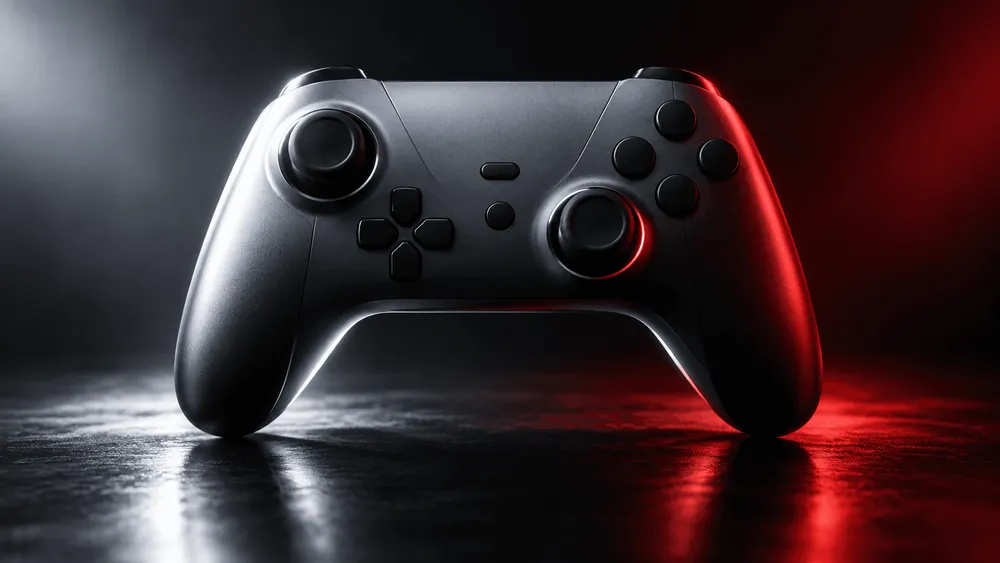
On September 13, <a href="https://comicvibe.com/sara-bareilles-reveals-she-had-a-miscarriage-in-2026/” title=”Sara Bareilles reveals she had a miscarriage in 2026″>2026, Bloomberg reported that a game controller Apple plans to release is likely to come from Beats. That’s as far as the publicly visible teaser goes—neither Apple nor Beats has announced the product. The official name, form factor, price, and release date remain unknown.
What’s new here is evidence of a different nature from the two unannounced controller candidates found in macOS code in early September. The code shows that Apple was testing software support for specific hardware devices. Bloomberg’s sourced report supports the view that plans to bring a product to market are underway. Taken together, these two pieces of evidence make it less likely that the code was merely experimental. At the same time, Apple has not confirmed that the code and the product it plans to release are the same thing.
What Bloomberg’s Report Changed: The “Product Stage”
The earlier discovery involved two identifiers—”T6502″ and “T1057″—that briefly appeared in a release candidate build of macOS 26.7. A comparison of public binaries revealed dedicated HID service plugins and Game Controller framework profiles for each. This isn’t a trace of the OS accidentally recognizing a generic controller; it indicates development had progressed to the point where the OS was handling individual pieces of hardware.
However, that code was removed in the next release candidate. The reason for its removal hasn’t been disclosed, so it’s impossible to determine whether the project was canceled, kept confidential, or shifted to a different development track. As of September 5, all that could be said was that “specific OS support was tested for two devices”—not that a decision to sell the product had been made.
Bloomberg’s report has now filled part of that gap. The company’s public teaser refers to a game controller that Apple “plans to release” and states it’s likely to come from Beats. In other words, a separate reporting channel now supports the existence of a product plan that the code alone couldn’t confirm. That said, the subscriber-only body of the article hasn’t been directly verified here. It would be a mistake to attribute details about the number of products or the development team—details absent from the public portion—to Bloomberg as confirmed information.
Code and the
The public code and Bloomberg’s report support different questions. The code shows OS implementation for two devices and a Beats identification pathway for T1057. Bloomberg’s report supports the existence of a plan to release a product and the likelihood that it will come from Beats. But neither confirms the final brand, form factor, number of models to be released, price, or timing.
Breaking down the publicly available material as of September 14, 2026, by what each
| Evidence | What it directly confirms | What it does not confirm |
|---|---|---|
| Comparison of the fixed commit in macOS 26.7 RC1 | Dedicated plugins, individual profiles, and haptics-related implementations existed for T6502 and T1057 | A decision to sell the product, a retail name, or a release date |
| Code analysis by discoverer pdfu | T1057 matches via three pathways—Apple USB, Apple Bluetooth, and Beats USB; T6502 matches via the Apple USB pathway only | Whether the vendor ID determines the final brand, or whether both devices will be released |
| Bloomberg’s public teaser | A sourced report that a controller Apple plans to release is likely to come from Beats | The official brand, form factor, price, release date, or whether it corresponds to either of the two devices found in the code |
| Apple’s developer documentation and sales pages | iPhone-compatible controllers include both clip-on and standalone types | Which form factor the unannounced product will take |
The key here is not to substitute evidence from one column for another. The code is strong evidence of implementation, but it doesn’t answer questions about market plans. Thecations that haven’t been made public. Because both point in the same direction, the likelihood of an actual plan has increased—but the boundary marking this as an unannounced product remains intact
T1057 Aligns Best With the Beats Theory, But It Can’t Be Confirmed
Of the two code names, T1057 aligns particularly well with Bloomberg’s Beats theory. According to analysis by discoverer pdfu, T1057 connects to the same profile not only through Apple’s USB and Bluetooth identifiers but also through Beats’ USB vendor ID “0x290b” and product ID “0x5000.” T6502, by contrast, was found only with an Apple USB pathway.
There are functional differences too. T1057’s profile includes motion-related symbols for handling an accelerometer and gyroscope, and its haptics are defined as a single actuator for the whole device. T6502 shows no motion input, but has haptic elements split between left and right. Both are reportedly classified as Made For iPhone extended gamepads (MFi extended gamepad).
This alignment is hard to dismiss as coincidence, but it’s not proof that T1057 will become the released product as-is. Vendor ID/product ID information exists so the OS can route a connected device to the appropriate profile—it doesn’t guarantee the name or appearance used at retail. Bloomberg’s public portion refers to a controller in the singular, while the code shows two devices. Whether only one of them will be commercialized, whether they represent different prototypes of the same product line, or whether two separate devices will be released cannot be determined.
“For iPhone” Doesn’t Necessarily Mean Clip-On
While the controller is described as being for iPhone, there’s no basis for interpreting that as a clip-on design that grips the iPhone from both sides, like Backbone’s products. Apple’s “Discovering game controllers” documentation explains that the Game Controller framework handles both controllers that clip onto an iPhone and standalone extended controllers.
Indeed, the Apple Store’s iPhone gaming accessories category lists clip-on Backbone products alongside standalone options like the DualSense and SteelSeries Nimbus. “For iPhone” indicates compatibility, not a specific form factor. The fact that T1057 has a Bluetooth pathway is consistent with a design usable as a standalone controller, but the presence of a USB pathway doesn’t rule out a clip-on design either.
Form factor significantly changes how a product would be used. A clip-on design would emphasize portability and a unified feel with the screen, while a standalone design would make it easier to use across iPhone, iPad, and Mac. Apple’s Games app already spans all three platforms, letting compatible controllers move between screens and launch games. Which of these the product prioritizes will be one of the first things to confirm once an official announcement is made.
The Organizational Groundwork for Beats Expanding Beyond Audio
The Beats brand name may not simply be a superficial choice to avoid the Apple logo. Beats officially positions itself as an Apple subsidiary. At the same time, the brand has functioned as a gateway for product development with its own distinct form factors, colors, price points, and target audience.
In exclusive coverage from Beats’ development facility published on July 31, 2026, TechRadar quoted Apple’s Vice President of Hardware, Matthew Costello, explaining that Beats can broadly explore new product categories and isn’t limited to audio. According to the same article, Beats leverages Apple’s underlying infrastructure—such as quality control and wireless technology—while maintaining its own distinct identity in form, style, and color. This isn’t a statement confirming a controller plan, but it does provide specific background showing that it wouldn’t be organizationally unusual for Beats to handle a non-audio peripheral.
For game controllers, factors like appearance, portability, and color options—alongside feel and responsiveness—often drive purchasing decisions. Beats, which can leverage Apple’s shared technology while emphasizing style and broad appeal to a wide range of users, could be well suited to that role. However, this material doesn’t support conclusions about Android compatibility or multiple price tiers.
The Last Missing Piece in Apple’s Gaming Ecosystem
On the software side, Apple has already been consolidating where users find games and how they interact with them. The Games app aggregates games and friend activity across iPhone, iPad, and Mac. The Touch Controller, introduced at WWDC26, is a system that passes on-screen controls to games as the same “GCController” object used by physical controllers. This lets developers avoid rebuilding game logic for each input
Within that environment, a first-party controller’s role would likely be less about introducing a new input standard and more about aligning connectivity, haptics, portability, and appearance with Apple’s gaming pathway. This is an editorial inference drawn from public material, not a development purpose Apple has stated. Because existing PlayStation, Xbox, and MFi-compatible devices are already widely usable, a new product would need a reason to exist beyond mere compatibility.
What’s become more certain this time boils down to two points: that Apple’s controller has been reported as a planned product following concrete OS implementation, and that T1057’s Beats identification pathway aligns with Bloomberg’s Beats theory through separate channels. The final determining factor will be an official announcement from Apple or Beats. Only once the official name, whether it’s one model or two, whether it’s clip-on or standalone, the haptics and motion specifications, supported OS, price, region, and release date are revealed will it be possible to connect the candidates found in the code to the product that ends up on store shelves.
