

Backed by tech giants Baidu and Tencent, China’s homegrown streaming platforms provide ready access to Chinese content
Young people have already overcome their reservations about Chinese content. Regardless of ideology or national image, its influence will continue to grow as long as it is entertaining.
Union Mall, a major shopping center in Bangkok’s Lat Phrao district, is widely considered one of the city’s most popular hangouts for fans of K-pop and Korean culture, with a nonstop stream of fan-organized events and advertisements celebrating Korean stars. But a visit last Sunday offered a glimpse of something else: the growing influence of Chinese entertainment challenging Korean content’s dominance.
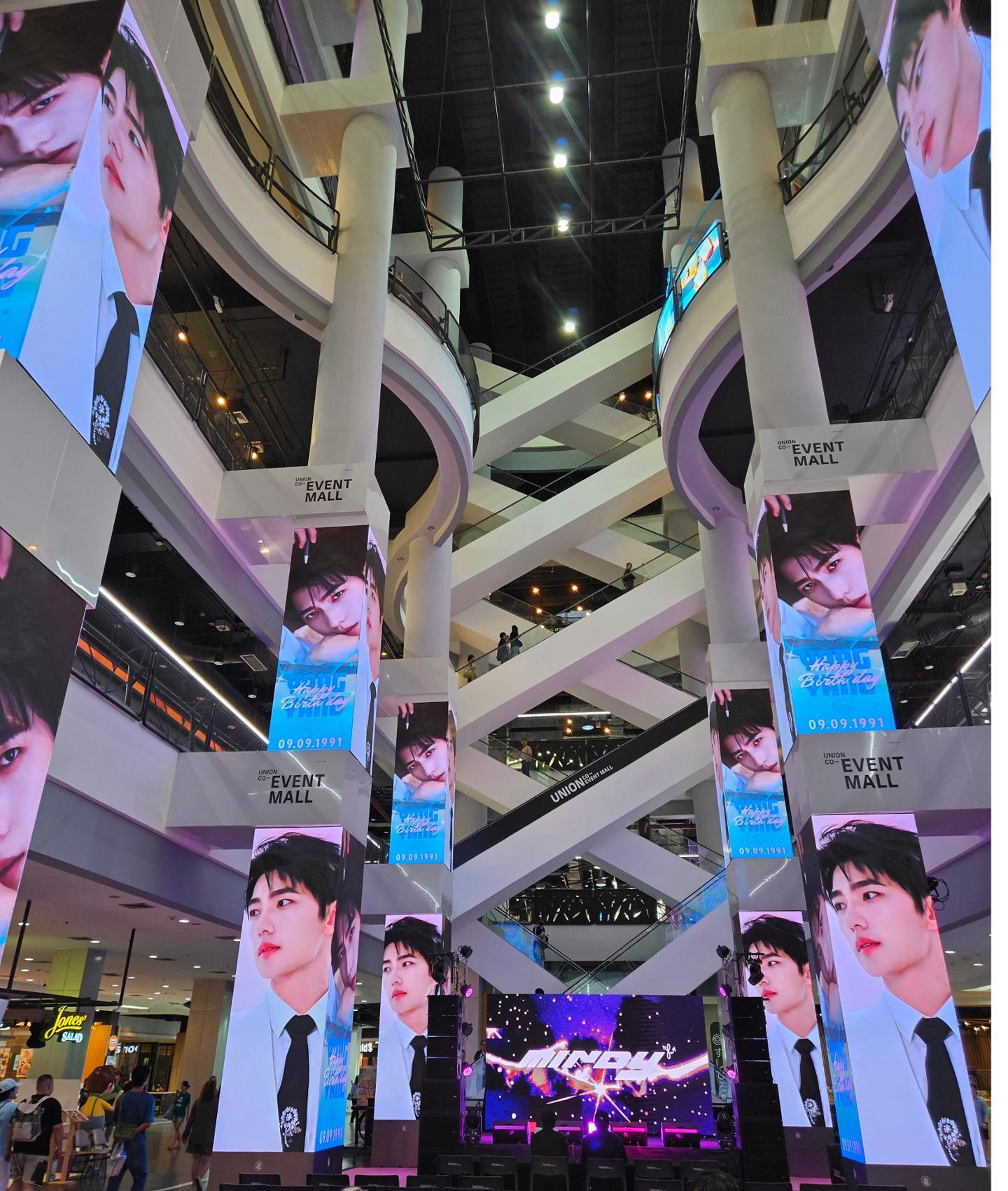
LED screens on six towering pillars stretching from the first to the sixth floor were covered with images of one man: Yang Yang, a top Chinese actor known as one of the country’s “Big Four.” To celebrate his birthday on Wednesday, his Thai fan community, known as “Yangmao,” or “wool,” had rented every digital advertising screen in the mall.
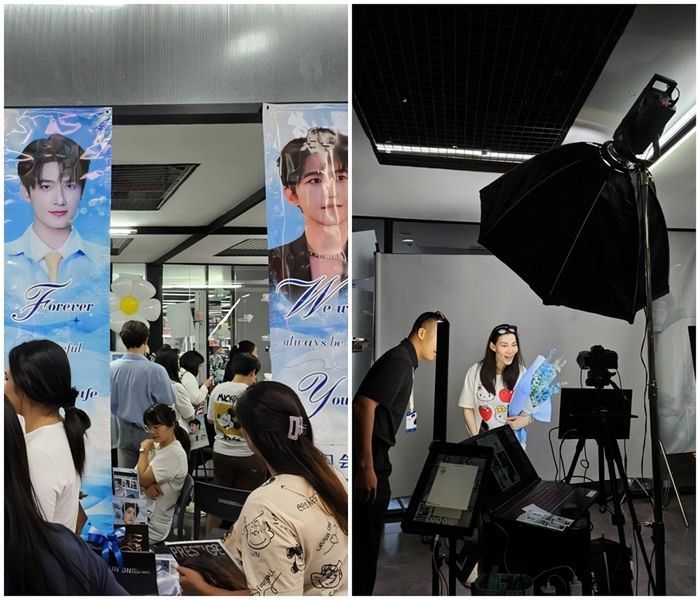
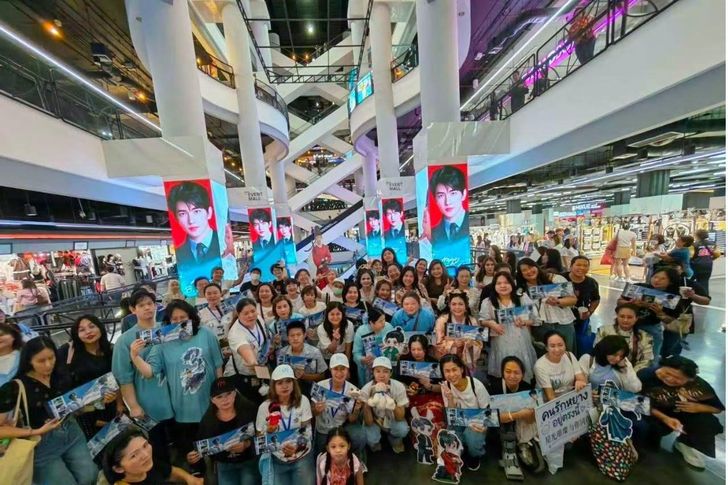
A birthday pop-up booth was set up in a prime spot next to the escalator. Fans wearing T-shirts bearing Yang Yang’s face took photos of themselves in front of a life-size cutout and wrote birthday cards in fluent Chinese. The event, which ran from 11 a.m. to 5 p.m. and attracted hundreds of people, was organized entirely by fans, who handled everything from renting the space to preparing merchandise and photos.
“Last year, we held the event at a cafe, but this year Union Mall reached out first, so we held it here,” said an administrator of Yang Yang’s Facebook fan club page, speaking at the mall. “I think the mall took an interest because our Thai fan club has around 200,000 followers.”
One fan said she had visited Shanghai, where Yang Yang was born, as well as Beijing and Shenzhen. “Seeing how remarkably developed these cities were changed my view of China. I felt there was a lot to learn from the country,” she said.
China closes in on Korea’s soft power lead
Once dismissed as tacky and outdated, Chinese content is making deep inroads into Southeast Asia. Chinese dramas, in particular, are quickly winning over local audiences with flashy visuals and straightforward storylines, delivered through Chinese streaming platforms. For Korea, this means facing a growing Chinese challenge in cultural soft power, an area it has long considered its domain, following similar competition in manufacturing and IT.
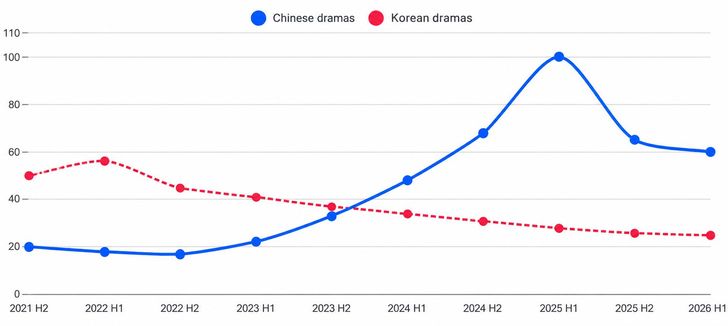
The numbers bear this out. In a report released last August, global media analytics firm OnDemandIQ found that Thai viewers favored domestic content most, at 85 percent, followed by Chinese content at 54 percent, ahead of Korean content at 51 percent. Google Trends data for Thailand also showed searches for Chinese dramas overtaking those for Korean dramas for the first time last year.
Signs that Chinese dramas have become deeply embedded in Thai people’s everyday lives are evident. In April, the Royal Thai Army posted a recruitment poster on social media parodying the Chinese drama “Zhu Yu.”
“Want to ride a horse as majestically as the lead character in ‘Zhu Yu’? Enlist and join the cavalry,” it read. The hit series reached the top five on Netflix’s global non-English-language TV chart during its run, helping Chinese dramas win fans beyond Asia, including in Europe, the United States and South America.
As their popularity grows, Chinese stars are flocking to Thailand. Actress Meng Ziyi’s first fan meeting at Bangkok’s Phenix Grand Ballroom on Aug. 9 sold out all 1,500 seats. On Sept. 5, rising Chinese actor and singer Hao Yiran held a birthday concert at Bangkok’s BITEC, in a hall with a capacity of 12,000. VIP tickets for the Weibo Bangkok cultural event on Aug. 8, attended by top stars including Ren Jialun, cost 32,000 baht ($967), yet still fetched a premium on the resale market, a sign of fan base large and willing to pay to see Chinese stars in person.

Viewers turn from complex K-dramas to Chinese romances
Chinese dramas have found an opening left by their Korean counterparts.
“Themes and plots have become more sophisticated for recent Korean dramas, such as the newer series like ‘Squid Game,’ or ‘Made In Korea,’ as they are produced to target a global audience. But Chinese dramas focus on romance itself” said Anchalee Chaiworaporn, Thai film and cultural critic and a specialist in Asian cinema, who has also served as a jury member at film festivals in Busan, Hong Kong and Bangkok.
“Many viewers of Chinese dramas are similar to the Korean wave fans who enjoyed straightforward romances such as ‘Autumn in My Heart’ and ‘Coffee Prince’ in the early 2000s.”
Also coming with dramas are their own platforms. While Korean content relies on Netflix for overseas distribution, Chinese entertainment reaches Southeast Asian audiences directly through homegrown services such as iQIYI and WeTV. Backed by Chinese tech giants Baidu and Tencent, respectively, the two platforms have deep financial re
A combined subscription to iQIYI, WeTV and Hong Kong-based Viu costs only around $30 a year, just over a third of Netflix’s $80 annual price.
WeTV has now recorded 55 million cumulative downloads in Thailand, equivalent to nearly 80 percent of the country’s roughly 70 million people. Meanwhile, iQIYI’s share of the Thai market is estimated at around 30 percent.
“Some Chinese platforms attract subscribers by offering points redeemable for cash just for leaving videos playing,” a local media industry official said.

Pop culture softens China’s ‘wolf warrior’ image
China’s growing soft power, driven by pop culture, contrasts with its past strategy of expanding its presence in Southeast Asia through the Belt and Road Initiative, which involved building roads, railways and ports. The threatening image shaped by aggressive “wolf warrior” diplomacy and disputes in the South China Sea is slowly giving way to that of a sophisticated, familiar cultural powerhouse.
The shift seems to be having an effect. A 38-year-old fan at Yang Yang’s birthday event said her interest in the actor led her to binge-watch Chinese dramas and eventually take up Chinese. She added that she is now exploring Chinese fashion, cosmetics and pop music. Hong Kong’s South China Morning Post reported interest in Chinese culture peaked last year as enthusiasm for TikTok, Labubu and Chinese dramas converged.
Can Chinese entertainment surpass the Korean wave? Experts say one immediate obstacle is the negative perception of China’s closed political system and its government’s persistent territorial and maritime disputes with neighboring countries.
“Negative perception over China still persists because of unruly behavior by overzealous Chinese fans and crimes committed by some Chinese nationals in Thailand,” Chaiworaporn said. “Korean and Japanese content carry the prestige of the ‘Korean wave’ and ‘cool Japan,’ but Chinese content still has a long way to go to reach that status.”
However, a Thai media industry official offered a different view.
“Young people have already overcome their reservations about Chinese content,” the official said. “Regardless of ideology or national image, its influence will continue to grow as long as it is entertaining.”
This article from the Hankook Ilbo, the sister publication of The Korea Times, is translated by a generative AI system and edited by The Korea Times.
- Q.
- Q.
- Q.
