


Today would’ve been my grandfather’s 94th birthday. He wasn’t a big games person, but apparently, he loved to play the dice game bunco with my grandmother. Rest easy, Popo!
Ok! So every so often, a week arranges itself. This one is about apparatus: a magnifying glass that opens the past instead of enlarging it, a controller built to be unpleasant to hold, a nightclub rebuilt inside a headset because the body that used to go out cannot do it anymore. I’m forcing a theme, yes, but hey let’s see what rhymes, right?
Twenty-four of you signed up in the last seven days, and two came in on the paid side. Welcome especially to Daniel and Mazen! Thanks for taking a chance on me.
This Week’s Feature
When you can no longer close the club, you build one
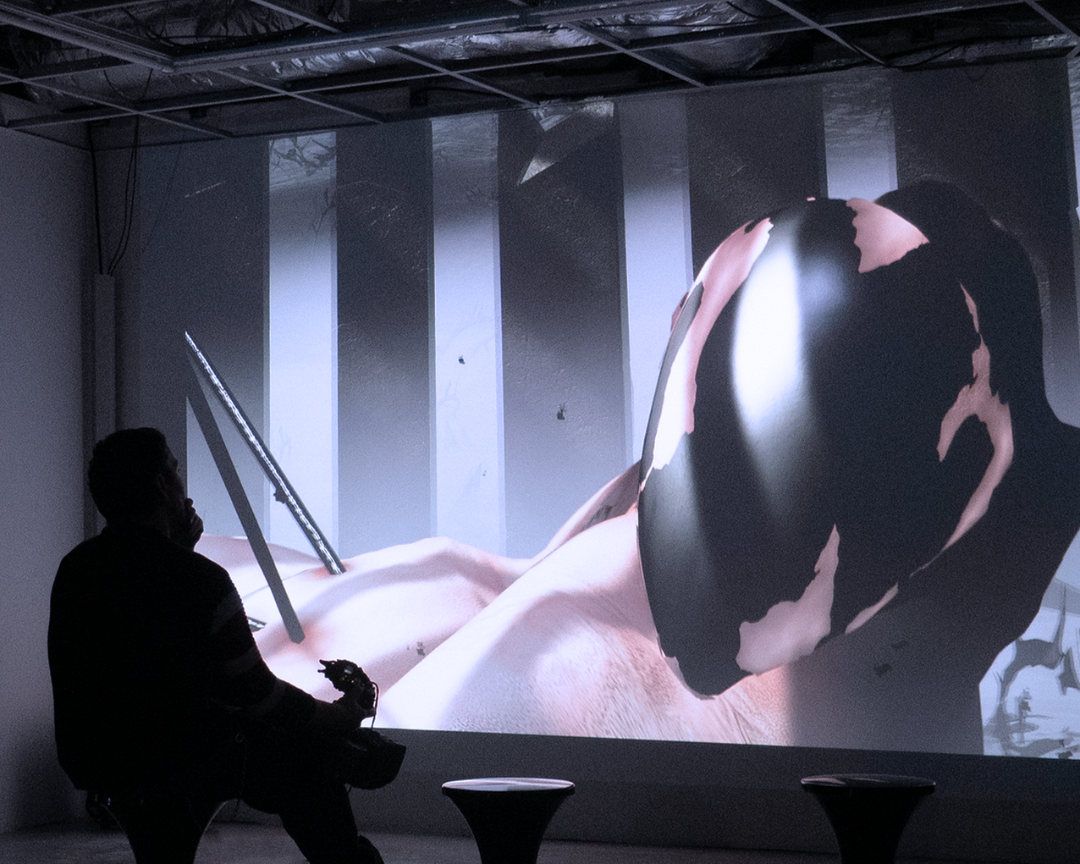
Sobriety and injury cost Ambrose Trataris the nightclub, so they rebuilt it inside VRChat, then staged it as a dance work where one body puppets another.
If you’ve had the misfortune of not quite having enough cable, you may have been tempted to cross one power strip over another. Any DIY arcade maker knows this well, and you hope the entire arrangement doesn’t become a fire hazard. But artist Ambrose Trataris pointed me to a different understanding while making their new work, which premiered at Gray Area in San Francisco on Aug. 29. “In the queer community, resources are daisy-chained,” they say. “It’s something we’re always creating, these life graphs for each other.” The other side of that is the “star connection”: a clean line straight to the source of power.
Daisy-Chain<><><>Star-Connection is a 45-minute hybrid dance work grounded in that asymmetry, reading like a laundry list of Trataris’ interests: contemporary choreography, drag, motion capture, live VR, seven musicians, holographic projection. The timeline was three years, deliberately, after an earlier performance left them racing to fix the software underneath. It’s an enduring challenge to have wide-ranging interests while trying not to make the work “overwrought.”
Trataris is part of a set of performers experimenting with living and breathing in online spaces while presenting themselves to others. Kevin Peter He has been constructing physical armatures for his live performances, coming off the back of his Lincoln Center Collider fellowship. Letta Shtohryn’s Чули? Чули / Chuly? Chuly starts from a cave thick with urban legend before moving to motion capture onstage. In all, there’s so much possibility to blend the impermanence of live physical performance with the flexible features of game worlds.
Read it on Killscreen
The best is yet to Come
Members read the Frist piece and this month’s playlist the day they went up, and the whole archive back to 2010 sits behind the same login. Librarian is $2 a month or $12 a year.
Spandrel
ChillCash pitched its sailing mystery as internet horror
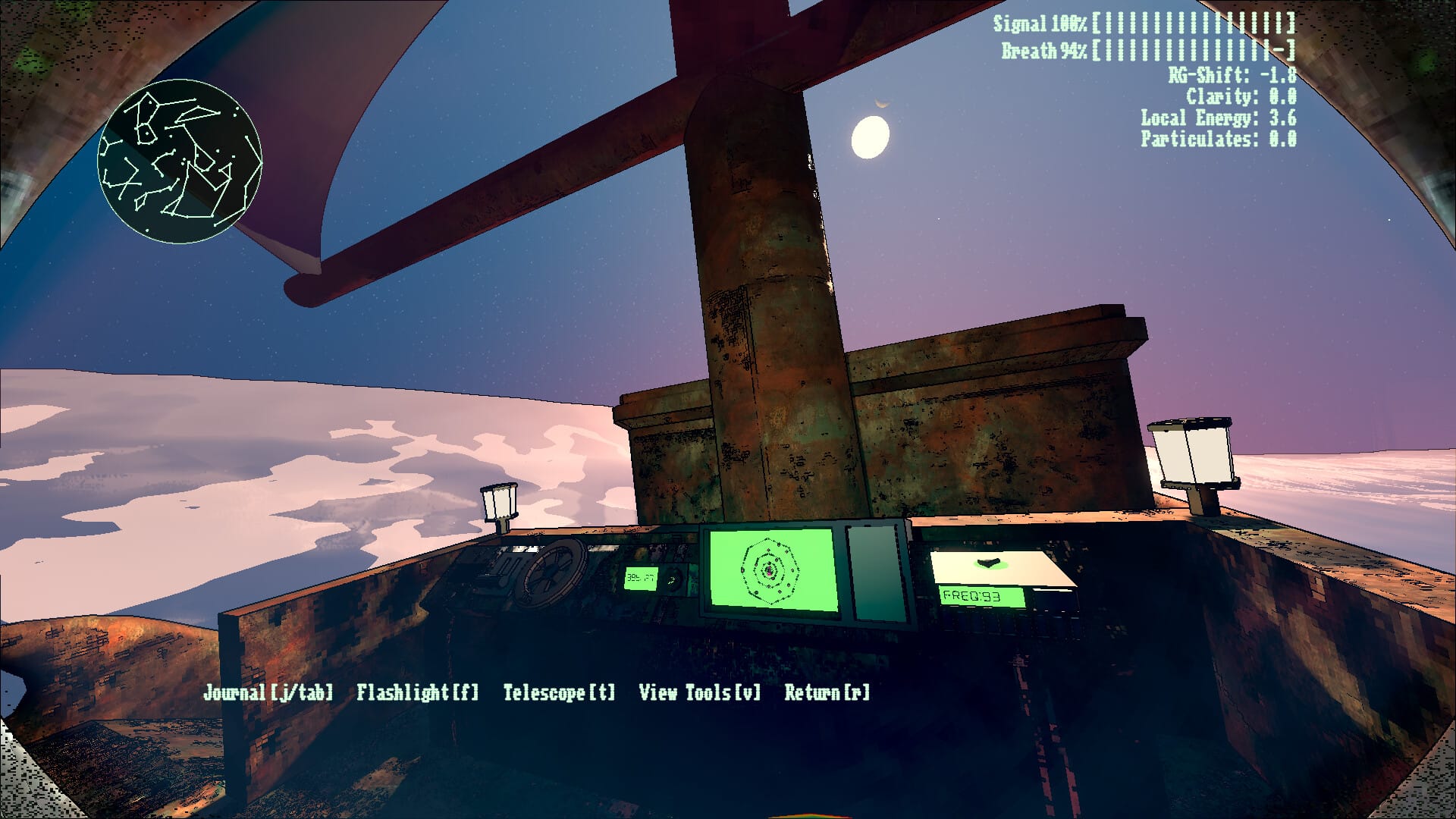
In May, ChillCash sold the game as a curse: something pale following your boat through the fog, 8,600 likes, a long wishlist wait attached. What actually shipped on July 13 is an open-world mystery about sailing a drowned planet, with no combat, no waypoints, and no skill trees, where you steer by constellations and move forward only once you understand something. The distance between how a game advertises itself and what it turns out to be is becoming a full-time beat.
DDoD brings its Fog-swallowed roguelite to Xbox day and date
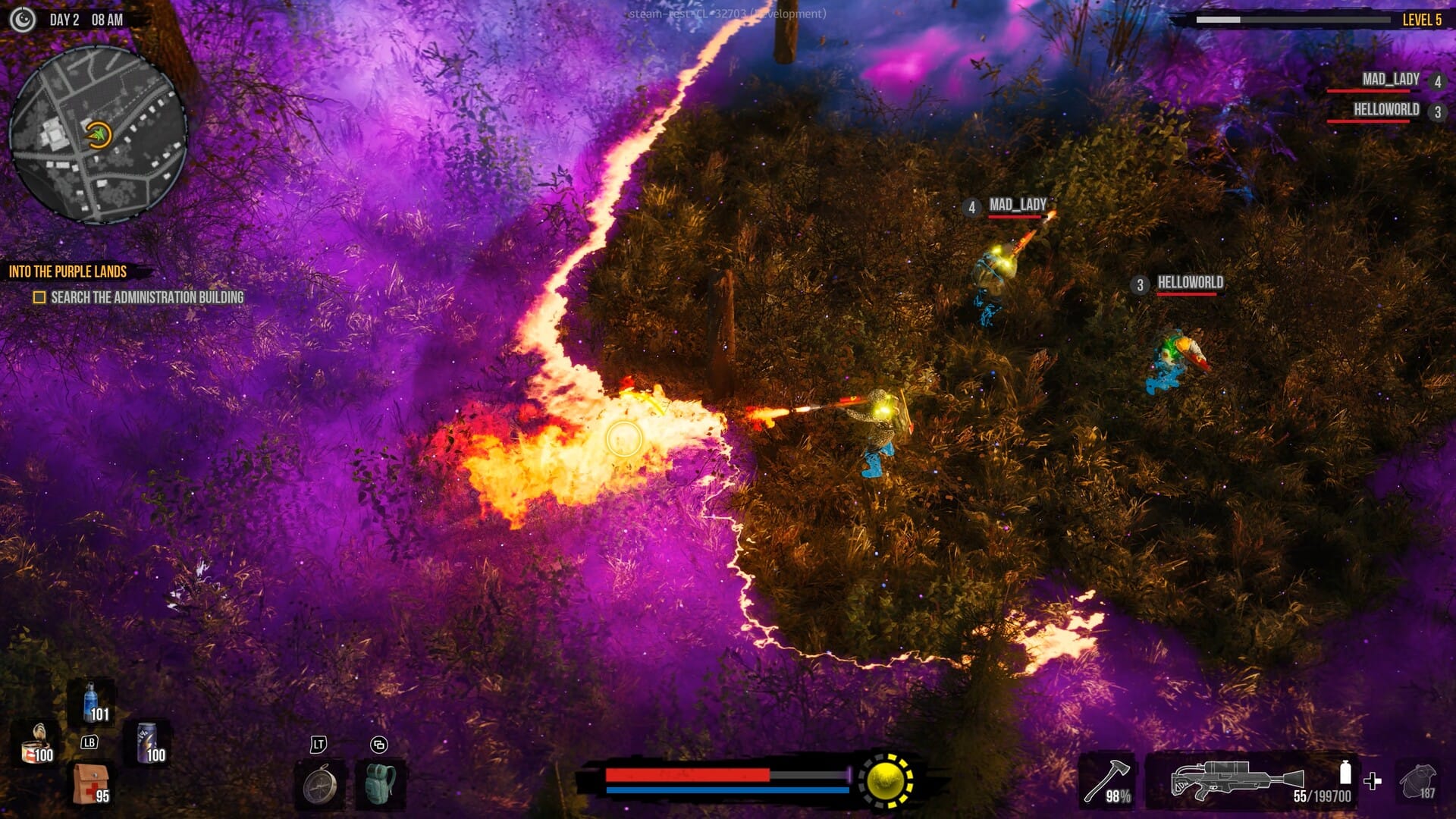
The Future Entertainment Company will put DDoD on Xbox Series X|S the same day it arrives on Steam and Epic, all inside the fourth quarter. It is a top-down roguelite shooter for one to four players, pitched with unusual honesty as Diablo pacing inside a S.T.A.L.K.E.R. atmosphere, and its sealed 60-square-kilometer zone is built on real-world topography. A demo with full four-player co-op is live now.
Desire paths teach a machine to want in Aggregate
I’ve always loved the term “desire paths” as a real-world version of crowd-sourced interface design. Surely, you’ve seen the dirt paths people wear into the ground the plan never provided. And in Aggregate, Vincent Moulinet from the French collective Distraction.fun, turns them into a curriculum. Players take turns steering an artificial intelligence across a wasteland modeled on rural cruising grounds, and each player’s scraped-out route becomes the map the next one inherits. The 3D-printed controller is deliberately thorny to hold, making the avatar’s punishment physical.
Radar is the short one — three news items, every Monday, Wednesday and Saturday. It started in August, after most of you had already signed up, so you were never added to it. Ticking one box fixes that.
Intersection
Seventeen artists rethink our place on earth at the Frist

Shimmer: Dreaming the Posthuman opens Sept. 25 at the Frist in Nashville and runs to Jan. 3, gathering 17 artists against the assumption of human superiority. What stands out is how much of the roster runs on game technology: Ian Cheng’s live simulations, Jakob Kudsk Steensen’s first-person swamps, Marina Zurkow’s 146-hour generative year. Read as a group show, it surveys real-time simulation as a museum medium.
One to Watch
A magnifying glass is the time machine in Inkblood
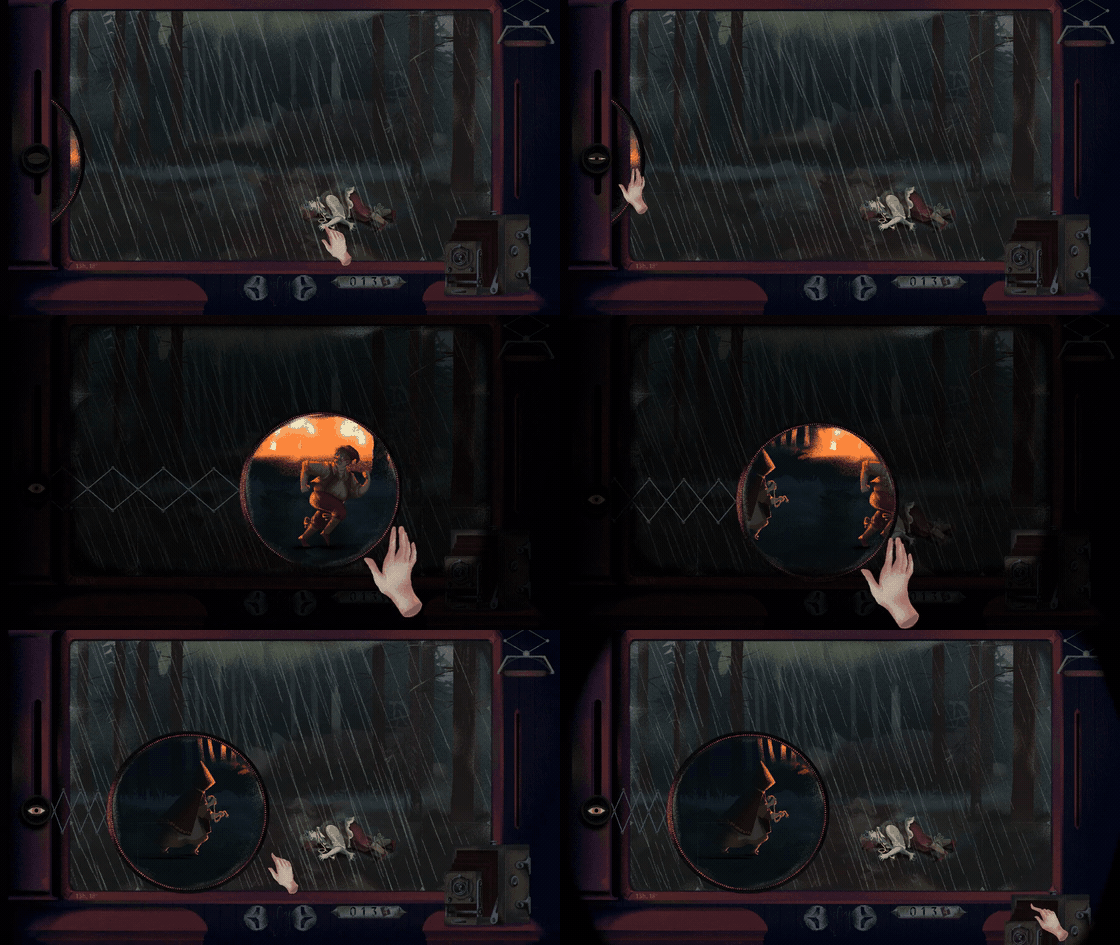
The Inquisitor carries a magnifying glass that does not enlarge the present; it opens the past: hold the lens to a villager’s window and last night replays inside the circle. You photograph clues, compile a case file, and call a distant overseer from a carriage the store page pointedly calls both your home and your prison. 10 cases, due from Critical Reflex on Steam in 2026.
Run-ons
- Refik Anadol’s AI museum takes your pulse as an input. Every visitor at the Grand LA wears a wristband and a scent collar, then leaves holding a paper token of the data they made.
- Whale songs drive the render engine in a Singapore show. Marshmallow Laser Feast let the animals’ own recordings deform the picture in real time.
- Gradually, Then Suddenly: What to Play, September 4. This month’s playlist goes looking for the point where an incremental game stops being a joke.
The Killscreen Podcast debuted Episode 35, One Pigeon Instead of Every Clock, in which Danny Snelson and I get from an arcade cabinet that writes a stranger’s life to Christian Marclay’s 24-hour clock to a pigeon romance rebuilt after its map switched off. We record the next one on Sept. 17. Looking forward!

1 Comment
Pingback: Build Video Game Nostalgia with LEGO's PlayStation Near 1:1 Replica - Comic Vibe