

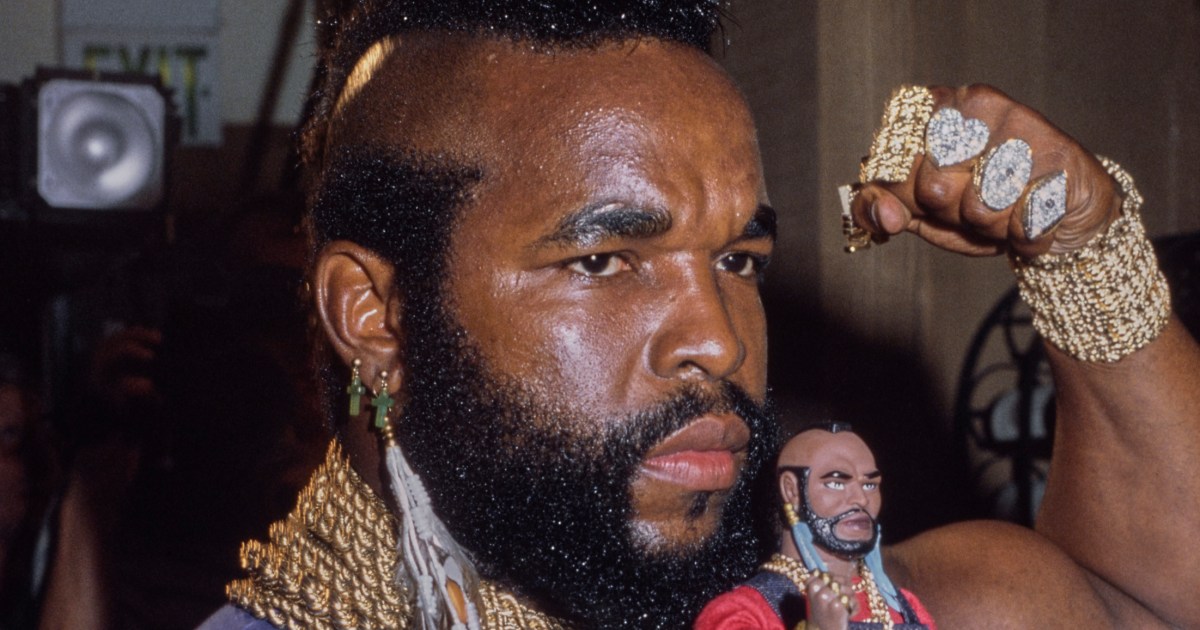
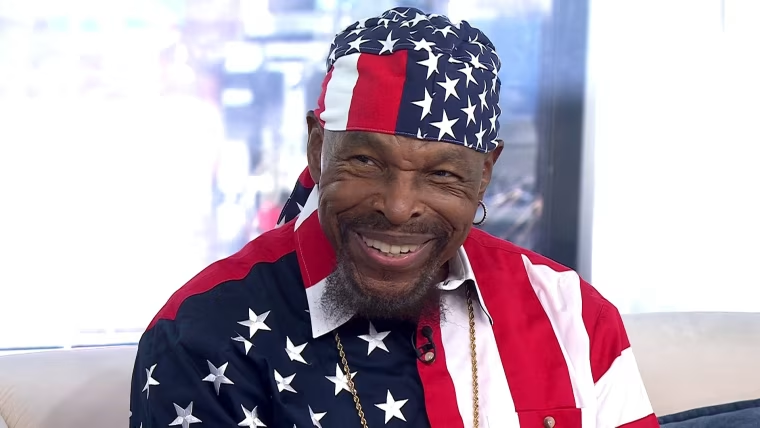
Mr. T Talks New Doc and Reflects on His Career: ‘Like Yesterday’
06:38
Let’s conduct an experiment: Close your eyes and think of the 1980s. In the diorama of your mind, maybe you’re seeing Jordache jeans, Ferris Bueller or Pac-Man. They’re all fine and dandy, but, come on, how could you not think of Mr. T?
Mr. T, born Laurence Tureaud, is the quintessential American success story of the decade, a star who is the subject of the Netflix documentary, “Untold Mr. T: I Pity the Fool,” premiering Sept. 8, which chronicles his improbable rise to fame, while taking viewers back to the peak of his popularity.
“This movie is a nostalgia bomb,” director Scott Weintrob tells TODAY.com.
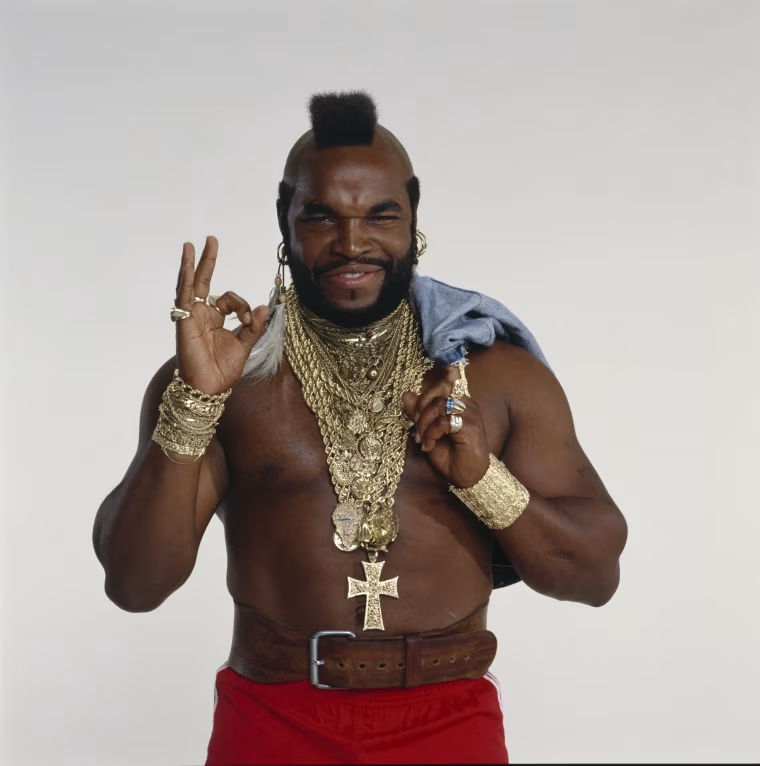
It is, and it’s so much more, peeling back the layers of how Mr. T actually became Mr. T. One of 12 children, he grew up in a Chicago ghetto. Adorned with a display window’s supply of necklaces around his neck, along with earrings, sunglasses and a shocking mohawk, he burst on the scene opposite Sylvester Stallone as the villainous Clubber Lang in 1982’s “Rocky III.”
The documentary traces his evolution and looks back at a defining moment of his youth when his mother was robbed and he sought retribution.
“Mr. T had a situation that he faced after his mother was attacked that turned him into what we know as Mr. T, their superhero,” Weintrob says.
The documentary also dives into the etymology of his self-given moniker and how fame found him. After the incident with his mother, he became a bodyguard and was eventually cast in “Rocky III,” before landing the part of B.A. Baracus in “The A-Team,” an NBC action series that became a big hit.
Mr. T was a superstar. A cartoon series followed. Stickers. Breakfast cereal. Action figures. Endorsement deals out the yin yang. He got in on the movement to not do drugs. And, of course, there’s the catch phrase. “I pity the fool” was as ubiquitous as his muscles.
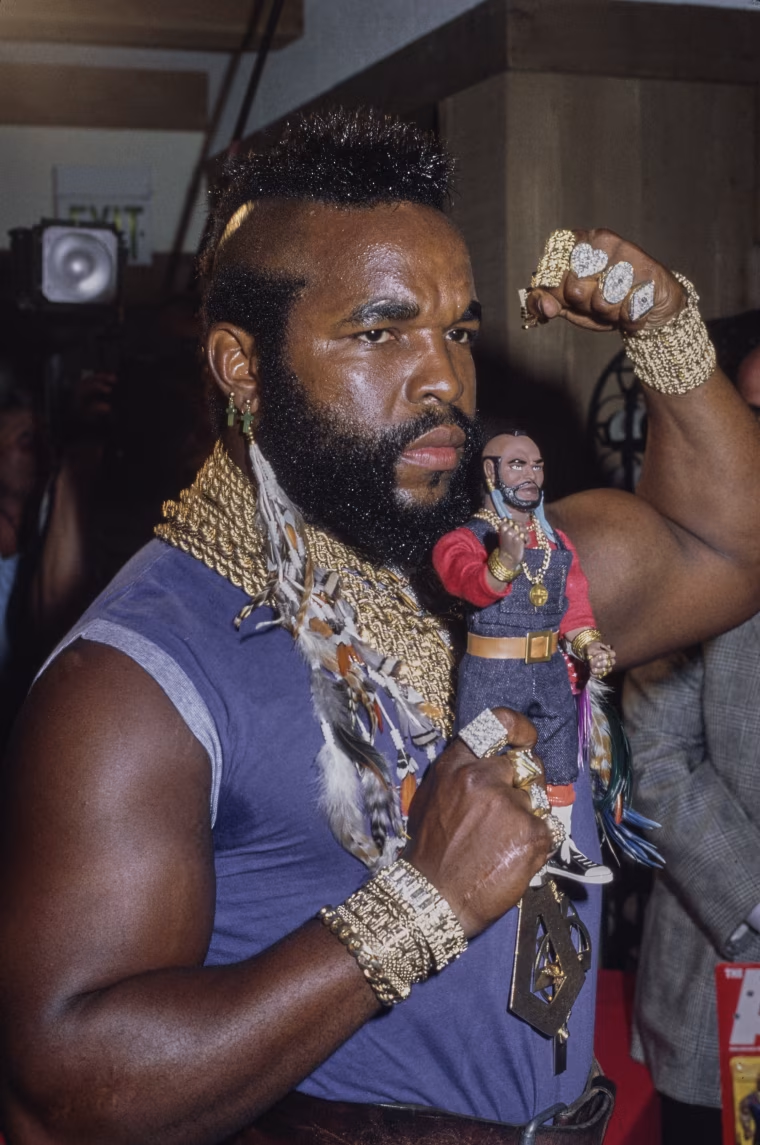
“Mr. T was so famous. He had fame that people today just don’t even understand because everybody watched the show,” Weintrob says of “The A-Team.”
It’s easy to dismiss Mr. T as a character from the decade of decadence, but that’s not fair. As the documentary explores, he’s always been interested in raising up the downtrodden. He just happened to blaze a trail for others in the process.
“He did set the standard for so many artists to dress how they wanted to dress, dress loud, be noticed,” Weintrob says.
“Mr. T told me that Muhammad Ali always told him, ‘Stand out. You need to stand out if you want to be noticed.’ And I feel like we live in a generation now of young kids trying to stand out and be noticed … This is a different time, and it was all about being yourself. And he was one of the first.”
“The A-Team” offered Mr. T a chance to change the narrative after his menacing turn in “Rocky III.” He was still enormous and tough, but also human, as evidenced by the recurring bit on the show that addressed his character’s fear of flying. After “The A-Team” came out, he crossed the bridge from terrifying to teddy bear, one of the 1980s most memorable personalities.
“He was the right person at the right time,” Weintrob says. “Remember, when TV was so focused on just a few shows that everybody watched them, when Mr. T walked onto the screen, everybody was like, ‘Who is that?’ We’d never seen anyone quite like him.
“There’s a bravery to that. There’s a bravery to putting yourself out there in a way that people may criticize, and he didn’t care. He was always going to be the person that he believed in.”
There’s a bravery to putting yourself out there in a way that people may criticize, and he didn’t care. He was always going to be the person that he believed in.
Today, you can watch what you want when you want, on any number of platforms, a far cry from how the world worked when “The A-Team” was on. The options were limited, which worked out for Mr. T.
“You were given one or two or three or four clear streams of entertainment, and you watched them when they were on, and that was that. And Mr. T was the champion,” Weintrob says. “There was no one else quite like him at the time, and there’s still no one else quite like him today.”
In an era when audiences were presented with characters — think Alf or Pee-Wee Herman
“He was Mr. T onscreen and Mr. T offscreen. He was the same character, and people were just so shocked by it,” Weintrob says.
“Mr. T is an incredible human. There’s only one Mr. T. There’ll never ever be another like him,” he adds.
Singular in nature, Mr. T still elicits a reaction among people, one that Weintrob wants to bring out in “Untold.”
“I hope viewers watch this and come away with it and feel good,” he says. “I hope they feel happy. There’s an emotion that comes with watching the film, and if you don’t feel anything at the end, well, it probably wasn’t the right film for you.”

It’s been more than 40 years since “Rocky III” and the premiere of “The A-Team.” Mr. T remains as beloved today as he ever was. Sure, there’s some nostalgia, but he remains dedicated to uplifting others.
“Going out to dinner with Mr. T is a very lengthy experience because it takes him 25 minutes to get from the door to the table because he talks to everybody. Everybody comes up to him. He loves everybody, and everyone loves him,” Weintrob says.
Mr. T, in an interview with The Guardian published Sept. 3,disavowed the documentary, saying it focused too much on his stereotypical image. “If you don’t know me, you’re gonna think I’m some monster,” the documentary quoted him as saying.
Weintrob, in an interview withTV Insider published Sept. 8, responded to the criticism, saying he had a different takeaway from his film’s subject. He said the last time he saw Mr. T was at a screening: “He loved it. He cried, he hugged us.”
“These words of he doesn’t like it. I don’t even know where they even came from. They sound like untruths,” he said.
“Is it heartbreaking that a journalist says that Mr. T doesn’t like it? Not in the slightest. What is exciting is we’ve made a film that’s brilliant, really exciting about someone that people can be inspired by,” he continued.
