

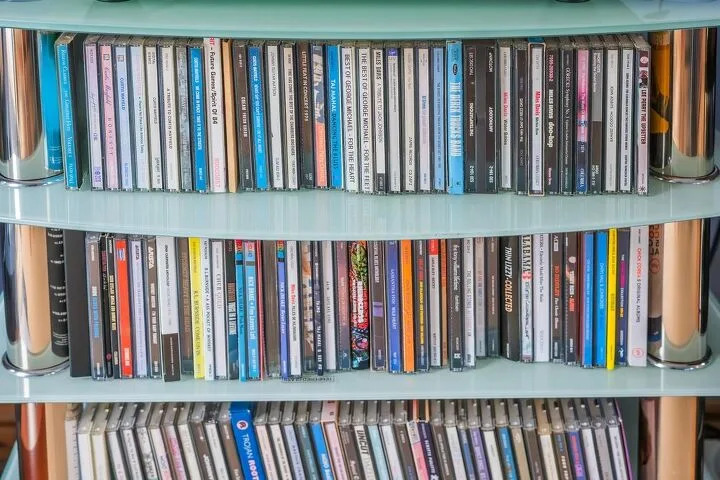
- CD sales in the US have increased by 16 percent year-over-year, driven by factors such as collection building, price accessibility, and major album releases like BTS’ ARIRANG, indicating a shift in how younger buyers view ownership and artist support.
- Despite K-pop playing a major role in the CD sales increase, US CD sales still rose by 6.7 percent without K-pop included, showing that the current CD trend is broader than one release schedule or fan community, with physical music sales across formats rising by 7.8 percent year-over-year in the first half of 2026.
- Approximately half of Gen Z and Millennial CD buyers do not own a CD player, highlighting that for many younger buyers, the act of buying physical music is as much about aesthetic ownership and direct financial support for the artist as it is about listening to the music, with CDs serving as an affordable collectible in the physical music culture.
CD sales are moving upward again, on Luminate’s new first-half 2026 data showing 16.3 million CDs sold in the US, a 16 percent year-over-year increase. That puts the format back into growth territory at a time when physical music continues to carry cultural value well beyond simple playback.
Luminate says the increase was driven by “collection building, price accessibility, massive albums such as BTS’ ARIRANG and a strong K-pop release schedule.” That mix matters because it places CDs in a different position than they occupied during the format’s mainstream peak. The disc is no longer just a default way to hear an album. It now functions as a compact, comparatively accessible object for fans who want a physical connection to an artist.
K-pop is a major factor, but not the whole story
K-pop played a major role in the first-half 2026 jump, but the CD rebound does not disappear when that category is removed. Luminate’s data shows that US CD sales still increased 6.7 percent without K-pop included.
That figure is the clearest sign that the current CD trend is broader than one release schedule or one fan community. K-pop remains a powerful engine for physical music sales, but the format is also benefiting from a larger shift in how younger buyers view ownership, fandom, and artist support. Luminate’s language is direct: “the CD has been recontextualized from a functional audio format into an affordable collectible.” That recontextualization explains why the category can grow even as streaming remains the default listening environment for most music fans.
Many buyers apparently are not using CDs for playback
The most revealing detail in the Luminate report is not the sales total, but the hardware gap. Approximately half of Gen Z and Millennial buyers picking up CDs do not own a CD player
That does not weaken the case for CDs. It clarifies it. For many younger buyers, the disc, packaging, artwork, and the purchase itself appear to matter as much as the audio utility. Luminate says this behavior shows that “for younger generations, the act of buying physical music is as much about aesthetic ownership and direct financial support for the artist as it is listening to the music on the product itself.” For home-entertainment shoppers, that distinction is important. CD sales rising does not automatically signal a mass return to disc-based listening in living rooms, AV racks, or dedicated stereo setups. It does show that physical media still has strong appeal when it carries collectible value, visible ownership, and a clear link between fan spending and artist support.
Physical albums are rising across formats
CDs are not the only physical format gaining ground. Overall physical album sales, including vinyl, CDs, and cassettes, increased 7.8 percent year-over-year in the first half of 2026.
Vinyl remained ahead of CDs, with 21.8 million units sold Cassette sales reached around 205,000 units. Vinyl’s lead continues a trend of the format outselling CDs that has been going for a few years now
The broader takeaway is direct: physical music is not returning as a single-format revival. It is fragmenting into different kinds of ownership. Vinyl continues to dominate the premium analog collector lane, CDs are gaining traction as affordable artist-support merchandise, and cassettes remain a much smaller but still active physical category.
The CD revival is about fandom as much as audio
The answer to why people are buying so many CDs is not complicated. Luminate’s report points to affordability, collecting, major album releases, and K-pop momentum. The more interesting conclusion is that CDs have become a low-friction physical format for fans who want something tangible without necessarily building a playback system around it. That makes the current CD increase less a nostalgia cycle and more a market correction around value. Streaming handles access. Physical media handles ownership. CDs now sit in the middle as an affordable collectible that lets fans participate in physical music culture without the higher unit volume commanded by vinyl.
