

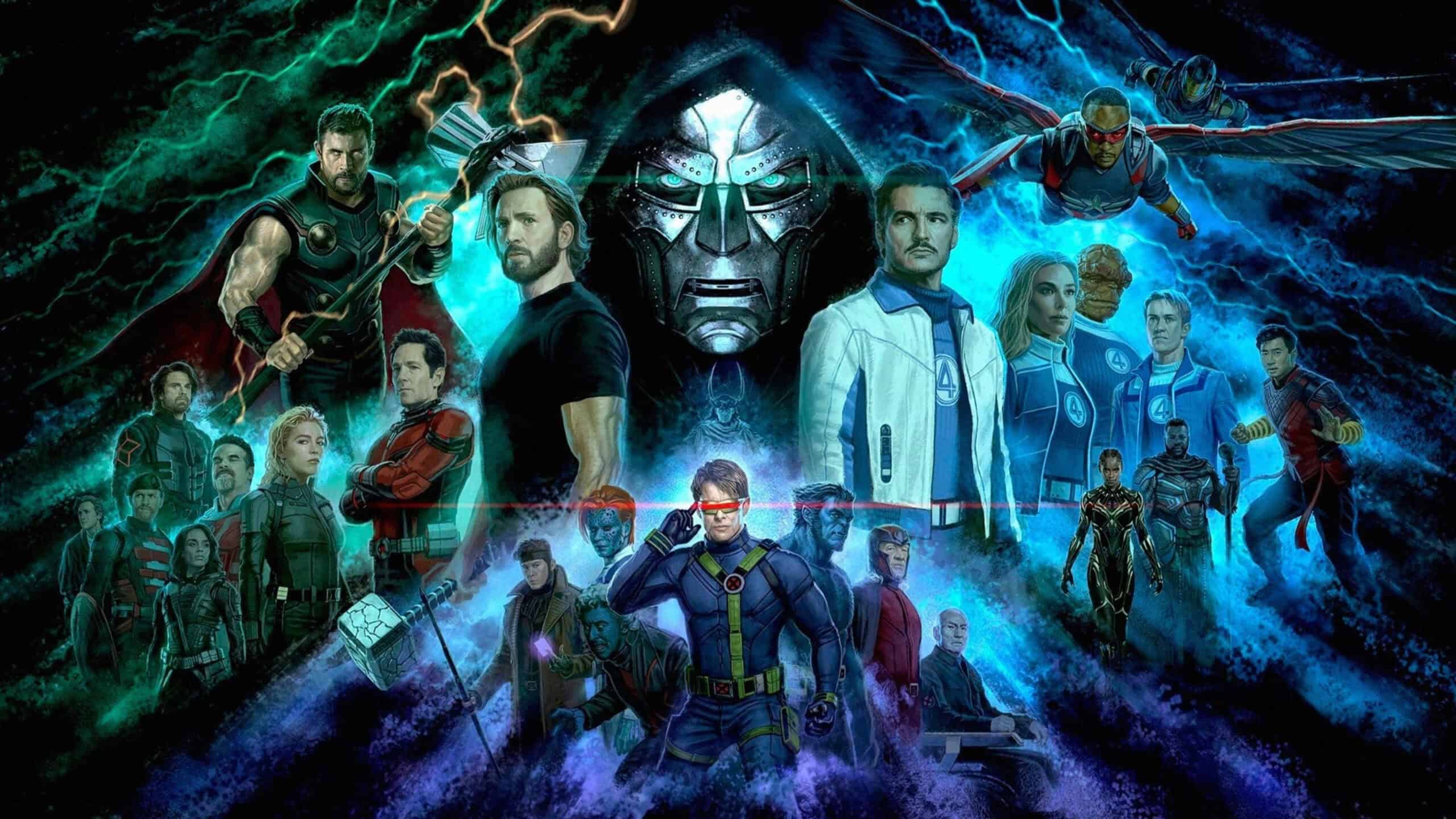
The Russo brothers directing duo most famously known for their epic 4 movie run with the Marvel Cinematic Universe, where they made Captain America: The Winter Soldier, Civil War, Avengers: Infinity War and Endgame now pave their return to the franchise with their latest instalment soon to release, Avengers Doomsday. They join me with Fortnite creator Donald Mustard to discuss their Marvel foray, Fortnite collaboration and eventual partnership formed through their independent led studio Agbo that has made films like Everything, Everywhere All At Once, The Gray Man, Extraction and the upcoming John Rambo.
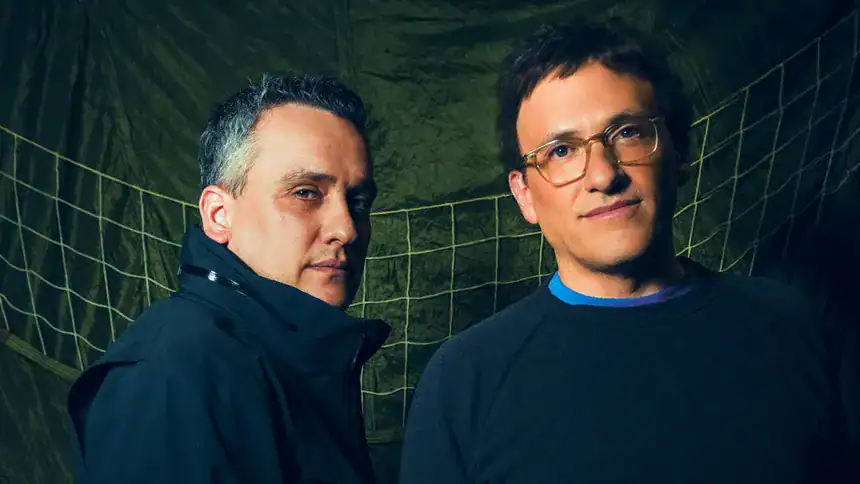
Russo Brothers (courtesy of Agbo Studios)
Soundsphere] It’s an interesting time right now in the movie industry. There’s a lot happening in the box office. Agbo was created to change the way in which storytelling was perceived and conceived in Hollywood. Where do you think Agbo is now and what do you think of the landscape right now in the film business?
Anthony Russo]The reason Joe and I created Agbo, we started as independent filmmakers like Do It Yourself. We grew up in Cleveland, Ohio. This is pre-digital. We did not have any filmmaking infrastructure around us whatsoever. So when we started it was the 90s, and as we know, in that independent cinema movement, we started to explore filmmaking ourselves. At that time, we had to do it, it was a very do-it-yourself process. We had to learn filmmaking on our own in a vacuum, trying to find equipment and trying to figure out people to make it with. So we had a process from the get-go as we learned how to become filmmakers. We were almost like our own studio back then. We had no money. You’re your own head. We were behaving like that.
Joe Russo]Moguls in our own mind.
Anthony]With the infrastructure, we could scrabble together. Agbo is just a point on that evolution. Our partnership with Donald is a point on that evolution, which is trying to develop a place where we can do work with cutting edge technology, with all of our favorite creative collaborators in house, where we are protected and energised and focused. We’re allowed to sort of incubate creative visions and that’s what Agbo has been doing, and that’s what we’re going to continue to do
Soundsphere] What would you say is the taste right now? How do you know if something’s an Agbo movie?
Joe]It’s hard. We like telling stories and we can only get out of bed every day to tell stories that excite us. I think that taste is diversifying because we all can communicate over little boxes we hold in our hands. Diversification is expanding into micro-nations and you can find your group that you want to hang out with pretty quickly. If you try to chase all those groups, I think you’re going to have a poor experience as a storyteller. But if you follow your own ethos, which I think you can see. I’m fascinated by Obsession because it’s a brilliant film. Star-making performance, harrowing, really clever, viciously funny, right? In a very dark way. Made for less than a million dollars and will be the highest return ever for a movie. That’s an explosively disruptive moment. Where do you all think that the state of the film business is right now? It’s in a very complicated place but I think that’s a good thing because Gen Z are aging into becoming not only the dominant audience, but the dominant storytellers, and you’ve grown up differently. You’ve grown up differently than any prior generation in history by leaps and bounds. You’re way more technologically advanced, you’ve consumed way more media, you’ve consumed way more linear content. Gen Z have a PhD in storytelling, whether you went to film school or not, because you have watched thousands of hours of stories since you were born. It’s almost become ingrained in your existence. Walking down the street, you’re watching one. Going to the bathroom, you’re watching one. Driving in a car, you’re watching one. In between classes, you’re watching one. So it’s sort of become critical. That could be a micro story on a TikTok or a Reels, or it can be you getting five minutes of whatever TV show you’re watching. But to me, what’s happening right now is this collective myth. Backroom’s a really interesting conversation. It’s a collective myth that was built by the internet, collectively on the internet, that then had a mythology built out on the internet, that then Parsons grabbed and turned into a story and everybody said, I want to go see that. Everyone who participated in the community of that story wanted to go see that story. That is a very different way of telling stories than where Hollywood anoints the story that they deem everyone should watch.
Donald Mustard]I think that’s what’s so cool because most of us now grew up in a world where we had film, we had video games, and now we’re walking around with these insanely powerful devices in our pockets that can do all this stuff. But we all have these amazing filmmaking tools in our pocket. You can kind of do a lot of this stuff just with what you’re already walking around with. I think that just enables new storytellers to tell new stories in completely different ways.
Joe]I think this analogy of the chief comes out and says, here’s the story you’re gonna hear. Or the village says, no hold on, we’ve got a story we want to tell. It’s a completely different approach. It’s fascinating and I think it’s going to lead to a shake-up in a really good way and a lot of really interesting stories being told.
Soundsphere] How did you start working with Joe and Anthony?
Donald]So Infinity War was probably about a month away from coming out. I was a huge fan. I’m a huge Marvel fan, huge film fan, and I was already a massive fan of Joe and Anthony. Weirdly, I don’t think I talk about this part, but the morning before we talked for the first time, I was at the dentist, and in the chair there was a TV in my face, and Winter Soldier was playing. I was just like, oh my gosh, I love this movie so much. So at the time, I made this game called Fortnite which was the biggest game in the world at the time. We had hundreds of millions of players engaged in this really unique experience. I think Joe’s son was playing Fortnite.
Joe]He was a huge gamer at the time, and I remember that I was sitting with him watching him play for two hours. It was his idea. He said, are you ever going to do Marvel skins? Can I ever play one of the characters? I was like, I don’t know. I’d have to call up Fortnite and find out if they’d ever let us do something like that. So this is my 14 year old, probably the best marketing idea in 20 years of movies. So I called Disney and said, can you get Donald Mustard on the phone? Will he talk to me about this? Not only did we talk, we talked for four hours. We were just getting obsessed with the idea of how virtual storytelling and linear storytelling needed each other in a way so that they could disrupt each other and we could find new ways to tell stories. Here I have my son who’s in his own story, which is the story Donald’s telling. Donald’s instigating people to create their own stories in a virtual space and interact with each other and interact with their friends. Then concerts are coming in and skins and different parts of pop culture. Suddenly, it’s the town square where you can hang out and you don’t need a passport and you don’t need an airplane ticket and you can go there anytime you want, it’s free for the most part. You get to hang out and I said, what would you think if we did, did I pitch you first, was it Thor?
Donald] Yeah, it was some kind of other thing, because what if we just brought some stuff in? But the more we talked, I was not just a fan of the movies, but I grew up on the comics. I love Marvel comics and I love Infinity War specifically. We only had four weeks. There was not a lot of time. We kind of got to this idea of what if Thanos actually came into Fortnite? It wasn’t just a skin. Thanos comes in and you can be Thanos. You can run around on Fortnite island and just use the Infinity Gauntlet and kind of be that character. We got so excited about it and there was a lot that we had to push through to make that happen. All the kinds of traditional silos, even within my own team at Epic and within Disney, it was hard to make that happen in the short amount of time we did, but I remember going to a couple of my core people on the team and I’m thinking what if we did this bonkers thing? And Rob, if you ever see this guy, he rolls up his sleeve and he literally has a tattoo of the Infinity Gauntlet. He’s like, I was born with this. So we worked like crazy,
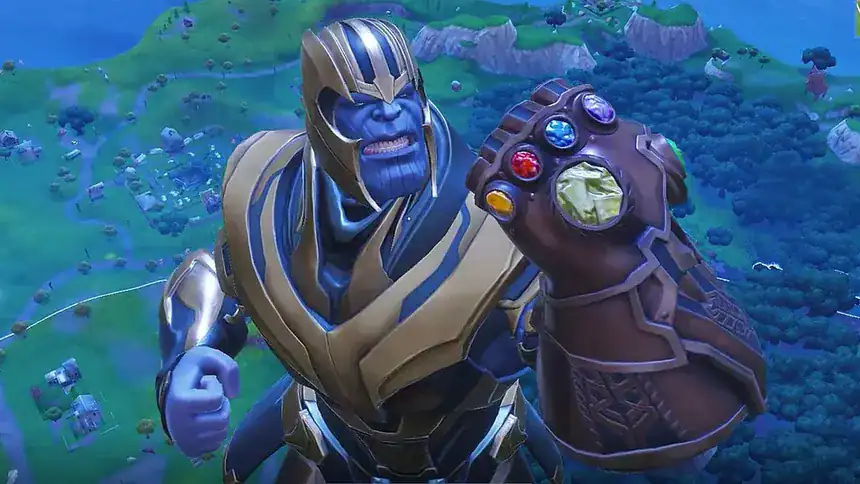
Thanos in Fortnite (courtesy of Epic Games)
Joe]it was an explosive force, explosive for the movie. It was taking the chocolate and the peanut butter and smushing them together. We went and did something really interesting here. Maybe there’s more of this that can be done in an interesting way.
Donald]So we all became not just really dear friends, but the more that we talked and worked together over the last few years, it kind of became inevitable that we were going to form a partnership and build stuff together moving forward around that creative ethos.
Soundsphere]How does your background in video games help you bring a different perspective to Agbo?
Donald]Well it’s interesting. The language of video games, it’s not even video games. The language of putting people into an interactive place or an interactive narrative is a little different than a linear narrative. There’s different things you have to consider as you’re approaching that. But a lot of the techniques that you use to get emotion out of a character or get people to feel things are similar. So we speak a very similar language, but we just have a different lens of how we’ve gotten really good at it over the last 20-30 years. For me, it’s been amazing because I learn so much from you two every day. We’re teaching each other a lot. What’s really amazing is when you kind of put that peanut butter and chocolate together, what we’re making together now is really special. I think when you see all of what we’re working on together, it’s amazing.
Soundsphere]You talked about finishing on a high note with Infinity War, and you said you were too busy to work on anything Marvel related till the end of the decade. We’re not at the end of the decade, so you did decide to go back to Marvel. How did you come to that decision to go back to Marvel and why was this the right project for the both of you?
Anthony] We were telling the truth when we made Endgame and we were like, oh yeah, this is our Endgame. At that point, we had begun telling stories within the MCU with Captain America the Winter Soldier, in Captain America Civil War, we started segueing into…Civil War was…was kind of like almost an Avengers film, and that just ended up setting up us doing Avengers Infinity War and Avengers Endgame. It was a four-movie arc. We felt like we had gone through a real completion in storytelling in terms of where we were able to bring the characters, specifically Captain America, Iron Man, Black Widow, et cetera. Thanos himself in that arc. We did really feel like our job with those two Avengers movies was to sort of provide a climax to what the MCU had been up to that point, even beyond the work that we had done. So there was a sense that we had that there’s no narrative past this. That was our understanding. It took a few years for us to move past that story. Oddly enough as we’re very close with Marvel, we continue we are sort of every few months we’ll talk. We’re very close friends with them and we talk a lot about a lot of creative ideas that we don’t end up working on but eventually we just came to an idea and it was Steve McFeely the writer who co-wrote all the Marvel work that we did, he came up with this creative idea that sort of reignited, and I can’t talk about that creative idea because it’s the basis for Doomsday, but that all of a sudden broke the skies open for us. We saw all new kinds of possibilities within the MCU with that idea. It was very much based upon the work we had done prior, and now we have Donald in official partnership on those films as well. So it’s an exciting time for us.
Soundsphere] How was Downey because he plays Dr. Doom, and there’s a moment in this film where we understand why he looks like Tony Stark, because he’s not Tony Stark, but how important he was to this piece of the puzzle in assembling this cast
Joe]No better actor in the world than Robert Downey. I’m not going to give away anything. It will all make sense when you watch the movies. What we love about telling these stories is that they’re serialized. This is a giant experiment. Nobody’s ever done anything like this before. Marvel’s unique. You’re taking all these different franchises and combining them into overarching stories. If you’re a fan of the comics like I was, I still have my comic book collection. I’m 54 years old and the idea of…That’s shifting and changing and surprising you and then reinventing itself and then shifting and changing and then surprising you. That’s exciting. So get ready for it. We were with Robert earlier and we’re both talking about this concept that we are back to phase zero. This is starting over from scratch. We want to make sure everybody feels like we’re not leaning on anything from the past. This is going to be a you’ll see when you see the movie, a complete new direction.
Anthony]You know what an incredible performer Robert is, and it’s a brand new character that you can’t even guess at.
Soundsphere] How do you pitch him to come back?
Anthony]Here’s the funny thing. I’ll tell you the first time we met Robert was after Winter Soldier came out was a success. Marvel wanted us to do another Captain America film and we really wanted to do Civil War, which wasn’t on the table at the time. Iron Man and Robert were a key part of that vision for that story. So we pitched Marvel on the idea and Kevin Feige was like, all right we can do it, but you got to go get Robert. I was saying aren’t you going to go get Robert with us?
Joe]We never met him before and we showed up at his house and he was on a chaise lounge. Laid out in his backyard, a little iced tea sitting there, two chairs in front of him like the Inquisition. We had a sit down and he’s like, I hear you’re dreaming up something. Why don’t you tell me what it is? We had to pitch him.
Soundsphere] Were you nervous?
Joe]Very nervous because we had spent months crafting this pitch and if he said no, we’re gonna have to throw the whole movie out. It wouldn’t work without him. It was a high risk pitch. This is Robert on his own career redemption arc with this incredibly famous character, a lot was at stake for him. We said, crazy idea, what if he’s the villain and he’s a gambler and he was like, that’s a great idea. I like where it’s going. Now, obviously, when you watch the film, we work a lot harder to make sure that both sides are represented, so it’s a more complicated movie. Its mission ultimately is to make you try to pick sides, which is really dependent on who you are as a person. But it was very risky for him to do that. And then what’s interesting about this is how things go full circle. He talked us into coming back to do Doomsday. So we were committed to not doing anything till the end of the decade. Then I had dinner with him two years ago and he said, crazy idea but what if, and at the time I said, you’re out of your fucking mind. That was my immediate response. It was prior to Steve McFeely coming up with the idea. We were so exhausted. We did four of those movies in seven years. It was a crazy compressed period to do movies of that scale and that small of a timeframe. My brother and I age like US presidents in photos of us. Before we make a Marvel movie and then there’s a photo of us after we make a Marvel movie, Soon we will be directing from the bed. So those things take a very physical toll on your body. They take a psychological toll.
Donald]I was with Robert earlier and I’m just gonna compliment you two a little bit. He was talking with some of the other people we work with, and he’s like, there’s something about Joe and Anthony. I trust them more than anyone. They’re the kindest people, they’re the greatest collaborators, they treat everyone like family, and that’s the truth. I’ve watched you work for years, but now I get to watch you work and how you really work. They are truly after what is the best idea, what makes the best story, what’s the best performance, there’s no ego. You ask any of the actors that have worked with you, it’s why everyone wants to work with you over and over again because you’re in pursuit of making something that’s just wonderful for the audience. It’s all they care about. How do we tell the very best story with the very best people and that just ripples through everyone that you work with and it’s incredible to watch. Everyone loves you for it and Robert, more than anybody, he would do anything. That’s how you get magic.
Soundsphere]How do you juggle very large ensembles? Because when you have one major star in a movie, you’re going to make sure that star is getting what they need. But when you have 20 or 30 major stars in a movie, how do you navigate that?
Joe]We have a phrase that we call firm papa, firm mama. You gotta be firm, but gentle at the same time. You have to create an environment where there’s structure, but there’s a lot of movement in the structure. These movies have more movie stars than any movies in history. And movie stars, by their very nature, want to shine. That’s their job. It’s hard to shine when there’s 19 other movie stars in a scene with you. So we have to work meticulously hard to make sure that everyone gets those moments because each one of those actors is playing somebody’s favorite character. So if you’re not going to service the character properly, then you’re going to disappoint somebody in that audience. We grew up in a big Italian family and we love ensembles, we do Arrested Development, we did Community. We understand how to tell stories with multiple characters. A lot of that has to do with very subtle POV shifts throughout the story with one overarching POV, like Infinity War is all told from Thanos’ point of view. But if Thor, when he lands, if that axe cuts Thanos’ head off, it’s actually Thor’s movie. That’s how close those points of view are to each other and that’s all very calibrated from a storytelling standpoint to create, to maximize impact and to maximize the surprise for you so that you are instinctually having the best time because we’re fighting against, as I talked about earlier, the PhD inside the youth that can read a story. 10 minutes in you can go, I know how this is going to end, because that’s the 10 minute moment. That’s setting me up, how’s this gonna pay off? I’ve seen this filmmaker’s work before, they tend to do optimistic endings, it’s gonna end well. I’ve seen their work before, it’s the Coen brothers. Everybody’s going to die. You have an instinct that tells you based on what you’re watching, what you’re going to get. We have to work very hard to surprise you and to circumvent that instinct by giving you these subtle calibrations and points of view that keep you guessing while you’re watching the movie.
Anthony]We do have a creative process that is even though we’re like a two and a half hour uh three-act structure film, it is generally based around a single character arc overall. We do have a creative process where we really envision the movie and the narrative from each individual character’s point of view and paint the movie from that character’s point of view. Even if that character is just intersecting with a small part of the story, it’s creatively energising to filter the film through even a small character’s point of view occasionally.
Soundsphere] What is your favourite costume as directors in the Marvel Cinematic Universe?
Anthony]Doom’s the best. You’ll have to see why
Joe]It’s representative of the character in a way that the costume, the character really fit.
Anthony]Part of our challenge has always been, that there’s something that we love from the comics and there’s something that other fans of the comics love. Sometimes those things are the same thing, sometimes they’re different things. You never know, but a lot of times what our expression in the movie ends up being is what we love most about the comics, but then what is original to our storytelling, what is brand new? Because we always look at it as our job to not tell you a story that you’ve heard before. We’re never translating directly from the comics. We’re always adding a new experience that hasn’t been written yet in terms of who these characters can be. But I would say Doom hits that sweet spot between being very specific and unique to the original story that happens within this film, but also delivering on what the most awesome things are about Doom from the comics.
Soundsphere] Is Downey very collaborative about what he wants in the costume?
Joe]Extremely. Collaborative is putting it nicely
Anthony]Here’s the thing about Downey. We generally prefer this as collaborators, it’s the way we work. Our favorite collaborators are always people who think like filmmakers, whether they’re composers or production designers or actors, whoever it may be, editors involved in our creative process. Our favorite people we always respond to are the ones that think like holistic filmmakers. Certainly Robert is the extreme example of that. Robert doesn’t only think like an actor. He is micro detailed.
Soundsphere] You founded Agbo in 2017. You’ve had 15 number one openings at the box office, everything everywhere all at once, winning Best Picture. And then you guys decided to make The Grey Man, which became one of the most watched Netflix films of all time, 300 million hours watched. Why was the Netflix relationship important for Agbo?
Joe]Everything we’ve done our entire careers is experimentation. Technology is fascinating to us. We were the first filmmakers to shoot digital video for a narrative show on television. Meaning, when we used beta cams to shoot Arrested Development, which was the only way we could make the show because it was too expensive to shoot in any other way, we had to move really quickly, we had a run and gun. couldn’t afford to light it. So our idea was let’s shoot it like a mockumentary. We’d seen an incredible film a few years earlier called Man Bites Dog, which is a mockumentary about a serial killer being followed around by a film crew. We were vibing off of that and we thought, let’s just make the show, a comedy, it’s low rent and it should feel like a reality TV show. Maybe you can’t tell the difference about whether it’s real or fake. So technology is critically important to us and experimentation is really important to us with technology. It’s why we founded our own company.
So we had our own autonomy to experiment more, to try different things. We’re platform agnostic. There are stories that belong in different places. We have to stop trying to identify or trying to define that every story has to fit for every medium and that certain mediums are better than other mediums. It’s not true. Watch the story where you want to watch the story. If you don’t want to watch it at home, go watch it in a theater. If you don’t want to watch it in a theater, go watch it at home. You don’t want to watch it on a computer, watch it on your phone. It’s your right to watch a story how you want to watch it be told. There’s amazing filmmakers who have been working on the phone format who are now blowing up the box office. So it’s all translatable at some point. There are tremendous assets to digital platforms that you can’t get with. There’s an incredible amount of diversity in digital platforms because they’re more regionally focused and they’ll do regional content. There’s just real opportunities there for regional filmmakers to get an opportunity to make something with some real financial backing behind it. So all of this stuff should be embraced. I think the part of the problem with culture today is everything’s conflict driven because social media is conflict driven because that’s what’s sticky and that’s what keeps you on social media. Cause if you’re happy, you’re not on social media. You are outliving your life. You’re not worried about what other people are doing in their life. You’re not worried about what your neighbor said and getting upset and rage baited by what your neighbor said. Right. So at a certain point, if we don’t stop attacking every segment, that every sector doesn’t view the other sector as its enemy, we’re not going to have any stories left because we’re going to go down some rabbit hole where everything is just vitriol. That’s all that’s left. Everybody is attacking each other. I think it’s a really important point because maybe the only true community binder that we have left, the one thing left that binds all of us are stories. The more we can diversify those stories, the more we can democratize how those stories are told, which is why I love what’s happening in the theatrical space. The more we can create technological tools that bring down the cost and the risk factor behind making these things, the more diverse and democratized stories will become. That ultimately was the ethos behind Agbo. How do we shake things up in a way behind the scenes that then allows other filmmakers and most of the work that we do, like with the Daniels, they had done one movie prior to that. We sat them down at lunch and we said, we have a company. We’ve been very fortunate. We made some movies that made a lot of money, blank checks. We loved your film. What do you want to make next? And it took them two years to figure it out. But they did, but that’s how Sam Hargrave directed Extraction. He was on Winter Soldier, he was a stunt double for Chris Evans. Then we elevated him because we went, you have a great eye. We elevated him to a second unit director. And then from that we said, you should be making a movie. So it’s really, how do you find opportunities to foster new voices? And what can we do? with all the work we’ve done and all the assets we have to try to create tools that will allow these voices to tell their own stories without going through the traditional system.
Donald]Because that’s kind of what we’re about. We are storytellers, we love stories. In most ways, we’re in the business of joy and delight. We want to thrill you, we want to entertain you, we want to move you, and we want to be moved by other people. So the idea that we can help lots of people make lots of stories that we are excited to consume is amazing to us and to be a part of
Soundsphere] Donald, under your leadership, Fortnite became something no one in the world really had a way to describe. 800 million registered players now. What was the lesson from working on Fortnite for you as a storyteller?
Donald]The lesson? It was really an opportunity. I had chosen to spend a lot of my time in that medium, in the medium of interactivity. There’s been a lot of stuff that we’d been thinking about and experimenting with for years, but when Fortnite took off and all of a sudden I had, like the first couple weeks, it was like 30 million people, and then it was 100 million people. We could see it. I had literally a thing on my wall just showing me this is how many people are playing right this second. 10 million people right now are doing this thing and it gave me this massive opportunity and platform to be able to experiment with the stuff I was passionate about, which is experiential storytelling. What can you do when you’ve got millions and millions of people and I had the technology that let me be able to put them all together at the same time. So that was my dream. I tell a story over years where you’re all experiencing it together. Where I could do concerts, but even beyond concerts, I’d have my story playing out in the world while everyone’s there engaged in it. So we’d have tens of millions of people witnessing and participating in this story that’s happening live around you. And it was magical. Now let me experiment with stuff that just didn’t exist before. We learned so much by going through that process. I think there’s still so much more to do in that medium. That’s why we’re so excited to be doing stuff together because taking all of what we’ve learned over the last 30 years and building new experiences and new stories, but taking all of what we’ve learned together is going to be amazing.
Soundsphere] What is the one piece of advice you would give someone who wants to break into the entertainment industry?
Joe]Somebody came up on my TikTok feed and they were joking about how every time I go to a film festival, the guy’s like, you got a camera, it’s in your pocket. Just make a movie, go make a movie. It’s like an obsession. You have to just tell stories and you can tell stories on any scale. You can tell stories in one minute or in 30 seconds or a five minute story, or you can work in YouTube shorts, you can work on TikToks, you can work on reels, you can do whatever you want. The more you do it, the better you get at editing and the better you get at understanding how the audience is gonna respond to the things that are important to you that you are trying to translate to them. So it is true. Just pick up your phone and shoot stuff.
Anthony]What I was going to say is somewhat connected. Whatever is standing in the way, whatever’s holding you back, whatever’s blocking you. Find a way to get past it and just do it. It’s never gonna be perfect. Just try something. That’s one reason why we started the No Sleep Till Film Fest, which has a clock on it in terms of how you produce material. It was a challenge to people to just take a challenge, make something, and see what happens.
Donald]One of my favorite storytellers right now is this Instagram channel called Mummy Joe. He makes these really cool little stick figures almost like animated shorts. They’re brilliant, so funny, they’re so heartfelt. They’re amazing. It’s just someone telling awesome stories. When I was 12, I couldn’t afford a computer, I couldn’t afford a camera. But I had a pencil so I could start drawing comic books and I could write stuff. And then that taught me how to tell stories and I got better tools and I could make different stories. Just start telling stories.
