

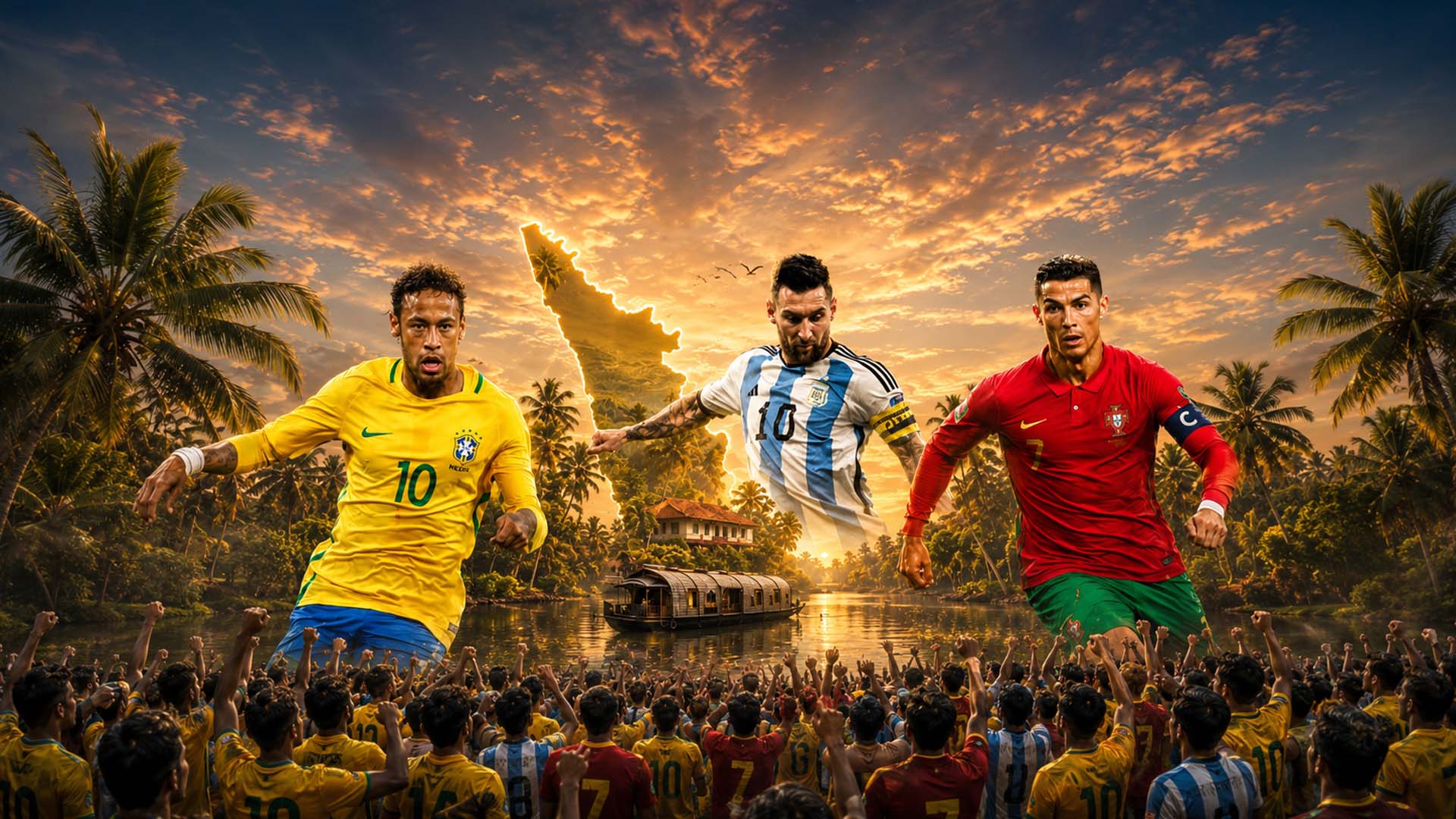
Football has always reflected politics, but this FIFA World Cup has pushed that relationship into sharper focus. As the tournament reaches its quarter-final stage, conversations around the game have increasingly merged with debates on the war in West Asia, the humanitarian crisis in Gaza, US President Donald Trump’s public interventions and questions surrounding FIFA. In Kerala, one of India’s strongest football cultures, those global political fault lines are now influencing football fandom itself.For decades, Kerala has celebrated the World Cup as more than just a sporting event. Streets transform into colourful displays of support for national teams, giant cut-outs dominate villages and towns, and generations of fans passionately back Argentina, Brazil, or Portugal or other European football powers.Also read: France should fear Spain, says Lamine Yamal ahead of World Cup semifinal clashHowever, this World Cup has witnessed football discussions giving way to ideological arguments, with social media becoming a battleground for competing political narratives.Football cultureFootball has never existed in isolation from politics. Every World Cup carries not only sporting rivalries but also the anxieties, conflicts and aspirations of the world beyond the stadium.The ongoing tournament has unfolded against the backdrop of the conflict in West Asia, the humanitarian crisis in Gaza and increasing geopolitical polarisation. Public comments by Donald Trump on the tournament, including remarks on refereeing decisions, added another political dimension to an already contentious competition.While politics influencing football is not new, what has surprised many observers is the depth with which these debates have entered Kerala’s football culture.Kerala’s passionFor nearly four decades, the FIFA World Cup has transformed Kerala into a month-long celebration. Giant cut-outs appear overnight, roads are decorated in the colours of competing nations and villages compete to erect elaborate displays supporting their favourite teams.Also read: Mbappe equals Messi’s 8 in World Cup, but leads Golden Boot race with more assistsSince Diego Maradona captured Kerala’s imagination during the late 1980s, Argentina has enjoyed an extraordinary following across the state. For many Left supporters, Maradona represented defiance against established global powers. His admiration for Fidel Castro and Che Guevara, coupled with his criticism of Western power structures, resonated strongly with sections of Kerala’s political landscape.Brazil, meanwhile, came to symbolise footballing artistry, while Cristiano Ronaldo later inspired a massive following for Portugal. The rise of European club football further expanded Kerala’s football loyalties.Despite these rivalries, Kerala’s football culture has traditionally united supporters across political parties, religions and social backgrounds.Debate shiftsAccording to the discussion, the turning point came after the high-voltage Argentina-Egypt match.Almost overnight, football conversations shifted towards politics. Social media timelines became dominated by geopolitical arguments rather than tactical analysis, with some Argentina supporters being labelled “Zionist apologists”.Also read: From ‘also-rans’ to powerhouses: How Africa scripted historic World Cup in 2026The debate increasingly moved beyond football itself, reflecting wider global discussions on international politics, FIFA and geopolitical power struggles.Online battleWhatsApp groups, football pages and Instagram Reels increasingly mixed football content with discussions on Palestine, Zionism, imperialism and global politics.Football was no longer being discussed in isolation, as international political narratives rapidly became part of Kerala’s football discourse.Former Kerala minister MB Rajesh, an Argentina supporter, publicly remarked that many Argentina fans were uncomfortable with the developments surrounding the match, reflecting how difficult it had become to separate football from the larger political debate.Competing narrativesThen, a new narrative from sections of the Hindutva ecosystem, where terms such as “Football Jihad” and claims of football being “Islamised”, entered public discussion.Videos showing Muslim footballers performing “sujood” (prostration) after victories were circulated as examples supporting these claims, while similar religious expressions by players from other faiths often received little attention.Also read: Egypt coach says ‘cheated unfairly’ after World Cup loss to ArgentinaBoth sides increasingly viewed football teams through political lenses, with some branding teams based on the policies of their governments while others interpreted sporting support through communal narratives.Beyond politicsAt the end of the day, football teams should not be treated as representatives of governments or political ideologies. Nations comprise diverse populations, many of whom disagree with those in power.For…
